 HRTD Medical Institute

Caregiver Courses in HRTD Medical Institute
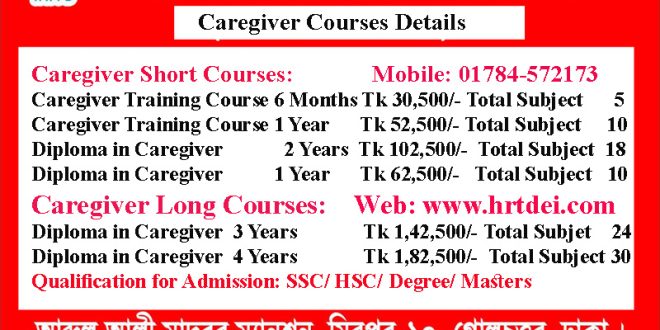
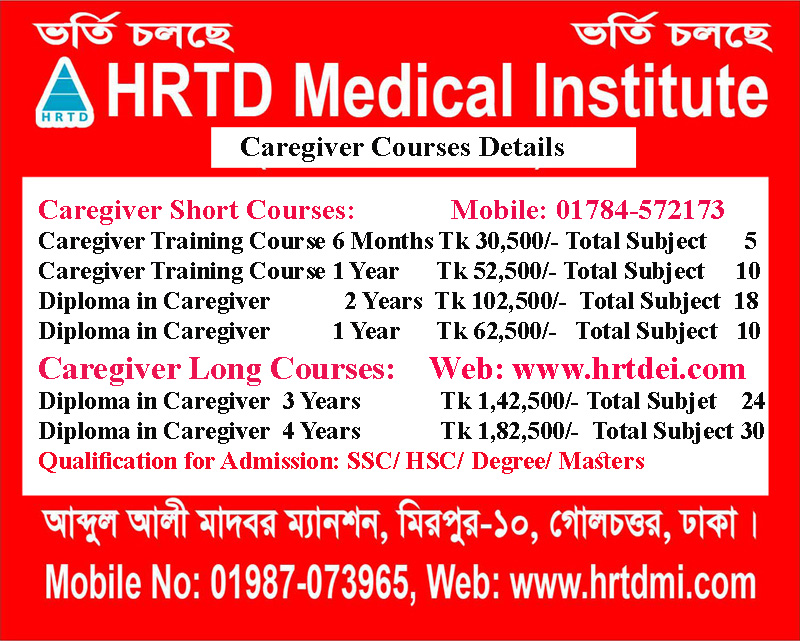
Caregiver Courses. Mobile No. 01969947171, 01784-572173, 01987-073965. Caregiver Training Course 6 Months, Caregiver Training Course 1 Year, Diploma in Caregiver 1 Year, Diploma in Caregiver 2 Years, Diploma in Caregiver 3 Years, and Diploma in Caregiver 4 Years. All these Caregiver Training Courses and Caregiver Diploma Courses are available at HRTD Medical Institute, Mirpur-10, Gol-Chattar, Dhaka-1216.
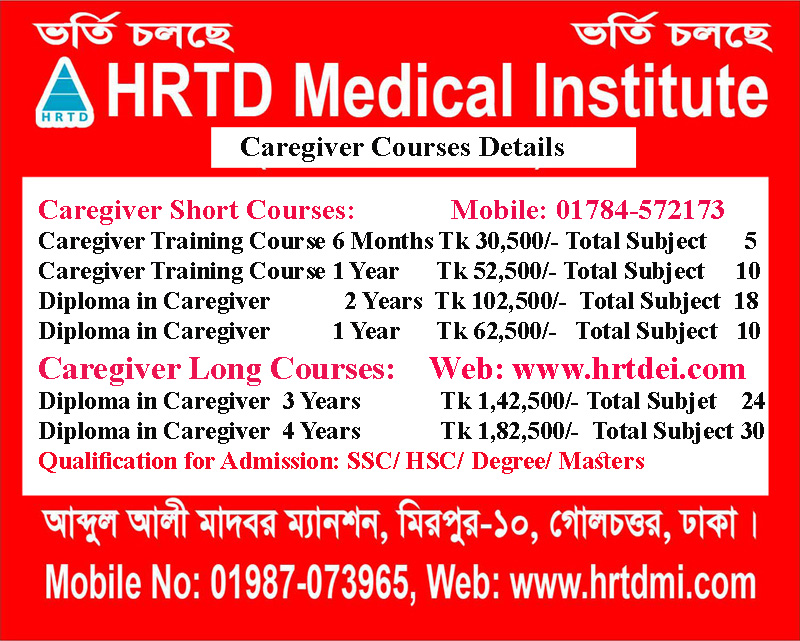
Caregiver Course Fees at HRTD Medical Institute
Caregiver Courses Fees are: Caregiver Training Course 6 Months Tk 35,500/-, Caregiver Training Course 1 Year Tk 70,500/-, Diploma in Caregiver 1 Year Tk 70,500/-, Diploma in Caregiver 2 Years Tk 1,30,500/-, Diploma in Caregiver 3 Years Tk 160500/- Diploma in Caregiver 4 Years Tk 198500/-. The admission Fee for a Caregiver Training Course for 6 Months is Tk 15,500/-, the Admission Fee for a Caregiver Training Course 1 Year is Tk 20,500/-, the Admission Fee for 2 two-year diplomas in a Caregiver Course is Tk 30500/- and Admission Fee for 4 Years Diploma in Caregiver is Tk 30,500.
Caregiver Courses Curriculum at HRTD Medical Institute:
The caregiver Courses Curriculum has mentioned here: 6 Months Caregiver Training Course contains 5 Subjects, 1 Year Caregiver Training Course contains 10 subjects, 2 Years Diploma in Caregiver contains 18 subjects, 3 Years Diploma in Caregiver contains 24 subjects and 4 Years Diploma in Caregiver contains 30 subjects. The subjects for Caregiver Courses are Human Anatomy and physiology, Pharmacology, First Aid & Treatment, Study of OTC Drugs, Pediatric Caregiver, Geriatric Caregiver, Cardiovascular Caregiver, Orthopedic Caregiver, Gynecological Caregiver, Neurological Caregiver, Therapeutic Caregiver, etc.
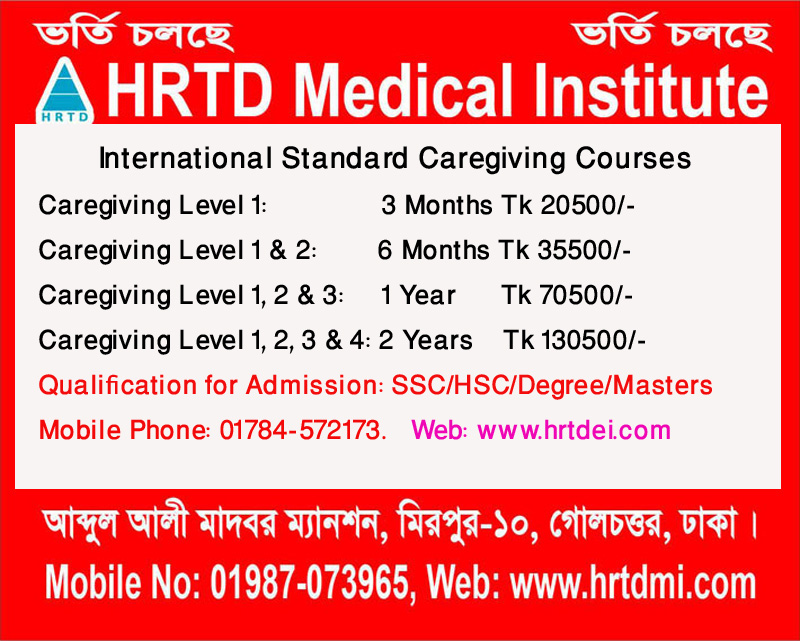
International Standard Caregiving Courses in HRTD Medical Institute
International Standard Caregiving Courses. Mobile No. 01969947171, 01784-572173, 01987-073965. International Caregiving Courses are Caregiving Level 1, Caregiving Level 2, Caregiving Level 3, Caregiving 4, and Caregiving Level 5. Caregiving Levels 1, 2, 3, and 4 are available in HRTD Medical Institute. Caregiving Level 1 & 2 Tk 35500/-for 6 Months, Caregiving Level 1,2,3 Tk 70,500/- for 1 Years, Caregiving Level 1,2,3,4 Tk 70,500/- for 2 Years.
The Demand for Caregiver Courses:
There is high demand for Caregivers in the USA and this demand is increasing day after day.
According to a PHI report, the in-home care industry will need to fill an estimated 4.7 million home care jobs between 2018 and 2028. PHI is a leading authority on the direct care workforce in the United States. The estimate, which is slightly higher than previous projections, is yet another reminder of the labor shortage that nearly all home care providers in the United States face. Over the same time period, the number of job openings in the direct care industry is expected to exceed 8 million.
Duties, and Responsibilities of a Caregiver:
A Caregiver, also known as a Personal Care Aide, assists patients who have difficulty performing basic tasks, such as people with disabilities, the elderly, or patients suffering from mental disorders. Their primary responsibilities include administering medications, assisting patients with personal care tasks such as bathing, dressing, eating, or grooming, and adhering to the patients’ prescribed healthcare plan.
Qualities of a Good Caregiver
Do you want to learn how to care for the elderly or people with disabilities? The majority of the skills needed to be an in-home caregiver are not technical. Instead, you’ll need the desire to help others as well as a desire to spend time with people. The most important aspects of being an in-home caregiver are probably selflessness, empathy, and compassion. Always prioritize the client and consider how you can improve their quality of life. The best caregivers develop personal relationships with their patients and are invested in their well-being not because they have to, but because they want to.
Immigration facilities for Caregivers:
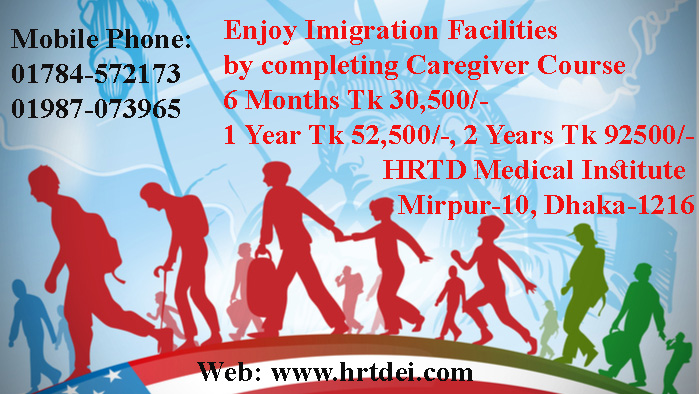
Among the three visa preferences, caregivers fall into the unskilled (EB3) employment category. Un-skilled employment is open to anyone 18 years of age or older who is physically fit and has no criminal record in his life. Qualifications can be obtained with as little as two years of training and experience as a Caregiver.
International OTC Drugs for Caregiver Courses
OTC Drugs are the Drugs that are permitted by the Govt to sell from Pharmacies. These drugs are used widely worldwide. OTC Drugs are of different types. They are different from country to Country. OTC Drugs in the USA are not the same as in Australia and Canada. We discuss highly OTC Drugs for Caregiver Courses.
First Aid in Caregiver Courses
First Aid is an important subject for Caregiver Courses. A Caregiver has to provide First Aid to the Patients of the Family of the Institute. Topics of First Aid are Management of Shock, First Aid of Bleeding, First Aid of Cuts and Injury, First Aid of Snake Bite, First Aid of Chemical Burn, First Aid of Fire Burn, First Aid of Electric Shock, First Aid of Severe Hypertension, First Aid of Severe of Hypotension, First Aid of Severe Coughing, First Aid of Hypovolemic Shock, First Aid of Anaphylactic Shock, First Aid of Vomiting, etc.
Importance of Shock Management for Caregiver Courses
Management of Shock is very important for Caregiver Courses. There are many types of Shock such as Hypovolemic Shock, Cardiogenic Shock, Traumatic Shock, Burn Shock, Electric Shock, Psychogenic Shock, Neurogenic Shock, and Anaphylactic Shock. A Caregiver should know about all types of Shocks and their Management.
A Caregiver Should Know the Symptoms of All types of Shocks
Management of Shock is an important part of all Medical Professionals including Doctors, Nurses, Physiotherapists, Paramedics, Caregivers, and Health Workers. When they observe the symptoms of Shock they should apply the Management of Shock. Symptoms of Shocks are Decreased Blood Pressure, Increased Heart Rate, and Pulse, Decreased Urine output, and Decreased Body temperature.
Importance of English Fluency for Caregiver Courses
English is the number one International Language. If you take a caregiver job in English Medium Countries, You must be Fluent in English. You should also understand their Speaking. For Increasing English Fluency, You Should Complete a Caregiver English Fluency Course from HRTD Medical Institute.
Understanding Culture is an important matter for a Caregiver
A Caregiver Should know and understand the culture of the care receivers. Culture is the Characteristics of a group of people about their behavior, beliefs, values, and symbols that they accept.
Caregiver Levels in the World
There are 5 Levels of Caregivers. Caregiver Level-1 ( Entry Level), Caregiver Level-2, Caregiver Level-3, Caregiver Level-4 and Caregiver Level-5. These levels can vary by region or organization, but they generally follow a similarity.
Caregiver Level-1, Functions, Responsibilities and Qualifications
Caregiver Level-1 is called an entry-level caregiver. They provide basic care and assistance to the carereceivers with activities of daily living. These daily activities are bathing, dressing, meal preparation, and housekeeping. A basic caregiving course is enough to take a job in Caregiver Level-1 or Entry Level.
Caregiver Level-2, Functions, Responsibilities and Qualifications
Caregiver Level-2 is called personal care aid. They have a better understanding of medical science, especially hygiene, nutrition, and safety precautions. They may be qualified to administer medications or provide specialized care to the carereceivers with chronic conditions such as back pain, asthma, tuberculosis, rheumatoid arthritis, osteoarthritis, gout, and COPD.
Caregiver Level-3, Functions, Responsibilities and Qualifications
Caregiver Level-3 is responsible for Home Health Aid. They are responsible for more advanced care including monitoring vital signs, assisting with mobility, and handling medical equipment. They work in home healthcare or nursing homes under the supervision of nurses. Certified Nursing Assistant is the qualification for taking a job for this post.
Caregiver Level-4, Functions, Responsibilities and Qualifications
Caregiver-4 is a Licensed Practical Nurse or Vocational Nurse. They have completed state-approved nursing courses. They have a deeper understanding of medical care such as medication administration, wound care, shock diagnosis, shock management, cleaning, dressing, bandaging, etc. Licensed Practical Nurse or Licensed Vocational Nurse can work in various healthcare centers. They can provide specialized care under the supervision of registered nurses or registered doctors.
Caregiver Level-5, Functions, Responsibilities and Qualifications
Caregiver Level-5 is a Registered Nurse (RN). They have completed a nursing degree program and passed the necessary licensing examinations. They have a comprehensive understanding of healthcare and medical science such as assessment, diagnosis, and treatment planning. Registered Nurses can work in hospitals, clinics, and other healthcare centers.
কেয়ার গিভিং এ কাজের ক্ষেত্র কয়টি
কেয়ার গিভিং বা সেবা প্রদানের কাজের পরিধি মূলত পাঁচটি প্রধান ক্ষেত্রে বিভক্ত: বয়স্কদের যত্ন, শিশু যত্ন, প্রতিবন্ধী বা বিশেষ চাহিদাসম্পন্ন ব্যক্তিদের যত্ন, রোগী বা অসুস্থ ব্যক্তিদের পুনর্বাসন যত্ন এবং ডে-কেয়ার ও হোম কেয়ার ব্যবস্থাপনা。
কেয়ার গিভিংয়ের কাজের ক্ষেত্রগুলো
- বয়স্কদের যত্ন (Elderly Care): প্রবীণদের দৈনন্দিন কাজ, ওষুধ সেবন, হাঁটাচলা, ব্যক্তিগত পরিচ্ছন্নতা এবং নিয়মিত স্বাস্থ্য পর্যবেক্ষণে সহায়তা করা。
- শিশু যত্ন (Child Care): নবজাতক ও শিশুদের খাওয়ানো, গোসল করানো, খেলাধুলা ও পড়াশোনার দেখভাল করা。
- বিশেষ চাহিদাসম্পন্নদের যত্ন (Special Needs/Disability Care): শারীরিক বা মানসিকভাবে পিছিয়ে পড়া মানুষদের দৈনন্দিন কাজ, থেরাপি এবং মানসিক সাহচর্য প্রদান。
- রোগী ও পুনর্বাসন যত্ন (Patient/Rehabilitation Care): হাসপাতাল বা বাড়িতে চিকিৎসাধীন রোগীদের সেবা, ক্ষত পরিষ্কার, পুষ্টি নিশ্চিতকরণ এবং দ্রুত সুস্থ হয়ে উঠতে মানসিক সমর্থন দেওয়া。
- গৃহস্থালী ও অন্যান্য সেবা (Home Care & Management): সেবাগ্রহীতার ঘরের সাধারণ কাজ, রান্নাবান্না, পরিবেশ পরিষ্কার রাখা এবং ঘরোয়া প্রাথমিক চিকিৎসা পরিচালনা করা
Hostel Facilities in Caregiver Courses in Dhaka Bangladesh
Hostal & Meal Facilities
The Institute has hostel facilities for the students. Students can take a bed in the hostel.
Hostel Fee Tk 3000/- Per Month
Meal Charges Tk 3000/- Per Month. ( Approximately )
হোস্টাল ও খাবার সুবিধা
ইনস্টিটিউটে শিক্ষার্থীদের জন্য হোস্টেল সুবিধা রয়েছে। ছাত্ররা হোস্টেলে বিছানা নিতে পারে।
হোস্টেল ফি 3000/- টাকা প্রতি মাসে,
খাবারের চার্জ 3000/- টাকা প্রতি মাসে।(প্রায়)
Some Subject for Caregiver Courses in Dhaka Bangladesh
Subject for Caregiver Course -6 Months Caregiver Level- 1, 2
- Human Anatomy & Physiology-1
- First Aid & Practice Of Medicine
- Study Of OTC Drugs
- Pharmacology-1 & Pediatric Caregiving-1
- Geriatric Caregiving-1
Subject for Caregiver Course -1 Year Caregiver Level- 1, 2 & 3
Subject for First Semester
- Human Anatomy & Physiology-1
- First Aid & Practice Of Medicine
- Study Of OTC Drugs
- Pharmacology-1 & Pediatric Caregiving-1
- Geriatric Caregiving-1
Subject for 2’nd Semester
- Orthopedic & Cardiovascular Caregiving
- Pediatric Caregiving-2
- Geriatric Caregiving-2
- Food & Nutrition
Subject for Caregiver Course -2 Year Caregiver Level- 1, 2, 3 & 4
Subject for First Semester
- Human Anatomy & Physiology-1
- First Aid & Practice Of Medicine
- Study Of OTC Drugs
- Pharmacology-1 & Pediatric Caregiving-1
- Geriatric Caregiving-1
Subject for 2’nd Semester
- Orthopedic & Cardiovascular Caregiving
- Pediatric Caregiving-2
- Geriatric Caregiving-2
- Food & Nutrition
- Caregiving English Conversation-1
Subject for 3’rd Semester
- Caregiving Planning
- Caregiver Management
- Caregiving English Conversation-1
- Hematology, Microbiology & Pathology (Shortly)
Subject for 4’th Semester
- International OTC Drugs
- Prescription follow up & Monitoring Medication
- Assessment of Medical Needs
- Practickle Works (Internship)
Practical Classes And Internship for Caregiver Courses in Dhaka Bangladesh
Heartbeat, Heart Rate, Cardiac Auscultation, Process of Cardiac Auscultation, Tachycardia, Bradycardia, Pulse, Pulse Rate, Strong Pulse, Weak Pulse, Blood Pressure, Normal Blood Pressure, Systolic Blood Pressure, Diastolic Blood Pressure, Pulse Pressure, Mean Blood Pressure, Hypertension, Hypotension, Hypertension Emergency, First Aid and Management of Hypertension Emergency, Cleaning, Dressing, Bandaging, Stitching, Inhaler, Rotahaler, Nebulizer, Pulse Oxymter, Oxygen Cyllinder, Injection Pushing, IM Injection Pushing, IV Injection Pushing, SC Injection Pushing, Vaccine Pushing, Insulin Pushing, Blood Glucose Masurement, Diabetes, Saline Pushing, Respiratory Meter, First Aid and Management of Shock, First Aid of Bone Fracture, X Ray Report Understanding, Respiration, Respiratory Auscultation, Process of Respiratory Auscultation, First Aid of Diarrhea and Constipation, Dehydration Test, Edema Test, Joundice Test, Anemia Test, etc.
Teachers For Caregiver Courses in Dhaka Bangladesh
Dr. Sakulur Rahman (MBBS,CCD)
Dr. Tisha (MBBS)
Dr. Sanjana Ahmed (BDS)
Dr. Disha (FCPS)
Dr. Kazi Mahinul (MBBS)
Dr. Najmun Nahar Juthi (BDS)
Dr. Md. Niamul (MBBS)
Dr. Kamrunnahar Keya (BDS)
Dr. Suhana (MBBS, PGT)
Dr. Shamima (MBBS,PGT)
Dr.Layla (MBBS)
Dr. Farabi (MBBS)
Dr.Nurunnahar (BDS)
Dr.Rajoan (MBBS)
Anatomy for Caregiver Courses in Dhaka Bangladesh
Anatomy হচ্ছে মানবদেহের গঠন বা কাঠামো সম্পর্কিত বিজ্ঞান। এটি জানায় দেহের অঙ্গপ্রত্যঙ্গ কোথায় থাকে, তাদের আকার, অবস্থান ও সম্পর্ক কেমন।
উদাহরণ:
হৃদপিণ্ড (Heart) কোথায় অবস্থিত
কঙ্কাল (Skeleton), স্নায়ু (Nerves), পেশি (Muscles) এর গঠন
হাড়, মাংসপেশি, অঙ্গপ্রত্যঙ্গ কীভাবে যুক্ত
Physiology (ফিজিওলজি) কী?
Physiology হচ্ছে দেহের অঙ্গপ্রত্যঙ্গ কিভাবে কাজ করে তা নিয়ে আলোচনা। এটা বলে শরীরের ভেতরে কীভাবে কাজ হয় এবং কিভাবে শরীর সুস্থ থাকে।
উদাহরণ:
- হৃদপিণ্ড কিভাবে রক্ত পাম্প করে
- ফুসফুস কিভাবে অক্সিজেন নেয়
- পরিপাকতন্ত্র (Digestive system) কিভাবে খাবার হজম করে
মানবদেহের প্রধান ১১টি সিস্টেম (Human Body Systems):
| সিস্টেমের নাম (বাংলা) | ইংরেজি নাম | কাজ |
|---|---|---|
| ১. অস্থি তন্ত্র | Skeletal System | শরীরের কাঠামো তৈরি করে |
| ২. পেশি তন্ত্র | Muscular System | চলাফেরা ও গতি নিয়ন্ত্রণ |
| ৩. স্নায়ুতন্ত্র | Nervous System | তথ্য আদান-প্রদান ও নিয়ন্ত্রণ |
| ৪. শ্বাসতন্ত্র | Respiratory System | শ্বাস গ্রহণ ও কার্বন ডাই-অক্সাইড বের করা |
| ৫. রক্ত সংবহন তন্ত্র | Circulatory System | রক্ত ও পুষ্টি পরিবহন |
| ৬. পরিপাক তন্ত্র | Digestive System | খাবার হজম ও পুষ্টি গ্রহণ |
| ৭. বর্জ্য নিষ্কাশন তন্ত্র | Excretory System | দেহের বর্জ্য অপসারণ |
| ৮. প্রজনন তন্ত্র | Reproductive System | সন্তান উৎপাদন |
| ৯. অন্তঃস্রাব তন্ত্র | Endocrine System | হরমোন নিঃসরণ ও নিয়ন্ত্রণ |
| ১০. ত্বক/চর্ম তন্ত্র | Integumentary System | ত্বক, চুল, নখ সুরক্ষা প্রদান |
| ১১. রোগ প্রতিরোধ তন্ত্র | Immune System | রোগ থেকে রক্ষা |
Digestive System in Bangla (পরিপাকতন্ত্র)
পরিপাকতন্ত্র কী?
পরিপাকতন্ত্র হলো একগুচ্ছ অঙ্গপ্রত্যঙ্গের সমন্বয়ে গঠিত একটি তন্ত্র, যা খাবার হজম করে, পুষ্টি শোষণ করে এবং বর্জ্য পদার্থ শরীর থেকে বের করে দেয়।
🧾 পরিপাকতন্ত্রের প্রধান অঙ্গসমূহ ও তাদের কাজ:
| অঙ্গের নাম | কাজ |
|---|---|
| ১. মুখ (Mouth) | চিবিয়ে খাবার ছোট ছোট অংশে পরিণত করা, লালা দিয়ে নরম করা |
| ২. গ্রাসনালী (Esophagus) | মুখ থেকে পাকস্থলীতে খাবার সরবরাহ করা |
| ৩. পাকস্থলী (Stomach) | এসিড ও এনজাইম দিয়ে খাবার গলানো ও প্রাথমিক হজম |
| ৪. ক্ষুদ্রান্ত্র (Small Intestine) | এনজাইম দ্বারা খাবার হজম সম্পূর্ণ ও পুষ্টি শোষণ |
| ৫. বৃহদান্ত্র (Large Intestine) | পানি শোষণ করে মল তৈরি করা |
| ৬. রেকটাম ও মলদ্বার (Rectum & Anus) | মল সংরক্ষণ ও দেহ থেকে অপসারণ |
Respiratory System in Bangla (শ্বাসতন্ত্র)
📌 শ্বাসতন্ত্র কী?
শ্বাসতন্ত্র হলো এমন একটি অঙ্গতন্ত্র, যার মাধ্যমে আমরা অক্সিজেন গ্রহণ করি এবং কার্বন ডাই-অক্সাইড বের করে দেই। এটি আমাদের শরীরে অক্সিজেন সরবরাহ করে, যা জীবিত থাকার জন্য অত্যন্ত প্রয়োজনীয়।
🫁 শ্বাসতন্ত্রের প্রধান অঙ্গসমূহ:
| অঙ্গের নাম (বাংলা) | অঙ্গের নাম (ইংরেজি) | কাজ |
|---|---|---|
| নাক | Nose | বাতাস প্রবেশ করে, ধুলাবালি ও জীবাণু ছেঁকে ফেলে |
| গলা / ফ্যারিংস | Pharynx | নাক ও মুখ থেকে বাতাস শ্বাসনালীতে পৌঁছে দেয় |
| কণ্ঠনালী / ল্যারিংস | Larynx | শ্বাস ও স্বর নিয়ন্ত্রণ করে (এখানে কণ্ঠস্বর তৈরি হয়) |
| শ্বাসনালী | Trachea | ফুসফুসে বাতাস প্রবাহিত করে |
| ব্রঙ্কাস | Bronchi | শ্বাসনালীর দুটি শাখা, যা দুই ফুসফুসে বাতাস পাঠায় |
| ব্রঙ্কিওলস | Bronchioles | ব্রঙ্কাস থেকে আরও ছোট শাখা, যা ফুসফুসের ভেতরে ছড়িয়ে থাকে |
| অ্যালভিওলি | Alveoli | ক্ষুদ্র বায়ুথলি, যেখানে গ্যাসের বিনিময় হয় |
| ফুসফুস | Lungs | শ্বাসতন্ত্রের মূল অঙ্গ, গ্যাস বিনিময় করে |
| ডায়াফ্রাম | Diaphragm | পেশি যা শ্বাস-প্রশ্বাসে সাহায্য করে |
কেয়ারগিভারের জন্য অ্যানাটমি কেন গুরুত্বপূর্ণ
১️⃣ শরীরের গঠন ও অঙ্গ চিনতে সাহায্য করে
কেয়ারগিভার যদি জানে কোন অঙ্গ কোথায় আছে এবং কীভাবে কাজ করে, তাহলে রোগীর ব্যথা বা সমস্যা কোন জায়গায় তা সহজে বুঝতে পারে।
উদাহরণ: বুকের ব্যথা হৃদযন্ত্রের সমস্যা নাকি পেশীর টান — তা পার্থক্য করা সহজ হয়।
২️⃣ দৈনন্দিন যত্ন (Daily Care) দিতে সুবিধা হয়
শরীরের গঠন জানলে রোগীকে সঠিকভাবে স্নান করানো, অবস্থান পরিবর্তন করা, বা ম্যাসাজ দেওয়া নিরাপদ হয়।
এতে পেশী বা হাড়ের ক্ষতি হওয়ার আশঙ্কা কমে।
৩️⃣ রোগীর পরিবর্তন দ্রুত বুঝতে পারে
অ্যানাটমি জানা থাকলে কেয়ারগিভার শরীরের স্বাভাবিক অবস্থা ও অস্বাভাবিক পরিবর্তন (যেমন: ফোলা, ব্যথা, ঘা, শ্বাসকষ্ট) দ্রুত চিনে নিতে পারে এবং নার্স বা চিকিৎসককে জানাতে পারে।
৪️⃣ জরুরি অবস্থায় সঠিকভাবে সাহায্য করতে পারে
রক্তপাত, শ্বাসরোধ, অজ্ঞান হয়ে যাওয়া— এসব পরিস্থিতিতে কোন অঙ্গ বা সিস্টেম ক্ষতিগ্রস্ত হতে পারে তা বুঝে দ্রুত পদক্ষেপ নেওয়া সম্ভব হয়।
৫️⃣ রোগীর স্বাচ্ছন্দ্য ও নিরাপত্তা বজায় রাখতে সাহায্য করে
অ্যানাটমি বোঝার মাধ্যমে কেয়ারগিভার রোগীকে এমনভাবে নাড়াচাড়া বা সহায়তা করে যাতে ব্যথা না হয় এবং শরীরের কোনো অংশে চাপ না পড়ে।
৬️⃣ স্বাস্থ্যপেশাজীবীদের (Doctors, Nurses) সঙ্গে সমন্বয় সহজ হয়
অ্যানাটমির মৌলিক ধারণা থাকলে কেয়ারগিভার চিকিৎসক বা নার্সের নির্দেশ বুঝে সঠিকভাবে পালন করতে পারে।
Pharmacology for Caregiver Courses in Dhaka Bangladesh
Pharmacology (ফার্মাকোলজি or ঔষধবিজ্ঞান) is the scientific study of drugs (ওষুধ) and their interactions with living systems. It explores what drugs do to the body and what the body does to the drugs. This subject is crucial in medical and dental education in Bangladesh, taught in both English and Bengali to ensure a comprehensive understanding
The study of pharmacology is divided into two main areas:
- Pharmacokinetics (ফার্মাকোকাইনেটিক্স or ঔষধসঞ্চরণবিজ্ঞান): This branch studies what the body does to the drug. It involves the absorption, distribution, metabolism, and excretion (ADME) of a chemical compound within the body.
- Example: How quickly a painkiller is absorbed into the bloodstream (রক্তপ্রবাহে শোষিত হওয়া) and how the liver breaks it down (যকৃতে বিপাক).
- Pharmacodynamics (ফার্মাকোডাইনামিক্স or ঔষধক্রিয়াবিজ্ঞান): This branch studies what the drug does to the body. It explores the mechanism of drug action, where drugs bind to target molecules (like receptors or enzymes) to produce a therapeutic effect or side effects.
- Example: How a local anesthetic blocks nerve signals (স্নায়ু সংকেত বন্ধ করা) to numb an area during a dental procedure.
Terminology in English and Bengali
| English Term | Bengali Translation | Explanation |
|---|---|---|
| Drug/Medicine | ওষুধ / ঔষধ | A substance used to diagnose, prevent, or treat a disease. |
| Dose | মাত্রা | The specific amount of a drug to be administered. |
| Side Effect | পার্শ্বপ্রতিক্রিয়া | An unintended effect of a drug that occurs at a normal dose. |
| Mechanism of Action | কার্যপ্রণালী | How a drug produces its effect in the body. |
| Prescription | প্রেসক্রিপশন | An order for medication issued by a licensed medical practitioner. |
| Antibiotic | অ্যান্টিবায়োটিক | A medicine that kills or inhibits the growth of bacteria. |
Study of OTC Drugs For Caregiver Courses in Dhaka Bangladesh
Studying Over-The-Counter (OTC) drugs in caregiver and paramedical courses (like those at the HRTD Medical Institute in Mirpur) covers the legal dispensing and safe administration of non-prescription medications. It trains caregivers to manage minor ailments without medical prescriptions.
Core Curriculum Breakdown
The study of OTC drugs typically includes the following essential components:
- Drug Knowledge: Learning the description, mode of action, primary indication, contraindication, and potential side effects.
- Administration: Understanding daily dosage limits, proper dose forms (tablets, syrups, lotions), and storage requirements.
- Special Considerations: Recognizing drug interactions and ensuring safety during pregnancy.
Common OTC Drugs Studied
Caregivers are instructed on specific OTC medicines approved for localized use. In Bangladesh, this includes roughly 39 standard medications:
- Pain Relievers & Fever: Paracetamol
- Gastric & Indigestion: Omeprazole and antacids
- Vitamins & Minerals: Vitamin B Complex, Calcium, and Zinc
- Dermatologicals: Permethrin and Benzyl Benzoate Lotion
- Anthelmintics: Albendazole
Practical Goals for Caregivers
The primary focus is equipping students to:
- Handle minor primary illnesses and First Aid safely.
- Counsel patients on correct administration and minor side effects.
- Prevent complications resulting from uncontrolled self-medication.
If you are looking to enroll in a program, could you tell me whether you want to focus on a short-term certificate (like 6 months) or a longer diploma? I can find exact course registration details and locations for your needs.
কেয়্যারগিভার কোর্সে OTC ড্রাগ এর ভুমিকা কি?
কেয়ারগিভার কোর্সে ওভার-দ্য-কাউন্টার (OTC) ড্রাগের মূল ভূমিকা হলো প্রেসক্রিপশন ছাড়া কেনা যায় এমন ওষুধ সম্পর্কে সঠিক জ্ঞান প্রদান করা। এর মাধ্যমে পরিচর্যাকারীরা সাধারণ শারীরিক সমস্যা (যেমন- সর্দি, কাশি, জ্বর) নিরাপদভাবে সামলাতে এবং অনাকাঙ্ক্ষিত পার্শ্বপ্রতিক্রিয়া বা ওষুধের মিথস্ক্রিয়া এড়াতে পারেন।
কেয়ারগিভার কোর্সে OTC ড্রাগ সম্পর্কিত শিক্ষার মূল দিকগুলো নিচে দেওয়া হলো:
- মৌলিক ধারণা: প্রেসক্রিপশন ছাড়াই ফার্মেসিতে সহজলভ্য ওষুধগুলো সম্পর্কে বিস্তারিত জানা।
- উপসর্গ নিয়ন্ত্রণ: সাধারণ ব্যথা, ডায়রিয়া, বা বদহজমের মতো প্রাথমিক উপসর্গগুলো কীভাবে এই জাতীয় ওষুধ দিয়ে নিরাপদে উপশম করতে হয় তা শেখা।
- সঠিক ব্যবহার: ওষুধের লেবেল পড়া এবং নির্ধারিত মাত্রায় তা প্রদান করার দক্ষতা অর্জন করা।
- ঝুঁকি ও সতর্কতা: বেশি মাত্রায় সেবনের ঝুঁকি এবং শিশুদের বা বয়স্কদের ক্ষেত্রে অন্যান্য ওষুধের সাথে এর বিক্রিয়ার সম্ভাব্য পার্শ্বপ্রতিক্রিয়া সম্পর্কে সতর্ক থাকা
Practice of Medicine For Caregiver Courses in Dhaka Bangladesh
A “Practice of Medicine” subject in a caregiver course equips learners with practical, non-diagnostic clinical skills. Essential topics include basic health monitoring (taking vital signs), medication management, first aid and CPR, and chronic illness care (such as dementia or diabetes).
These vital subjects ensure you can safely assist patients, respond to emergencies, and support the treatment plans outlined by doctors.
Core Medical Subjects and Important Topics
1. Pharmacology and Medication Management
Caregivers frequently assist with administering medication, making it critical to understand drugs safely.
- Medication Administration: Understanding the “rights” of medication (right patient, right drug, right dose, right route, right time).
- Drug Storage and Expiry: Safely securing pharmaceuticals and checking for deterioration.
- Side Effect Monitoring: Observing for adverse reactions or unexpected changes in the patient’s condition.
2. Anatomy and Physiology
You do not need a medical degree, but you must understand how the human body works to provide proper daily assistance.
- The Body Systems: Understanding the basics of the cardiovascular, respiratory, and nervous systems.
- Body Mechanics: Using proper posture and techniques to prevent injury when transferring or repositioning patients.
- Skin Care and Wound Healing: Identifying and preventing pressure ulcers (bedsores) through proper hygiene and repositioning.
3. Health Monitoring and Diagnostics
Caregivers act as the “eyes and ears” for doctors, making accurate observations essential.
- Vital Signs: Skillfully reading and recording temperature, pulse, respiration rate, and blood pressure.
- Symptom Tracking: Documenting pain levels, fatigue, and changes in appetite or mood.
- Intake and Output: Monitoring fluid intake and waste elimination for issues like dehydration or incontinence.
4. First Aid and Emergency Response
When medical emergencies occur, a caregiver is the first to respond until professional help arrives.
- Basic Life Support (BLS): Performing CPR and using AEDs.
- Choking Management: Knowing and using the Heimlich maneuver.
- Wound and Fall Management: Stopping bleeding, dressing minor wounds, and stabilizing injuries from falls.
5. Specialized Condition Care
Understanding specific disease processes and their day-to-day medical management.
- Geriatrics and Dementia Care: Managing Alzheimer’s behaviors, wandering risks, and cognitive decline.
- Pediatric Care: Understanding developmental milestones and administering treatments specifically designed for children.
- Palliative Care: Providing comfort and pain management to patients with terminal illnesses.
Pediatric Caregiving-1 for Caregiver Courses in Dhaka Bangladesh
The Pediatric Caregiving-1 subject focuses on the core foundational skills required to care for infants, toddlers, and young children safely and effectively. It covers everything from physical survival and basic nursing to early psychological support.
An overview of the most critical topics typically taught under this subject includes the following domains:
👶 1. Child Growth and Developmental Stages
Understanding how a child changes physically, mentally, and emotionally is vital to providing age-appropriate care.
- Developmental Milestones: Tracking physical, cognitive, language, and social-emotional growth milestones from birth through early childhood.
- Age-Specific Recommendations: Implementing specialized care protocols ranging from newborns (birth to 1 week) up to older children (2+ years).
- Fostering Autonomy: Structuring everyday routines that encourage independence, self-esteem, and self-concept in children.
2. Pediatric First Aid and Emergency Response
Caregivers must possess the urgent practical skills required to handle life-threatening situations before professional medical help arrives.
- Infant and Child CPR: Performing cardiopulmonary resuscitation using proper, age-adjusted hand placements and chest compression depths.
- Choking Interventions: Executing the Heimlich maneuver safely on older children versus chest thrusts/back blows on infants.
- Minor Injury Management: Administering immediate first aid for common household mishaps like cuts, burns, scalds, and falls.
🥦 3. Nutrition, Hygiene, and Infection Control
Maintaining a sterile environment and serving proper nutrition ensures basic child survival and disease prevention.
- Balanced Meal Planning: Preparing age-appropriate diets rich in vital nutrients necessary for optimal growth.
- Infection Prevention: Mastering strict sanitation techniques, sterilization of feeding tools, and teaching proper handwashing to children.
- Immunization Awareness: Tracking mandatory vaccination timelines to guard children against deadly preventable diseases.
🧸 4. Child Psychology and Behavioral Support
Managing a child’s mind and emotions is just as critical as managing their physical health.
- Responsive Caregiving: Interpreting non-verbal cues, distress indicators, and crying patterns to give timely comfort.
- Positive Reinforcement: Utilizing healthy behavior management strategies instead of punitive actions to correct temper tantrums.
- Trauma and Stress Handling: Recognizing signs of emotional distress or trauma in young children and offering therapeutic, structured support.
🛡️ 5. Child Safety and Special Needs Care
A caregiver is responsible for neutralizing immediate environmental dangers and adapting care for vulnerable individuals. [1]
- Babyproofing and Hazard Mapping: Identifying household threats like open electrical outlets, poisoning hazards, and sharp corners.
- Pediatric Special Needs Care: Tailoring specialized daily care, communication aids, and behavioral interventions for children diagnosed with conditions like Autism.
If you are preparing for a specific exam or creating a syllabus, please share:
- The governing educational board or institution (e.g., NSDA, WHO, local nursing college)
- Whether the course focuses primarily on clinical/hospital care or at-home babysitting
- The exact age group you want to focus on (e.g., newborns, toddlers, adolescents)
Geriatric Caregiving-1 for Caregiver Courses in Dhaka Bangladesh
Cardiovascular Caregiving for Caregiver Courses in Dhaka Bangladesh
Food & Nutrition for Caregiver Courses in Dhaka Bangladesh
Caregiving English Conversation-1 for Caregiver Courses in Dhaka Bangladesh
for Caregiver Courses in Dhaka Bangladesh


I have read all the pages given here , No where is written HRTD Ltd has government approved , How the institute is providing certificates to the participants or students ? If it is not government approved then will the certificate serve the purposes of students , it will be highly appreciated if you make it clear ,