 HRTD Medical Institute

Nursing Pathology Course Combo Offer
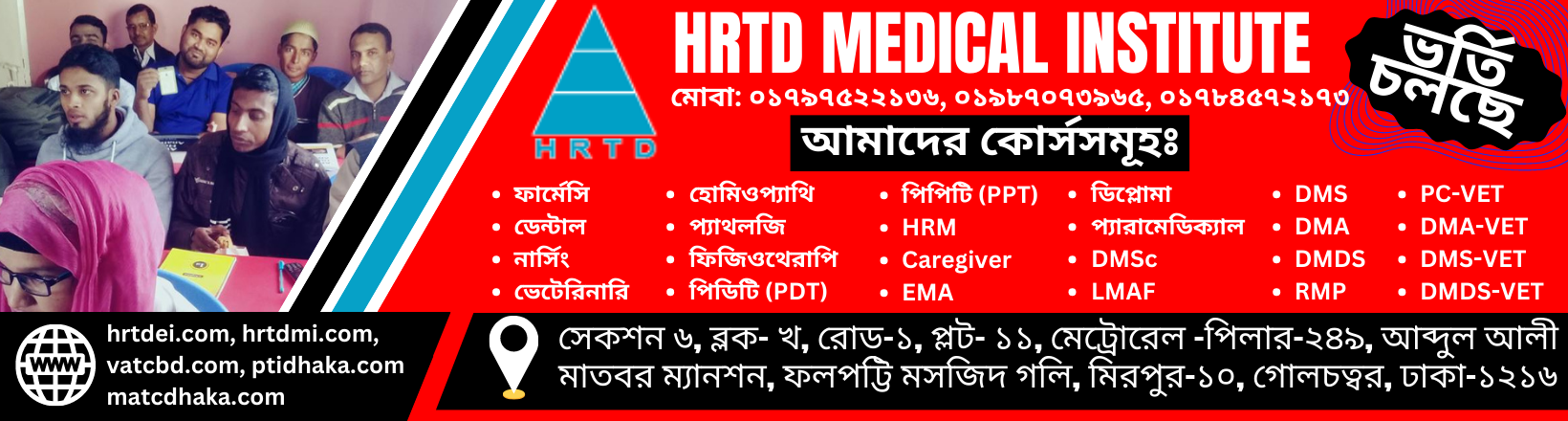
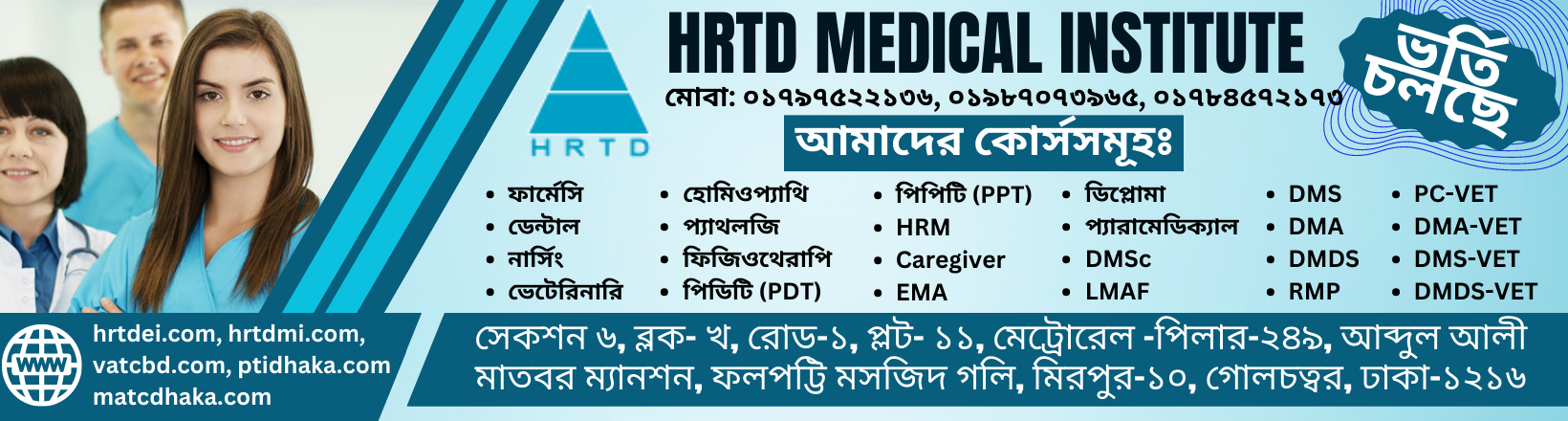
Nursing Pathology Course Combo Offer. Mobile Phone 01797522136, 01987073965. Nursing Course 1 Year, Pathology Course 1 Year, and Medical Business Management Course 6 Months Tk 1,20,000. ( Separately Calculated Course Fee Tk 160500). Total Subjects 25. There are some common subjects. The common subjects are Human Anatomy and Physiology, Chemistry and Pharmacology, First Aid and Primary Treatment, Study of OTC Drugs, Hematology & Pathology for Medical Practice. The Medical Business Management Course will empower students to apply their knowledge in the Medical Sector.
নার্সিং প্যাথলজি কোর্স কম্বো অফার। মোবাইল ফোন: ০১৭৯৭৫২২১৩৬, ০১৯৮৭০৭৩৯৬৫। নার্সিং কোর্স ১ বছর, প্যাথলজি কোর্স ১ বছর এবং মেডিকেল বিজনেস ম্যানেজমেন্ট কোর্স ৬ মাস ফি ১,২০,০০০ টাকা। (আলাদাভাবে গণনাকৃত কোর্স ফি ১,৬০,৫০০ টাকা)। মোট বিষয় ২৫টি। কিছু সাধারণ বিষয় রয়েছে। সাধারণ বিষয়গুলো হলো মানব অঙ্গসংস্থানবিদ্যা ও শারীরবিদ্যা, রসায়ন ও ঔষধবিজ্ঞান, প্রাথমিক চিকিৎসা ও প্রাথমিক পরিচর্যা, ওটিসি ঔষধের অধ্যয়ন, চিকিৎসা অনুশীলনের জন্য রক্তবিজ্ঞান ও প্যাথলজি। মেডিকেল বিজনেস ম্যানেজমেন্ট কোর্সটি শিক্ষার্থীদের চিকিৎসা খাতে তাদের জ্ঞান প্রয়োগ করতে সক্ষম করবে।
Location for Nursing Pathology Course Combo Offer
HRTD Medical Institute, Abdul Ali Madbor Mansion, Section-6, Block-Kha, Road-1, Plot-11, Mirpur-10 Golchattar, Dhaka-1216.
এইচআরটিডি মেডিকেল ইনস্টিটিউট, আব্দুল আলী মাদবর ম্যানশন, সেকশন-৬, ব্লক-খা, রোড-১, প্লট-১১, মিরপুর-১০ গোলচত্তর, ঢাকা-১২১৬।
Qualifications for Nursing Pathology Course Combo Offer
SSC Passed, HSC Passed, Bachelor’s Degree, Master’s Degree ( In any Group like Science, Arts, Commerce, etc.)
Subjects for Nursing Course 1 Year
- Human Anatomy and Physiology
- Chemistry and Pharmacology
- First Aid and Primary Treatment
- Study of OTC Drugs
- Hematology and Pathology for Medical Practice
- Cardiovascular Nursing
- Orthopedic Nursing
- Gastrointestinal Nursing
- Gynecological Nursing
- Pediatric and Geriatric Nursing
Subjects for Pathology Course 1 Year
- Human Anatomy and Physiology
- Chemistry and Pharmacology
- First Aid and Primary Treatment
- Study of OTC Drugs
- Hematology and Pathology for Medical Practice
- General Pathology
- Systemic Pathology
- Clinical Pathology
- Microbiology and Clinical Microbiology
- Biochemistry and Clinical Biochemistry
Subjects for Medical Business Management Course 6 Months
- Human Anatomy and Physiology
- Chemistry and Pharmacology
- Principle of Management
- Human Resource Management
- Medical Marketing Management
Teachers for Nursing Pathology Course Combo Offer
Dr. Sakulur Rahman, MBBS, CCD
Dr. Sanjana, BDS, MPH
Dr. Tisha, MBBS, PGT
Dr. Mahinul Islam, MBBS
Dr. Disha, MBBS, PGT
Dr. Juthi, BDS, PGT
Dr. Niamul, MBBS
Dr. Suhana, MBBS, PGT
Dr. Papia, MBBS
Dr. Keya, BDS, PGT
Eti Zahan, BSc in Nursing Science and Midwifery
Alauddin Hazari, B Pharm, M Pharm
Mamun Mia, BSc in Biochemistry, MSc in Molecular Biochemistry
Md. Shariful Islam, Director, HRTD
Practical Works for Nursing Course 1 Year
Practical works for the 1-Year Nursing Training Course (NTC) at HRTD Medical Institute focus on foundational clinical skills and patient management. The curriculum is divided into two semesters, with specific practical components integrated into the clinical and general nursing subjects.
Core Practical Skills
The 1-year program includes hands-on training in the following areas:
- Vital Signs & Monitoring: Measuring and recording heart rate, pulse (strong/weak), blood pressure (systolic/diastolic), respiration, and oxygen saturation using a pulse oximeter.
- Wound Care & Minor Procedures: Techniques for cleaning, dressing, bandaging, and stitching.
- Injections & Infusions: Training in intramuscular (IM), intravenous (IV), intradermal (ID), and subcutaneous (SC) injections, as well as saline infusion.
- Respiratory Care: Use of inhalers, rotahalers, and nebulizers; administration of oxygen from cylinders or ambu bags.
- Diagnostics & Testing: Performing blood glucose/diabetes tests, blood grouping, and tests for common conditions like anemia, jaundice, and edema.
- Clinical Diagnosis: Practical application of auscultation and percussion for identifying respiratory and other systemic issues.
Practical Works for Pathology Course
The 1-year Pathology Training Course at HRTD Medical Institute (located near Mirpur-10, Dhaka) focuses on hands-on laboratory practicals, covering hematology, clinical pathology, and biochemistry. Key practical skills include Total Count (TC), Differential Count (DC), Erythrocyte Sedimentation Rate (ESR), urine analysis, and various biochemistry profiles (liver, kidney, lipid).
Key Practical Laboratory Works (1-Year Course):
- Hematology: Total Count (TC), Differential Count (DC), Erythrocyte Sedimentation Rate (ESR), Hemoglobin percentage, Bleeding Time, Clotting Time.
- Clinical Pathology & Urinalysis: Routine and Microscopic Examination (R/E) of urine.
- Biochemistry & Serology: Liver Function Test (LFT), Kidney Function Test (KFT), Lipid Profile Test, Widal Test, HBsAg Test, Dengue Virus Test, Electrolyte Testing, and Helicobacter Pylori Antigen Test.
- Microbiology: Basic staining techniques and sample preparation for microbiology.
Hostel Facilities for the students of Nursing Pathology Course Combo Offer
HRTD Medical Institute offers dedicated hostel and meal facilities for students enrolled in its nursing and other medical courses. The accommodation is designed to support students during their training, particularly those from outside Dhaka.
Hostel Facility Details
- Availability: The institute has hostel facilities available for all students, including those in nursing programs.
- Accommodation Type: Students can secure a bed in the hostel.
- Monthly Fees:
- Hostel Fee: ৳3,000 per month.
- Meal Charges: ৳3,000 per month.
- Total Monthly Cost: Students should expect a total recurring cost of ৳6,000 per month for both bed and board.
Institute Contact Information
To secure a spot, you are encouraged to contact the institute directly:
- Address: HRTD Medical Institute, Abdul Ali Madbor Mansion (3rd Floor, 4th Floor, 5th Floor, and 6th Floor), Section-6, Block-Kha, Road-1, Plot-11, Mirpur-10 Golchattar, Dhaka 1216.
- Mobile: 01797-522136 or 01987-073965.
- Email: hrtdmedicalinstitute.dhaka@gmail.com.
Class Schedule for Nursing Pathology Course Combo Offer
Weekly Class 6 Hours in the 1st Semester and the 2nd Semester. Our Class Days are Friday, Saturday, and Monday. Morning Shift from 9:00 am to 12:00 pm and Evening Shift from 3:00 pm to 6:00 pm.
প্রথম ও দ্বিতীয় সেমিস্টারে সাপ্তাহিক ক্লাস ৬ ঘন্টা। আমাদের ক্লাসের দিনগুলো হলো শুক্রবার, শনিবার এবং সোমবার। সকালের শিফট সকাল ৯:০০টা থেকে দুপুর ১২:০০টা পর্যন্ত এবং সন্ধ্যার শিফট বিকাল ৩:০০টা থেকে সন্ধ্যা ৬:০০টা পর্যন্ত।
Human Anatomy and Physiology for Nursing Pathology Course Combo Offer
In the 1-Year Nursing Training Course (NTC) at HRTD Medical Institute, Human Anatomy & Physiology is a core foundational subject taught in the 1st Semester. The course is designed to provide a comprehensive understanding of the human body’s structure and its functional mechanisms to support clinical nursing practice.
Human Anatomy & Physiology Curriculum
The curriculum typically covers the organization of the human body from a cellular level to complex organ systems.
- Body Organization: Introduction to cells (basic units of life), tissues (epithelial, connective, muscle, nervous), and the hierarchical structure of organs and systems.
- Major Organ Systems:
- Skeletal & Muscular: Bones, cartilage, and muscle types (skeletal, smooth, cardiac) for support and movement.
- Nervous & Endocrine: Coordination of body activities through electrical signals and hormonal regulation.
- Cardiovascular: Detailed study of heart anatomy (chambers, valves) and circulatory pathways.
- Respiratory: Structure and gas exchange functions of the lungs and airways.
- Digestive (Gastro Anatomy): The oral cavity, esophagus, stomach, and intestines.
- Urinary & Reproductive: Filtration of waste and reproductive structures.
- Integumentary & Immune: Skin protection and defense mechanisms against disease.
Chemistry and Pharmacology for Nursing Pathology Course Combo Offer
In the 1st year (1st semester) of the 1-year Nursing Training Course (NTC) at HRTD Medical Institute, Chemistry & Pharmacology is a foundational core subject. This subject combines essential chemical principles with the study of drugs to prepare students for medication administration and patient care.
Key Topics in Chemistry & Pharmacology
The curriculum focuses on the practical application of medical science, including:
- General Chemistry: Foundational concepts such as atomic structure, chemical bonding, reactions, solutions, and thermodynamics.
- Pharmacology-1 Basics: Introduction to the study of drugs, including nomenclature, sources of drug information, and systems of measurement.
- Drug Knowledge: Detailed study of drug descriptions, indications, dosages, contraindications, side effects, and storage.
- Pharmacokinetics & Pharmacodynamics: How the body processes drugs (absorption, distribution, metabolism, excretion) and how drugs affect the body.
- Major Drug Groups:
- NSAIDs, steroids, and anti-inflammatory drugs.
- Anti-infectives (Antibiotics, Antivirals, Antifungals).
- Cardiovascular drugs (Beta-blockers, Calcium channel blockers).
- Antidiabetic and gastrointestinal medications.
First Aid and Primary Treatment for Nursing Pathology Course Combo Offer
The 1-Year Nursing Training Course (NTC) at HRTD Medical Institute in Mirpur, Dhaka, includes “First Aid & Treatment” as a core subject in the first semester. The training emphasizes practical skills for immediate, temporary care in emergencies, designed for nurses and medical assistants.
Key discussing points and topics covered include:
1. Fundamental Principles of First Aid
- Objectives and Principles: Understanding the goals of first aid (preserve life, prevent deterioration, promote recovery).
- Primary Survey (ABC Method): Assessing Airway, Breathing, and Circulation in unconscious or injured patients.
- First Aid Kit Essentials: Proper usage of materials found in a medical kit.
- Role of a Nurse: Legal and ethical responsibilities when providing immediate care.
2. Emergency Medical Scenarios (Theory & Management)
- Shock Management: Recognizing types of shock (hypovolemic, cardiogenic, anaphylactic, electric, burn) and initial management.
- Bleeding and Hemorrhage: Techniques for controlling severe bleeding.
- Bone and Joint Injuries: First aid for fractures, sprains, and setting splints.
- Burns and Scalds: Classifying burns and immediate cooling/dressing techniques.
- Environmental Emergencies: Handling snake bites, poisoning, fainting, heat stroke, and hypothermia.
- Respiratory Emergencies: Identifying and treating choking, asthma attacks, and providing oxygen.
3. Core Practical Skills
- Cardiopulmonary Resuscitation (CPR): Techniques for adult CPR.
- Bandaging and Dressing: Proper techniques for cleaning and covering wounds.
- Injection and Medication: Administering IM (Intramuscular), IV (Intravenous), SC (Subcutaneous), and Vaccine injections.
- Patient Monitoring: Checking blood pressure, pulse rate, heart rate, respiration, and blood glucose.
- Emergency Equipment: Using nebulizers, inhalers, oxygen cylinders, and pulse oximeters.
- Basic Procedures: Setting a cannula, saline pushing, and stitching.
Study of OTC Drugs for Nursing Pathology Course Combo Offer
The 1-year Nursing Course at HRTD Medical Institute includes a focused study of Over-the-Counter (OTC) Drugs, covering about 39+ commonly used medicines like Paracetamol and Antacids. Students learn drug pharmacology, indications, contraindications, and administration practices, alongside 10 total subjects designed for foundational nursing training.
Key Aspects of OTC Drug Study:
- Core Knowledge: Drug description, mode of action, indication, contraindication, side effects, dosage, and storage.
- Common OTC Drugs Covered: Paracetamol (pain/fever), Albendazole (deworming), Omeprazole (acidity), Benzyl Benzoate/Permethrin (scabies), Vitamin B Complex, and Calcium.
Course Context:
The training is part of a broader 1-year curriculum at HRTD Medical Institute (located in Dhaka) designed for paramedics and nursing assistants to provide foundational clinical knowledge.
For admission inquiries, HRTD Medical Institute provides contact numbers 01797522136 and 01987073965.
Hematology for Nursing Pathology Course Combo Offer
Hematology is the medical study of blood, blood-forming organs (bone marrow), and related diseases, focusing on components like red cells, white cells, platelets, and plasma. It covers the diagnosis and treatment of conditions such as anemia, leukemia, lymphoma, and bleeding disorders. Key tests include the Complete Blood Count (CBC) and blood smears.
Key Components of Blood
- Plasma (55%): The liquid portion, consisting of water, electrolytes, and proteins.
- Red Blood Cells (RBCs/Erythrocytes): Contain hemoglobin, transporting oxygen from lungs to tissues.
- White Blood Cells (WBCs/Leukocytes): Part of the immune system that defends against infections.
- Platelets (Thrombocytes): Crucial for clotting (hemostasis) to prevent excessive bleeding.
Fundamental Concepts
- Hematopoiesis: The production of blood cells, which occurs primarily in the bone marrow.
- CBC (Complete Blood Count): A standard test that measures red cells, white cells, and platelets, often used to identify anemia or infections.
- Hemostasis: The mechanism that causes bleeding to stop, involving platelets and clotting factors.
Common Blood Disorders
- Anemia: Insufficient red blood cells or hemoglobin, leading to fatigue.
- Leukemia: A cancer of the bone marrow leading to an overproduction of abnormal white blood cells.
- Thrombocytopenia: A low platelet count, which can lead to excessive bleeding.
- Hemophilia: A disorder where blood does not clot normally.
Key Diagnostic Tools
- Blood Smear: Microscopic examination of blood cells.
- Bone Marrow Biopsy: Assesses the production of blood cells within the bone.
Pathology for Medical Practice in Nursing Pathology Course Combo Offer
Pathology for Medical Practice is the study and application of TC, DC, ESR, Hemoglobin, Kidney Function Test, Urine Test, Blood Test, Lipid Profile Test, Liver Function Test, Widal Test, Cancer Marker Test, and Blood Glucose Test in Medical Practices. TC means Total Count of RBC, WBC, and Platelets. DC Means Differential Counts of WBC.
Kidney Function Test
Kidney function tests are blood and urine tests that measure how effectively your kidneys filter waste, primarily evaluating the Glomerular Filtration Rate (eGFR) and albumin levels. Key tests include serum creatinine, Blood Urea Nitrogen (BUN), and urine albumin-to-creatinine ratio (uACR), often used to diagnose or monitor chronic kidney disease (CKD), diabetes, and high blood pressure.
Primary Kidney Function Tests
- eGFR (Estimated Glomerular Filtration Rate): This blood test estimates how well your kidneys filter blood. A normal result is usually over 90, while a result below 60 suggests kidney disease.
- Serum Creatinine: Measures the level of creatinine, a waste product, in the blood. High levels often indicate that the kidneys are not filtering efficiently.
- Blood Urea Nitrogen (BUN): Measures nitrogen in the blood from urea, a waste product of protein metabolism. High levels can indicate poor kidney function, dehydration, or other issues.
- Urine Albumin-to-Creatinine Ratio (uACR): Checks for albumin (a type of protein) in the urine. High levels of albumin indicate that the kidneys’ filters are damaged.
- Urinalysis: A broad urine test to detect protein, blood, and other abnormalities in the urine, according to healthdirect.gov.au.
When to Get Tested
Testing is critical for individuals with risk factors such as diabetes, high blood pressure, heart disease, or a family history of kidney failure. It is also used to monitor the impact of medications on kidney function.
Diagnostic Imaging and Procedures
If blood or urine tests suggest kidney disease, additional tests may be required:
- Kidney Ultrasound: A scan to visualize the size and structure of the kidneys to check for physical damage or blockages.
- Kidney Biopsy: A procedure to remove a small piece of kidney tissue for examination under a microscope.
Interpreting Results
- Normal Function: eGFR > 90.
- Reduced Function: eGFR 60-89 (depending on other factors) or, consistently, < 60.
- Kidney Damage: A uACR result of 30 mg/g or higher indicates albuminuria (kidney damage).