 HRTD Medical Institute

Paramedical Courses in Dhaka Details
Paramedical Courses in Dhaka. Mobile No. 01987-073965, 01797-522136. Paramedical Courses are Paramedical Course 1 Year, Paramedical Course 2 Years, Paramedical Course 3 Years, and Paramedical Course 4 Years.
Paramedical Courses Fees in Dhaka
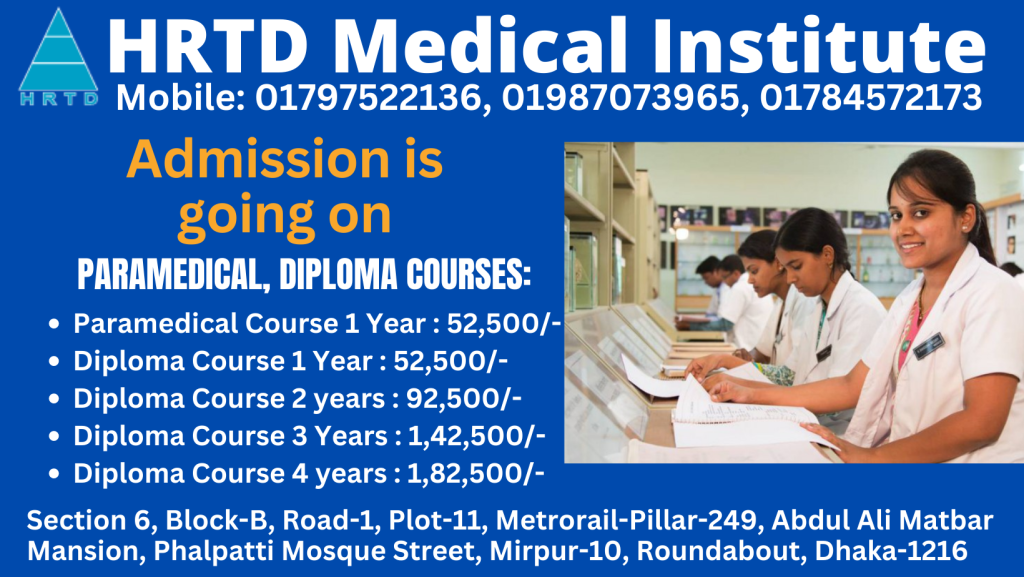
Paramedical Courses Fees in Dhaka. Mobile No. 01987-073965, 01797-522136. Paramedical Courses 1 Year Tk 52500/-, Paramedical Course 2 Years Tk 92500/-, Paramedical Course 3 Years Tk 142500/-, and Paramedical Course 4 Years Tk 182500/-.
Location for Paramedical Courses in Dhaka
Location of Paramedical Courses in Dhaka. Mobile No. 01987-073965, 01797-522136. HRTD Medical Institute, Section-6, Block-Kha, Road-1, Plot-11, Mirpur-10 Golchattar, Dhaka-1216.
Subjects for Paramedical Courses in Dhaka (1 Year, 2 Years, 3 Years, and 4 Years)
Human Anatomy & Physiology
Pharmacology
First Aid
Study of OTC Drugs
Hematology & Pathology
Microbiology & Antimicrobial Drugs
Cardiovascular Anatomy & Physiology
Orthopedic Anatomy & Physiology
Medical Diagnosis
Practice of Medicine
Cardiovascular Disease
Orthopedic Disease
Gastrointestinal Disease
Primary Gynecology & Midwifery
1 Year Paramedical Courses in Dhaka
1 Year Paramedical Course in Dhaka. Mobile Phone Number 01797522136, 01987073965. Admission Fee Tk 10500/-, Monthly Fee Tk 3000/-, Semester Exam Fee Tk 3000/- Tocal Course Fee Tk 52500/-, Total Subject 10, Total Exam Marks 1000.
Practical Class for Paramedical 1 Year: Heat Beat, Heart Rate, Heart Sound, Pulse Rate, Week Pulse, Strong Pulsse, Tachecardia, Bradycardia, Blood Pressure, Systolic Blood Pressure, Diastolic Blood Pressure, Pulse Pressure, Mean Blood Pressure, Hypertension or High Blood Pressure, Hypotension or Low Blood Pressure, Inhaler, Rotahaler, Nebulizer, Respiratory Rate, Respiratory Meter, Pulse Oxymeter, Clining, Dressing, Bandazing, Stitching, Injection, IM Injection, IV Injection, SC Injection, Insulin Pushing, Oxygen Inhalation, and etc.
2 Years Paramedical Courses in Dhaka
2 Year Paramedical Course in Dhaka. Mobile Phone Number 01797522136, 01987073965. Admission Fee Tk 16500/-, Monthly Fee Tk 3000/-, Semester Exam Fee Tk 3000/- Tocal Course Fee Tk 92500/-, Total Subject 18, Total Exam Marks 1800.
Practical Class for Paramedical 1 Year: Heat Beat, Heart Rate, Heart Sound, Pulse Rate, Week Pulse, Strong Pulsse, Tachecardia, Bradycardia, Blood Pressure, Systolic Blood Pressure, Diastolic Blood Pressure, Pulse Pressure, Mean Blood Pressure, Hypertension or High Blood Pressure, Hypotension or Low Blood Pressure, Inhaler, Rotahaler, Nebulizer, Respiratory Rate, Respiratory Meter, Pulse Oxymeter, Clining, Dressing, Bandazing, Stitching, Injection, IM Injection, IV Injection, SC Injection, Insulin Pushing, Oxygen Inhalation, and some more.
3 Years Paramedical Courses in Dhaka
3 Year Paramedical Course in Dhaka. Mobile Phone Number 01797522136, 01987073965. Admission Fee Tk 20500/-, Monthly Fee Tk 3000/-, Semester Exam Fee Tk 3000/- Tocal Course Fee Tk 142500/-, Total Subject 24, Total Exam Marks 2400.
Practical Class for Paramedical 1 Year: Heat Beat, Heart Rate, Heart Sound, Pulse Rate, Week Pulse, Strong Pulsse, Tachecardia, Bradycardia, Blood Pressure, Systolic Blood Pressure, Diastolic Blood Pressure, Pulse Pressure, Mean Blood Pressure, Hypertension or High Blood Pressure, Hypotension or Low Blood Pressure, Inhaler, Rotahaler, Nebulizer, Respiratory Rate, Respiratory Meter, Pulse Oxymeter, Clining, Dressing, Bandazing, Stitching, Injection, IM Injection, IV Injection, SC Injection, Insulin Pushing, Oxygen Inhalation, and many more.
4 Years Paramedical Courses in Dhaka
4 Year Paramedical Course in Dhaka. Mobile Phone Number 01797522136, 01987073965. Admission Fee Tk 30500/-, Monthly Fee Tk 3000/-, Semester Exam Fee Tk 3000/- Tocal Course Fee Tk 182500/-, Total Subject 30, Total Exam Marks 3000.
Practical Class for Paramedical 1 Year: Heat Beat, Heart Rate, Heart Sound, Pulse Rate, Week Pulse, Strong Pulsse, Tachecardia, Bradycardia, Blood Pressure, Systolic Blood Pressure, Diastolic Blood Pressure, Pulse Pressure, Mean Blood Pressure, Hypertension or High Blood Pressure, Hypotension or Low Blood Pressure, Inhaler, Rotahaler, Nebulizer, Respiratory Rate, Respiratory Meter, Pulse Oxymeter, Clining, Dressing, Bandazing, Stitching, Injection, IM Injection, IV Injection, SC Injection, Insulin Pushing, Oxygen Inhalation, and many many more.
1. Human Anatomy and Physiology for Paramedical Courses in Dhaka
Human anatomy is the study of the body’s physical structure, while human physiology is the study of how those structures function. The human body is organized into multiple systems, including the nervous, circulatory, respiratory, digestive, and musculoskeletal systems, which work together to sustain life.
Definitions
- Human Anatomy: The study of the body’s structures, both internal and external, and their relationships to each other. It includes the description of form and organization at different levels, such as gross (macroscopic) anatomy and histology (microscopic structures like tissues and cells).
- Human Physiology: The study of the functions of the body’s structures, focusing on how individual parts and the body as a whole work to maintain life.
- Systems of Human Body: Groups of organs that work together to perform a specific function to support life.
Major Systems of the Human Body
- Integumentary System: Protects the body, regulates temperature, and houses sensory receptors.
- Musculoskeletal System: Provides support, enables movement, and protects organs.
- Respiratory System: Exchanges gases, bringing in oxygen and expelling carbon dioxide.
- Circulatory System: Transports blood, oxygen, and nutrients throughout the body.
- Digestive System: Breaks down food and absorbs nutrients.
- Urinary System: Removes waste from the body and maintains fluid and electrolyte balance.
- Nervous System: Controls and coordinates the body’s activities and responses through electrical signals.
- Endocrine System: Regulates bodily functions through hormones, controlling growth, metabolism, and reproduction.
- Reproductive System: Produces gametes and facilitates reproduction.
- Lymphatic and Immune Systems: Maintains fluid balance and defends the body against infection and disease.
Digestive System: Organs and Functions
The organs of the digestive system are the mouth, esophagus, stomach, small intestine, large intestine, and anus, along with accessory organs like the salivary glands, liver, gallbladder, and pancreas. Its main functions are to break down food into nutrients the body can use, absorb those nutrients, and then eliminate waste products.
Organs of the digestive system
- Mouth: Where ingestion and initial mechanical and chemical digestion begin.
- Esophagus: A tube that transports food from the mouth to the stomach through peristalsis.
- Stomach: A muscular organ that mechanically mixes food and uses acid and enzymes for chemical breakdown.
- Small Intestine: Where most chemical digestion and nutrient absorption into the bloodstream occurs.
- Large Intestine: Absorbs water and electrolytes and forms waste into stool.
- Rectum and Anus: Store and expel waste (stool) from the body.
- Salivary Glands, Liver, Gallbladder, and Pancreas: These are accessory organs that produce and store digestive juices and enzymes to help break down food.
Functions of the digestive system
- Ingestion: The intake of food into the body.
- Secretion: Releasing enzymes, mucus, and acids to aid in digestion.
- Mixing and Propulsion: The mechanical movement of food through the digestive tract via muscle contractions (peristalsis).
- Digestion: The breakdown of food into smaller molecules, both mechanically (chewing) and chemically (enzymes).
- Absorption: The process of absorbing nutrients, water, and vitamins into the bloodstream or lymphatic system.
- Excretion: The elimination of indigestible waste products from the body.
1. Pharmacology for Paramedical Courses in Dhaka
Pharmacology is the scientific study of drugs and their effects on living organisms. It investigates the origin, nature, chemical properties, uses, and effects of medications, as well as how they are absorbed, distributed, metabolized, and excreted by the body. This field is distinct from pharmacy, which is the healthcare profession concerned with preparing and dispensing medicines.
Antiulcer drugs
Antiulcer agents treat and prevent peptic ulcers by reducing stomach acid or protecting the gastrointestinal lining. They are grouped into several classes:
- Proton Pump Inhibitors (PPIs): Block the enzyme in the stomach wall that produces acid.
- Omeprazole (Prilosec)
- Lansoprazole (Prevacid)
- Esomeprazole (Nexium)
- Pantoprazole (Protonix)
- Rabeprazole (Aciphex)
- H2-Receptor Antagonists: Reduce stomach acid by blocking histamine from activating acid-producing cells.
- Famotidine (Pepcid AC)
- Cimetidine (Tagamet HB)
- Nizatidine (Axid AR)
- Cytoprotective Agents: Protect the stomach’s mucosal lining.
- Sucralfate (Carafate)
- Misoprostol (Cytotec)
- Antacids: Neutralize existing stomach acid for rapid, temporary relief.
- Calcium carbonate (Tums)
- Aluminum hydroxide
- Magnesium hydroxide
- Antibiotics: Used to eradicate Helicobacter pylori bacteria, a common cause of ulcers.
- Amoxicillin
- Clarithromycin
- Metronidazole
Pain killer drugs
Pain killers, or analgesics, are medications used to relieve pain. They are categorized by their mechanism of action and strength:
- Nonsteroidal Anti-Inflammatory Drugs (NSAIDs): Reduce pain, inflammation, and fever by inhibiting cyclooxygenase (COX) enzymes.
- Ibuprofen (Advil, Motrin)
- Naproxen (Aleve)
- Aspirin
- Diclofenac
- Acetaminophen: Reduces pain and fever, but does not significantly reduce inflammation.
- Paracetamol (Tylenol)
- Opioid Analgesics: Moderate-to-severe prescription pain relievers that block pain signals in the brain.
- Codeine
- Morphine
- Hydrocodone (Vicodin)
- Oxycodone (OxyContin, Percocet)
- Fentanyl
- Other Pain Killers:
- Antidepressants and anticonvulsants are sometimes used for chronic nerve pain (e.g., gabapentin, duloxetine).
- Topical pain relievers are applied directly to the skin (e.g., creams with NSAIDs or capsaicin).
Steroid drugs
Steroids are a class of human-made drugs that are similar to cortisol, a hormone the body produces naturally. They are often called corticosteroids and are potent anti-inflammatory medications used to treat a wide range of conditions.
- Oral Steroids:
- Prednisolone
- Prednisone (Deltasone)
- Methylprednisolone (Medrol)
- Dexamethasone
- Topical Steroids (Creams and Ointments):
- Hydrocortisone
- Betamethasone
- Clobetasol
- Inhaled Steroids:
- Fluticasone
- Budesonide
- Nasal Sprays:
- Mometasone
- Anabolic Steroids: These are distinct from corticosteroids. They are a different class of drugs related to the male hormone testosterone, used to build muscle mass, though often illicitly.
3. First Aid/ প্রাথমিক চিকিৎসা/প্রাথমিক পরিচর্যা
First aid is the initial emergency care given to an ill or injured person before regular medical help arrives, with the primary purposes of preserving life, preventing further harm, and promoting recovery. Medical shock is a life-threatening condition where the body’s circulatory system fails, leading to a drop in blood pressure and inadequate oxygen supply to vital organs. Shock is classified into several types based on its underlying cause, including hypovolemic shock (from fluid loss), cardiogenic shock (heart failure), anaphylactic shock (severe allergic reaction), septic shock (infection), and neurogenic shock (nervous system damage).
Definition of First Aid
- Definition: First aid is the immediate, emergency care given to an individual who is ill or injured, before professional medical help can be obtained.
Purposes of First Aid
- Preserve life: To take immediate action to prevent death.
- Prevent further harm: To stop the person’s condition from getting worse.
- Promote recovery: To help the person’s body begin to recover.
- Relieve pain: To alleviate suffering where possible.
Definition of Shock
- Medical definition: A life-threatening condition where the body’s circulatory system fails, causing a dangerous drop in blood pressure.
- Mechanism: This lack of adequate blood flow deprives the brain and other vital organs of oxygen and nutrients, which can lead to organ damage or failure if not treated quickly.
Classification of Shock
- Hypovolemic shock: Caused by a significant loss of blood or body fluids, such as from severe bleeding, vomiting, or diarrhea.
- Cardiogenic shock: Occurs when the heart cannot pump enough blood to meet the body’s needs, often due to a heart attack or other heart problems.
- Anaphylactic shock: A severe, whole-body allergic reaction to a substance like a bee sting, certain foods, or medications.
- Septic shock: A life-threatening complication of an infection, where a widespread infection leads to a dangerous drop in blood pressure.
- Neurogenic shock: Caused by damage to the nervous system, most commonly from a spinal cord injury, which disrupts the body’s ability to regulate blood vessel diameter.
প্রাথমিক চিকিৎসা হলো নিয়মিত চিকিৎসা সহায়তা পৌঁছানোর আগে অসুস্থ বা আহত ব্যক্তিকে দেওয়া প্রাথমিক জরুরি সেবা, যার প্রাথমিক উদ্দেশ্য জীবন রক্ষা করা, আরও ক্ষতি প্রতিরোধ করা এবং পুনরুদ্ধারের প্রচার করা। মেডিকেল শক হল একটি জীবন-হুমকিস্বরূপ অবস্থা যেখানে শরীরের সংবহনতন্ত্র ব্যর্থ হয়, যার ফলে রক্তচাপ কমে যায় এবং গুরুত্বপূর্ণ অঙ্গগুলিতে অপর্যাপ্ত অক্সিজেন সরবরাহ হয়। শককে তার অন্তর্নিহিত কারণের উপর ভিত্তি করে বিভিন্ন ধরণের শ্রেণীতে শ্রেণীবদ্ধ করা হয়, যার মধ্যে রয়েছে হাইপোভোলেমিক শক (তরল ক্ষয় থেকে), কার্ডিওজেনিক শক (হার্ট ফেইলিওর), অ্যানাফিল্যাকটিক শক (গুরুতর অ্যালার্জির প্রতিক্রিয়া), সেপটিক শক (সংক্রমণ), এবং নিউরোজেনিক শক (স্নায়ুতন্ত্রের ক্ষতি)।
প্রাথমিক চিকিৎসার সংজ্ঞা
- সংজ্ঞা: প্রাথমিক চিকিৎসা হলো অসুস্থ বা আহত ব্যক্তিকে পেশাদার চিকিৎসা সহায়তা পাওয়ার আগে তাৎক্ষণিক, জরুরি সেবা প্রদান।
প্রাথমিক চিকিৎসার উদ্দেশ্য
- জীবন রক্ষা করুন: মৃত্যু রোধে তাৎক্ষণিক পদক্ষেপ নেওয়া।
- আরও ক্ষতি প্রতিরোধ করুন: ব্যক্তির অবস্থার অবনতি রোধ করার জন্য।
- পুনরুদ্ধারের প্রচার করুন: ব্যক্তির শরীর পুনরুদ্ধার শুরু করতে সাহায্য করার জন্য।
- ব্যথা উপশম: যতদূর সম্ভব কষ্ট লাঘব করার জন্য।
শকের সংজ্ঞা
- চিকিৎসা সংজ্ঞা: একটি জীবন-হুমকিস্বরূপ অবস্থা যেখানে শরীরের সংবহনতন্ত্র ব্যর্থ হয়, যার ফলে রক্তচাপ বিপজ্জনকভাবে কমে যায়।
- প্রক্রিয়া: পর্যাপ্ত রক্ত প্রবাহের এই অভাব মস্তিষ্ক এবং অন্যান্য গুরুত্বপূর্ণ অঙ্গগুলিকে অক্সিজেন এবং পুষ্টি থেকে বঞ্চিত করে, যা দ্রুত চিকিৎসা না করা হলে অঙ্গের ক্ষতি বা ব্যর্থতা হতে পারে।
শকের শ্রেণীবিভাগ
- হাইপোভোলেমিক শক: রক্ত বা শরীরের তরলের উল্লেখযোগ্য ক্ষতির কারণে, যেমন তীব্র রক্তপাত, বমি বা ডায়রিয়ার কারণে।
- কার্ডিওজেনিক শক: এটি তখন ঘটে যখন হৃদপিণ্ড শরীরের চাহিদা মেটাতে পর্যাপ্ত রক্ত পাম্প করতে পারে না, প্রায়শই হার্ট অ্যাটাক বা অন্যান্য হৃদরোগের কারণে।
- অ্যানাফিল্যাকটিক শক: মৌমাছির কামড়, নির্দিষ্ট কিছু খাবার বা ওষুধের মতো কোনও পদার্থের প্রতি তীব্র, পুরো শরীরের অ্যালার্জির প্রতিক্রিয়া।
- সেপটিক শক: সংক্রমণের একটি জীবন-হুমকিপূর্ণ জটিলতা, যেখানে ব্যাপক সংক্রমণের ফলে রক্তচাপ বিপজ্জনকভাবে কমে যায়।
- নিউরোজেনিক শক: স্নায়ুতন্ত্রের ক্ষতির কারণে, সাধারণত মেরুদণ্ডের আঘাতের কারণে, যা শরীরের রক্তনালীর ব্যাস নিয়ন্ত্রণ করার ক্ষমতাকে ব্যাহত করে।
4. Study of OTC Drugs for Paramedical Courses in Dhaka
Over-the-counter (OTC) drugs are widely used for self-care, but knowledge about them varies. Omeprazole is a proton pump inhibitor that reduces stomach acid and is available OTC for issues like heartburn. Paracetamol is a common pain reliever and fever reducer, but many people have poor knowledge about its potential risks, such as overdose or toxicity when combined with other products containing the same active ingredient, notes BioMed Central and the National Institutes of Health. Studies show a need for better public education on OTC drug use, especially regarding potential side effects and safe dosing.
Study of OTC Drugs
- Prevalence and use: OTC medications are frequently used for common ailments, and their availability encourages self-care.
- Misconceptions: Studies reveal that many people have a poor understanding of OTC drugs, with some confusing them with other medications, notes the National Institutes of Health and ResearchGate.
- Risks: Self-medication can lead to misuse or abuse, and a lack of knowledge can result in negative outcomes.
- Need for education: There is a need for enhanced public education from healthcare providers, such as pharmacists, to improve awareness of safe use, side effects, and proper dosage.
Drug Knowledge of Omeprazole
- Mechanism: Omeprazole is a proton pump inhibitor that works by decreasing the amount of acid the stomach produces.
- Indications: It is used to treat conditions related to excess stomach acid.
- Availability: It is available both over-the-counter (OTC) and by prescription.
- Example: Its OTC availability means it can be purchased without a prescription for conditions like heartburn.
Drug Knowledge of Paracetamol
Public awareness: Despite its widespread use, many people are not fully aware of its risks, including the potential for toxicity and the importance of not exceeding the recommended dose. Studies have found that a significant number of people are unaware of the amount of paracetamol in various products, notes the National Institutes of Health and ResearchGate.
Mechanism: Paracetamol (acetaminophen) is a common painkiller that also reduces fever.
Availability: It is widely available without a prescription in pharmacies and shops.
Risks: Overdosing is a significant risk, especially if taken with other products that also contain paracetamol, leading to potential liver damage.
ওভার-দ্য-কাউন্টার (ওটিসি) ওষুধগুলি স্ব-যত্নের জন্য ব্যাপকভাবে ব্যবহৃত হয়, তবে সেগুলি সম্পর্কে জ্ঞান ভিন্ন। ওমেপ্রাজল হল একটি প্রোটন পাম্প ইনহিবিটর যা পাকস্থলীর অ্যাসিড কমায় এবং বুকজ্বালার মতো সমস্যার জন্য এটি ওভার-দ্য-কাউন্টার পাওয়া যায়। বায়োমেড সেন্ট্রাল এবং ন্যাশনাল ইনস্টিটিউট অফ হেলথউল্লেখ করেছে যে প্যারাসিটামল একটি সাধারণ ব্যথা উপশমকারী এবং জ্বর কমানোর ওষুধ, কিন্তু অনেকেরই এর সম্ভাব্য ঝুঁকি সম্পর্কে কম জ্ঞান রয়েছে, যেমন একই সক্রিয় উপাদানযুক্ত অন্যান্য পণ্যের সাথে অতিরিক্ত মাত্রা বা বিষাক্ততা। গবেষণায় দেখা গেছে যে, ওটিসি ওষুধের ব্যবহার সম্পর্কে, বিশেষ করে সম্ভাব্য পার্শ্বপ্রতিক্রিয়া এবং নিরাপদ ডোজ সম্পর্কে, আরও ভালো জনশিক্ষার প্রয়োজনীয়তা রয়েছে।
ওটিসি ওষুধের উপর গবেষণা
- ব্যাপকতা এবং ব্যবহার: ওটিসি ওষুধগুলি প্রায়শই সাধারণ অসুস্থতার জন্য ব্যবহৃত হয় এবং তাদের সহজলভ্যতা স্ব-যত্নকে উৎসাহিত করে।
- ভুল ধারণা: ন্যাশনাল ইনস্টিটিউট অফ হেলথ অ্যান্ড রিসার্চগেটউল্লেখ করেছে যে গবেষণায় দেখা গেছে যে অনেক লোকের ওটিসি ওষুধ সম্পর্কেকম ধারণা রয়েছে, কেউ কেউ অন্যান্য ওষুধের সাথে এগুলিকে গুলিয়ে ফেলেন।
- ঝুঁকি: স্ব-ঔষধ অপব্যবহার বা অপব্যবহারের দিকে পরিচালিত করতে পারে এবং জ্ঞানের অভাব নেতিবাচক ফলাফলের দিকে নিয়ে যেতে পারে।
- শিক্ষার প্রয়োজন: নিরাপদ ব্যবহার, পার্শ্বপ্রতিক্রিয়া এবং সঠিক ডোজ সম্পর্কে সচেতনতা বৃদ্ধির জন্য স্বাস্থ্যসেবা প্রদানকারীদের, যেমন ফার্মাসিস্টদের কাছ থেকে বর্ধিত জনশিক্ষার প্রয়োজন।
ওমিপ্রাজলের ওষুধের জ্ঞান
- প্রক্রিয়া: ওমেপ্রাজল একটি প্রোটন পাম্প ইনহিবিটর যা পাকস্থলীতে উৎপাদিত অ্যাসিডের পরিমাণ হ্রাস করে কাজ করে।
- ইঙ্গিত: এটি অতিরিক্ত পেট অ্যাসিড সম্পর্কিত অবস্থার চিকিৎসার জন্য ব্যবহৃত হয়।
- উপস্থিতি: এটি ওভার-দ্য-কাউন্টার (OTC) এবং প্রেসক্রিপশন উভয়ভাবেই পাওয়া যায়।
- উদাহরণ: এর ওটিসি প্রাপ্যতা মানে এটি বুকজ্বালার মতো অবস্থার জন্য প্রেসক্রিপশন ছাড়াই কেনা যাবে।
প্যারাসিটামল সম্পর্কে ওষুধের জ্ঞান
- প্রক্রিয়া: প্যারাসিটামল (অ্যাসিটামিনোফেন) একটি সাধারণ ব্যথানাশক যা জ্বরও কমায়।
- উপস্থিতি: এটি ফার্মেসী এবং দোকানে প্রেসক্রিপশন ছাড়াই ব্যাপকভাবে পাওয়া যায়।
- ঝুঁকি: অতিরিক্ত মাত্রা গ্রহণ একটি উল্লেখযোগ্য ঝুঁকি, বিশেষ করে যদি প্যারাসিটামলযুক্ত অন্যান্য পণ্যের সাথে গ্রহণ করা হয়, যা সম্ভাব্য লিভারের ক্ষতির কারণ হতে পারে।
- জনসচেতনতা: এর ব্যাপক ব্যবহার সত্ত্বেও, অনেক মানুষ এর ঝুঁকি সম্পর্কে সম্পূর্ণরূপে সচেতন নয়, যার মধ্যে বিষাক্ততার সম্ভাবনা এবং প্রস্তাবিত ডোজ অতিক্রম না করার গুরুত্ব অন্তর্ভুক্ত। ন্যাশনাল ইনস্টিটিউট অফ হেলথ অ্যান্ড রিসার্চগেট উল্লেখ করেছে যে গবেষণায় দেখা গেছে যে উল্লেখযোগ্য সংখ্যক মানুষ বিভিন্ন পণ্যে প্যারাসিটামলের পরিমাণ সম্পর্কে অবগত নন।
Which paramedical field is best?
When it comes to deciding which paramedical field is best, it really depends on what your interests and career goals are. While some paramedical fields offer more job security and higher wages, others may be more fulfilling and offer greater job satisfaction. Here’s a look at some of the most popular paramedical fields to consider. If you want to complete your Paramedical Courses in Dhaka please, contact with us.
1. Nursing: Nursing is one of the most popular and well-respected paramedical fields. Nurses can be found in hospitals, clinics, and other health care settings, providing direct patient care and performing a variety of tasks. They often specialize in a particular area of nursing, such as pediatrics or geriatrics, and may also be certified to provide advanced care. Nursing is a great field for those looking for a challenging and rewarding career. If you want to complete your Paramedical Courses in Dhaka please, contact with us.
2. Radiography: Radiography is a field that involves taking X-ray images of the body to help diagnose and treat medical conditions. Radiographers are responsible for operating specialized equipment and processing images. It’s a field that requires a high degree of technical knowledge and skill, and the job outlook is strong. If you want to complete your Paramedical Courses in Dhaka please, contact with us.
3. Respiratory Therapy: Respiratory therapists work with patients to treat and diagnose conditions related to the respiratory system. They may be involved in the management of patients with asthma, chronic obstructive pulmonary disease, and other breathing disorders. Respiratory therapists typically possess an associate’s degree in respiratory therapy and must pass a certification exam. If you want to complete your Paramedical Courses in Dhaka please, contact with us.
4. Physical Therapy: Physical therapists specialize in treating patients with physical impairments and injuries, helping them to regain their mobility and return to an active lifestyle. Physical therapists often work in hospitals, clinics, and rehabilitation centers, and may have specialties such as sports medicine or pediatrics. They typically hold a master’s degree in physical therapy, and must pass a certification exam.
5. Emergency Medical Services: Emergency medical services (EMS) is a field that involves providing medical care to patients in emergency situations. EMS personnel are often some of the first responders to arrive on the scene of an accident or medical emergency, and they provide life-saving care. EMS personnel must possess a variety of skills, including the ability to assess a patient’s condition, administer medications, and use specialized equipment.
Each of these paramedical fields offers its own unique benefits and challenges. The best field for you will ultimately depend on your interests and career goals. Regardless of which field you choose, you
Why Paramedical Courses are Important?
মহান আল্লাহ রাব্বুল আলআমিন মানুষকে যে জীবন দান করেছেন তার ধারক হিসেবে দিয়েছেন দেহকে । এই দেহকে ভালোভাবে জানতে পারা, এর পরিচর্যা করা, রক্ষনাবেক্ষন করতে পারা প্রত্যেকটি মানুষের জন্য ফরজ বলে আমি মনে করি । একজন ড্রাইভার যদি ড্রাইভিং এর পাশাপাশি তার গাড়ির প্রাথমিক পরিচর্যা, রক্ষনাবেক্ষন না করতে পারে তবে তাকে মাঝে মাঝে বড় ধরনের সমস্যায় পড়তেই হবে । আর যদি গাড়ির পরিচর্যা, প্রাথমিক মেকানিক, রক্ষনাবেক্ষন ইত্যাদি বিষয়ে জ্ঞান অর্জন করে, দক্ষতা এবং অভিজ্ঞতা অর্জন করে, তবে পথের মাঝে গাড়ি নষ্ট হলেও সে প্রাথমিক ভাবে সারিয়ে নিতে পারবে এবং পরবর্তিতে গাড়ি ড্রাইভ করে ভালো মানের ইন্জিনিয়ারিং সোপে নিয়ে গাড়ি ঠিক করে নিতে পারবে ।
একজন মানুষের ক্ষেত্রেও ঠিক তেমনি । দেহ সম্পকে জ্ঞান, দেহের প্রাথমিক পরিচর্যা, দেহের রক্ষনাবেক্ষন, দেহের প্রাথমিক চিকিৎসা ইত্যাদি বিষয়ে জ্ঞান, দক্ষতা এবং অভিজ্ঞতা অর্জন করলে সারাটা জীবন দেহটাকে সুন্দরভাবে পরিচালনা করা যায়, বেশি অসুস্থ্য হলে সঠিক সময়ে সঠিক ডাক্তারের কাছে গিয়ে সঠিক চিকিৎসা নেয়া যায় ।
Almighty Allah Rabbul Alamin has given the body as the container of the life He has given to man. I think it is a duty for every human being to know this body well, take care of it, and protect it.If a driver is not able to take basic care and maintenance of his car along with driving, then he has to face big problems at times.And if he acquires knowledge, skills and experience in car maintenance, basic mechanics, maintenance, etc., even if the car breaks down on the way, he can fix it initially and later drive the car and fix the car with good quality engineering soap.

The same is the case with a human being. If you acquire knowledge, skills and experience about the body, basic care of the body, maintenance of the body, basic treatment of the body, you can manage the body beautifully throughout your life, if you are very sick, you can go to the right doctor at the right time and get the right treatment.


One comment
Pingback: Best Short Medical Courses. Mobile No. 01987-073965