 HRTD Medical Institute

Physiotherapy Best Course in Bangladesh Details
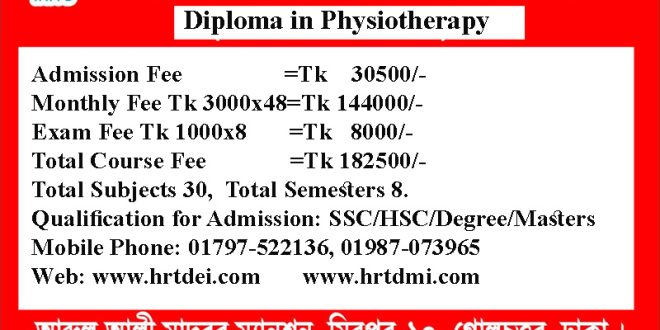
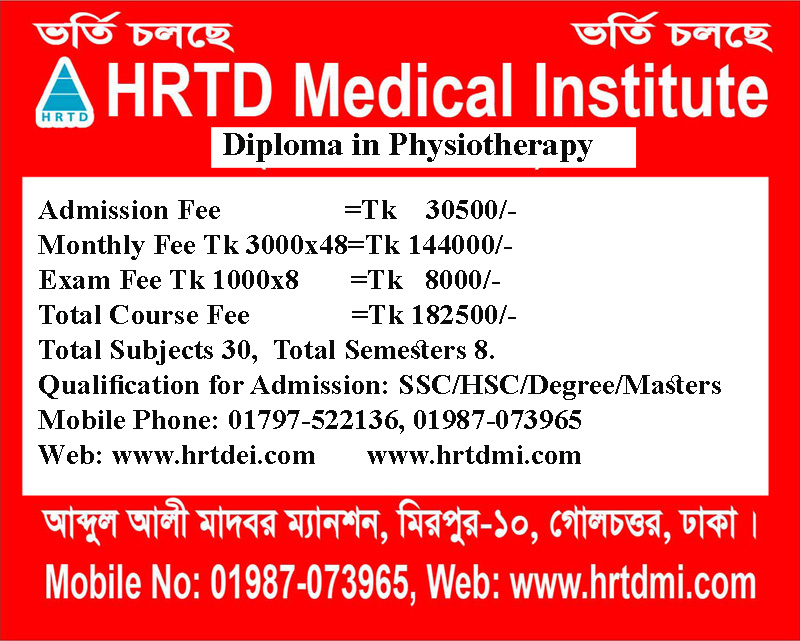
Physiotherapy Best Course in Bangladesh. Mobile No. 01987-073965, 01783-768658. Diploma in Physiotherapy 4 Years. Total Course Fee Tk 182500/- Including Admission Fee Tk 30500/-, Monthly Fee Tk 3000/-, Exam Fee Tk 1000×8=Tk 8000/-. Weekly Classes 3 Hours ( Friday Or Monday).
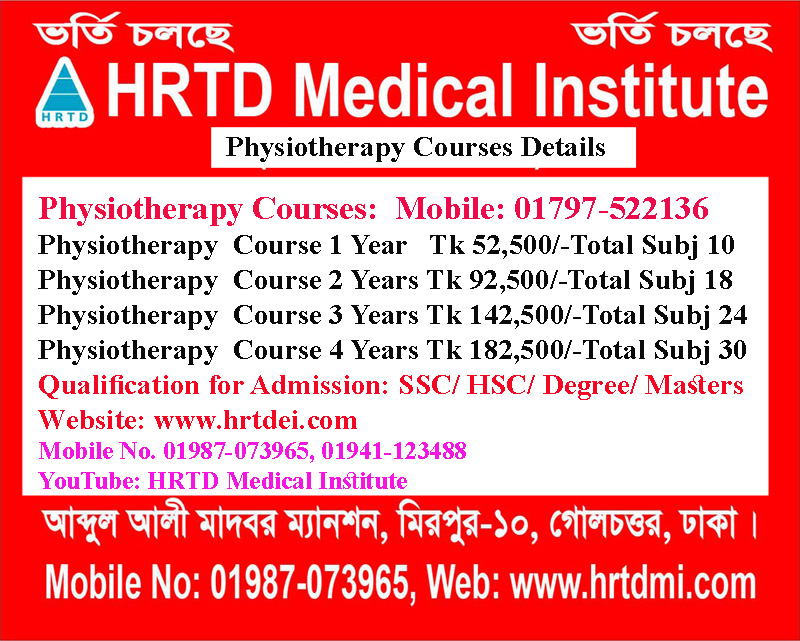
Physiotherapy Best Course in Dhaka. Mobile No. 01987-073965, 01797-522136. Physiotherapy Best Courses are Physiotherapy Course 1 Year, Physiotherapy Course 2 Years, Physiotherapy Course 3 Years, and Physiotherapy Course 4 Years.
Total Fee for Physiotherapy Best Course in Bangladesh
Fees for Physiotherapy Best Course in Dhaka. Mobile No. 01987-073965, 01797-522136. Physiotherapy Course 1 Year Tk 52500/-, Physiotherapy Course 2 Years Tk 92500/-, Physiotherapy Course 3 Years Tk 142500/-, and Physiotherapy Course 4 Years Tk 182500/-.
Location for Physiotherapy Best Course In Bangladesh
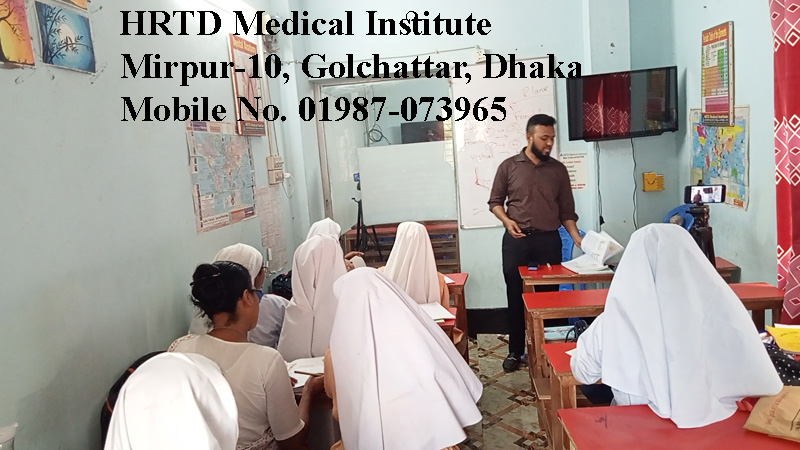
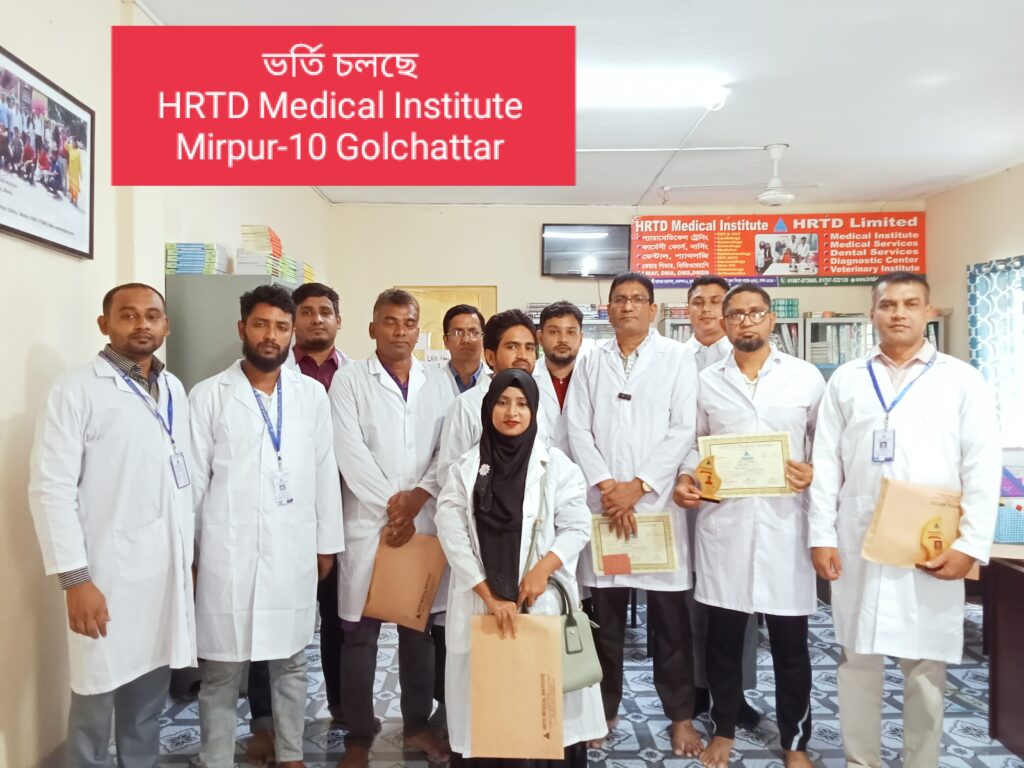
Location for Diploma in Physiotherapy 4 Years Course: Mobile Phone Number 01797522136, 01987073965. HRTD Medical Institute, Abdul Ali Madbor Mansion, Section-6, Block-Kha, Road-1, Plot-11, Metro Rail Piller Number 249, Mirpur-10 Golchattar, Dhaka-1216. This Institute is situated just by the West Side of Agrani Bank and the South Side of Islami Bank and Janata Bank Limited.
Admission Fee for Physiotherapy Best Course in Bangladesh
Admission Fee for Physiotherapy Course in Dhaka. Mobile No. 01987-073965, 01797-522136. Physiotherapy 1 Year Admission Fee Tk 10500/-, Physiotherapy 2 Years Admission Fee Tk 16500/-, Physiotherapy 3 Years Admission Fee Tk 20500/-, and Physiotherapy 4 Years Admission Fee Tk 30500/-.
Physiotherapy Best Course & Subjects
Physiotherapy Best Course is Diploma in Physiotherapy for 4 Years. Subjects of this Course are Human Anatomy & Physiology, Orthopedic Anatomy, Pharmacology, First Aid, Study of OTC Drugs, Hepatology, General Pathology, Systemic Pathology, General Chemistry, Electro Physics, Biochemistry, Therapeutic Exercise-1, Therapeutic Exercise-2, Electrotherapy-1, Electrotherapy-2, etc.
Physiotherapy Other Courses in Bangladesh
Physiotherapy Other Courses in Bangladesh. Mobile No. 01987-073965, 01783-768658. Physiotherapy Training Course 1 Year Tk 52500/-, Diploma Physiotherapy Assistant 2 Years Tk 92500/-, Diploma Physiotherapy Technology 3 Years Tk 142500/-.
Physiotherapy Short Course in Bangladesh
Physiotherapy Training Course 1 Year, and Diploma Physiotherapy Assistant are the short Physiotherapy Courses. 1-Year Physiotherapy Training Course Contains 10 Subjects in 2 Semesters. 2 Years Diploma in Physiotherapy Assistant Course Contains 18 Subjects in 4 Semesters. 1st Year of 2 Semesters Contains 10 Subjects and 2nd Year of 2 Semesters Contains 8 Subjects.
Physiotherapy Short Course Fee in Bangladesh
Physiotherapy Training Course 1 Year Tk 52500/- including Admission Fee Tk 10500/-, Monthly Fee Tk 3000/- and Exam Fee Tk 3000×2=Tk 6000/-. Diploma in Physiotherapy Assistant 2 Years Course Fee Tk 92500/- including Admission Fee Tk 16500/-, Monthly Fee Tk 3000/- and Exam Fee Tk 1000×4=Tk 4000/-. Weekly Classes 3 Hours on Friday or Monday. Morning Shift 9:00 AM to 12:00 PM and Evening Shift 3:00 PM to 6:00 PM.
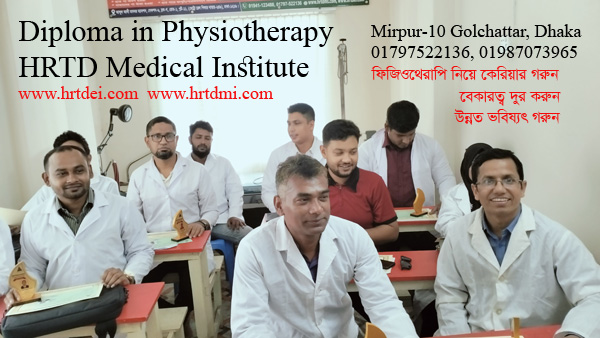
Physiotherapy Courses
Physiotherapy is one of the most important and growing fields of healthcare. It is a career focused on providing people with physical rehabilitation, pain management, and preventive care. Physiotherapists are healthcare professionals who specialize in helping people recover from injuries, illnesses, and disabilities. Physiotherapy courses provide students with the necessary skills and knowledge to practice in this field.
Physiotherapy courses are offered at many universities and colleges. Some of these programs are offered as part of a larger degree program, while others are available as stand-alone courses. Most programs require a minimum of two years of study, with some requiring up to four. Courses cover topics such as musculoskeletal anatomy and physiology, biomechanics, kinesiology, and clinical practice. Students also gain hands-on experience through clinical placements.
Physiotherapy courses focus on the assessment and treatment of physical and functional impairments. Students learn how to diagnose and treat a variety of conditions, including sports injuries, post-operative rehabilitation, musculoskeletal conditions, and neurological disorders. In addition, students learn about the prevention, management, and rehabilitation of chronic and degenerative conditions.
In addition to the academic portion of the program, most physiotherapy courses include a clinical placement. During this placement, students gain hands-on experience in a variety of settings, including hospitals, rehabilitation centers, and private practice. This allows them to develop their skills in assessing and treating patients, as well as developing rapport with clients.
Completing a physiotherapy course is the first step in becoming a licensed physiotherapist. After completing the program, students must pass the national licensure examination. This exam is administered by the National Board of Physical Therapy Examiners (NBPTX) and is required for all physiotherapists in the United States. Upon passing the exam, students can officially become licensed and practice in their state.
Physiotherapy is an exciting and rewarding field of healthcare. It is a profession that requires dedication and a strong commitment to helping people. With the right training and dedication, anyone can become a successful physiotherapist. Physiotherapy courses provide the necessary knowledge and skills to practice in this field and help people improve their quality of life.
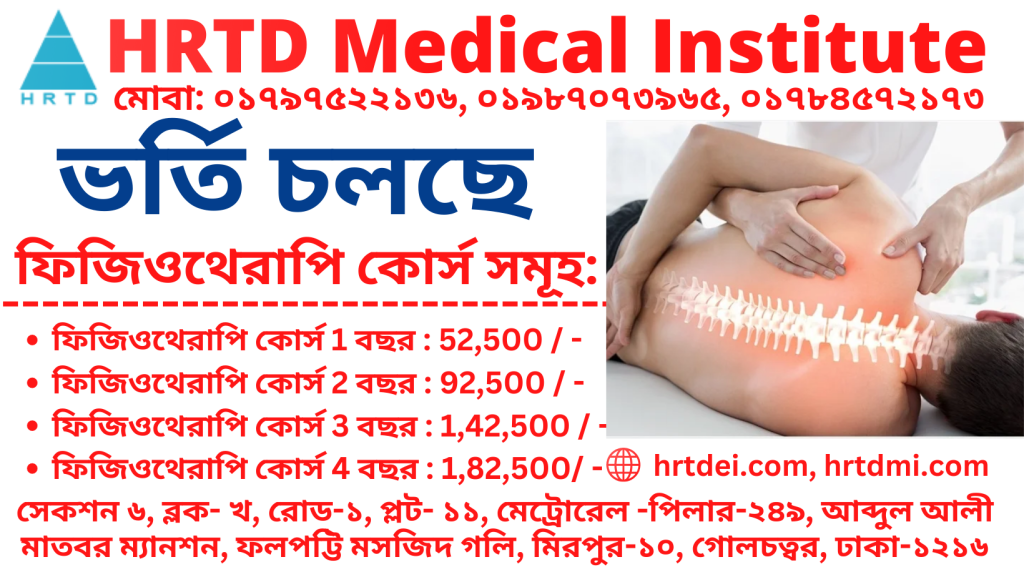
Which course is best for physiotherapy?
The best course for those interested in pursuing a career in physiotherapy is a degree in physical therapy. This degree program teaches students the fundamentals of physical therapy, such as anatomy and physiology, kinesiology, biomechanics, and therapeutic exercise.
It also provides students with an understanding of how to assess, diagnose, and treat patients with physical disabilities or injuries. Additionally, students learn about wound care, rehabilitation techniques, and patient education.
After completing their degree, students can pursue a career in physical therapy, which may include working in a hospital, clinic, or private practice.
Demand of Physiotherapy
There is a huge demand for physiotherapy worldwide. The modern world is looking for modern physiotherapy because painkiller drugs are destroying the nephron of our kidneys.
Treatment areas by Physiotherapy
Physiotherapy is mainly focused on the treatment of pain. Pain is not a disease but an important symptoms of maximum disease. Physiotherapy is used for the management of Low back pain, Back pain, Shoulder pain, Frozen shoulder, Belse palsy, Partial Paralysis, Complete Paralysis, etc.
Future of Physiotherapy
The future of Physiotherapy is too much better. Treatment with Physiotherapy is easy and safe. So the treatment option is expanding day after day in the world.
What does a physiotherapist do?
A physiotherapist is a healthcare professional who works with patients to diagnose and treat physical issues such as pain, injury, and disability. Physiotherapists use a combination of physical treatments, exercises, and lifestyle advice to help their patients regain and maintain their physical health.
Physiotherapists assess the patient’s condition using various techniques such as analyzing the patient’s posture, movement, balance, coordination, and strength. They also use assessment tools such as X-rays and MRI scans to get an accurate diagnosis.
Based on the diagnosis, they develop a treatment plan that may include manual therapy, therapeutic exercises, and lifestyle advice. Manual therapy involves manipulating the patient’s joints, muscles, and connective tissues to improve range of motion, reduce pain, and increase strength.
Therapeutic exercises are tailored to the individual patient to help improve strength and mobility. These exercises may include stretching, strengthening, balance, and coordination exercises. Physiotherapists also teach their patients how to use assistive devices such as crutches, walkers, and wheelchairs.
In addition to providing physical treatments and exercises, physiotherapists also provide lifestyle advice to their patients. This may include educating them about nutrition, sleeping habits, and proper body mechanics. They may also refer patients to other healthcare professionals for additional treatments such as occupational therapy, speech therapy, or psychological counseling.
Physiotherapists work closely with their patients to help them achieve their physical goals and improve their quality of life. They are an important part of the healthcare team, and their expertise is invaluable when it comes to helping people regain their physical health.
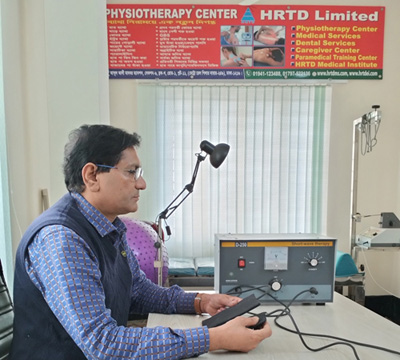
Teachers for Physiotherapy Best Course In Bangladesh
- Dr. Md. Sakulur Rahman, MBBS, CCD (BIRDEM), Course Director
- Dr. Sanjana Binte Ahmed, BDS, MPH, Assistant Course Director
- Dr. Tisha, MBBS, PGT Gyne, Assistant Course Director
- Dr. Suhana, MBBS, PGT Medicine
- Dr. Danial Hoque, MBBS, C-Card
- Dr. Tisha, MBBS
- Dr. Afrin Jahan, MBBS, PGT Medicine
- Dr. Ananna, MBBS
- Dr. Lamia Afroze, MBBS
- Dr. Amena Afroze Anu, MBBS, PGT Gyne, Assistant Course Director
- Dr. Farhana Antara, MBBS,
- Dr. Nazmun Nahar Juthi, BDS, PGT
- Dr. Farhana Sharna, MBBS
- Dr. Bushra, MBBS
- Dr. Turzo, MBBS
- Dr. Kamrunnahar Keya, BDS, PGT (Dhaka Dental College)
- Dr. Shamima, MBBS, PGT Gyne
- Dr. Alamin, MBBS
- Dr. Benzir Belal, MBBS, FCPS( FP)
- Dr. Disha, MBBS, FCPS (FP)
- Dr. Mahinul Islam, MBBS
- Dr. Tisha, MBBS, PGT Medicine
- Dr. Anika, MBBS, PGT
- Dr. Jannatul Ferdous, MBBS, PGT Gyne
- Dr. Jannatul Aman, MBBS, PGT
- Dr. Rayhan, BPT
- Dr. Abu Hurayra, BPT
- Dr. Sharmin Ankhi, MBBS, PGT Medicine
- Md. Monir Hossain, B Pharm, M Pharm
- Md. Monirul Islam, B Pharm, M Pharm
- Md. Feroj Ahmed, BSc Pathology, PDT Medicine
Class System for Physiotherapy Course in Bangladesh
Weekly Class 3 hours. For Regular Students Friday 1 hour, Saturday 1 hour, and Monday 1 hour. For Job holders, Friday is 3 hours, or Monday is 3 hours. Morning Shift 9:00 am to 12:00 pm, and Evening Shift 3:00 pm to 6:00 pm.
Physiotherapy Chamber Starting & Establishment for Physiotherapy Course In Bangladesh
After completing the Diploma in Physiotherapy Course you can start a Physiotherapy chamber in any location in Bangladesh. You need to obtain The Registration and The License from the Respective Authority of the Government of the People’s Republic of Bangladesh. We only help our students obtain registration and licenses for the Starting & Establishment of Physiotherapy Chamber.
ডিপ্লোমা ইন ফিজিওথেরাপি কোর্স সম্পন্ন করার পর আপনি বাংলাদেশের যেকোনো স্থানে একটি ফিজিওথেরাপি চেম্বার শুরু করতে পারেন। আপনাকে গণপ্রজাতন্ত্রী বাংলাদেশ সরকারের সংশ্লিষ্ট কর্তৃপক্ষের কাছ থেকে নিবন্ধন এবং লাইসেন্স পেতে হবে। আমরা শুধুমাত্র আমাদের ছাত্রদের ফিজিওথেরাপি চেম্বারের শুরু ও প্রতিষ্ঠার জন্য নিবন্ধন এবং লাইসেন্স পেতে সাহায্য করি।
Objectives of the Physiotherapy Diploma Course
একজন ফিজিওথেরাপিষ্ট এর পক্ষে একটি ফিজিওথেরাপী চেম্বার বা ফিজিওথেরাপী সেন্টার বা ফিজিওথেরাপী ক্লিনিক ম্যানেজ করা সম্ভব হয় না বা ম্যানেজ করা উচিৎ না । কারন সেখানে থাকে অনেক মেশিনারী এবং অনেক কাজ । যেমন মেশিনারী ম্যানেজমেন্ট, মার্কেটিং ম্যানেজমেন্ট, একাউন্টস ম্যানেজমেন্ট, ফিনেনশিয়াল ম্যানেজমেন্ট, রোগীদের ডেটা ম্যানেজমেন্ট, রোগীদের কাউন্সিলিং ইত্যাদি ।
ফিজিওথেরাপি ৩ বছর/ ৪ বছরের ডিপ্লোমা কোর্স সফলভাবে সমাপ্ত করার পরে, শিক্ষার্থীরা সক্ষম হবে:
(১) ফিজিওথেরাপি সম্পর্কিত অনেক জ্ঞান ও দক্ষতা অর্জন করতে পারবে ।
(২) বিভিন্ন ফিজিওথেরাপি সরঞ্জাম এবং আনুষাঙ্গিক পরিচালনা এবং রক্ষণাবেক্ষণের জ্ঞান ও দক্ষতা অর্জন করতে পারবে ।
(৩) ফিজিওথেরাপি সম্পর্কিত প্রয়োজনীয় ডকুমেন্টেশন বজায় রাখার জ্ঞান ও দক্ষতা অর্জন করতে পারবে ।
(৪) ফিজিওথেরাপি যন্ত্রগুলি পরিচালনার বিপদ এবং তাদের প্রতিরক্ষামূলক জ্ঞান ও দক্ষতা অর্জন করতে পারবে ।
(৫) ফিজিওথেরাপিউটিক কার্যক্রম তদারকি জ্ঞান ও দক্ষতা অর্জন করতে পারবে ।
(৬) ফিজিওথেরাপিউটিক কার্যক্রমের ভবিষ্যত উন্নয়ন ও পরিকল্পনায় অবদান রাখাতে পারবে।
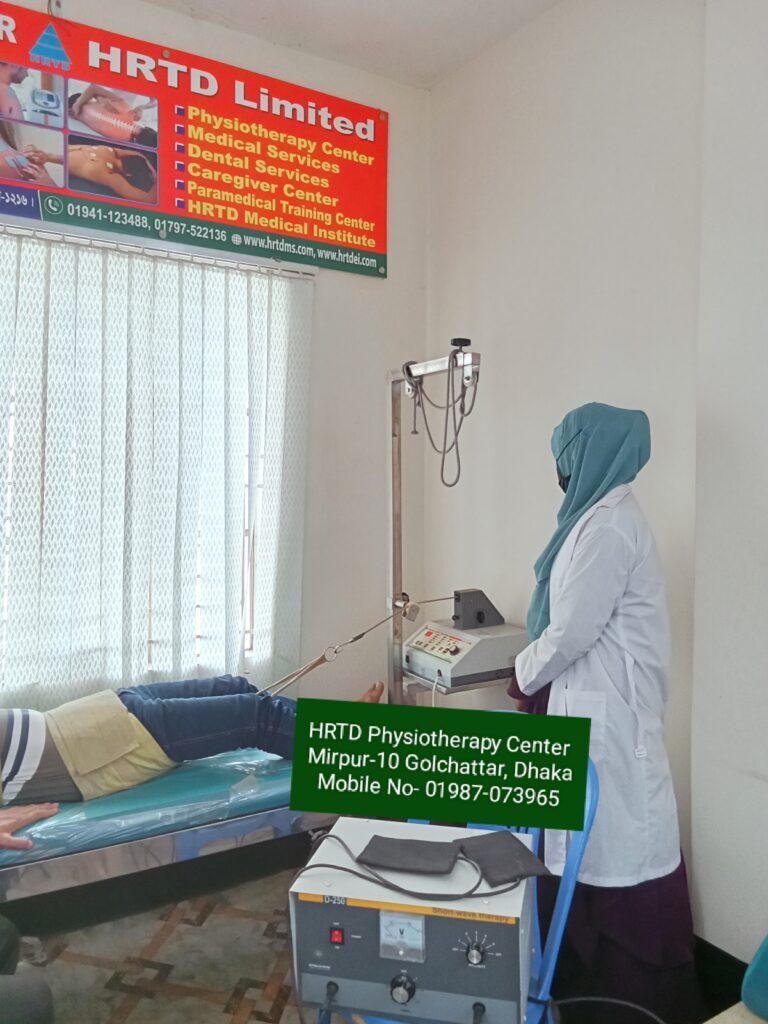
Subjects for Physiotherapy Best Course In Bangladesh
Anatomy & Physiology
chemistry & Pharmacology-1
Study of OTC
Hematology & Pathology
Orthopedic Anatomy & Physiology
Neuro Anatomy & Physiology
Cardiovascular Anatomy &Physiology
Electric Physics
Study Of OTC
Microbiology & Antimicrobial Drugs
Bones Joints & Disease
Claytons Electrotherapy-1
Therapeutic Exercise-1
Community Medicine-1
Electrotherapy & Hydrotherapy
Therapeutic Exercise-2
Anatomy of Backbone
Claytons Electrotherapy-2
Back Pain & Physiotherapy Treatment
Skin Anatomy & Physiology
Vertebral Muscles & Their Abnormalities
Physiotherapy Equipment
Neuromuscular Coordination
Management of Hypertension & Hypotension
Disability & Rehabilitation
Neurogenic Disorders & Physiotherapy
Community Medicine-2
Paralysis & Physiotherapy Treatment
Anatomy & Physiology for Physiotherapy Best Course In Bangladesh
The study of Body Structure and its functions is Anatomy and Physiology. Here we discuss the systems of the Human Body and its Organs, Tissues, and Cells. The systems of the Human Body are the Digestive System, Respiratory System, Cardiovascular System, Skeletal System, Muscular System, Nervous System, Endocrine System, Immune System, Lymphatic System, Integumentary System, and Urinary System.
Pharmacology for Physiotherapy Best Course In Bangladesh
The study of Drugs and Medicine is called Pharmacology. Here we discuss group-wise drugs and their medicines in Pharmacology-1. Common Groups of Drugs are Pain Killer Drugs, Anti Ulcer Drugs, Anti Vomiting Drugs, Laxative Drugs, Motility Drugs, Antimotility Drugs, Bronchodilator Drugs, Antibiotic Drugs, Anti Fungal Drugs, Anti Protozoal Drugs, Anti Viral Drugs, Anthelmintic Drugs, Anti Hypertensive Drugs, Beta Blocker Drugs, Calcium Channel Blocker Drugs, ACE Inhibitor Drugs, Hemostatic Drugs, Analgesic Drugs, Antipyretic Drugs, Anti Thrombotic Drugs, etc.
First Aid for Physiotherapy Best Course In Bangladesh
First Aid is an important subject for Medical Courses including Diplomas in Medicine& Surgery Course, RMP Courses, LMAF Courses, Paramedical Courses, DMA Courses, DMS Courses, Nursing Courses, Dental Courses, Pathology Courses, Physiotherapy Courses, Caregiver Courses, etc. Here we discuss Shock, Classification Shock, Causes of Shock, Stages of Shock, Clinical Features of Shock, Hypovolemic Shock, Cardiogenic Shock, Neurogenic Shock, Traumatic Shock, Burn Shock, Electric Shock, Psychogenic Shock, Anaphylactic Shock, First Aid of Shock, First Aid of Cut, First of Snake Bite, First Aid of Accidental Injury, etc.
Study of OTC Drugs for Physiotherapy Best Course In Bangladesh
OTC Drugs are important for all Medical Assistant Courses, Diploma Medical Courses, LMAF Courses, and RMP Courses. It is also important for the Physiotherapy and Nutrition Course. These OTC Drugs can be sold or purchased without any prescription from Registered MBBS Doctors. These Drugs are Emergency and Safe for the patients. The study of OTC Drugs improves the quality of practice. Some OTC Drugs are Albendazole, Ascorbic Acid, Calcium, Multivitamins, Vitamin B Complex, Omeprazole, Oral Rehydration Salt, Salbutamol, etc.
OTC ড্রাগগুলি সমস্ত মেডিকেল অ্যাসিস্ট্যান্ট কোর্স, ডিপ্লোমা মেডিকেল কোর্স, LMAF কোর্স এবং RMP কোর্সের জন্য গুরুত্বপূর্ণ। এটি ফিজিওথেরাপি এবং পুষ্টি কোর্সের জন্যও গুরুত্বপূর্ণ। এই OTC ওষুধগুলি নিবন্ধিত এমবিবিএস ডাক্তারদের কাছ থেকে কোনও প্রেসক্রিপশন ছাড়াই বিক্রি বা কেনা যায়। এই ওষুধগুলি জরুরী এবং রোগীদের জন্য নিরাপদ। ওটিসি ওষুধের অধ্যয়ন অনুশীলনের মান উন্নত করে। কিছু ওটিসি ওষুধ হল অ্যালবেনডাজল, অ্যাসকরবিক অ্যাসিড, ক্যালসিয়াম, মাল্টিভিটামিন, ভিটামিন বি কমপ্লেক্স, ওমেপ্রাজল, ওরাল রিহাইড্রেশন সল্ট, সালবুটামল ইত্যাদি।
Hematology and Pathology for Physiotherapy Best Course In Bangladesh
The study of Blood and Blood Disease is called Hematology and the Study of Pathos and Process of Disease Creation and Diagnosis is called Pathology. In Hematology and Pathology, we discuss blood cells, their structure and functions, Blood Diseases, Common Pathos and their pathogenesis, Atrophy, Hypertrophy, Metaplasia, Gangrene, Pathological Tests like TC, DC, ESR, Hemoglobin Percentage, etc.
রক্ত ও রক্তের রোগের অধ্যয়নকে বলা হয় হেমাটোলজি এবং স্টাডি অফ প্যাথোস এবং রোগ সৃষ্টি ও নির্ণয়ের প্রক্রিয়াকে প্যাথলজি বলা হয়। হেমাটোলজি এবং প্যাথলজিতে, আমরা রক্তের কোষ, তাদের গঠন এবং কার্যকারিতা, রক্তের রোগ, সাধারণ প্যাথোস এবং তাদের প্যাথোজেনেসিস, অ্যাট্রোফি, হাইপারট্রফি, মেটাপ্লাসিয়া, গ্যাংগ্রিন, প্যাথলজিকাল টেস্ট যেমন TC, DC, ESR, হিমোগ্লোবিন শতাংশ ইত্যাদি নিয়ে আলোচনা করি।
Practice of Medicine for Physiotherapy Best Course In Bangladesh
The study of Disease and Treatment is called the Practice of Medicine. This subject is important for all medical practitioners, Diploma Medical Practitioners, Diploma Medical Assistants, and Rural Medical Practitioners. This subject is also important for all medical-related workers, nurses, and pharmacists to understand the movement of disease and treatment.
রোগ এবং চিকিত্সার অধ্যয়নকে মেডিসিনের অনুশীলন বলা হয়। এই বিষয়টি সকল মেডিকেল প্র্যাকটিশনার, ডিপ্লোমা মেডিকেল প্র্যাকটিশনার, ডিপ্লোমা মেডিকেল অ্যাসিস্ট্যান্ট এবং গ্রামীণ চিকিৎসা অনুশীলনকারীদের জন্য গুরুত্বপূর্ণ। রোগ এবং চিকিত্সার গতিবিধি বোঝার জন্য সমস্ত চিকিৎসা-সম্পর্কিত কর্মী, নার্স এবং ফার্মাসিস্টদের জন্যও এই বিষয়টি গুরুত্বপূর্ণ।
This subject discusses some common diseases. The discussion points for the Practice of Medicine are the Definition of Disease, Causes of Disease, Clinical Features of Disease ( Symptoms and Signs), Investigation of Disease, Treatment of Disease, Complication of Disease, and Advice for the Patients.
এই বিষয়ে কিছু সাধারণ রোগ নিয়ে আলোচনা করা হয়েছে। মেডিসিন অনুশীলনের আলোচনার বিষয়গুলি হল রোগের সংজ্ঞা, রোগের কারণ, রোগের ক্লিনিক্যাল বৈশিষ্ট্য (লক্ষণ এবং চিহ্ন), রোগের তদন্ত, রোগের চিকিৎসা, রোগের জটিলতা এবং রোগীদের জন্য পরামর্শ।
Orthopedic Anatomy & Physiology for Physiotherapy Best Course In Bangladesh
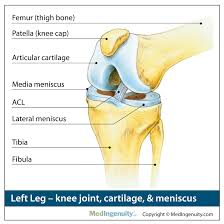
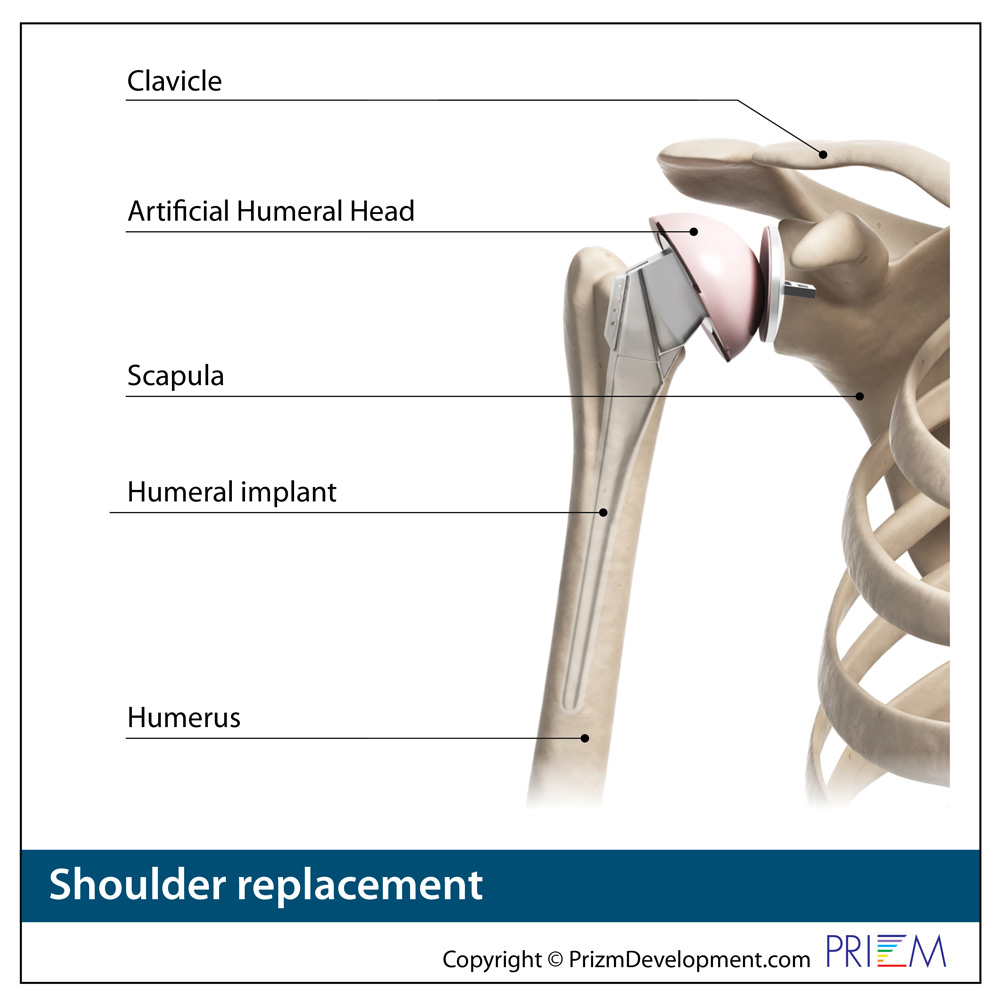
Orthopedic anatomy and physiology is the study of the structure (anatomy) and function (physiology) of the musculoskeletal system. This complex system provides form, stability, and movement to the body, and includes bones, muscles, joints, tendons, and ligaments.
Anatomy Anatomy of the Musculoskeletal System
The primary components of the musculoskeletal system are:
Ligaments: Tough bands of connective tissue that connect bones to other bones, providing joint stability.
Bones: Provide the body’s structural support, protect internal organs, store minerals (like calcium), and produce blood cells in the bone marrow.
Joints: Areas where two or more bones meet, allowing for movement. Key structures in joints include cartilage (a slippery connective tissue that allows smooth movement) and synovial fluid.
Muscles: Skeletal muscles are responsible for movement and joint stability through contraction. They are composed of fibers containing actin and myosin, the contractile proteins.
Tendons: Strong, fibrous connective tissues that connect muscles to bones, enabling movement.
Physiology of the Musculoskeletal System
The physiology focuses on how these components work together:
- Movement: Muscles contract and pull on tendons, which in turn move the bones around a joint. The coordinated action of various muscle groups, facilitated by the nervous system, is essential for controlled movement.
- Bone Remodeling: Bone is a living tissue that undergoes a continuous process of remodeling throughout life. This involves a balance between:
- Osteoblasts: Cells that form new bone tissue.
- Osteoclasts: Cells that break down (resorb) old bone tissue.
- Osteocytes: Mature bone cells that help maintain the bone as living tissue.
- Support and Protection: The skeleton bears the body’s weight and withstands physical stress, while the spine, for example, provides flexibility, stability, and protection for the delicate spinal cord.
Neuro Anatomy & Physiology for Physiotherapy Best Course In Bangladesh
Neuroanatomy is the study of the structure and organization of the nervous system, while neurophysiology is the study of its function, focusing on how neurons communicate to control body processes, thoughts, and sensations.
Neuroanatomy: Structure of the Nervous System
The nervous system is divided into two main parts: the central nervous system (CNS) and the peripheral nervous system (PNS).
Central Nervous System (CNS)
The CNS is the body’s command center, consisting of the brain and spinal cord, protected by the skull and vertebrae, as well as by membranes called meninges and cerebrospinal fluid
- Brain: The central organ responsible for thought, emotion, memory, sensation, and movement. It is divided into several major regions, including the cerebrum (for higher functions), the cerebellum (for coordination), and the brainstem (for vital autonomic functions like breathing and heart rate).
- Spinal Cord: A vital pathway for transmitting motor commands from the brain to the body and relaying sensory information from the body to the brain
Peripheral Nervous System (PNS)
The PNS consists of nerves and ganglia outside the CNS that connect the CNS to the rest of the body.
- Somatic Nervous System: Controls voluntary movements by sending signals to skeletal muscles.
- Autonomic Nervous System (ANS): Regulates involuntary body functions such as heart rate, digestion, and respiration to maintain homeostasis. It is further divided into:
- Sympathetic Nervous System: Prepares the body for a “fight-or-flight” response in emergencies.
- Parasympathetic Nervous System: Has a calming effect, responsible for “rest-and-digest” functions.
Neurophysiology: Function of the Nervous System
The primary function of the nervous system is communication, which relies on specialized nerve cells called neurons.
- Neurons: The basic building blocks of the nervous system. They receive signals via dendrites, process them in the cell body, and transmit signals along an axon to other neurons or effector cells (muscles and glands).
- Action Potentials: Neurons communicate using rapid, all-or-none electrochemical impulses.
- When a neuron is sufficiently stimulated, voltage-gated ion channels open, allowing ions (like sodium and potassium) to flow across the cell membrane, creating a brief change in electrical potential that travels down the axon.
- Synaptic Transmission: At the end of the axon, a microscopic gap called the synapse is crossed by chemical messengers called neurotransmitters.
- Neurotransmitters are released from the presynaptic neuron and bind to receptors on the postsynaptic neuron, causing either an excitatory (promoting a new signal) or inhibitory (suppressing a signal) response.
- Glial Cells: Non-neuronal support cells (e.g., oligodendrocytes and Schwann cells) that provide structural support, nutrition, and electrical insulation (myelin) for neurons, allowing for faster signal transmission.
Cardiovascular Anatomy &Physiology for Physiotherapy Best Course In Bangladesh
The cardiovascular system, also known as the circulatory system, consists of the heart, blood vessels (arteries, capillaries, and veins), and blood. Its primary function is to transport oxygen, nutrients, and hormones to the body’s tissues while removing metabolic waste products like carbon dioxide.
Anatomy of the Cardiovascular System
The cardiovascular system is a closed system with three main anatomical components:
- Heart: This muscular pump in the chest cavity has four chambers: right atrium and ventricle, and left atrium and ventricle. Four valves (tricuspid, pulmonary, mitral, and aortic) ensure blood flows in one direction. The coronary arteries supply blood to the heart muscle itself.
- Blood Vessels: These tubes transport blood.
- Arteries carry high-pressure blood away from the heart and have thick, elastic walls. The aorta is the largest.
- Capillaries are tiny, thin vessels where gas and nutrient exchange occurs between blood and tissues.
- Veins carry low-pressure blood back to the heart. They have thinner walls than arteries and contain valves to prevent backflow. The superior and inferior vena cava are the largest veins, returning blood to the right atrium.
- Blood: The transport medium composed of plasma, red blood cells, white blood cells, and platelets.
Physiology of the Cardiovascular System
The system functions through two main circulatory loops and an electrical system:
Circulation Loops
- Pulmonary Circulation: The right heart pumps deoxygenated blood to the lungs for oxygenation, then it returns to the left atrium.
- Systemic Circulation: The left heart pumps oxygenated blood to the body, and deoxygenated blood returns to the right atrium.
The Cardiac Cycle and Electrical Conduction
The heart’s rhythm involves contraction (systole) and relaxation (diastole), regulated by an electrical conduction system.
- The sinoatrial (SA) node starts the impulse in the right atrium.
- The impulse spreads through the atria and is delayed at the atrioventricular (AV) node.
- The impulse then travels through the bundle of His and Purkinje fibers, causing ventricular contraction.
Electric Physics for Physiotherapy Best Course In Bangladesh
Electrophysics is the branch of physics that studies the physical phenomena resulting from the interaction of electric and magnetic fields with matter. It is essentially a combination of electrostatics and magnetism, unified under the theory of electromagnetism, which is one of the four fundamental forces of nature.
Core Principles
The foundational principles of electrophysics are described by Maxwell’s equations, which provide a complete classical description of electric and magnetic fields and their interactions. Key concepts include:
- Electric Charges: Like charges repel each other, while opposite charges attract with a force inversely proportional to the square of the distance between them (Coulomb’s Law).
- Magnetic Poles: Magnetic fields are generated by moving electric charges (currents). North poles and south poles always exist in pairs (no magnetic monopoles exist).
- Electromagnetic Induction: A changing magnetic field induces an electric field and current (Faraday’s Law of Induction), while an electric current or changing electric field creates a magnetic field (Ampère’s Law with Maxwell’s addition).
- Electromagnetic Waves: Oscillating electric and magnetic fields can propagate as waves through a vacuum at the speed of light. This vast range of frequencies makes up the electromagnetic spectrum, including radio waves, visible light, and X-rays.
Areas of Study and Applications
Electrophysics spans theoretical and applied fields, bridging fundamental physics with practical engineering.
Areas of Study
- Electromagnetism and Electrodynamics: The behavior of electric and magnetic fields and waves.
- Solid-State Physics: Understanding the electrical properties of materials, leading to semiconductor technology and transistors.
- Optics and Photonics: The study of light’s behavior, propagation, and interaction with materials, applied in fiber optics, lasers, and solar cells.
- Quantum Electrodynamics (QED): A quantum theory that describes how light and matter interact.
- Micro/Nanoelectromechanical Systems (MEMS/NEMS): The design and fabrication of miniature devices with electrical, mechanical, and biological applications.
Key Applications
- Power Generation and Distribution: The principles of electromagnetic induction are fundamental to electric generators and transformers.
- Telecommunications: Radio, television, mobile phones, and wireless internet all rely on the transmission and reception of electromagnetic waves.
- Medical Imaging: Techniques like Magnetic Resonance Imaging (MRI) use powerful magnetic fields and radio waves to produce detailed internal images.
- Motors and Actuators: The interaction between magnetic fields and electric currents is the basis for all electric motors, from household appliances to industrial machinery.
- Computing and Electronics: Electrophysics principles are crucial in designing integrated circuits, sensors, and nanotechnology.