 HRTD Medical Institute

Dental Technology Course in Dhaka
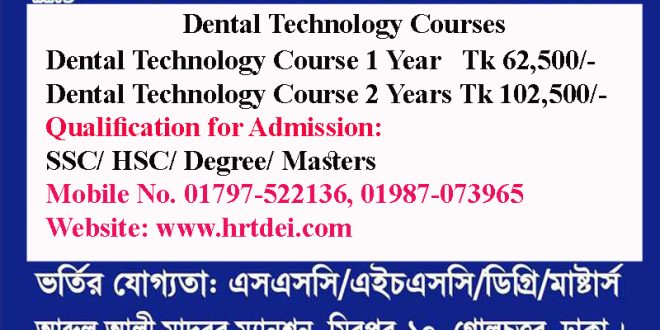
Dental Technology Course. Mobile No. 01987-073965, 01797-522136. Dental Technology 1 Year, and Dental Technology 2 Years.
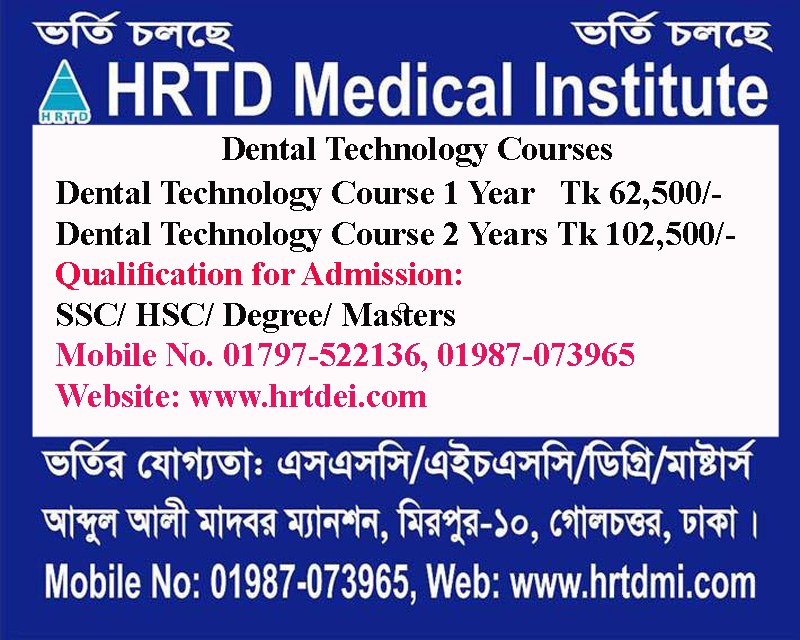
Location of Dental Technology Training Center in Dhaka, Bangladesh
Location of Dental Technology Training Center. Mobile No. 01987-073965, 01797-522136. HRTD Medical Institute, Abdul Ali Madbor Mansion, Section-6, Block-Kha, Road-1, Plot-11, Mirpur-10 Golchattar, Metro Rail Piller No. 249, Dhaka-1216.
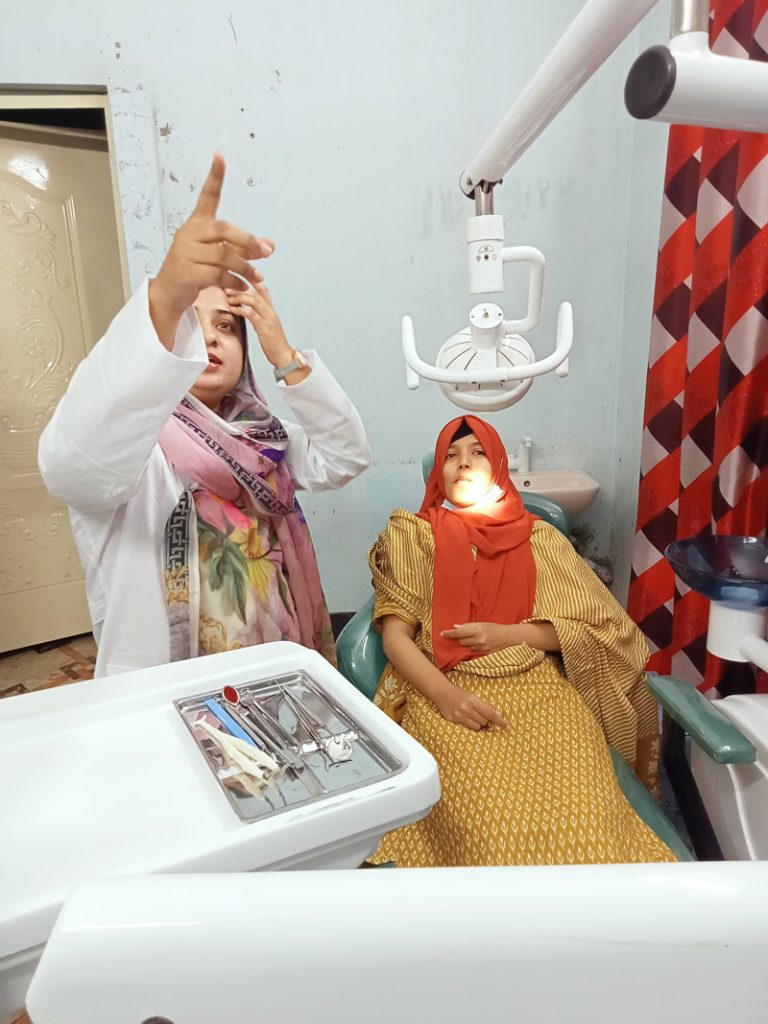
Course Fee for Dental Technology in Dhaka, Bangladesh.
Course Fee for Dental Technology. Mobile No. 01987-073965, 01797-522136. Dental Technology Course Fee for 1 Year is Tk 62500/- including Admission Fee, Monthly Fee, and Exam Fee. Dental Technology 2 Years Tk 102,000/- including Admission Fee, Monthly Fee, and Exam Fee.
Dental Technology Admission Eligibility in Dhaka, Bangladesh
Dental Technology Admission Eligibility. Mobile No. 01987-073965, 01797-522136. SSC or Equivalent/ HSC/Degree/ Masters from Any Background ( Science/ Arts/ Commerce/ Technical).
Qualification for Admission into Dental Technology in Dhaka, Bangladesh
Minimum Qualification for Admission is SSC Pass. However, HSC, Bachelor Degree Pass, and Master Degree Pass students can be admitted into this Course.
Admission System of Dental Technology Course in Dhaka, Bangladesh
অনলাইন এবং অফলাইন দুই সিস্টেমেই ভর্তির সুযোগ আছে।
Payment System of Dental Technology Course In Dhaka, Bangladesh
Payment System of Diploma Dental Technology Course. Mobile Phone Number 01797522136, 01987073965.
1 Year Diploma: Total Cost -62,500/- ,Admission Fee Tk 12,500/-, Monthly Fee Tk 3500/-,Exam Fee Tk 4000/- per Semester.
2 Years Diploma: Total cost-1,02,500/- Admission Fee Tk 20,500/-, Monthly Fee Tk 3000/-, Exam Fee Tk 2500/- per Semester.
Why Dental Technology Course is Important?
Teachers for Dental Technology Course
Dr. Sanjana, BDS
Dr, Nazmun Nahar Juthi, BDS
Dr. Kamrunnahar Keya, BDS
Class Time for Dental Technology Course in Dhaka
Weekly Class 3 hours. For Regular Students Friday 1 hour, Saturday 1 hour, and Monday 1 hour. For Job holders, Friday is 3 hours, or Monday is 3 hours. Morning Shift 9:00 am to 12:00 pm, and Evening Shift 3:00 pm to 6:00 pm.
Dental Courses of HRTD Medical Institute
Dental Courses of HRTD Medical Institute. Mobile Phone 01797522136, 01987073965. Dental Training Course, Diploma Dental Assistant, Diploma in Dental Technology Course, Diploma in Dental, Post Diploma in Dental Surgery.
These Courses are helpful and essential for taking a job in Dental Hospitals, Health Service Centers, Dental Care Centers, Dental Services Centers, Health Sectors of NGOs, Health Centers of Schools, Health Centers of Colleges, Health Sectors of Universities, and Health Sectors of Garments Manufacturing Companies, Dental Research and Manufacturing Company, Dental Device Manufacturing Companies, Dental Chemical Manufacturing Companies, etc.
These Courses are also helpful for conducting a Dental Chamber, Dental Clinic, Dental Nursing Home, General Hospital, Medical College, Medical Institute, Health Research Institute, Medical Research Institute, Dental Research Institute, etc.
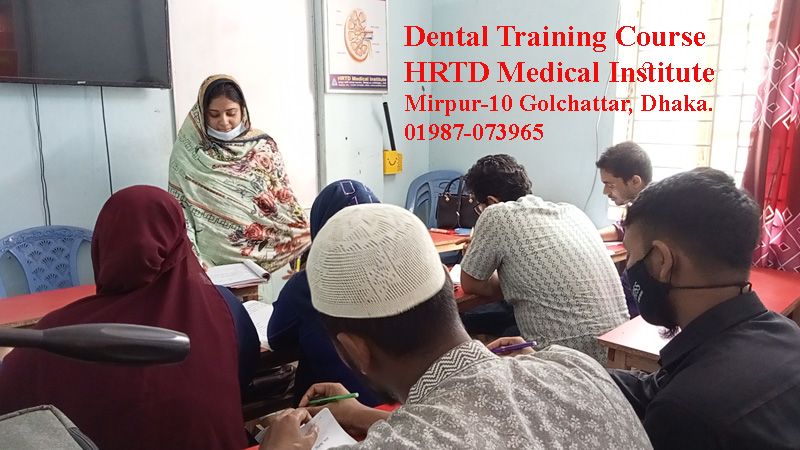
Our Other Courses:
Our Other Courses: Pharmacy Course, Dental Course, Nursing Course, Pathology Course, Homeopathy Course, Veterinary Course, Village Doctor Course, PDT( Post Diploma Training) Course, PPT, LMAF Training Course, LMAFP Course, Poultry Course, DMA ( Diploma Medical Assistant), Diploma in Medicine and Surgery (DMDS). Physiotherapy Courses.
Job Facilities of Dental Technology Course in Dhaka, Bangladesh
Jobs are available in Bangladesh and many other countries as dental assistants, dental technicians, or dental technologists. Each and every busy dental surgeon needs at least 2 to 3 dental technicians for the proper surgical treatment in his/her chamber or dental clinic.
Business Facilities of Diploma Dental Technology Course
Dental Chamber Starting & Establishment
After completing the Diploma in Dental Technology 3 Years Course you can start a Dental Chamber in any location in Bangladesh. You need to obtain The Registration and The License from the Respective Authority of the Government of the People’s Republic of Bangladesh. We only help our students obtain registration and licenses for the Starting & Establishment of Dental Chamber.
ডিপ্লোমা ইন ডেন্টাল টেকনোলজি 3 বছরের কোর্স শেষ করার পর আপনি বাংলাদেশের যেকোনো স্থানে একটি ডেন্টাল চেম্বার শুরু করতে পারেন। আপনাকে গণপ্রজাতন্ত্রী বাংলাদেশ সরকারের সংশ্লিষ্ট কর্তৃপক্ষের কাছ থেকে নিবন্ধন এবং লাইসেন্স পেতে হবে। আমরা শুধুমাত্র আমাদের ছাত্রদের ডেন্টাল চেম্বারের শুরু ও প্রতিষ্ঠার জন্য নিবন্ধন এবং লাইসেন্স পেতে সাহায্য করি।
Subjects of 1st and 2nd semesters for
Dental Technology Course in Dhaka, Bangladesh
1st semester contains 5 subjects which are Human Anatomy & Physiology, Chemistry & Pharmacology, First Aid & Treatment, Hematology & Pathology, and Study of OTC Drugs. The 2nd Semester contains 5 Subjects which are Anatomy of the Head and Neck, Neuro Anatomy & Physiology, Dental Anatomy & Physiology, Dental Pathology & Dental Caries, and Conservative Dentistry & Dental Surgery.
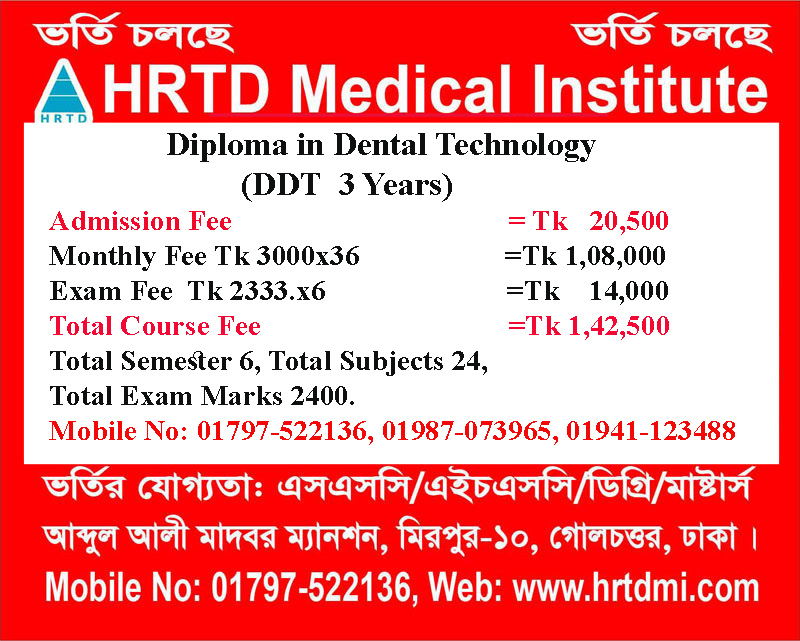
Subjects of 3rd and 4th semesters:
3rd Semester contains 4 subjects which are Orthopedic Anatomy & Physiology, Cardiovascular Anatomy & Physiology, Microbiology & Antimicrobial Drugs, and Dental Sterilization. The 4th semester contains 4 subjects and the subjects are Dental Anatomy & Physiology-2, Dental Pharmacology, Conservative Dentistry and Dental Surgery-2, and Clinical Practice in Dental Surgery-1.
Subjects of 5th and 6th semesters:
The 5th semester contains 3 subjects which are Oral Pathology and Oral Surgery, Dental Prosthesis, and Periodontology. The 6th semester contains 3 subjects, and the subjects are Dental Anesthesiology, Conservative Dentistry and Dental Surgery-3, and Medical Diagnosis.
Total Subjects for Dental Technology Course in Dhaka, Bangladesh
DDT 1st year Subjects-
- Chemistry & Pharmacology,
- Human Anatomy & Physiology,
- First Aid & Treatment,
- Hematology & Pathology,
- Study of OTC Drugs,
- Anatomy of the Head and Neck,
- Neuro Anatomy & Physiology,
- Dental Anatomy & Physiology,
- Dental Pathology & Dental Caries,
- Conservative Dentistry & Dental Surgery.
DDT 2nd Year Subjects:
- Orthopedic Anatomy & Physiology,
- Cardiovascular Anatomy & Physiology,
- Microbiology & Antimicrobial Drugs,
- Dental Sterilization,
- Dental Anatomy & Physiology-2,
- Dental Pharmacology,
- Conservative Dentistry and Dental Surgery-2,
DDT 3rd Year Subjects:
- Oral Pathology and Oral Surgery,
- Dental Prosthesis,
- Periodontology.
- Dental Anesthesiology,
- Conservative Dentistry and Dental Surgery-3,
- Medical Diagnosis.
Anatomy & Physiology for Dental Technology Course in Dhaka, Bangladesh
Anatomy is the study of the structure and relationship of body parts, while Physiology is the study of how those parts function. In a Bangladeshi context, these subjects are taught using a mix of both Bengali and English terminologies to bridge scientific knowledge with local understanding.
0.
20
Pharmacology for Dental Technology Course in Dhaka, Bangladesh
Pharmacology (ফার্মাকোলজি or ঔষধবিজ্ঞান) is the scientific study of drugs (ওষুধ) and their interactions with living systems. It explores what drugs do to the body and what the body does to the drugs. This subject is crucial in medical and dental education in Bangladesh, taught in both English and Bengali to ensure a comprehensive understanding
The study of pharmacology is divided into two main areas:
- Pharmacokinetics (ফার্মাকোকাইনেটিক্স or ঔষধসঞ্চরণবিজ্ঞান): This branch studies what the body does to the drug. It involves the absorption, distribution, metabolism, and excretion (ADME) of a chemical compound within the body.
- Example: How quickly a painkiller is absorbed into the bloodstream (রক্তপ্রবাহে শোষিত হওয়া) and how the liver breaks it down (যকৃতে বিপাক).
- Pharmacodynamics (ফার্মাকোডাইনামিক্স or ঔষধক্রিয়াবিজ্ঞান): This branch studies what the drug does to the body. It explores the mechanism of drug action, where drugs bind to target molecules (like receptors or enzymes) to produce a therapeutic effect or side effects.
- Example: How a local anesthetic blocks nerve signals (স্নায়ু সংকেত বন্ধ করা) to numb an area during a dental procedure.
Terminology in English and Bengali
| English Term | Bengali Translation | Explanation |
|---|---|---|
| Drug/Medicine | ওষুধ / ঔষধ | A substance used to diagnose, prevent, or treat a disease. |
| Dose | মাত্রা | The specific amount of a drug to be administered. |
| Side Effect | পার্শ্বপ্রতিক্রিয়া | An unintended effect of a drug that occurs at a normal dose. |
| Mechanism of Action | কার্যপ্রণালী | How a drug produces its effect in the body. |
| Prescription | প্রেসক্রিপশন | An order for medication issued by a licensed medical practitioner. |
| Antibiotic | অ্যান্টিবায়োটিক | A medicine that kills or inhibits the growth of bacteria. |
Significance in Dental Courses
For dental students, pharmacology focuses on Dental Therapeutics (ডেন্টাল থেরাপিউটিক্স) and includes:
- Local anesthetics (স্থানীয় অবেদনিক).
- Analgesics (ব্যথা উপশমকারী).
- Antibiotics (অ্যান্টিবায়োটিক) used for oral infections.
- Understanding drug interactions and how certain systemic drugs (e.g., blood thinners) affect dental procedures.
Chemistry for Dental Technology Course in Dhaka, Bangladesh
Dental students study chemistry because oral health is deeply connected to chemical principles—from tooth structure to materials used in dental treatments. The subject generally includes General Chemistry, Organic Chemistry, and Biochemistry.
General Chemistry (Basic Principles Relevant to Dentistry)
A. Structure of Matter
- Atoms, ions, molecules
- Chemical bonding: ionic, covalent, metallic
- Importance in enamel, dentin, cementum mineral content
→ Example: Hydroxyapatite formula: Ca₁₀(PO₄)₆(OH)₂
B. Acids, Bases, pH
- pH of saliva (~6.2–7.6)
- Demineralization of teeth occurs below critical pH 5.5
- Buffer systems in saliva (bicarbonate system)
C. Solutions & Concentrations
- Osmosis and diffusion in oral tissues
- Fluoride concentration in toothpaste / mouthwash
D. Chemical Reactions
- Redox reactions
- Corrosion of dental instruments
- Setting reactions of dental materials (glass ionomer, amalgam)
2. Organic Chemistry (Very Important for Dental Biomolecules)
A. Functional Groups
- Alcohols, carboxylic acids, amines, aldehydes, ketones
- Basis for many drugs and biomolecules
B. Carbohydrates
- Glucose, sucrose, lactose
- Role in dental caries formation (bacterial fermentation → acid)
C. Lipids
- Used in cell membranes of oral tissues
- Fat-soluble vitamins: A, D, E, K → important for oral health
D. Proteins & Enzymes
- Collagen in dentin and periodontal ligament
- Enzymes in saliva (amylase, lysozyme)
E. Polymers
- Acrylics and resins used in dentures and restorations
3. Biochemistry (Core for Dental Students)
A. Enzymes
- Salivary enzymes
- Enzyme inhibition (relevant to drug interactions)
B. Metabolism
- Carbohydrate metabolism → diabetes → periodontal disease
- Calcium–phosphate metabolism → tooth mineralization
C. Vitamins & Minerals
- Vitamin C → collagen formation
- Calcium & phosphorus → hydroxyapatite
- Fluoride → enamel remineralization
D. Saliva Composition
- Mucins, enzymes, electrolytes
- Role in lubrication, digestion, protection
E. Oral Microbiology Basics
- Acid production by bacteria
- Chemical basis of plaque formation
4. Chemistry of Dental Materials
A. Amalgam
- Silver, tin, copper, mercury alloys
- Setting reactions and corrosion behavior
B. Composite Resin
- Bis-GMA, urethane dimethacrylate.
- Polymerization chemistry (light-curing)
C. Glass Ionomer Cements
- Acid–base reaction between aluminosilicate glass and polyacrylic acid
- Fluoride release mechanism
D. Impression Materials
- Alginate: gelation reaction
- Silicone elastomers: polymerization chemistry
E. Dental Ceramics
- Porcelain chemistry and sintering
First Aid for Dental Technology Course in Dhaka, Bangladesh
First aid for a dental course focuses on managing medical emergencies that might arise within a dental clinic setting, as well as providing immediate care for acute traumatic dental injuries. The training goes beyond general first aid to cover specific scenarios faced by dental professionals.
Medical Emergencies in a Dental Setting
Dental professionals are trained to prevent, recognize, and manage a range of medical crises, as these can happen to any patient, regardless of their medical history. The most common emergencies include:
- Syncope (Fainting): The most frequent emergency in a dental office, often caused by anxiety or pain. Management involves positioning the patient in the Trendelenburg (supine with feet elevated) position and ensuring an open airway.
- Hyperventilation (Panic Attack): Usually anxiety-induced rapid breathing, managed by calming the patient and having them breathe into a paper bag or cupped hands to restore
CO2 levels.
- Allergic Reactions/Anaphylaxis: Ranging from minor skin rashes to life-threatening anaphylactic shock. Management includes administering antihistamines for mild cases and epinephrine (adrenaline) via intramuscular injection immediately for anaphylaxis.
- Asthma Attack: Helping the patient use their own bronchodilator inhaler (e.g., salbutamol) and administering oxygen if necessary.
- Hypoglycemia (Low Blood Sugar): A diabetic emergency. If the patient is conscious, oral glucose (e.g., orange juice, sugar packets) is administered. If unconscious, glucagon injection is used.
- Chest Pain (Angina/Heart Attack): Involves stopping treatment, positioning the patient comfortably, administering aspirin, and calling emergency services.
- Seizures (Epileptic Fits): Protecting the patient from injury, not putting anything in their mouth, and placing them in the recovery position after the seizure subsides.
- Airway Obstruction: Due to the supine position and use of small instruments, choking on materials is a risk. Dental staff are trained in the Heimlich maneuver (abdominal thrusts) and CPR.
Practice of medicine for Dental Technology Course in Dhaka, Bangladesh
Practice of Medicine” in dentistry helps future dentists understand medical conditions that affect dental treatment. Dentists often encounter patients with systemic diseases, so this subject prepares you for safe, informed, and holistic patient care.
ডেন্টিস্ট্রিতে Practice of Medicine কেন প্রয়োজন?
ডেন্টাল ছাত্রদের জন্য Practice of Medicine (POM) জরুরি কারণ—
- অনেক ডেন্টাল রোগীর শরীরে অন্য রোগ থাকে
যেমন: ডায়াবেটিস, হাইপারটেনশন, হার্টের সমস্যা, অ্যাজমা ইত্যাদি।
এগুলো বুঝতে না পারলে নিরাপদ ডেন্টাল চিকিৎসা দেওয়া যায় না। - অনেক সিস্টেমিক রোগের লক্ষণ মুখের ভেতর দেখা যায়
যেমন:- অ্যানিমিয়া → ফ্যাকাসে মিউকোসা
- ডায়াবেটিস → মাড়ির রোগ ও সংক্রমণ
তাই দাঁতের ডাক্তারকে এসব চিনতে জানতে হয়।
- রোগীর মেডিকেল কন্ডিশন অনুযায়ী ডেন্টাল ট্রিটমেন্ট বদলাতে হয়
যেমন:- কোন ওষুধ দেওয়া যাবে/যাবে না
- কতটা অ্যানাস্থেশিয়া দেওয়া যাবে
- অ্যাপয়েন্টমেন্টের সময়
তাই মেডিসিন না জানলে ট্রিটমেন্ট ভুল হতে পারে।
- ডেন্টাল চেয়ারে মেডিকেল ইমার্জেন্সি হতে পারে
যেমন:- অচেতন হয়ে যাওয়া
- সিজার
- অ্যাজমা অ্যাটাক
- হার্ট অ্যাটাক
এসব সামলাতে মেডিসিনের জ্ঞান দরকার।
- ডেন্টাল ওষুধের সাথে মেডিকেল ওষুধের ইন্টারঅ্যাকশন হতে পারে
সঠিকভাবে প্রেসক্রাইব করতে মেডিসিন জানা জরুরি। - লিগ্যাল ও এথিক্যাল দায়িত্ব
রোগী ঝুঁকিতে থাকলে ডেন্টিস্টকে সঠিকভাবে চিনে প্রয়োজন হলে চিকিৎসকের কাছে পাঠাতে হয়। - সার্বিক (holistic) রোগী ব্যবস্থাপনা
দাঁত শরীর থেকে আলাদা নয়। রোগীকে পুরো মানুষ হিসাবে বুঝতে মেডিসিনের প্রয়োজন।
Hematology for Dental Technology Course in Dhaka, Bangladesh
Hematology is the study of blood, blood-forming organs, and blood disorders.
For dentists, it is essential because many blood diseases show oral manifestations and affect bleeding control, healing, and infection risk.
Why Hematology Is Important in Dentistry
- Helps assess bleeding risk before extractions/surgery
- Many disorders cause oral signs (petechiae, pallor, glossitis, gingival bleeding)
- Some blood diseases require treatment modification
- Avoiding complications with anticoagulants
- Helps understand anemia, leukemia, bleeding disorders, etc.
- Dentists often diagnose systemic diseases from oral clues
Pathology for Dental Technology Course in Dhaka, Bangladesh
What is Pathology? (English)
Pathology is the study of diseases, including their causes, mechanisms, changes in tissues, and effects on the body.
Dentists use pathology to understand conditions that affect the oral cavity, jaw bones, and overall health.
Why Pathology is important for Dentistry (English)
Dentists must learn pathology because:
- Most oral diseases are pathological conditions
– caries, pulpitis, periodontal disease, cysts, tumors - Many systemic diseases show oral manifestations
– anemia, leukemia, diabetes, infections - Helps in diagnosis
– biopsy interpretation, identifying lesions - Helps decide treatment
– benign vs malignant, inflammatory vs neoplastic - Essential for oral cancer detection
- Important in understanding healing, inflammation, necrosis
- Helps in preventing complications
প্যাথলজি কী? (Bangla)
প্যাথলজি হলো রোগের কারণ, রোগ কীভাবে হয়, শরীরের কোষ ও টিশুতে কী পরিবর্তন আনে—এসবের বিজ্ঞান।
ডেন্টিস্টদের জন্য মুখগহ্বর ও চোয়ালের রোগ বুঝতে প্যাথলজি খুবই জরুরি।
ডেন্টিস্ট্রিতে প্যাথলজি কেন জরুরি? (Bangla)
ডেন্টিস্টদের জন্য প্যাথলজি গুরুত্বপূর্ণ কারণ—
- মুখ ও দাঁতের বেশিরভাগ রোগই প্যাথলজিকাল
– ক্যারিজ, পালপাইটিস, মাড়ির প্রদাহ, সিস্ট, টিউমার - অনেক সিস্টেমিক রোগের লক্ষণ মুখে দেখা যায়
– অ্যানিমিয়া, লিউকেমিয়া, ডায়াবেটিস - ডায়াগনসিস করতে প্যাথলজি লাগে
– বায়োপসি রিপোর্ট, লেশন চেনা - ট্রিটমেন্ট প্ল্যান করতে সাহায্য করে
– কোনটা ক্ষতিকারক, কোনটা নরমাল গ্রোথ - ওরাল ক্যান্সার চিনতে অত্যন্ত গুরুত্বপূর্ণ
- ইনফ্লামেশন/হিলিং/নেক্রোসিস বুঝতে সাহায্য করে
- ডেন্টাল সার্জারিতে কমপ্লিকেশন এড়াতে সাহায্য করে
Study of OTC for Dental Technology Course in Dhaka, Bangladesh
OTC drugs are medicines that patients can buy without a prescription. Dental professionals must know their uses, risks, contraindications, and interactions because many patients self-medicate before coming to the clinic.
OTC drugs are medications considered safe and effective for public use without a dentist/doctor’s prescription, when used as labeled.
In dentistry, OTC drugs include:
- Analgesics
- Oral care products
- Topical anesthetics
- Anti-inflammatory agents
- Antimicrobial mouthwashes
- Fluoride products
Definition of OTC Drugs
OTC drugs are medications considered safe and effective for public use without a dentist/doctor’s prescription, when used as labeled.
In dentistry, OTC drugs include:
- Analgesics
- Oral care products
- Topical anesthetics
- Anti-inflammatory agents
- Antimicrobial mouthwashes
- Fluoride products
2. Common OTC Drugs Used in Dentistry
A. Analgesics (Painkillers)
Used for toothache, post-operative pain, or minor oral discomfort.
1. Paracetamol (Acetaminophen)
- Dose: 500–1000 mg every 6 hours (max 4 g/day)
- Uses: Mild–moderate dental pain
- Safe in children and pregnant women (with caution)
2. NSAIDs (Ibuprofen, Naproxen)
- Ibuprofen: 400–600 mg every 6–8 hours
- Dental uses: pulpitis, pericoronitis, post-extraction pain
- Contraindications: gastric ulcer, kidney disease, asthma
3. Aspirin
⚠ Should NOT be applied directly on gums — causes chemical burns.
B. Oral Care OTC Products
1. Fluoride Toothpaste
- Contains 1000–1500 ppm fluoride
- Prevents caries by remineralization
2. Mouthwashes
a. Chlorhexidine 0.12% (sometimes OTC depending on region)
- Anti-plaque and anti-gingivitis
- Side effects: staining, altered taste
b. Listerine (Essential oils)
- Reduces plaque bacteria
c. Fluoride mouthwash
- 0.05% NaF for daily use
- Prevents caries
3. Desensitizing Toothpaste
- Potassium nitrate
- Strontium chloride
- reduces dentinal hypersensitivity
C. Topical Agents Used in Dentistry
1. Topical Anesthetics
- Benzocaine gel/spray
- Used for minor irritation or before injections
- Caution: Methemoglobinemia (rare)
2. Oral Ulcer Gels
- Benzocaine, Choline salicylate
- Provides temporary relief
3. Antifungal OTC Agents
- Clotrimazole mouth paint (in some countries OTC)
- Used for oral thrush
Vitamins and Supplements (OTC)
Vitamin C
- Supports healing and collagen formation
- Used after extraction or periodontal therapy
Vitamin D + Calcium
- Supports tooth and bone mineralization
OTC Dental Emergency Products
Temporary Filling Material
- Zinc oxide–eugenol based
- Used when a filling falls out
Orthodontic Wax
- For bracket irritation
Teething Gels (Infants)
- Mostly glycerin-based soothing gels
⚠ Avoid benzocaine in infants (risk of methemoglobinemia)
5. Risks & Precautions of OTC Drugs
A. Overuse
- Excess NSAIDs → gastric bleeding
- Excess paracetamol → liver damage
B. Drug Interactions
- Ibuprofen + antihypertensives → reduced BP control
- Aspirin + warfarin → increased bleeding risk
C. Misuse by patients
- Using aspirin on gums
- Overusing mouthwash
- Relying on OTC painkillers instead of dental treatment
6. OTC Drugs Dental Professionals Should Recommend
✔ Pain relief: Paracetamol / Ibuprofen
✔ Fluoride toothpaste (1000–1500 ppm)
✔ Fluoride mouthwash
✔ Chlorhexidine (if allowed OTC)
✔ Desensitizing toothpaste
✔ Temporary filling kits (for emergencies)
7. OTC Drugs Dental Professionals Should Avoid or Warn About
❌ Aspirin on the gums
❌ Excessive NSAIDs
❌ Excess chlorhexidine (stains teeth)
❌ Unregulated whitening kits
❌ Teething gels with benzocaine for babies
Dental Anatomy & Physiology Dental Technology Course in Dhaka, Bangladesh
Dental Anatomy & Physiology হচ্ছে দাঁতের গঠনবিদ্যা ।যেখানে দাঁতের নামকরণ এবং দাঁত তৈরির কাঠামো সম্পর্কে আলোচনা করা হয়। মানুষের চোয়ালে ৪ ধরনের দাঁত থাকে ।
- Incisor
- Canine
- Premolar
- Molar
শিশুদের অস্থায়ী দাঁত ২০ টি এবং মানব্দেহের স্থায়ী দাঁত ৩২ টি-Maxilla তে ১৬ টি এবং Mandible ১৬ টি।
Proper দাঁতের ৪ ধরনের Tissue থাকে।
- Enamel
- Dentine
- Cementum
- Dental Pulp
মানবদেহের স্থায়ী দাঁত ৩২ টি।
Maxilla তে 16 টি , Mandible এ ১৬ টি ।
দাঁতের যে অংশ মাড়ির নিচে অবস্থিত তাকে Dental root বলে। Root এর ভিতরে যে ছিদ্র পথ থাকে তাকে বলা হয় Root Canal.এর মধ্য দিয়ে প্রবেশ করে Blood vessel & Nerve.এই Blood vessel & Nerve একত্র হয়ে Dental pulp গঠন করে।
Dental Anatomy
Dental Anatomy is an important subject for the Diploma in Dental Technology Course. Dental Anatomy describes the structure of every tooth and its parts. Dental parts are Enamel, Dentin, Dental Neck, Pulp Cavity or Pulp Chamber, Dental Pulp, Dental Root, Cementum etc. After studying Dental Anatomy we can understand clearly the structure of the above dental parts.
Dental Physiology
Dental Physiology is an important subject for the Diploma in Dental Technology Course. Dental Physiology describes the functions of every tooth and its parts. After studying Dental Physiology we can understand clearly the functions of Enamel, Dentin, Dental Pulp, etc.
Dental Microbiology in Dental Technology Course in Dhaka, Bangladesh
Dental microbiology is the study of the microorganisms that inhabit the human oral cavity, focusing on their roles in both health and diseases like dental caries (tooth decay) and periodontal disease (gum disease). The mouth is home to over 700 species of microbes, primarily bacteria, that form complex, multispecies communities known as oral biofilms or dental plaque.
The Oral Microbiome in Health
In a healthy state, a dynamic equilibrium or symbiotic relationship exists between the diverse oral microbes and the host’s immune system. Commensal (harmless or beneficial) bacteria help maintain oral health by competing with pathogens for space and nutrients, producing antibacterial substances, and aiding the digestive and immune systems.
Role in Oral Diseases
Dysbiosis occurs when the balance of the oral microbiome is disrupted, leading to an overgrowth of harmful (pathogenic) microbes and the onset of disease.
The primary oral diseases associated with specific microbial activity are:
- Dental Caries (Cavities): This is caused by acid-producing and acid-tolerant bacteria, primarily Streptococcus mutans and various Lactobacillus species. These bacteria metabolize dietary sugars into acids (like lactic acid), which demineralize the tooth enamel and dentin.
- Periodontal Disease: This condition involves inflammation and damage to the gums and supporting bone structures of the teeth. It progresses from gingivitis (gum inflammation) to periodontitis, which is associated with anaerobic bacteria such as Porphyromonas gingivalis, Treponema denticola, and Fusobacterium species. The bacterial products elicit an inflammatory response that ultimately leads to tissue and bone loss.
- Other Infections: Fungal infections like oral thrush (Candida albicans) and viral infections such as oral herpes (HSV-1) and mumps can also affect the oral cavity, often in immunocompromised individuals.
Clinical Significance
Understanding oral microbiology is essential for dental professionals to:
- Diagnose and assess oral infections, including bacterial and fungal diseases.
- Develop effective treatment plans, which may include targeted antimicrobial therapy in severe cases.
- Implement appropriate infection control and decontamination procedures in dental practice.
- Advise patients on the best oral hygiene practices (brushing, flossing, healthy diet) to maintain a balanced microbiome and prevent disease.
Poor oral health has also been linked to systemic conditions, including cardiovascular disease and diabetes, underscoring the connection between oral and general health
Dental Microbiology is the subjects that describe the pathogenic microorganisms that create dental infections. Pathogenic Microorganisms are bacteria, Virus, Fungus, and Protozoa.
Dental Anatomy of Head Neck in Dental Technology Course in Dhaka, Bangladesh
The anatomy of the head and neck is complex, containing vital structures from the respiratory, digestive, nervous, and endocrine systems. The neck serves as a critical conduit, supporting the head, facilitating movement, and transmitting signals and blood flow between the brain and the rest of the body
Bones
The skeletal structure of the head and neck is comprised of the skull and the cervical spine.
- Skull: Protects the brain (neurocranium) and forms the face (viscerocranium). It is made of 22 bones joined by sutures, with the mandible (lower jaw) being the only movable facial bone.
- Cervical Spine: The seven cervical vertebrae (C1-C7) provide support and flexibility, allowing for a wide range of head movements (flexion, extension, rotation). The C1 (atlas) and C2 (axis) vertebrae are specialized for bearing the head’s weight and enabling rotation.
- Hyoid Bone: A horseshoe-shaped bone in the neck that serves as an anchor point for many muscles involved in swallowing and speech.
Muscles
Numerous muscles facilitate movement, facial expressions, chewing, and swallowing.
- Muscles of Mastication: The masseter and temporalis muscles are primarily responsible for chewing by elevating the mandible.
- Muscles of Facial Expression: Innervated by the facial nerve (Cranial Nerve VII), these muscles (e.g., orbicularis oculi, buccinator, platysma) control expression.
- Neck Muscles: Key muscles like the sternocleidomastoid and trapezius support the head and allow for movement and rotation.
- Suprahyoid and Infrahyoid Muscles: These muscle groups (e.g., digastric, mylohyoid, sternohyoid, omohyoid) work in sync to depress or elevate the hyoid bone and larynx during speech and swallowing.
Neurovasculature
The region is rich with an extensive network of nerves and blood vessels.
- Arteries: The common carotid arteries and vertebral arteries are major vessels supplying blood to the brain, face, and neck. The common carotid artery bifurcates into the internal and external carotid arteries, which supply intracranial and superficial structures, respectively.
- Veins: The internal and external jugular veins, along with vertebral veins, drain deoxygenated blood from the head and neck back to the heart.
- Nerves: Twelve pairs of cranial nerves emerge from the brain to innervate structures in the head and neck (e.g., optic nerve for vision, trigeminal nerve for facial sensation and mastication, vagus nerve for organ control). The cervical spinal nerves (C1-C8) also form plexuses that innervate neck and shoulder muscles and provide sensory input.
Organs and Passageways
The neck acts as a pathway for several crucial systems.
- Respiratory System: Air passes through the nasal cavity, pharynx, larynx (voice box), and trachea (windpipe).
- Digestive System: Food enters via the oral cavity (mouth) and passes through the pharynx and esophagus. The epiglottis is a flap of cartilage that covers the trachea during swallowing to prevent food from entering the airway.
- Endocrine Glands: The thyroid and parathyroid glands are located in the neck and secrete hormones to control metabolism and blood calcium levels, respectively.
- Lymphatic System: Numerous lymph nodes are situated throughout the head and neck, filtering pathogens and playing a key role in the immune response
Head Neck bone-
Cranial bone = 8 টি
Facial bone= 14 টি
Middle ear bone = 6 টি
Hyoid bone(neck)= 1 টি
Total Bone= 29 টি
Brain :Brain হচ্ছে Nervous system এর সবচেয়ে গুরুত্বপূর্ণ অংশ যা মাথার খুলির ভিতরে অবস্থিত।
Cranial Nerves: যে সকল Nerve brain থেকে উৎপত্তি হয়েছে তাদেরকে Cranial nerve বলে। Cranial Nerve 12 জোড়া ।
Cranial Nerve গুলি brain থেকে উৎপত্তি হয়ে brain এর আশেপাশের বিভিন্ন tissue তে মিলিত হয়েছে।
Dental Filling Materials for Dental Technology Course
Filling materials are those materials which are used for restoration purposes in dentistry. They vary in composition properties and manipulation.
Common Filling Materials are-
- Zinc oxide (Eugenol cement)
- Zinc oxide phosphate cement
- Silver cement
- Copper cement
- Calcium hydroxide
Common dental filling materials include amalgam, composite resin, glass ionomer, gold, and porcelain (ceramic). The choice of material depends on factors such as the cavity’s location and size, cost, durability, and aesthetic preferences
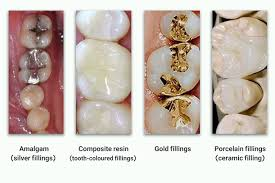
Comparison of Dental Filling Materials
- Aesthetics: For highly visible teeth (front teeth), tooth-colored options like composite resin or porcelain are preferred.
- Durability: For back teeth that endure heavy chewing forces, amalgam or gold are often recommended for their strength and longevity.
- Cost: Amalgam fillings are generally the most affordable option, while gold and porcelain are the most expensive.
- Procedure Type: Amalgam, composite, and glass ionomer are typically direct fillings placed in a single visit, while gold and porcelain often require multiple visits because they are custom-made in a lab.
- Health Concerns: While major health organizations like the FDA and ADA consider amalgam safe for most people, some individuals may have sensitivities or prefer metal-free alternatives like BPA-free composite resin or porcelain
| Material | Aesthetic Appeal | Durability/Longevity | Key Advantages | Disadvantages |
|---|---|---|---|---|
| Amalgam (Silver) | Noticeable (metallic) | Very durable, 10-15+ years | Affordable, strong for back teeth, withstands chewing forces | Metallic appearance, contains mercury (though considered safe by major health bodies for most) |
| Composite Resin (Tooth-colored) | High (matches natural teeth) | Less durable than amalgam, 5-10 years | Natural look (ideal for front teeth), bonds to tooth, preserves more tooth structure | Prone to staining over time, may require more frequent replacement |
| Glass Ionomer | Tooth-colored (less aesthetic than composite) | Weaker, 5-7 years | Releases fluoride (helps prevent further decay), good for children or cavities near gumline | Less durable, can wear down easily, not suitable for high-pressure areas |
| Porcelain (Ceramic) | Excellent (stain-resistant, natural look) | Highly durable, 10-15+ years | Strong, highly aesthetic, resistant to staining | Most expensive, may require multiple visits (indirect filling), can be brittle |
| Gold | Noticeable (gold color) | Most durable, 20+ years | Extremely long-lasting, does not corrode, very strong |
Neuro Anatomy for Dental Technology Course In Dhaka
নিউরো অ্যানাটমি (Neuro Anatomy) হলো মানবদেহের স্নায়ুতন্ত্র (nervous system)-এর গঠন ও কাজ সম্পর্কে অধ্যয়ন। ডেন্টাল কোর্সের জন্য এটি অত্যন্ত গুরুত্বপূর্ণ, বিশেষ করে দাঁত, মুখ, চোয়াল এবং আশেপাশের অঞ্চলের স্নায়ু ব্যবস্থা বোঝা এবং স্থানীয় অ্যানেস্থেসিয়া (local anesthesia) প্রয়োগের জন্য এটি অপরিহার্য।
দেহের যে system দ্বারা Monitoring & Coordination এর কাজ সম্পাদিত হয় তাকে Nervous system বলে। এর দুইটি অংশ । 1.Central Nervous system(CNS) 2.Peripheral Nervous system (PNS)
CNS এর অংশ সমুহ -1.Brain 2. Spinal Cord
PNS এর অংশ সমুহ -1. Cranial Nerves12 জোড়া 2. Spinal Nerves 31 জোড়া
Nervous system এর কোষ গুলিকে Neuron বলে। Neuron 3 প্রকার .
1.Sensory Nerve 2. Motor Nerve 3.Internucial Neuron
ডেন্টাল কোর্সের জন্য প্রধান নিউরো অ্যানাটমি বিষয়
- সেরিব্রাল কর্টেক্স (Cerebral Cortex): মস্তিষ্কের বাইরের স্তর, যা উচ্চতর মানসিক কাজ, যেমন চেতনা, স্মৃতি এবং চিন্তাভাবনা নিয়ন্ত্রণ করে।
- ট্রাইজেমিনাল নার্ভ (Trigeminal Nerve – CN V): এটি “ডেন্টিস্টের নার্ভ” নামে পরিচিত এবং দাঁতের চিকিৎসার জন্য সবচেয়ে গুরুত্বপূর্ণ। এটি মুখ, দাঁত এবং চোয়ালের বেশিরভাগ অংশে সংবেদনশীলতা (sensation) সরবরাহ করে। এর তিনটি প্রধান শাখা হলো:
- অপথ্যালমিক (Ophthalmic) শাখা: চোখ এবং কপাল অঞ্চলের সংবেদন।
- ম্যাক্সিলারি (Maxillary) শাখা: উপরের চোয়াল, দাঁত এবং গাল অঞ্চলের সংবেদন।
- ম্যান্ডিবুলার (Mandibular) শাখা: নিচের চোয়াল, দাঁত, জিহ্বার কিছু অংশ এবং চিবানোর পেশীগুলির (muscles of mastication) কার্যকারিতা নিয়ন্ত্রণ করে।
- ফেসিয়াল নার্ভ (Facial Nerve – CN VII): এই নার্ভ মুখের পেশীগুলির (facial muscles) সঞ্চালন নিয়ন্ত্রণ করে এবং জিহ্বার সামনের দুই-তৃতীয়াংশ থেকে স্বাদের অনুভূতি মস্তিষ্কে পাঠায়।
- পেইন পাথওয়ে (Pain Pathways): মুখ গহ্বর থেকে ব্যথার সংকেত কীভাবে কেন্দ্রীয় স্নায়ুতন্ত্রে (central nervous system – CNS) পৌঁছায়, তা বোঝা ব্যথা ব্যবস্থাপনার জন্য জরুরি।
- অটোনোমিক নার্ভাস সিস্টেম (Autonomic Nervous System – ANS): এটি লালা গ্রন্থির কার্যকারিতা এবং রক্ত প্রবাহের মতো অনৈচ্ছিক কাজগুলি নিয়ন্ত্রণ করে।
Clinical Practice In Dental Surgery for Dental Technology Course In Dhaka
Personal hygiene-
It may be define as the process of maintain of cleanliness of personalmanagement is called personal hygiene.
Good personal hygiene is essential to promoting good health. Personal hygiene habits such as-
- Washing your hands
- Brushing and flossing your teeth will help keep bacteria, viruses andillnesses at bay and mental as well as physical benefits Practicing good body hygiene helps you feel good about yourself, which is important for your mental health.
Importance of Oral Hygiene-
The health of our mouth mirrors the condition of our body as whole. For example-When our mouth is healthy ,chances are our overall health is good too.
More Than 90% of all systemic disease have oral manifestations, including-swollen gums, mouth ulcers, dry mouth and excess gum problems. Such disease include-
-Diabetes
-Leukemia
-Oral Cancer
-Pancreatic cancer
-Heart disease
-Kidney disease .
Dental Surgery in Dental Technology Course in Dhaka, Bangladesh
Dental Surgery is a very vital subject for the Diploma in Dental Technology Course. Some common Dental Surgeries are Scaling, Polishing, Whitening, Filling, Root Canal Treatment, Fixed Denture, etc. Every Surgical Procedure should be known by the students of the Diploma in Dental Technology Course.
Trigeminal Nerves & Its Branches for Dental Technology Course In Dhaka
Trigeminal nerve এর প্রধান শাখা গুলি হচ্ছে-
- Opthalmic nerve
- Maxillary nerve
- Mandibular nerve
The opthalmic nerve is responsible for sensory innervation of the face and skull above the palpebral fissure as well as the eye and portions of the nasal cavity.
The Maxillary nerve is a sensory branch & innervates portions of the nasal cavity, sinuses, maxillary teeth, palate, and the middle point of the face and skull above the mouth and below the forehead.
The mandibular nerve is unique in that it contains both sensory and motor fibers. Its provides sensory innervation of the buccal mucosa ,mandibular teeth and the skin below the mouth.
Oral & Dental Pathology for Dental Technology Course in Dhaka
There are many acquired and inherited developmental abnormalities that alter the size, shape and number of teeth.
Supernumerary teeth- Presence of extra. Such as-extra incisor, extra molar.
Cleidocranial dysplasia- ৫০ এর অধিক দাঁত হলে তাকে Cleidocranial dysplasia বলে। ইহা একটি autosomal dominant disorder.
Oligodontia-জন্মগতভাবে ৬ বা অধিক দাঁতের মিছিং থাকলে তাকে ওলিগডনশিয়া বলে।
Taurodontism-টরোডন্টিজম হচ্ছে দাঁতের একটি গঠনগত অস্বাভাবিকতা ।
Fusion-দুটি সংলগ্ন দাঁতের জীবাণু একত্রিত হয়ে একটি বড় দাঁত তৈরি করে। দাঁতের ফিউশনের ঘটনাটি
Oral Ulcer for Dental Technology Course in Dhaka
কোন আঘাত ,ইনফেকশন, টিউমার অথবা systemic বা local factor এর জন্য oral mucosa ক্ষতি গ্রস্থ হলে তাকে oral ulcer বলে।
Oral Surgery for Dental Technology Course In Dhaka
Dentistry এর যে শাখায় মুখের surgical treatment নিয়ে deal করে তাকেoral surgery বলে।
দাঁত তোলার সময় নিম্নক্ত বিষয়গুল জানা দরকার-
Patient এর Medical History
সঠিকভাবে Anesthesia
সঠিক যন্ত্রপাতি নির্বাচন
Nerve ,Sinus, আরও অন্যান্য surrounding anatomical structure সম্পর্কে ধারনা।
Periacipal infection আছে কিনা দেখতে হবে।
Procedure of Extraction for Dental Best Course in Dhaka
প্রথমে যে দাঁত Extraction করতে হবে তাকে এবং তার surrounding tissue properly anesthesia করতে হবে।
উপরের দাঁতের ক্ষেত্রে infiltration নিচের দাঁতের ক্ষেত্রে কিন্তু block অথবা Nerve block বাচ্চাদের ক্ষেত্রে gel অথবা স্প্রে।
Anesthesia দেয়ার পর ভালভাবে অবশ হয়েছে কিনা চেক করতে হবে।
অবশ হয়ে গেলে Extraction Procedure শুরু হবে।
প্রথমে free gingiva & inter periodontal ligament দাঁত থেকে আলাদা করে দিতে হবে। এক্ষেত্রে periosteal elevator ব্যাবহার করা যেতে পারে।
এখন clevator দিয়ে দাঁতের long axis বরাবর pressure দিতে হবে।খেয়াল রাখতে হবে যেন পাশের দাঁতে pressure না পরে। দাঁত elevated হলে forcep নিতে হবে।
Forcep দিয়ে প্রথমে buccally ,lingually পরে more bucally দাঁতকে ঘুরিয়ে দাঁত তুলে আনতে হবে। single root এর ক্ষেত্রে rotatory movement এ কাজ করতে হবে।
দাঁত তুলে নিয়ে আসার পর socket এ infection থাকলে cureite করে আনতে হবে। bones উঁচু হয়ে থাকলে সেগুলো bone file দিয়ে ঘষে সমান করে দিতে হবে।এরপর নরমাল সেলাইন দিয়ে irrigate করে নিতে হবে।
দুপাশের gingiva গুলোকে টেনে এনে compress করে দিতে হবে। প্রয়োজনে stitching দিতে হবে।তারপর damp cotton দিয়ে patient কে শক্ত করে কামড় দিয়ে রাখতে হবে।
Oro- Antral Fistula for Dental Best Course in Dhaka
Oro Antral Fistula একটি abnormal pathway,যা Maxillary sinus এর wall ছিদ্র হয়ে sinus এবং oral cavity এর মধ্যে একটি রাস্তা তৈরি করে।
Pulp Pathology for Dental Best Course In Dhaka
Disease of the pulp-
Dental Caries-Classification of caries.
According to the location caries can be –
a-Primary caries
b-Secondary caries
According to the amount of tooth involvement ,caries can be –
a-Incipient caries
b-Advanced caries
According to the rate of progression ,caries can be-
a-Acute caries
b-Chronic Caries
Pulpitis-
Acute pulpitis-
- Acute open pulpitis
- Acute hypersensitive pulpitis
Chronic pulpitis-
- Chronic closed pulpitis
- Chronic open pulpitis
- Chronic hyperplastic pulpitis
Root Canal Treatment for Dental Best Course In Dhaka
Definition of root canal treatment –
It maybe defined as the complete removal of the irreversible damaged dental pulp followed by through cleaning ,shaping and obturation of the root canal system. So, That a tooth may remain as a functional unit in the dental arch.
Indication of root canal treatment-
- All the teeth with pulpal and periapical pathosis
- Periodontal disease
- Risk of exposure
- Pulpal sclerosis following trauma
- Acute pulpitis
- Pulp stone
- Acute alveolar abscess
- Granuloma
- Chronic pulpitis
Sterilization & Control of Infection for Dental Best Course In Dhaka
Sterilization is the process by which all viable microorganisms including spores are killed or eliminated.
Physical Sterilization -Dry Heat
Incineration- Gas and electric furnaces are used for destruction of organism
Flaming-This is commonly used for sterilization of platinum loop, needle and non-inflammable substances.
Flaming-This is commonly used for sterilization of platinum loop, needle and non-inflammable substances.
Red Heat-Wire loops used in Microbiology labortory are sterilized by heating to red in bunsen burner or spirit lamp flame. Temperature is above 100C.It Leads to sterilization .
Sterilization by hot air oven-It is one of the most common method used for sterilization in the laboratory. Temperature is required at 160C.Time is one hour but there is no pressure quire.
Process of Sterilization by hot air oven-
The oven is double metalic walls and a door. There is an air space between these walls.
The oven is heated by electricity or gas at the bottom.
On heating the air at the bottom becomes hot and passes between the two walls from below upwards and then passes in the inner chamber through the holes on the top of the oven.
A thermostat is fitted to maintain a constant temperature of 160C.
Uses of Hot air oven-
- All glass wares like petridish, test tube, glass slide, beakers and flasks
- Oily substances like fat, grease are sterilized by hot air oven.
- Surgical instruments are sterilized by hot air oven.
- Swab sticks are also sterilized
Disadvantage of hot air oven-
- Need more temperature
- Time consuming
- Plastic materials can not
- Natural and Synthetic fibers can not be sterilized
- Destroy the constituents of normal media
Sterilization at 100’C
Boiling-Boiling at 100’C for 30 Minutes is done in a water bath. All bacteria and certain and certain spores are killed. It leads to disinfection.
Uses-
Syringes, rubber goods and surgical instruments maybe sterilized by this method.
Autoclaving-Autoclaving is one of the most common method of sterilization. In this method sterilization .In this method sterilization is done by steam under pressure.
Uses of Autoclave for Dental best course In Dhaka
Surgical Instruments, Gauze ,bandage ,hand gloves, culture media ,apron, dressing, etc are sterilized by autoclave.
Advantages of Autoclave –
- As it is moist heat, it has more penetrating power.
- Pressure is applied, so effective under low temperature.
- Liberation of latent heat occurs during condensation of steam. So, internal temperature increases.
- Less time consuming
- No charring
- It is an efficient sporicidal procedure
- Dressing apron gloves catheter surgical instruments and natural and synthetic fibers can be sterilized by this method.
Disadvantages of autoclave-
- Equipment is costly
- There is a chance of explosion
- Plastic materials, fats, oils powder etc. can not be sterilized.
Difference between autoclave and hot air oven-
- Autoclave-Less time consuming
- Hot Air oven-More time consuming
- Autoclave-Moist heat has more penetrating power
- Hot air oven-Dry heat has less penetrating power
- Autoclave- Latent heat of evaporation is release
Hot air oven-Latent heat of evaporation is not release