
C Grade Best Pharmacy Course in Dhaka
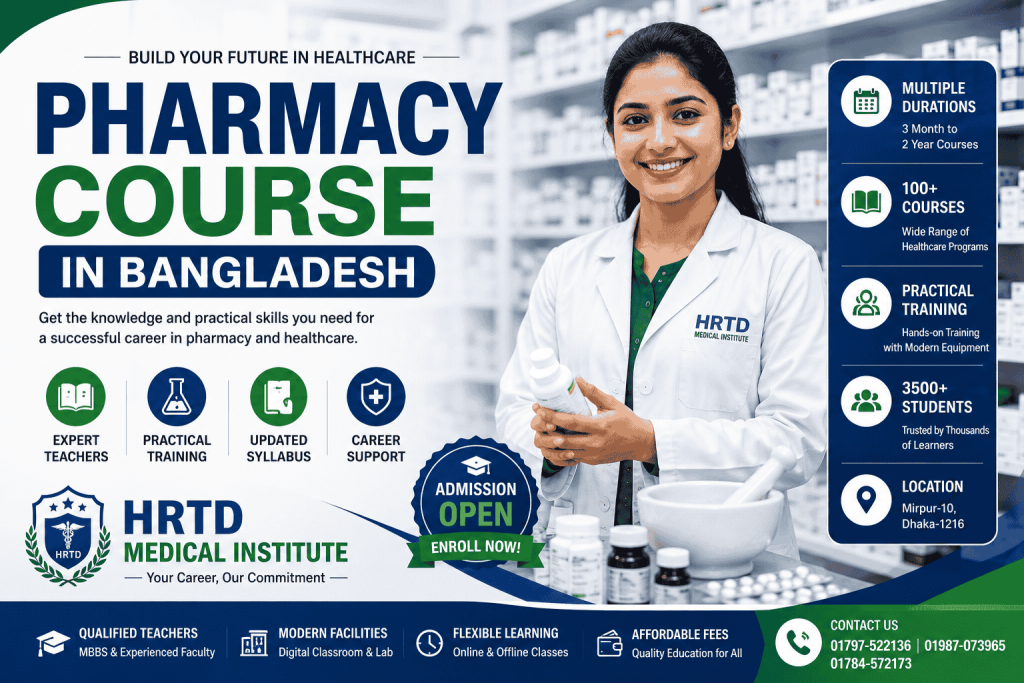
C Grade Best Pharmacy Course in Dhaka
HRTD Medical Institute offers C Grade Pharmacy Courses in Dhaka in three durations. Mobile: 01987-073965, 01797-522136
- 3-Month Pharmacy Course: Tk 15,500/-
- 6-Month Pharmacy Course: Tk 25,500/-
- 1-Year Pharmacy Course: Tk 52,500/-
These courses prepare students for the C Grade Pharmacist Registration Examination. A pharmacist registration number is required to obtain a drug license.
Course Fees and Payment System
- 3 Months (Tk 15,500/-): Admission Fee Tk 7,500/-, Monthly Fee Tk 2,500/-, Exam Fee Tk 500/-.
- 6 Months (Tk 25,500/-): Admission Fee Tk 7,500/-, Monthly Fee Tk 2,500/-, Exam Fee Tk 3,000/-.
- 1 Year (Tk 52,500/-): Admission Fee Tk 10,500/-, Monthly Fee Tk 3,000/-, Exam Fee Tk 3,000 × 2 = Tk 6,000/-.
Fees may change. Please confirm current fees by phone before admission.
Why the C Grade Pharmacy Course Matters
C Grade Pharmacist registration is required for a drug license. The C Grade Pharmacy Course helps students prepare for the registration examination and gives them the knowledge needed to run a pharmacy (medicine) business responsibly.
Course Duration and Examination
The C Grade Pharmacist Course is offered by many private medical institutes in 3-month, 6-month and 1-year formats. The duration of training is not fixed by regulation, but the C Grade Pharmacist examination is mandatory and is regulated by the Pharmacy Council of Bangladesh. To learn more about our C Grade Pharmacist Course and certificate, please contact us.
Admission Qualification
- SSC pass from any education board of Bangladesh, including Madrasah Board and Open University.
- Maximum age: 50 years.
Our Teachers
- Dr. Md. Sakulur Rahman, MBBS, CCD (BIRDEM), Course Director
- Dr. Sanjana Binte Ahmed, BDS, MPH, Assistant Course Director
- Dr. Tisha, MBBS, PGT Gyne, Assistant Course Director
- Dr. Amena Afroze Anu, MBBS, PGT Gyne, Assistant Course Director
- Md. Feroj Ahmed, BSc Pathology, PDT Medicine
- Md. Monir Hossain, B Pharm, M Pharm
- Md. Monirul Islam, B Pharm, M Pharm
- Dr. Suhana, MBBS, PGT Medicine
- Dr. Danial Hoque, MBBS, C-Card
- Dr. Tisha, MBBS
- Dr. Tisha, MBBS, PGT Medicine
- Dr. Afrin Jahan, MBBS, PGT Medicine
- Dr. Ananna, MBBS
- Dr. Lamia Afroze, MBBS
- Dr. Farhana Antara, MBBS
- Dr. Nazmun Nahar Juthi, BDS, PGT
- Dr. Farhana Sharna, MBBS
- Dr. Bushra, MBBS
- Dr. Turzo, MBBS
- Dr. Kamrunnahar Keya, BDS, PGT (Dhaka Dental College)
- Dr. Shamima, MBBS, PGT Gyne
- Dr. Alamin, MBBS
- Dr. Benzir Belal, MBBS
- Dr. Disha, MBBS
- Dr. Mahinul Islam, MBBS
- Dr. Anika, MBBS, PGT
- Dr. Jannatul Ferdous, MBBS, PGT Gyne
- Dr. Jannatul Aman, MBBS, PGT
- Dr. Sharmin Ankhi, MBBS, PGT Medicine
- Dr. Rayhan, BPT
- Dr. Abu Hurayra, BPT
Subjects
Number of subjects by program length: 1 Year – 10 subjects; 2 Years – 18 subjects; 3 Years – 24 subjects; 4 Years – 30 subjects. The full subject list is:
- Human Anatomy & Physiology
- Pharmacology-1 and Pharmacology-2
- First Aid
- Study of OTC Drugs and International OTC Drugs
- Study of Orthopedic Drugs
- Study of Antidiabetic Drugs
- Study of Cardiovascular Drugs
- General Chemistry and Biochemistry for Medical Study
- Hematology & Pathology (General and Systemic Pathology)
- Study of Gastrointestinal Drugs
- Study of Respiratory Drugs
- Microbiology & Antimicrobial Drugs
- Medical Diagnosis-1 and Medical Diagnosis-2
- Study of Hormonal Drugs
- Study of Neurological Drugs
- Study of Ophthalmic & ENT Drugs
- Study of Gynecological Drugs
- Study of Psychiatric Drugs
- Study of Dermatological Drugs
- Study of Pediatric Drugs
- Drug Rules & Regulations
- Study of Essential Drugs
- Study of Emergency Drugs
We also offer the DPhA (Diploma in Pharmacy Assistant) 2-Year Course: Tk 92,500, 18 subjects across 2 semesters, total exam marks 1,800.
Human Anatomy & Physiology
This subject covers the body's organization from cells to organ systems, focusing on structure (anatomy) and function (physiology), and how systems work together in health and disease.
- Foundations: levels of organization (cells, tissues, organs, organ systems), homeostasis and feedback loops, body planes and cavities.
- Body systems: integumentary, skeletal, muscular, nervous, cardiovascular, respiratory, digestive, urinary, endocrine, reproductive, and lymphatic/immune systems.
- Key processes: cellular respiration and metabolism, membrane transport, muscle contraction, cardiac cycle and blood pressure regulation, gas exchange, digestion and absorption, fluid balance and urine formation.
- Special topics: special senses, neuroanatomy, histology.
Pharmacology-1
Pharmacology-1 builds the foundation for understanding how drugs act, why they cause side effects, and how to use them rationally.
- Pharmacokinetics: absorption, distribution, metabolism, excretion (ADME), bioavailability, first-pass metabolism, plasma protein binding, loading and maintenance doses.
- Pharmacodynamics: drug receptors, dose–response, tolerance, drug interactions, therapeutic index, placebo effect.
- Pharmacovigilance and rational prescribing: adverse drug reactions, drug schedules, essential medicines, fixed-dose combinations, patient counseling.
- System-based topics: autonomic nervous system drugs, cardiovascular, CNS, respiratory, gastrointestinal, endocrine drugs, and chemotherapy (antimicrobials, antimalarials, antituberculars, anticancer drugs).
- Common high-yield areas: NSAIDs, aspirin, paracetamol poisoning, antihistamines, drugs for blood disorders, iron overdose, local anesthetics and analgesics.
Pharmacology-2
Pharmacology-2 focuses on drugs used for specific organ systems and infectious diseases. For each drug class, students study:
- Mechanism of action and classification.
- Therapeutic uses and indications.
- Adverse effects, contraindications and poisoning management (for example, atropine and paracetamol toxicity).
- Important drug interactions (for example, nitrates with sildenafil).
- One or two prototype drugs from each class in detail.
Main areas: cardiovascular drugs, antimicrobial agents, endocrine drugs (insulin, oral antidiabetics, thyroid and antithyroid drugs, corticosteroids, sex hormones), CNS drugs (antiepileptics, antipsychotics, antidepressants, opioids), and autacoids and NSAIDs.
Study of OTC Drugs
Over-the-counter (OTC) medicines are a central part of self-care, which makes their safe use an important public health topic.
- Prevalence: OTC drugs are widely used for pain, cough, colds and allergies, and self-medication rates are high in many populations.
- Role in healthcare: they give faster, cheaper access to treatment for minor ailments and can reduce unnecessary clinic visits.
- Risks: overdose or misuse (for example, of paracetamol, dextromethorphan or loperamide) can cause liver damage, heart problems, dependence or death, and may mask serious illness or interact with other drugs.
- Knowledge gaps: many people are unaware that antibiotics should not be sold or used without prescription, which contributes to antimicrobial resistance.
- Regulation: OTC classification varies by country, and unclear rules can lead to inappropriate sale of prescription medicines.
- Pharmacist's role: counseling patients on correct dose, duration, warnings and when to see a doctor.
Study of International OTC Drugs
This subject compares how non-prescription medicines are classified, labeled and sold in different countries, and which products are commonly used worldwide.
- Classification systems: prescription-only, pharmacy-only and general sale categories, and how national drug authorities (including Bangladesh's DGDA) define non-prescription medicines.
- Common international OTC categories: analgesics and antipyretics, antihistamines, antacids and acid reducers, cough and cold preparations, laxatives and antidiarrheals, oral rehydration salts, topical products, vitamins and minerals.
- Labeling and safety: dose limits, age restrictions, warnings, and maximum duration of self-treatment.
- Prescription-to-OTC switching: why some medicines move to non-prescription status and the safety evidence required.
- Practical use: recognizing imported brands, identifying active ingredients, and counseling patients correctly.
First Aid
First Aid training focuses on preserving life, preventing further harm and promoting recovery.
- CPR and AED use: restoring circulation when the heart stops.
- Choking: abdominal thrusts and back blows for adults, children and infants.
- Severe bleeding control: direct pressure, elevation, bandaging, and tourniquets in extreme cases.
- Shock management: recognizing signs, positioning and monitoring the patient.
- Primary assessment and scene safety: the DRABCD action plan.
- Wounds, burns and fractures: wound care, burn degrees (cool running water), RICE method and splinting.
- Medical emergencies: heart attack, stroke (FAST), seizures, diabetic emergencies, and severe allergic reactions (anaphylaxis).
- Unconsciousness and environmental emergencies: recovery position, heat exhaustion, heat stroke, hypothermia and poisoning.
Microbiology & Antimicrobial Drugs
Antimicrobials (antibiotics, antifungals, antivirals and antiparasitics) are essential to modern medicine, and antimicrobial resistance (AMR) is a major global threat.
- Mechanisms of action: targeting the bacterial cell wall, protein synthesis, nucleic acid synthesis or metabolic pathways.
- Classification: by target organism and by effect (bactericidal or bacteriostatic).
- Pharmacokinetics and pharmacodynamics: achieving effective drug levels at the site of infection while limiting toxicity.
- Clinical use: the right drug, dose and duration to reduce side effects and resistance.
- AMR: bacterial AMR was directly responsible for an estimated 1.27 million deaths in 2019 and contributed to nearly 5 million. Misuse and overuse in human health, animals and agriculture are the main drivers, and the WHO promotes a coordinated "One Health" response.
Study of Antimicrobial Drugs: Dispensing and Stewardship
This subject applies antimicrobial knowledge to everyday pharmacy practice, where antibiotics are frequently requested. Bangladesh faces a significant AMR burden, so proper dispensing is critical.
- Types of antimicrobials: antibacterial, antifungal, antiviral, and basic mechanisms.
- Why resistance develops and how incomplete courses and unnecessary use contribute.
- Correct dispensing and counseling: dose, timing, duration, completing the course, and common side effects.
- Recognizing when a patient should be referred to a doctor instead of self-treating.
Study of Orthopedic Drugs
This subject covers medicines used for musculoskeletal disorders.
- NSAIDs and analgesics: pain and inflammation in arthritis, sports injuries and trauma.
- Corticosteroids: including joint injections for bursitis and severe arthritis.
- DMARDs: slowing joint damage in autoimmune conditions such as rheumatoid arthritis.
- Bone health medications: bisphosphonates for osteoporosis, and an introduction to biologics.
- Antibiotics: bone and joint infections such as osteomyelitis.
- Conditions: osteoarthritis, rheumatoid arthritis, gout, fractures, osteoporosis, rickets, osteomalacia, Paget's disease, and sports injuries.
Study of Antidiabetic Drugs
- Classes: insulin and analogs, biguanides (metformin), sulfonylureas, meglitinides, thiazolidinediones, alpha-glucosidase inhibitors, DPP-4 inhibitors, GLP-1 receptor agonists and SGLT-2 inhibitors.
- Clinical use: metformin is commonly the first treatment for type 2 diabetes, with other drugs added as needed. Monitoring uses blood glucose and HbA1c.
- Safety: hypoglycemia is a risk with insulin, sulfonylureas and meglitinides; some drugs commonly cause gastrointestinal effects.
Study of Cardiovascular Drugs
- Antihypertensives: diuretics (furosemide, thiazides), ACE inhibitors, ARBs, beta-blockers and calcium channel blockers.
- Antiarrhythmics: drugs that correct heart rhythm disturbances.
- Heart failure drugs: digoxin, ACE inhibitors, beta-blockers.
- Antianginals: nitrates (nitroglycerin) and calcium channel blockers.
- Antithrombotics: anticoagulants and antiplatelets such as aspirin.
- Lipid-lowering agents: statins.
- Also covered: pharmacokinetics, pharmacodynamics, pathophysiology, patient monitoring, adverse effects and cardiotoxicity.
General Chemistry for Medical Study
General chemistry explains the physical and chemical processes of the human body and underpins biochemistry, physiology and pharmacology.
- Atomic structure and the periodic table: atoms, isotopes, periodic trends.
- Chemical bonding: ionic and covalent bonds, molecular geometry and intermolecular forces such as hydrogen bonding.
- Stoichiometry and solutions: the mole concept, concentration (molarity, percent mass) and preparing solutions.
- Thermodynamics: enthalpy (ΔH), entropy (ΔS), Gibbs free energy (ΔG), spontaneous reactions and the role of ATP.
- Kinetics and equilibrium: reaction rates, catalysts and enzymes, Le Chatelier's principle.
- Acids, bases and pH: buffers, titration and blood acid–base balance.
- Electrochemistry: redox reactions, relevant to nerve impulses and cellular respiration.
- Solubility and surface phenomena: solubility product (Ksp), adsorption and colloids, relevant to kidney function and drug delivery.
- Analytical techniques: spectroscopy, chromatography and electrophoresis.
Study of Gastrointestinal Drugs
- Acid-related disorders: antacids (calcium carbonate), H2 blockers (famotidine), proton pump inhibitors (omeprazole, pantoprazole) and mucosal protectants (sucralfate).
- Bowel motility: laxatives (bulk-forming, stimulant, osmotic, stool softeners), antidiarrheals (loperamide) and prokinetics (metoclopramide).
- Antiemetics: 5-HT3 antagonists (ondansetron), dopamine antagonists (metoclopramide), and antihistamines or anticholinergics for motion sickness.
- Inflammatory bowel disease: 5-aminosalicylates, corticosteroids and immunosuppressants.
- H. pylori eradication: combination antibiotic therapy with a PPI.
Study of Respiratory Drugs
- Conditions: asthma, COPD, respiratory infections such as pneumonia, and allergies.
- Bronchodilators: beta-agonists (salbutamol/albuterol, salmeterol), anticholinergics (ipratropium) and methylxanthines (theophylline).
- Anti-inflammatory agents: corticosteroids, leukotriene modifiers and mast cell stabilizers.
- Other agents: mucolytics, decongestants, antitussives, and biologic therapy for severe asthma.
- Delivery: inhalers and nebulizers, combination therapy, and patient education (for example, the risk of oral thrush with inhaled corticosteroids).
Study of Hormonal Drugs
Hormonal drugs are studied as part of pharmacology, typically in the later part of longer programs.
- Endocrine pancreas: insulin, glucagon and blood glucose control.
- Adrenal cortex: corticosteroids and their therapeutic uses.
- Thyroid: T3 and T4, and drugs for hyper- and hypothyroidism.
- Reproductive hormones: male and female sex hormones, contraceptives and hormone replacement therapy.
- Mechanism of action: hormone secretion, transport and receptor action.
Study of Neurological Drugs
Neuropharmacology is the study of how drugs affect the nervous system.
- Principles: neurotransmitter systems (dopamine, serotonin, norepinephrine, GABA), receptor interactions, the blood–brain barrier, pharmacokinetics and pharmacodynamics.
- Epilepsy: antiepileptic drugs.
- Movement disorders: levodopa and Parkinson's disease.
- Neurodegenerative disease: Alzheimer's disease and multiple sclerosis.
- Psychiatric disorders: depression, bipolar disorder, anxiety and schizophrenia.
- Pain management: opioid and non-opioid analgesics.
- Other: stroke, CNS infections, myasthenia gravis and neuropathies.
Study of Ophthalmic & ENT Drugs
- Eye: anatomy and drug-delivery barriers; administration (drops, ointments, injections); anti-glaucoma agents, anti-infectives, anti-inflammatories, mydriatics and cycloplegics, anti-allergy drugs and artificial tears; adverse reactions and contraindications.
- Ear, nose and throat: anti-infectives (otitis media/externa, tonsillitis), steroids, antihistamines and decongestants, ear wax softeners, analgesics and antipyretics, cough preparations, and antiseptic mouthwashes.
- Common disorders: sinusitis, Meniere's disease and epistaxis.
- Patient education: correct drug use, side-effect monitoring and adherence.
Study of Gynecological Drugs
- Gynecology: menstrual disorders, reproductive tract infections, contraception, hormone replacement therapy, PCOS and endometriosis, infertility, and an introduction to gynecological cancers.
- Obstetrics: drug safety in pregnancy and lactation, hypertensive disorders (preeclampsia), gestational diabetes, preterm labor and induction of labor, postpartum hemorrhage, and anticoagulation in pregnancy.
- General: pharmacokinetics in pregnancy, rational drug use and dosage forms such as tablets, capsules and pessaries.
Study of Essential Drugs
Essential medicines are those that satisfy the priority healthcare needs of a population, as defined by the World Health Organization (WHO).
- Concept and selection criteria: disease prevalence, evidence of efficacy and safety, and cost-effectiveness.
- WHO Model List: updated every two years, including the AWaRe (Access, Watch, Reserve) antibiotic classification.
- National lists: how countries adapt the WHO list to local needs.
- Management and policy: procurement, supply chain, quality assurance and financing.
- Rational use: standard treatment guidelines and appropriate prescribing.
Study of Emergency Drugs
This subject covers drugs for acute, life-threatening conditions, including mechanisms, routes of administration and safety considerations.
- Cardiovascular: adrenaline (cardiac arrest, anaphylaxis), amiodarone (ventricular fibrillation/tachycardia), atropine (symptomatic bradycardia), nitroglycerin and aspirin (suspected heart attack).
- Respiratory: bronchodilators (salbutamol/albuterol, ipratropium) and corticosteroids (hydrocortisone, dexamethasone).
- Neurological: naloxone (opioid overdose), benzodiazepines (diazepam, midazolam) and antiepileptics (phenytoin).
- Other: furosemide for fluid overload, glucose/dextrose for hypoglycemia, antihistamines and corticosteroids for severe allergy.
- Protocols: ACLS overview, poisoning and overdose antidotes, trauma care, and early sepsis recognition.
- Operations: proper storage of emergency drugs and kits, and the need for training and certification.
Practical Classes
Practical classes at HRTD Medical Institute teach the hands-on skills needed in pharmacies and basic healthcare settings, including vital signs measurement, respiratory care, injections and infusions, dispensing, and first aid (CPR, bleeding, burns and fractures). Students practice under supervision. Practical training is a major part of the 6-month course and supports preparation for the Pharmacy Council of Bangladesh examination.
Heartbeat and Heart Rate
A heartbeat is the rhythmic contraction and relaxation of the heart. The electrical impulse starts at the sinoatrial (SA) node, the heart's natural pacemaker, spreads through the atria and then the ventricles. Heart rate is the number of beats per minute (bpm); the normal resting range for adults is 60–100 bpm, and athletes may have lower rates. Children have higher rates (for example, about 80–120 bpm at ages 3–5).
- Diastole: the chambers relax and fill with blood.
- Atrial systole: the atria contract and push remaining blood into the ventricles.
- Ventricular systole: the right ventricle sends blood to the lungs and the left ventricle to the rest of the body.
- The cycle repeats as the heart returns to diastole.
Heart rate is affected by fitness, stress, caffeine, nicotine, alcohol, medications, illness, pregnancy, hormones and sleep. To check it, rest for 5–10 minutes, place the index and middle fingers on the thumb side of the wrist, and count beats for 15 seconds × 4 (or a full minute).
Tachycardia
Tachycardia is a resting heart rate above 100 bpm in adults. It may be a normal response to stress, exercise or fever, or a sign of conditions such as anemia, thyroid disease or arrhythmia. Types include sinus tachycardia, supraventricular tachycardia (SVT), ventricular tachycardia (VT, potentially life-threatening) and atrial fibrillation/flutter. Symptoms include palpitations, dizziness, shortness of breath and chest discomfort. Triggers include caffeine, alcohol, stimulants, smoking, stress, dehydration, lung or heart disease and high blood pressure.
Bradycardia
Bradycardia is a resting heart rate below 60 bpm in adults. It can be normal in athletes and during sleep but is a concern when it causes dizziness, fainting, fatigue, shortness of breath, chest pain or confusion.
- Types: sinus bradycardia and heart block.
- Causes: heart disease, sick sinus syndrome, beta-blockers and calcium channel blockers, thyroid problems, electrolyte imbalance, sleep apnea and aging.
- Diagnosis and treatment: examination, ECG, Holter monitoring and blood tests; treatment addresses the cause, and severe cases may need a pacemaker.
Pulse Measurement
- Pulse points: radial (routine), carotid (emergency), brachial and femoral.
- Technique: wash hands, keep the patient relaxed, use the index and middle fingers (not the thumb) with light pressure, and count for 60 seconds if irregular or 30 seconds × 2 if regular.
- Parameters: rate, rhythm (regular or irregular), force/volume (weak, normal, bounding) and equality on both sides.
- Safety: never press both carotid arteries at the same time.
- Documentation: record rate, rhythm and strength accurately.
Inhaler and Rotahaler
Correct technique is crucial; with poor technique, little medicine reaches the lungs. Students learn the types of devices (metered-dose inhalers, dry powder inhalers such as the Rotahaler, soft mist inhalers), common errors (not exhaling fully, not holding the breath), and how to teach patients.
- Rotahaler: insert the capsule, rotate the base to open it, breathe out away from the device, seal lips on the mouthpiece, inhale deeply and forcefully, hold the breath for about 10 seconds, then confirm the capsule is empty and discard it.
- Pressurized MDI: remove the cap and shake, breathe out, start inhaling slowly while pressing the canister, continue inhaling and hold the breath for 5–10 seconds. A spacer helps patients who struggle with coordination.
- After use: clean the device regularly and rinse or gargle with plain water if the medicine contains a steroid, to prevent oral thrush.
Nebulizer
- Theory: a nebulizer converts liquid medicine into a fine mist for deep lung delivery; used in asthma and COPD; types include jet, ultrasonic and mesh.
- Procedure: assemble the compressor, tubing, medication cup and mask or mouthpiece; prepare the correct dose; seat the patient upright; encourage slow, deep breaths; monitor for palpitations, tremor or worsening breathlessness.
- Hygiene: wash hands, use personal equipment, and clean, rinse and dry reusable parts after each use.
- Education: record the treatment and teach patients and caregivers home use and when to seek medical help.
IM Injection
- Prepare: wash hands; gather medication, syringe, alcohol swabs, gauze and a sharps container.
- Select and clean the site: for example, deltoid or ventrogluteal; clean with an alcohol swab and let it dry.
- Z-track method: pull the skin to the side to prevent leakage into subcutaneous tissue.
- Insert the needle quickly at 90 degrees.
- Inject slowly and steadily, then wait a few seconds before withdrawing at the same angle.
- Finish: dispose of the syringe in the sharps container, apply gentle pressure (no rubbing) and observe the patient for reactions.
IV Injection (IV Push)
- Verify: confirm the order, patient identity and the medication rights (drug, dose, time, route, patient, documentation); wash hands and wear gloves.
- Saline flush: scrub the port with an alcohol wipe for 15–30 seconds, let it dry, then flush with 3–5 mL saline to check patency.
- Administer: attach the medication syringe and push slowly at the prescribed rate, using a timer, while watching the patient.
- Follow-up flush: flush with 3–5 mL saline at the same rate to clear the line.
- Monitor: watch for adverse reactions, especially respiratory changes, and check compatibility with any running IV fluid.
Saline Infusion
- Fluid types: isotonic (0.9% normal saline), hypotonic (0.45% saline) and hypertonic solutions.
- Indications: dehydration, hypovolemia, hemorrhage, sepsis, mild sodium depletion, and as a vehicle for compatible medications.
- Cautions: heart failure, severe renal impairment and sodium retention, because of the risk of fluid overload.
- Preparation: check the fluid for clarity and expiry, use aseptic technique, spike the bag and prime the tubing to remove all air, and label the bag.
- Administration: explain the procedure and obtain consent, insert the cannula, and calculate and regulate the flow rate.
- Monitoring: watch for local reactions (pain, swelling, phlebitis, extravasation) and systemic reactions (fluid overload, electrolyte imbalance, infection); document everything and know when to stop and seek senior advice.
Cannula Insertion
- Theory: peripheral vein anatomy, indications and contraindications (for example, an arm with an AV fistula), cannula gauges and flow rates, aseptic non-touch technique, and complications (hematoma, phlebitis, infiltration, accidental arterial puncture).
- Preparation: explain the procedure, obtain consent, assemble equipment, apply the tourniquet, palpate a suitable vein and clean the site.
- Insertion: stabilize the vein, insert the cannula bevel up at a shallow angle, watch for flashback, advance the cannula and safely retract the stylet.
- Securing: release the tourniquet, flush with saline to confirm patency, and secure with a sterile dressing that keeps the site visible.
- Aftercare: label with date and time, document the procedure, and learn safe removal.
Oxygen Measurement
- Physiology: how oxygen is transported in the blood bound to hemoglobin, and the difference between oxygen saturation (SpO₂) and partial pressure (PO₂).
- Pulse oximetry: the core practical skill, including factors that affect accuracy such as movement, nail polish and tissue thickness.
- Blood gas analysis: an invasive, highly accurate method that reports SaO₂, PaO₂, pH and carbon dioxide levels.
- Interpretation: normal SpO₂ is typically 95–99%; low values indicate hypoxemia and may require oxygen therapy.
Location and Schedule
Classes and practical training are held at HRTD Medical Institute, Mirpur-10, Dhaka. Flexible schedules are available for working professionals, with morning and evening shifts on Fridays, Mondays and Saturdays.
How to Become a Registered Pharmacist in Bangladesh
Pharmacist registration in Bangladesh is managed by the Pharmacy Council of Bangladesh (PCB) and is graded by qualification:
- A Grade: Bachelor of Pharmacy (B.Pharm), a four-year university degree.
- B Grade: Diploma in Pharmacy.
- C Grade: completion of a pharmacy training course followed by the PCB's registration examination. This is the route our courses prepare you for.
A registered pharmacist can apply for a drug license to run a pharmacy and may work in pharmacies, hospitals or pharmaceutical companies. Registration requirements and renewal rules are set by the PCB and may change, so please check the Council's current notices. To enroll in a Pharmacy Course at HRTD Medical Institute, call 01987-073965 or 01797-522136.
Related Posts

Best Pharmacy Course in Bangladesh: A Step-by-Step Guide to Practical Training
Discover the best pharmacy course in Bangladesh with this step-by-step guide. Le...

Best Pharmacy Course in Dhaka: A Step-by-Step Guide to Practical Training
Discover the best pharmacy course in Dhaka with our step-by-step guide. Learn ab...
Pharmacy Best Course In Dhaka
Pharmacy Best Course in Dhaka Details Pharmacy Best Course in Dhaka. Mo...
