 HRTD Medical Institute

Dental Training Course Profile:
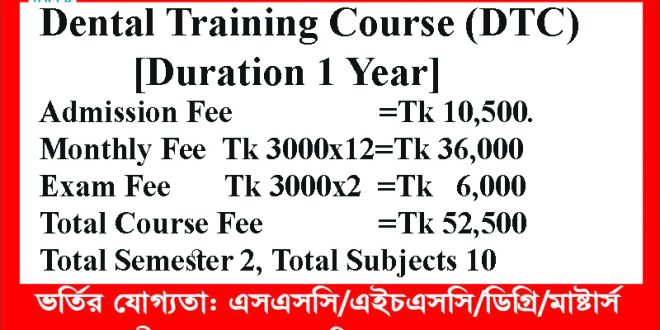
Dental Training Course. Mobile No. 01987-073965, 01797-522136. Dental Training Course is the Shortest Duration Course in Dental Education and Training. Dental Training Course Contains 10 Subjects in 2 Semesters. 1st Semester Contains 5 Subjects and 2nd Semester Contains 5 Subjects.
Location of Dental Training Center in Dhaka, Bangladesh
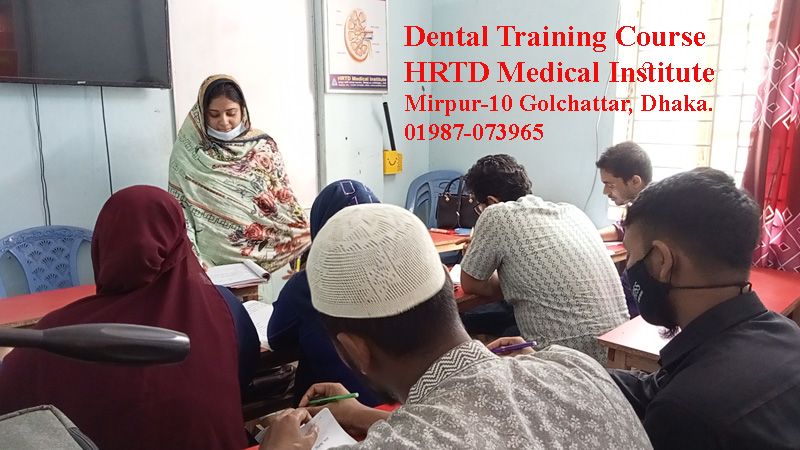
Location of Dental Training Center. Mobile No. 01987-073965, 01797-522136. HRTD Medical Institute, Abdul Ali Madbor Mansion, Section-6, Block-Kha, Road-1, Plot-11, Mirpur-10 Golchattar, Metro Rail Piller No. 249, Dhaka-1216.
Subjects for Dental 1 Year Course in Dhaka, Bangladesh
Subjects for Dental Training Course 1 Year. Mobile No. 01987-073965, 01797-522136. Human Anatomy & Physiology, Pharmacology, First Aid & Study of OTC Drugs, Hematology & Pathology, Anatomy of Head Neck, Dental Anatomy & Physiology, Conservative Dentistry, and Dental Surgery.
Course Fee for Dental Training in Dhaka, Bangladesh
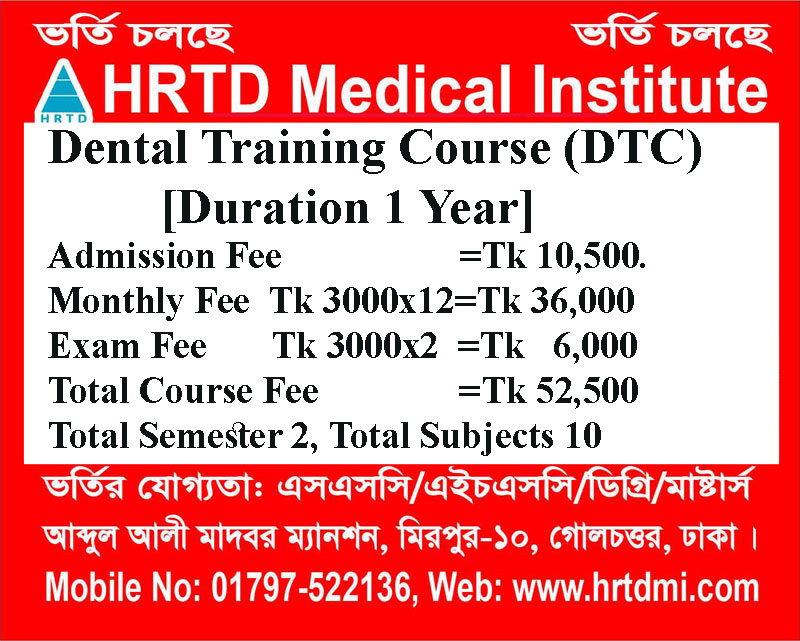
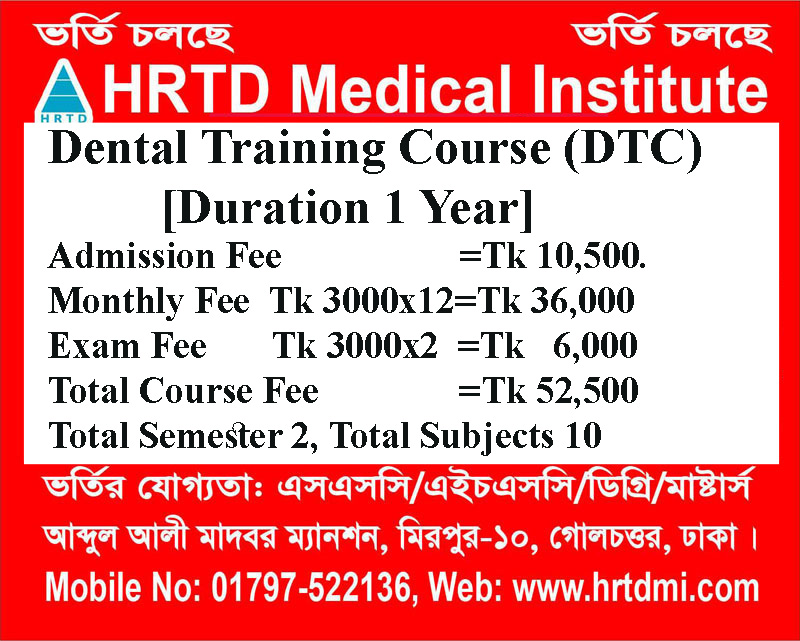
Dental Training Course Fee. Mobile No. 01987-073965, 01797-522136. 1 Year Dental Training Fee Tk 52500/- including Admission Fee Tk 10500/-, Monthly Fee Tk 3000/- and Exam Fee Tk 3000×2=Tk 6000/-.
Job Opportunities:
Dental Service Center, Dental Chamber, Private Hospital, Dental Chamber Setup, Dental Business, Dental Surgery, etc.
Our Others Course:
Pharmacy Course, Dental Training Course, Nursing Course, Pathology Course, Homeopathy Course, Veterinary Course, Village Doctor Course, PDT( Post Diploma Training) Course, PPT, LMAF Training Course, LMAFP Course, Poultry Course, DMA ( Diploma Medical Assistant), Diploma in Medicine and Surgery (DMDS).
Teachers for Dental Training Course
Dr. Sanjana Bite Ahmed, BDS, MPH
Dr. Sakulur Rahman, MBBS, CCD (BIRDEM)
Dr. Nurunnahar Keya, BDS,
Dr. Nazmun Nahar Juthi, BDS, PGT
Dr. Kamrunnahar Keya, BDS, PGT
Dr. Suhana, MBBS, PGT
Dr. Layla, MBBS, PGT
Dr. Lamia, MBBS
Dr. Disha, MBBS, FCPS (FP)
Dr. Afrin, MBBS, PGT
Dr. Tisha, MBBS, PGT
Dr. Danial Haque, MBBS, CCD
Dr. Turzo, MBBS, FCPS (FP)
Dr. Benzir, MBBS, FCPS (FP)
Dr. Trisha, MBBS, PGT
Dr. Farhana, MBBS, PGT
Dr. Jannatul Aman, MBBS, PGT
Dr. Mahinul Islam, MBBS
Dr. Amena Afroze Anu, MBBS, PGT
What is Dental Scaling?
Dental scaling is dental cleaning by a caller dental machine. This is routinely performed to help patients with gum disease and excessive plaque buildup. While a standard cleaning will address the surface of the tooth, scaling goes much deeper. If your dentist suggests dental scaling and root planing for your teeth, you should do this otherwise your teeth may be damaged day after day.
ডেন্টাল স্কেলিং কী?

ডেন্টাল স্কেলিং হল একটি কলার ডেন্টাল মেশিন দ্বারা দাঁত পরিষ্কার করা। মাড়ির রোগ এবং অতিরিক্ত প্লাক জমা রোগীদের সাহায্য করার জন্য এটি নিয়মিতভাবে করা হয়। যদিও একটি স্ট্যান্ডার্ড পরিষ্কার দাঁতের পৃষ্ঠকে মোকাবেলা করবে, স্কেলিং আরও গভীরে যায়। যদি আপনার দাঁতের ডাক্তার আপনার দাঁতের জন্য ডেন্টাল স্কেলিং এবং রুট প্ল্যানিংয়ের পরামর্শ দেন, তাহলে আপনার এটি করা উচিত অন্যথায় আপনার দাঁত দিনের পর দিন ক্ষতিগ্রস্ত হতে পারে।
What is Dental Filling?
A dental filling is the fill-up of a small dental hole or cavity. To repair a cavity, a dentist removes the decayed tooth tissue and then fills the space with a filling material. The filling materials are of various types. Some are long-lasting and some are shot-lasting.
ডেন্টাল ফিলিং কী?

ডেন্টাল ফিলিং হল দাঁতের একটি ছোট গর্ত বা গর্ত পূরণ করা। গর্ত মেরামত করার জন্য, একজন দন্তচিকিৎসক ক্ষয়প্রাপ্ত দাঁতের টিস্যু অপসারণ করেন এবং তারপর একটি ফিলিং উপাদান দিয়ে স্থানটি পূরণ করেন। ফিলিং উপকরণ বিভিন্ন ধরণের হয়। কিছু দীর্ঘস্থায়ী এবং কিছু শট-লাস্টিং।
Causes of dental filling
When decay-causing bacteria come into contact with sugars and starches from foods and drinks, they form an acid. This acid can attack the tooth’s surface (enamel), causing it to lose minerals.
When a tooth is repeatedly exposed to acid, such as when you frequently consume food or drink high in sugar and starches, the enamel continues to lose minerals. A white spot may appear where minerals have been lost. This is a sign of early decay.
Tooth decay can be stopped or reversed at this point. Enamel can repair itself by using minerals from saliva and fluoride from toothpaste or through the application of fluoride by a dentist or dental hygienist. If more minerals are lost than can be restored, the enamel weakens and eventually breaks down, forming a cavity.
More severe decay can cause a large hole or even destruction of the entire tooth. If tooth decay is not treated, it can cause pain, infection, and even tooth loss. So dental filling treatment is very essential for a cavity patient.
দাঁত ভরাটের কারণ

যখন ক্ষয়কারী ব্যাকটেরিয়া খাবার এবং পানীয় থেকে পাওয়া চিনি এবং স্টার্চের সংস্পর্শে আসে, তখন তারা একটি অ্যাসিড তৈরি করে। এই অ্যাসিড দাঁতের পৃষ্ঠ (এনামেল) আক্রমণ করতে পারে, যার ফলে এটি খনিজ পদার্থ হারাতে পারে।

যখন দাঁত বারবার অ্যাসিডের সংস্পর্শে আসে, যেমন যখন আপনি ঘন ঘন চিনি এবং স্টার্চযুক্ত খাবার বা পানীয় গ্রহণ করেন, তখন এনামেল খনিজ পদার্থ হারাতে থাকে। খনিজ পদার্থ হারিয়ে যাওয়ার জায়গায় একটি সাদা দাগ দেখা দিতে পারে। এটি প্রাথমিক ক্ষয়ের লক্ষণ।

এই সময়ে দাঁত ক্ষয় বন্ধ করা যেতে পারে বা বিপরীত করা যেতে পারে। লালা থেকে খনিজ পদার্থ এবং টুথপেস্ট থেকে ফ্লোরাইড ব্যবহার করে অথবা দাঁতের ডাক্তার বা ডেন্টাল হাইজিনিস্ট দ্বারা ফ্লোরাইড প্রয়োগের মাধ্যমে এনামেল নিজেকে মেরামত করতে পারে। যদি পুনরুদ্ধার করা সম্ভবের চেয়ে বেশি খনিজ পদার্থ নষ্ট হয়ে যায়, তাহলে এনামেল দুর্বল হয়ে যায় এবং অবশেষে ভেঙে যায়, যার ফলে একটি গর্ত তৈরি হয়।

আরও তীব্র ক্ষয় একটি বড় গর্ত বা এমনকি পুরো দাঁত ধ্বংস করতে পারে। যদি দাঁত ক্ষয়ের চিকিৎসা না করা হয়, তাহলে এটি ব্যথা, সংক্রমণ এবং এমনকি দাঁতের ক্ষতির কারণ হতে পারে। তাই ক্যাভিটি রোগীর জন্য ডেন্টাল ফিলিং চিকিৎসা অত্যন্ত প্রয়োজনীয়।
What are the 5 dental problems?
Dentistry is one of the oldest fields of medicine, and it is vitally important to our overall health and well-being. That said, it is also one of the most commonly neglected aspects of health care, with many people failing to receive regular dental checkups and cleanings.
Unfortunately, this opens the door to a wide range of dental problems, all of which can have serious consequences if left untreated. Here are five of the most common dental problems:
1. Tooth Decay: Tooth decay is one of the most common dental problems and is caused by a buildup of plaque and bacteria on the teeth. Over time, this buildup can lead to cavities and tooth decay, which can cause serious pain and discomfort.
১. দাঁত ক্ষয়: দাঁতের ক্ষয় হল সবচেয়ে সাধারণ দাঁতের সমস্যাগুলির মধ্যে একটি এবং এটি দাঁতে প্লাক এবং ব্যাকটেরিয়া জমা হওয়ার কারণে হয়। সময়ের সাথে সাথে, এই জমা হওয়ার ফলে গর্ত এবং দাঁতের ক্ষয় হতে পারে, যা গুরুতর ব্যথা এবং অস্বস্তির কারণ হতে পারে।
2. Gum Disease: Gum disease is caused by bacteria and plaque that accumulates at the gum line. If left untreated, it can lead to gum recession, tooth loss, and even bone loss.
২. মাড়ির রোগ: মাড়ির রোগ ব্যাকটেরিয়া এবং প্লাকের কারণে হয় যা মাড়ির রেখায় জমা হয়। যদি চিকিৎসা না করা হয়, তাহলে মাড়ির পতন, দাঁতের ক্ষয়, এমনকি হাড়ের ক্ষয়ও হতে পারে।
3. Tooth Sensitivity: Tooth sensitivity is caused by a thinning of the enamel, which is the outer layer of the tooth. This can lead to pain when consuming hot or cold foods and drinks.
৩. দাঁতের সংবেদনশীলতা: দাঁতের বাইরের স্তর, এনামেল পাতলা হয়ে যাওয়ার কারণে দাঁতের সংবেদনশীলতা দেখা দেয়। গরম বা ঠান্ডা খাবার এবং পানীয় গ্রহণ করলে ব্যথা হতে পারে।
4. Tooth Abrasion: Tooth abrasion is caused by improper brushing techniques and can lead to the erosion of the enamel. Over time, this can cause the teeth to become more sensitive and can even lead to tooth loss.
৪. দাঁত ঘর্ষণ: দাঁত ঘর্ষণ ভুল ব্রাশ করার কৌশলের কারণে হয় এবং এর ফলে এনামেল ক্ষয় হতে পারে। সময়ের সাথে সাথে, এর ফলে দাঁত আরও সংবেদনশীল হয়ে উঠতে পারে এবং এমনকি দাঁতের ক্ষতিও হতে পারে।
5. Malocclusion: Malocclusion is the misalignment of the teeth, either due to genetics or other factors. This can lead to difficulty speaking and eating, as well as a higher risk of tooth decay and gum disease.
These five dental problems are just some of the many that can occur if proper oral hygiene is not maintained. Regular visits to the dentist for checkups and cleanings can help to prevent and address these issues and is essential for maintaining a healthy smile.
৫. ম্যালোক্লুশন: ম্যালোক্লুশন হল দাঁতের ভুল সারিবদ্ধতা, হয় জেনেটিক্স বা অন্যান্য কারণে। এর ফলে কথা বলতে এবং খেতে অসুবিধা হতে পারে, পাশাপাশি দাঁতের ক্ষয় এবং মাড়ির রোগের ঝুঁকিও বেড়ে যেতে পারে।

এই পাঁচটি দাঁতের সমস্যা হল সঠিক মৌখিক স্বাস্থ্যবিধি বজায় না রাখলে যে অনেক সমস্যা দেখা দিতে পারে তার মধ্যে কয়েকটি। নিয়মিত চেকআপ এবং পরিষ্কারের জন্য দন্তচিকিৎসকের কাছে যাওয়া এই সমস্যাগুলি প্রতিরোধ এবং সমাধানে সাহায্য করতে পারে এবং একটি সুস্থ হাসি বজায় রাখার জন্য এটি অপরিহার্য।
Admission System for Dental Training Course In Bangladesh
অনলাইন এবং অফলাইন দুই সিস্টেমেই ভর্তির সুযোগ আছে।
Total Subjects for Dental Training Course In Bangladesh
- Human Anatomy & Physiology,
- Chemistry & Pharmacology,
- First Aid & Treatment,
- Hematology & Pathology,
- Study of OTC Drugs,
- Anatomy of the Head and Neck,
- Neuro Anatomy & Physiology,
- Dental Anatomy & Physiology,
- Dental Pathology & Dental Caries,
- Conservative Dentistry & Dental Surgery.
Payment System of for Dental Training Course In Bangladesh
Payment System of Diploma Dental Technology Course. Mobile Phone Number 01797522136, 01987073965.
1 Year Diploma: Total Cost -62,500/- ,Admission Fee Tk 12,500/-, Monthly Fee Tk 3500/-,Exam Fee Tk 4000/- per Semester.
Class Time for Dental Training Course In Bangladesh
Weekly Class 3 hours. For Regular Students Friday 1 hour, Saturday 1 hour, and Monday 1 hour. For Job holders, Friday is 3 hours, or Monday is 3 hours. Morning Shift 9:00 am to 12:00 pm, and Evening Shift 3:00 pm to 6:00 pm.
Dental Courses of HRTD Medical Institute
Dental Courses of HRTD Medical Institute. Mobile Phone 01797522136, 01987073965. Dental Training Course, Diploma Dental Assistant, Diploma in Dental Technology Course, Diploma in Dental, Post Diploma in Dental Surgery.
These Courses are helpful and essential for taking a job in Dental Hospitals, Health Service Centers, Dental Care Centers, Dental Services Centers, Health Sectors of NGOs, Health Centers of Schools, Health Centers of Colleges, Health Sectors of Universities, and Health Sectors of Garments Manufacturing Companies, Dental Research and Manufacturing Company, Dental Device Manufacturing Companies, Dental Chemical Manufacturing Companies, etc.
These Courses are also helpful for conducting a Dental Chamber, Dental Clinic, Dental Nursing Home, General Hospital, Medical College, Medical Institute, Health Research Institute, Medical Research Institute, Dental Research Institute, etc.
Human Anatomy & Physiology for Dental Training Course In Bangladesh
The study of the Body Structure and its functions is Anatomy and Physiology. Here we discuss the systems of the Human Body and its Organs, Tissues, and Cells. The systems of the Human Body are the Digestive System, Respiratory System, Cardiovascular System, Skeletal System, Muscular System, Nervous System, Endocrine System, Immune System, Lymphatic System, Integumentary System, and Urinary System.
দেহ গঠন এবং এর কার্যকারিতা অধ্যয়নের বিষয় হল অ্যানাটমি এবং ফিজিওলজি। এখানে আমরা মানবদেহের সিস্টেম এবং এর অঙ্গ, টিস্যু এবং কোষ নিয়ে আলোচনা করব। মানবদেহের সিস্টেমগুলি হল পাচনতন্ত্র, শ্বাসযন্ত্র, হৃদযন্ত্র, কঙ্কালতন্ত্র, পেশীতন্ত্র, স্নায়ুতন্ত্র, অন্তঃস্রাবী ব্যবস্থা, রোগ প্রতিরোধ ব্যবস্থা, লিম্ফ্যাটিক সিস্টেম, ইন্টিগুমেন্টারি সিস্টেম এবং মূত্রতন্ত্র।
Human Body Systems (মানব দেহের তন্ত্র)
- Skeletal System (কঙ্কালতন্ত্র): Provides structure and protection with bones (হাড়), cartilage (তরুণাস্থি), and ligaments (লিগামেন্ট).
- Muscular System (পেশীতন্ত্র): Enables movement using muscles (পেশী).
- Nervous System (স্নায়ুতন্ত্র): Coordinates body activities via the brain (মস্তিষ্ক), spinal cord (মেরুদণ্ড), and nerves (স্নায়ু).
- Cardiovascular System (রক্ত সংবহন তন্ত্র): Transports blood (রক্ত), nutrients, and oxygen throughout the body using the heart (হৃদপিণ্ড) and blood vessels.
- Respiratory System (শ্বসনতন্ত্র): Facilitates breathing and gas exchange through the lungs (ফুসফুস) and airways.
- Digestive System (পরিপাকতন্ত্র): Breaks down food using organs like the stomach (পাকস্থলী), liver (যকৃৎ), and intestines (অন্ত্র).
- Endocrine System (অন্তঃক্ষরা তন্ত্র): Regulates functions using hormones from glands like the thyroid (থাইরয়েড) and pancreas (অগ্ন্যাশয়
Pharmacology For Dental Training Course In Bangladesh
What is Pharmacology?
Pharmacology is the branch of medical science that studies drugs – their sources, actions, uses, side effects, and interactions in the body.
Pharmacology (ফার্মাকোলজি or ঔষধবিজ্ঞান) is the scientific study of drugs (ওষুধ) and their interactions with living systems. It explores what drugs do to the body and what the body does to the drugs. This subject is crucial in medical and dental education in Bangladesh, taught in both English and Bengali to ensure a comprehensive understanding
The study of pharmacology is divided into two main areas:
Important Terms in Pharmacology
| Term | Meaning |
|---|---|
| Drug | A substance that causes a change in body function |
| Dose | The amount of drug to be taken |
| Side effect | Unintended effect of a drug |
| Contraindication | A condition where a drug should not be used |
| Potency | Amount of drug needed for effect |
| Efficacy | Maximum effect a drug can produce |
- Pharmacokinetics (ফার্মাকোকাইনেটিক্স or ঔষধসঞ্চরণবিজ্ঞান): This branch studies what the body does to the drug. It involves the absorption, distribution, metabolism, and excretion (ADME) of a chemical compound within the body.
- Example: How quickly a painkiller is absorbed into the bloodstream (রক্তপ্রবাহে শোষিত হওয়া) and how the liver breaks it down (যকৃতে বিপাক).
- Pharmacodynamics (ফার্মাকোডাইনামিক্স or ঔষধক্রিয়াবিজ্ঞান): This branch studies what the drug does to the body. It explores the mechanism of drug action, where drugs bind to target molecules (like receptors or enzymes) to produce a therapeutic effect or side effects.
- Example: How a local anesthetic blocks nerve signals (স্নায়ু সংকেত বন্ধ করা) to numb an area during a dental procedure.
Terminology in English and Bengali
| English Term | Bengali Translation | Explanation |
|---|---|---|
| Drug/Medicine | ওষুধ / ঔষধ | A substance used to diagnose, prevent, or treat a disease. |
| Dose | মাত্রা | The specific amount of a drug to be administered. |
| Side Effect | পার্শ্বপ্রতিক্রিয়া | An unintended effect of a drug that occurs at a normal dose. |
| Mechanism of Action | কার্যপ্রণালী | How a drug produces its effect in the body. |
| Prescription | প্রেসক্রিপশন | An order for medication issued by a licensed medical practitioner. |
| Antibiotic | অ্যান্টিবায়োটিক | A medicine that kills or inhibits the growth of bacteria. |
Significance in Dental Courses
For dental students, pharmacology focuses on Dental Therapeutics (ডেন্টাল থেরাপিউটিক্স) and includes:
- Local anesthetics (স্থানীয় অবেদনিক).
- Analgesics (ব্যথা উপশমকারী).
- Antibiotics (অ্যান্টিবায়োটিক) used for oral infections.
- Understanding drug interactions and how certain systemic drugs (e.g., blood thinners) affect dental procedures.
Chemistry for Dental Training Course In Bangladesh
Dental students study chemistry because oral health is deeply connected to chemical principles—from tooth structure to materials used in dental treatments. The subject generally includes General Chemistry, Organic Chemistry, and Biochemistry.
General Chemistry (Basic Principles Relevant to Dentistry)
A. Structure of Matter
- Atoms, ions, molecules
- Chemical bonding: ionic, covalent, metallic
- Importance in enamel, dentin, cementum mineral content
→ Example: Hydroxyapatite formula: Ca₁₀(PO₄)₆(OH)₂
B. Acids, Bases, pH
- pH of saliva (~6.2–7.6)
- Demineralization of teeth occurs below critical pH 5.5
- Buffer systems in saliva (bicarbonate system)
C. Solutions & Concentrations
- Osmosis and diffusion in oral tissues
- Fluoride concentration in toothpaste / mouthwash
D. Chemical Reactions
- Redox reactions
- Corrosion of dental instruments
- Setting reactions of dental materials (glass ionomer, amalgam)
2. Organic Chemistry (Very Important for Dental Biomolecules)
A. Functional Groups
- Alcohols, carboxylic acids, amines, aldehydes, ketones
- Basis for many drugs and biomolecules
B. Carbohydrates
- Glucose, sucrose, lactose
- Role in dental caries formation (bacterial fermentation → acid)
C. Lipids
- Used in cell membranes of oral tissues
- Fat-soluble vitamins: A, D, E, K → important for oral health
D. Proteins & Enzymes
- Collagen in dentin and periodontal ligament
- Enzymes in saliva (amylase, lysozyme)
E. Polymers
- Acrylics and resins used in dentures and restorations
3. Biochemistry (Core for Dental Students)
A. Enzymes
- Salivary enzymes
- Enzyme inhibition (relevant to drug interactions)
B. Metabolism
- Carbohydrate metabolism → diabetes → periodontal disease
- Calcium–phosphate metabolism → tooth mineralization
C. Vitamins & Minerals
- Vitamin C → collagen formation
- Calcium & phosphorus → hydroxyapatite
- Fluoride → enamel remineralization
D. Saliva Composition
- Mucins, enzymes, electrolytes
- Role in lubrication, digestion, protection
E. Oral Microbiology Basics
- Acid production by bacteria
- Chemical basis of plaque formation
4. Chemistry of Dental Materials
A. Amalgam
- Silver, tin, copper, mercury alloys
- Setting reactions and corrosion behavior
B. Composite Resin
- Bis-GMA, urethane dimethacrylate.
- Polymerization chemistry (light-curing)
C. Glass Ionomer Cements
- Acid–base reaction between aluminosilicate glass and polyacrylic acid
- Fluoride release mechanism
D. Impression Materials
- Alginate: gelation reaction
- Silicone elastomers: polymerization chemistry
E. Dental Ceramics
- Porcelain chemistry and sintering
First Aid For Dental Training Course In Bangladesh
First aid for a dental course focuses on managing medical emergencies that might arise within a dental clinic setting, as well as providing immediate care for acute traumatic dental injuries. The training goes beyond general first aid to cover specific scenarios faced by dental professionals.
Medical Emergencies in a Dental Setting
Dental professionals are trained to prevent, recognize, and manage a range of medical crises, as these can happen to any patient, regardless of their medical history. The most common emergencies include:
- Syncope (Fainting): The most frequent emergency in a dental office, often caused by anxiety or pain. Management involves positioning the patient in the Trendelenburg (supine with feet elevated) position and ensuring an open airway.
- Hyperventilation (Panic Attack): Usually anxiety-induced rapid breathing, managed by calming the patient and having them breathe into a paper bag or cupped hands to restore
CO2 levels.
- Allergic Reactions/Anaphylaxis: Ranging from minor skin rashes to life-threatening anaphylactic shock. Management includes administering antihistamines for mild cases and epinephrine (adrenaline) via intramuscular injection immediately for anaphylaxis.
- Asthma Attack: Helping the patient use their own bronchodilator inhaler (e.g., salbutamol) and administering oxygen if necessary.
- Hypoglycemia (Low Blood Sugar): A diabetic emergency. If the patient is conscious, oral glucose (e.g., orange juice, sugar packets) is administered. If unconscious, glucagon injection is used.
- Chest Pain (Angina/Heart Attack): Involves stopping treatment, positioning the patient comfortably, administering aspirin, and calling emergency services.
- Seizures (Epileptic Fits): Protecting the patient from injury, not putting anything in their mouth, and placing them in the recovery position after the seizure subsides.
- Airway Obstruction: Due to the supine position and use of small instruments, choking on materials is a risk. Dental staff are trained in the Heimlich maneuver (abdominal thrusts) and CPR.
Study of OTC Drug For Dental Training Course In Bangladesh
OTC drugs are medicines you can buy without a doctor’s prescription.
They are safe for the public to use by themselves for common problems like pain, fever, cold, cough, toothache, etc.
Very Simple Definition:
OTC drugs = “Over-The-Counter” medicines that you can buy directly from a pharmacy without needing a doctor.
OTC Drugs in Dentistry
1. Painkillers
These reduce tooth pain.
- Paracetamol – mild pain, safe for most people
- Ibuprofen – best for toothache and swelling
- Naproxen – long-lasting pain relief
2. Numbing Gels
These make the area feel numb for a short time.
- Benzocaine gel – for mouth ulcers or teething
- Lidocaine gel – for sores and mouth pain
3. Mouth Cleaners (Antiseptics)
Kill germs in the mouth.
- Chlorhexidine mouthwash – for gum problems
- Hydrogen peroxide rinse – for mouth wounds
- Povidone-iodine – kills bacteria and viruses
4. Fluoride Products
Help prevent tooth decay.
- Fluoride toothpaste
- Fluoride mouthwash
5. Mouth Ulcer Treatment
Helps heal or reduce pain from ulcers.
- Benzydamine mouthwash
- Orabase gel (protects ulcer area)
6. Anti-fungal
For fungal infection in the mouth.
- Clotrimazole gel
- Nystatin suspension
7. Dry Mouth Products
Help when the mouth feels dry.
- Artificial saliva spray
- Biotene gel or rinse
8. Sensitive Teeth Products
Reduce sharp tooth sensitivity.
- Potassium nitrate toothpaste
- Stannous fluoride toothpaste
OTC Drugs – Classification Chart (Dental Use)
                 OTC DRUGS
                     │
 ┌────────────────────┼─────────────────────┐
 │                    │                     │
Painkillers       Mouth Antiseptics     Fluoride Products
 │                    │                     │
 ├───────────────┐    ├─────────────┐       ├───────────────┐
 │               │    │             │       │               │
Paracetamol   Ibuprofen   Chlorhexidine   Hydrogen Peroxide   Fluoride Toothpaste
Naproxen      Aspirin     Povidone-iodine  CPC mouthwash      Fluoride Mouthrinse
নিউরো অ্যানাটমি (Neuro Anatomy) কী?
নিউরো অ্যানাটমি হল স্নায়ুতন্ত্রের গঠন, কার্যপ্রণালী এবং তাদের পারস্পারিক সম্পর্ক নিয়ে অধ্যয়ন। এটি প্রধানত দুইটি ভাগে বিভক্ত:
- সেন্ট্রাল নার্ভাস সিস্টেম (CNS) — কেন্দ্রীয় স্নায়ুতন্ত্র
- পারিফেরাল নার্ভাস সিস্টেম (PNS) — প্রান্তিক স্নায়ুতন্ত্র
নিউরনের গঠন (Structure of Neuron):
- সেল বডি (Cell body / Soma)
- ডেনড্রাইট (Dendrites) — বার্তা গ্রহণ করে।
- অক্সন (Axon) — বার্তা প্রেরণ করে।
- সিন্যাপস (Synapse) — দুইটি নিউরনের সংযোগস্থল।
নিউরো অ্যানাটমির ব্যবহার:
- ব্রেইন স্ট্রোক, প্যারালাইসিস, মেমোরি লস, নিউরোলজিকাল ডিজঅর্ডার ইত্যাদি রোগের সঠিক নির্ণয় ও চিকিৎসায় সাহায্য করে।
Hematology For Dental Training Course In Bangladesh
Hematology is the study of blood, blood-forming organs, and blood disorders.
For dentists, it is essential because many blood diseases show oral manifestations and affect bleeding control, healing, and infection risk.
Hematology in Dental
(ডেন্টাল সেবায় হেমাটোলজির ভূমিকা)
হেমাটোলজি কী?
Hematology হল রক্ত, রক্ত গঠনকারী অঙ্গ এবং রক্তের রোগসমূহ নিয়ে অধ্যয়ন। এতে রক্তের কোষ (RBC, WBC, Platelets), হিমোগ্লোবিন, রক্তজমাট বাঁধার প্রক্রিয়া (coagulation), এবং বিভিন্ন রক্তরোগ যেমন এনিমিয়া, হেমোফিলিয়া ইত্যাদি অন্তর্ভুক্ত।
Why Hematology Is Important in Dentistry
- Helps assess bleeding risk before extractions/surgery
- Many disorders cause oral signs (petechiae, pallor, glossitis, gingival bleeding)
- Some blood diseases require treatment modification
- Avoiding complications with anticoagulants
- Helps understand anemia, leukemia, bleeding disorders, etc.
- Dentists often diagnose systemic diseases from oral clues
ডেন্টাল ফিল্ডে হেমাটোলজির গুরুত্ব:
ডেন্টাল চিকিৎসায় রক্তের বিভিন্ন উপাদান এবং রক্ত জমাট বাঁধার প্রক্রিয়া গুরুত্বপূর্ণ ভূমিকা পালন করে। যেমন:
রক্তজমাট বাঁধা (Bleeding & Coagulation):
- দাঁতের অপারেশন (extraction), স্কেলিং বা সার্জারির সময় যদি রোগীর রক্তজমাট বাঁধার সমস্যা থাকে (যেমন হেমোফিলিয়া), তাহলে অতিরিক্ত রক্তপাত হতে পারে।
- তাই আগে থেকেই Bleeding Time (BT), Clotting Time (CT), Prothrombin Time (PT), INR এসব টেস্ট করা হয়।
রক্তস্বল্পতা (Anemia):
- দাঁতের গোড়ায় ইনফেকশন বা সার্জারির পরে রোগী দুর্বল হয়ে পড়লে, হেমোগ্লোবিন কম থাকলে তা দ্রুত নির্ণয় করতে হয়।
- Iron deficiency anemia দাঁতের মাড়ি ফ্যাকাশে করে এবং ইনফেকশনের ঝুঁকি বাড়ায়।
সিস্টেমিক রোগ ও ওরাল লক্ষণ (Oral signs of Blood Disorders):
- লিউকেমিয়া (Leukemia): মাড়ি ফুলে যায়, রক্ত পড়ে, ঘা দেখা দেয়।
- থ্যালাসেমিয়া: দাঁতের আকার-আকৃতির পরিবর্তন হতে পারে।
- হেমোফিলিয়া: ছোট আঘাতে মাড়ি থেকে দীর্ঘক্ষণ রক্ত পড়া।
ইনফেকশন প্রতিরোধে সাদা রক্তকণিকার ভূমিকা:
- ওরাল ইনফেকশন হলে White Blood Cell (WBC) বাড়ে। তাই অনেক সময় ডেন্টাল চিকিৎসার আগে Complete Blood Count (CBC) করা হয়।
ওষুধ প্রয়োগে সাবধানতা:
- অ্যান্টিকোয়াগুলেন্ট (যেমন Warfarin) খাওয়া রোগীদের দাঁতের চিকিৎসায় অতিরিক্ত রক্তপাত হতে পারে, তাই ডোজ ম্যানেজ করা জরুরি।
Dental Anatomy & Physiology For Dental Training Course In Bangladesh
INTRODUCTION TO DENTAL ANATOMY
Dental Anatomy অন্তর্ভুক্ত করে—
- Tooth morphology
- Tooth numbering & identification
- Tooth development
- Dental arches
- Occlusion
- Supporting structures
FUNCTIONS OF TEETH
- Mastication – খাবার চিবানো
- Esthetics – মুখের সৌন্দর্য
- Speech / Phonetics –
- Protection of oral tissues
- Supporting facial muscles
TYPES OF TEETH (হিউম্যান ডেন্টিশন)
A. Primary / Deciduous Teeth (দুধ দাঁত) – ২০টি
- Incisors – 8
- Canines – 4
- Molars – 8
B. Permanent Teeth – ৩২টি
- Incisors – 8
- Canines – 4
- Premolars – 8
- Molars – 12
Dentition Periods
- 0–6 yrs → Primary dentition
- 6–12 yrs → Mixed dentition
- 12+ yrs → Permanent dentition
TOOTH MORPHOLOGY (দাঁতের আকৃতি ও বৈশিষ্ট্য)
1. Incisors
- Cutting food
- Sharp incisal edge
- Maxillary central incisor = সবচেয়ে বড় anterior tooth
- Mandibular incisors = smallest permanent teeth
2. Canines
- Strongest tooth
- Longest root
- Tearing of food
- Cornerstone of arch
3. Premolars
- 2 cusps (bicuspids)
- Grinding function
- Maxillary 1st premolar: usually 2 roots
4. Molars
- 4–5 cusps
- Strongest chewing teeth
- Maxillary molars → 3 roots
- Mandibular molars → 2 roots
- 3rd molars show maximum variation
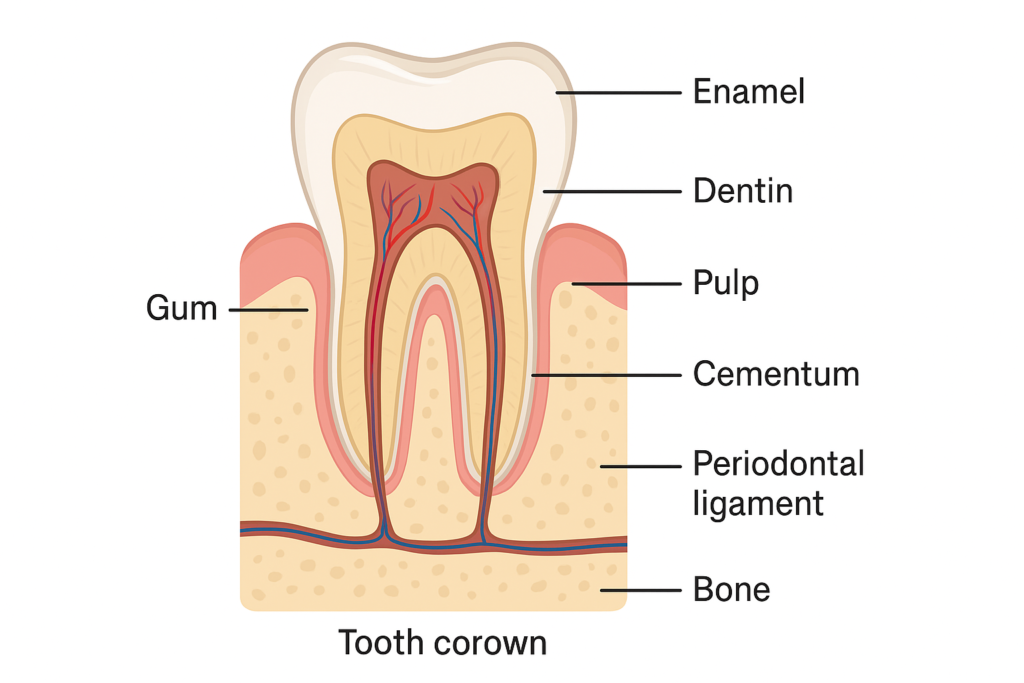
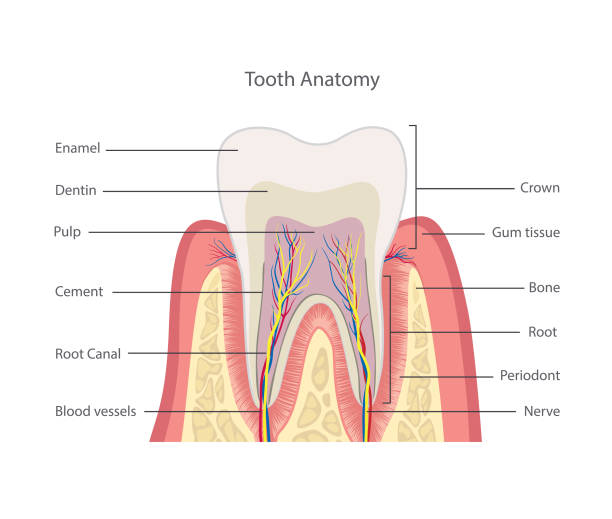
TOOTH STRUCTURE (HISTOLOGY)
A tooth has 2 main parts:
1. Crown (দাঁতের মাথা)
2. Root (দাঁতের মূলে)
Layers of the Tooth:
1. Enamel
- Hardest tissue in human body
- 96% inorganic (hydroxyapatite)
- Covers crown
- Avascular (নালীবিহীন)
- Cannot regenerate
2. Dentin
- 70% inorganic
- Yellowish & softer than enamel
- Contains dentinal tubules → sensitivity
- Types: primary, secondary, tertiary
3. Pulp
- Soft tissue
- Contains nerves, blood vessels
- Functions: nourishment, sensation, defense
4. Cementum
- Covers root
- Attachment to PDL
- Types: acellular & cellular
PERIODONTIUM (Periodontal Tissue)
দাঁতকে হাড়ের সাথে যুক্ত ও সাপোর্ট করে।
Components
- Gingiva – মাড়ি
- Periodontal ligament (PDL)
- Cementum
- Alveolar bone
PDL Functions
- Shock absorption
- Sensory function
- Tooth movement during orthodontics
TOOTH DEVELOPMENT (Odontogenesis)
Stages of tooth development:
- Initiation (Bud stage)
- Cap stage
- Bell stage
- Apposition
- Maturation
- Eruption
Developmental tissues
- Enamel → ectoderm
- Dentin & Pulp → mesenchyme
ERUPTION OF TEETH
Primary Teeth Eruption Chart
| Tooth | Age |
|---|---|
| Central incisor | 6–10 months |
| Lateral incisor | 10–16 months |
| Canine | 17–23 months |
| 1st Molar | 14–18 months |
| 2nd Molar | 23–31 months |
Permanent Teeth
| Tooth | Age |
|---|---|
| 1st molar | 6 yrs |
| Central incisor | 6–7 yrs |
| Lateral incisor | 7–8 yrs |
| Canine | 11–12 yrs |
| Premolars | 10–12 yrs |
| 2nd molar | 12–13 yrs |
| 3rd molar | 17–25 yrs |
TOOTH NUMBERING SYSTEMS
Most Common: FDI System
- Upper right: 11–18
- Upper left: 21–28
- Lower left: 31–38
- Lower right: 41–48
Other Systems
- Universal
- Palmer notation
DENTAL ARCHES
Maxillary Arch
- Larger, fixed
- Teeth overlap the mandibular arch
Mandibular Arch
- Movable (TMJ)
- Slightly smaller
Anatomy of Headneck For Dental Training Course In Bangladesh
Head & Neck Anatomy = মুখমণ্ডল, খুলিঃ (skull), ঘাড়, মাংসপেশি, স্নায়ু, রক্তনালী, লালাগ্রন্থি, দাঁত-supporting structures ইত্যাদি নিয়ে আলোচনা।
Dental students-এর জন্য important কারণ—
- Local anesthesia
- Tooth extraction
- Oral surgery
- Infection spread
- Muscles of mastication
- Nerve supply of teeth
Dental Head & Neck Anatomy হলো সেই শাখা যেখানে মাথা ও ঘাড়ের সকল গঠন (হাড়, মাংসপেশি, স্নায়ু, রক্তনালী, লালাগ্রন্থি, মুখগহ্বর, দাঁত ও আশেপাশের টিস্যু) বিস্তারিতভাবে অধ্যয়ন করা হয়, যা দাঁতের চিকিৎসা, অ্যানেস্থেসিয়া এবং ওরাল সার্জারির জন্য অত্যন্ত গুরুত্বপূর্ণ।
Skull (খুলি) মোট হাড় = ২২টি
Skull দুটি ভাগে বিভক্ত:
1️⃣ Cranium (মস্তিষ্ক আবরণের হাড়)
- Frontal
- Parietal (২টি)
- Temporal (২টি)
- Occipital
- Sphenoid
- Ethmoid
Cranial Bones (মস্তিষ্ক আবরণের হাড়) – ৮টি
| Bone Name | Number | বাংলা নাম |
|---|---|---|
| Frontal | 1 | কপালের হাড় |
| Parietal | 2 | মাথার পার্শ্ব হাড় |
| Temporal | 2 | কর্ণের পাশে |
| Occipital | 1 | মাথার পেছনে |
| Sphenoid | 1 | প্রজাপতি-আকৃতির হাড় |
| Ethmoid | 1 | নাক ও চোখের মাঝখানে |
2️⃣ Facial Bones (মুখমণ্ডলের হাড় – 14টি)
- Maxilla (২টি)
- Mandible
- Zygomatic (২টি)
- Nasal (২টি)
- Lacrimal (২টি)
- Palatine (২টি)
- Inferior nasal concha (২টি)
- Vomer
Facial Bones (মুখমণ্ডলের হাড়) – ১৪টি
| Bone Name | Number | বাংলা নাম |
|---|---|---|
| Maxilla | 2 | উপরের চোয়াল |
| Mandible | 1 | নিচের চোয়াল |
| Zygomatic | 2 | গালের হাড় |
| Nasal | 2 | নাকের হাড় |
| Lacrimal | 2 | অশ্রু গ্রন্থির হাড় |
| Palatine | 2 | মুখের ছাদের পিছনে |
| Inferior Nasal Concha | 2 | নাকের ভেতরের পাতলা হাড় |
| Vomer | 1 | নাকের মধ্যবর্তী বিভাজক |
Ear Bones (Auditory Ossicles – ৬টি)
| Bone | Number |
|---|---|
| Malleus | 2 |
| Incus | 2 |
| Stapes | 2 |
Hyoid Bone – ১টি
| Bone | Number | Note |
|---|---|---|
| Hyoid | 1 | ঘাড়ে ঝুলন্ত হাড়, অন্য হাড়ের সাথে যুক্ত না |
Neuro Anatomy & Physiology For Dental Training Course In Bangladesh
Neuroanatomy is the study of the structure and organization of the nervous system, including the brain, spinal cord, and peripheral nerves.
নিউরোঅ্যানাটমি হলো স্নায়ুতন্ত্রের গঠন, বিন্যাস ও বিভিন্ন অংশের (যেমন—মস্তিষ্ক, মেরুদণ্ড, ক্রেনিয়াল নার্ভ, পেরিফেরাল নার্ভ) কাঠামোগত অধ্যয়ন।
Nervous system দুই ভাগে ভাগ:
A. Central Nervous System (CNS)
- Brain (মস্তিষ্ক)
- Spinal Cord (মেরুদণ্ড)
B. Peripheral Nervous System (PNS)
- Cranial Nerves (১২ জোড়া)
- Spinal Nerves
Dentistry-তে সবচেয়ে গুরুত্বপূর্ণ: Cranial Nerves
Brain-এর প্রধান অংশ
1. Cerebrum (বড় মস্তিষ্ক)
- চিন্তা, স্মৃতি, মুভমেন্ট নিয়ন্ত্রণ করে।
2. Cerebellum
- Balance ও coordination।
3. Brainstem
- Midbrain
- Pons
- Medulla
Dental importance: PONS = Trigeminal nerve (CN V) origin
Cranial Nerves – Dental এর জন্য সবচেয়ে Important
CN V – Trigeminal Nerve
Face, teeth, gums, oral mucosa এর sensation দেয়
Chewing muscle (mastication muscle) control করে
ট্রাইজেমিনাল নার্ভের ৩টি শাখা:
- Ophthalmic (V1) – চোখের উপরের অংশ
- Maxillary (V2) – Upper jaw (maxilla) এর অনুভূতি
- Upper teeth
- Maxillary sinus
- Upper lip
- Mandibular (V3) – Lower jaw (mandible) এর অনুভূতি ও chewing movement
- Lower teeth
- Tongue anterior 2/3 sensation
- Mastication muscles (masseter, temporalis, pterygoids)
Cranial Nerves কী?
Cranial nerves হলো ১২ জোড়া স্নায়ু, যেগুলো brain থেকে সরাসরি বের হয় এবং
head, face, oral cavity, teeth, tongue, salivary gland, eyes, nose, neck–এর কাজ নিয়ন্ত্রণ করে।
এদেরকে “brain-এর special nerves” বলা যায়।
Number of Cranial Nerves
মোট ১২ জোড়া cranial nerve আছে:
I → XII পর্যন্ত নাম্বার দেওয়া থাকে।
নীচে প্রতিটি cranial nerve-এর নাম + কাজ (Bangla-friendly short notes):
I. Olfactory Nerve
- কাজ → Smell (ঘ্রাণ)
II. Optic Nerve
- কাজ → Vision (দৃষ্টি/দেখা)
III. Oculomotor Nerve
- চোখের নড়াচড়া
- চোখের pupil ছোট করা
IV. Trochlear Nerve
- চোখের নির্দিষ্ট muscle (superior oblique) কে চালায়
V. Trigeminal Nerve → MOST IMPORTANT for Dentistry
Face, teeth, gums, oral cavity এর sensation দেয়
এছাড়াও chewing muscle (mastication muscle) চালায়
শাখা:
- V1 → Ophthalmic
- V2 → Maxillary (upper teeth sensation)
- V3 → Mandibular (lower teeth sensation + chewing muscles)
VI. Abducens Nerve
- চোখের lateral movement (side দিকে)
VII. Facial Nerve
- Facial expression (হাসা, রাগ করা)
- Taste (tongue anterior 2/3)
- Salivary gland (submandibular, sublingual)
VIII. Vestibulocochlear Nerve
- Hearing (শোনা)
- Balance (ভারসাম্য)
IX. Glossopharyngeal Nerve
- Taste (posterior 1/3 tongue)
- Parotid gland secretion
- Gag reflex
X. Vagus Nerve
- Heart, lungs, digestive organs নিয়ন্ত্রণ
- Speech ও swallowing-এ ভূমিকা
XI. Accessory Nerve
- Neck muscle (sternocleidomastoid, trapezius) চালায়
XII. Hypoglossal Nerve
- Tongue movement (জিভ নড়াচড়া)
Cranial Nerves Chart
| No. | Name | Type | Main Function (Bangla) |
|---|---|---|---|
| I | Olfactory | Sensory | Smell (ঘ্রাণ) |
| II | Optic | Sensory | Vision (দেখা) |
| III | Oculomotor | Motor | চোখের নড়াচড়া, pupil control |
| IV | Trochlear | Motor | চোখের superior oblique muscle চালায় |
| V | Trigeminal | Both | Face sensation, teeth sensation, chewing muscles |
| VI | Abducens | Motor | চোখকে side-এ নড়ায় |
| VII | Facial | Both | Facial expression, taste (front 2/3 tongue), saliva |
| VIII | Vestibulocochlear | Sensory | Hearing & balance |
| IX | Glossopharyngeal | Both | Taste (back 1/3), gag reflex, parotid gland |
| X | Vagus | Both | Speech, swallowing, heart & digestive control |
| XI | Accessory | Motor | Neck muscles (SCM, trapezius) |
| XII | Hypoglossal | Motor | Tongue movement |
Extra Dental-Focused Short Chart
| Nerve | Dental Importance |
|---|---|
| V (Trigeminal) | Upper & lower teeth sensation, local anesthesia |
| VII (Facial) | Saliva, taste, facial movement |
| IX (Glossopharyngeal) | Gag reflex, posterior tongue sensation |
| XII (Hypoglossal) | Tongue movement, speech |
Trigeminal Nerve For Dental Training Course In Bangladesh
The Trigeminal nerve (Cranial Nerve V) is the largest cranial nerve that provides sensation to the face, oral cavity, teeth, and anterior scalp, and controls the muscles of mastication.
ট্রাইজেমিনাল নার্ভ (Cranial Nerve V) হলো সবচেয়ে বড় ক্রেনিয়াল নার্ভ, যা মুখ, দাঁত, জিহ্বা, ঠোঁট এবং সামনের ত্বকের সংবেদন দেয় এবং চিবানোর মাংসপেশি নিয়ন্ত্রণ করে।
Type (ধরন):
- Both (Sensory + Motor)
- Sensory: মুখ ও মুখগহ্বরের সমস্ত সংবেদন
- Motor: Mastication muscles (চিবানোর মাংসপেশি)
Origin (উৎপত্তি):
- Sensory root: Trigeminal ganglion থেকে আসে
- Motor root: Pons থেকে আসে (brainstem-এর অংশ)
Functions (কার্য):
A. Sensory Function
| Structure | Nerve Branch | Dental/Clinical Importance |
|---|---|---|
| Upper teeth, upper gums | Maxillary (V2) | Upper toothache, dental anesthesia |
| Lower teeth, lower gums | Mandibular (V3) | Lower toothache, IAN block |
| Face, forehead, eye | Ophthalmic (V1) | Facial sensation, eye reflexes |
| Tongue (anterior 2/3) | Mandibular (V3 – Lingual nerve) | Tongue sensation, taste (with VII) |
| Oral mucosa | V2, V3 | Oral pain perception |
B. Motor Function
- Muscles of mastication (চিবানোর মাংসপেশি)
- Masseter
- Temporalis
- Medial pterygoid
- Lateral pterygoid
- Other small muscles: Tensor veli palatini, Tensor tympani
Dental Relevance:
- Chewing movement
- Bite force
- Jaw control during procedures
Branches of Trigeminal Nerve (V1, V2, V3)
| Branch | Name | Type | Area/Function | Dental Importance |
|---|---|---|---|---|
| V1 | Ophthalmic | Sensory | Forehead, eye, upper eyelid, nose bridge | Rarely dental, mostly face sensation |
| V2 | Maxillary | Sensory | Upper jaw, upper teeth, upper gums, maxillary sinus, upper lip | LA blocks, upper tooth procedures |
| V3 | Mandibular | Both | Lower jaw, lower teeth, lower gums, anterior tongue (sensation), mastication muscles | LA blocks, lower teeth procedures, mastication control |
Dental Local Anesthesia (LA) Related Nerves
- Inferior Alveolar Nerve (V3) → Lower teeth, mandibular block
- Mental Nerve (V3) → Lower anterior teeth & lip
- Lingual Nerve (V3) → Tongue anterior 2/3, floor of mouth
- Infraorbital Nerve (V2) → Upper teeth, upper lip, cheek
- Posterior Superior Alveolar Nerve (V2) → Upper molars
Clinical Relevance (Dental Focus)
- Toothache & pulpitis diagnosis
- Gum disease & oral pain pathways
- Nerve blocks for painless dental procedures
- Trigeminal neuralgia (severe facial pain)
- Surgical procedures: Tooth extraction, root canal, implants
Mnemonic for Trigeminal Nerve
“Three Big Branches Take Care of Face, Teeth & Chewing”
- V1 → Ophthalmic → Face
- V2 → Maxillary → Upper teeth
- V3 → Mandibular → Lower teeth + Chewing muscles
Quick Dental Chart – Trigeminal Nerve
| Branch | Teeth | Gum | Tongue | Muscles | LA Block |
|---|---|---|---|---|---|
| V1 (Ophthalmic) | None | None | None | None | None |
| V2 (Maxillary) | Upper teeth | Upper gums | None | None | Infraorbital, PSA |
| V3 (Mandibular) | Lower teeth | Lower gums | Anterior 2/3 | Mastication | IAN, Mental, Lingual |
Dental Pharmacology-1 For Dental Training Course In Bangladesh
ফার্মাকোলজি কী?
ফার্মাকোলজি হলো এমন একটি বিজ্ঞান যা ওষুধ কীভাবে কাজ করে এবং শরীরে কী প্রভাব ফেলে তা নিয়ে আলোচনা করে। এটি দুটি ভাগে ভাগ করা যায়:
Pharmacokinetics (ফার্মাকোকিনেটিকস): ওষুধ শরীরে কীভাবে শোষিত, বিতরণ, বিপাক ও নির্গত হয়।
Pharmacodynamics (ফার্মাকোডাইনামিকস): ওষুধ শরীরে কী প্রভাব ফেলে বা কীভাবে কাজ করে।
ডেন্টাল ফার্মাকোলজি কী?
ডেন্টাল ফার্মাকোলজি হলো সেই শাখা যেখানে দন্তচিকিৎসায় ব্যবহৃত ওষুধ সম্পর্কে পড়ানো হয়, যেমন:
- ব্যথা নিরাময়কারী (Analgesics)
- সংক্রমণ প্রতিরোধক (Antibiotics)
- অ্যানাস্থেটিক (Anesthetics)
- অ্যান্টিসেপ্টিক (Antiseptics)
- অ্যান্টি-ইনফ্ল্যামেটরি (Anti-inflammatory drugs)
Dental Pharmacology – 1 এ কী কী পড়ানো হয়?
১. ওষুধের সংজ্ঞা ও শ্রেণীবিভাগ
- Drug কি
- Generic ও Trade Name পার্থক্য
- ওষুধের বিভিন্ন ধরন (Systemic vs Local)
ডেন্টাল ব্যবহারে প্রয়োজনীয় সাধারণ ওষুধ
- Pain killer: Paracetamol, Ibuprofen
- Antibiotics: Amoxicillin, Metronidazole
- Local anesthetics: Lidocaine
ওষুধ প্রয়োগের পদ্ধতি (Routes of drug administration)
- Oral (মুখে খাওয়ার)
- Topical (মুখে বা দাঁতের ওপর প্রয়োগ)
- Injection (সরাসরি রক্তে বা গামে)
Dose ও Dosage form
- Tablet, Capsule, Syrup
- Gel, Ointment, Spray ইত্যাদি
তর্কতা ও পার্শ্বপ্রতিক্রিয়া
- প্রতিটি ওষুধের কিছু পার্শ্বপ্রতিক্রিয়া থাকে যেমন: বমি, এলার্জি, ডায়রিয়া ইত্যাদি।
- ডেন্টাল রোগীদের পূর্ণ ইতিহাস না জেনে ওষুধ না দেয়া উচিত।
Dental Pharmacology-2 For Dental Training Course In Bangladesh
Dental Pharmacology – 2 (ডেন্টাল ফার্মাকোলজি – ২)
এই অধ্যায়ে আমরা দন্তচিকিৎসায় ব্যবহৃত কিছু গুরুত্বপূর্ণ ওষুধ যেমন অ্যান্টিবায়োটিক, অ্যানালজেসিক, অ্যান্টিসেপ্টিক, অ্যান্টিফাঙ্গাল ও অ্যান্টিভাইরাল ওষুধ সম্পর্কে বিস্তারিত আলোচনা করব।
. Analgesics (ব্যথানাশক ওষুধ)
ব্যথা কমাতে ব্যবহৃত হয়। দুটি প্রধান শ্রেণি:
(A) Non-Narcotic Analgesics:
- হালকা থেকে মাঝারি ব্যথার জন্য
- উদাহরণ:
- Paracetamol – জ্বর ও ব্যথা কমায়
- Ibuprofen – ব্যথা ও ইনফ্ল্যামেশন কমায় (NSAID)
(B) Narcotic Analgesics:
- তীব্র ব্যথার জন্য, আসক্তির সম্ভাবনা থাকে
- উদাহরণ:
- Codeine
- Tramadol
2. Antibiotics (জীবাণু প্রতিরোধক ওষুধ)
ডেন্টাল ইনফেকশন ও সার্জারির পর সংক্রমণ রোধে ব্যবহৃত হয়।
সাধারণ অ্যান্টিবায়োটিক:
- Amoxicillin – দাঁতের অ্যাবসেস ও জিনজিভাইটিসে
- Metronidazole – অ্যানারোবিক ব্যাকটেরিয়ায়
- Clindamycin – পেনিসিলিন অ্যালার্জি রোগীর জন্য
নির্দেশনা:
- পরিপূর্ণ কোর্স সম্পন্ন করা জরুরি
- খাবার পর খাওয়া ভালো
Oral Pathology For Dental Training Course In Bangladesh
অরাল প্যাথলজি (Oral Pathology) হলো মুখগহ্বরের রোগসমূহের কারণ, প্রকৃতি, গঠনগত পরিবর্তন এবং তার প্রভাব নিয়ে আলোচনা করে এমন একটি শাখা। এটি ডেন্টাল সায়েন্সের একটি গুরুত্বপূর্ণ অংশ।
What is Oral Pathology?
Oral Pathology is the branch of dental science that deals with the nature, identification, and management of diseases affecting the oral and maxillofacial regions. It combines clinical, radiographic, microscopic, and biochemical examinations to understand the causes and effects of diseases in the mouth.
অরাল প্যাথলজি কি?
অরাল প্যাথলজি হলো এমন একটি শাস্ত্র যা মুখগহ্বর, চোয়াল, দাঁত ও সংলগ্ন টিস্যুসমূহে দেখা দেওয়া রোগ এবং তাদের কারণ, গঠনগত পরিবর্তন ও কার্যপ্রক্রিয়া বিশ্লেষণ করে।
Common Oral Pathological Conditions
1. Dental Caries
- Decay of tooth structure due to bacterial activity
- Causes: Sugary diet, poor hygiene, acid production
2. Gingivitis
- Inflammation of the gums
- Symptoms: Redness, swelling, bleeding
3. Periodontitis
- Infection of the tissues around the teeth
- Can lead to tooth mobility and bone loss
4. Oral Ulcers
- Painful sores in the mouth
- Causes: Trauma, infections, nutritional deficiencies
5. Oral Candidiasis (Thrush)
- Fungal infection caused by Candida albicans
- Seen as white patches on the tongue or cheek
6. Leukoplakia
- White patches in the mouth that cannot be rubbed off
- Often linked to tobacco use
- Considered a premalignant condition
7. Oral Cancer
- Commonly affects the tongue, lips, and floor of the mouth
- Risk factors: Smoking, alcohol, HPV infection
8. Lichen Planus
- Chronic inflammatory condition
- May cause white striations, burning sensation
9. Ameloblastoma
- Benign but locally aggressive tumor of the jaw
- Often found in the mandible
মুখগহ্বরের সাধারণ প্যাথলজিক্যা ল রোগসমূহ:
১. ডেন্টাল ক্যারিজ (Dental Caries)
- দাঁতে ক্ষয় হওয়া বা গর্ত হওয়া
- ব্যাকটেরিয়া দ্বারা সৃষ্ট
- চিনি জাতীয় খাবারের সাথে সংযোগে আসে
২. জিনজিভাইটিস (Gingivitis)
- মাড়ির প্রদাহ
- রক্ত পড়া, ফুলে যাওয়া
- দন্ত ময়লা জমা হলে হয়
৩. পিরিওডোন্টাইটিস (Periodontitis)
- মাড়ি ও হাড়ের মধ্যে সংক্রমণ
- দাঁত আলগা হয়ে যেতে পারে
৪. অ্যারোশান এবং আলসার (Erosion & Ulcer)
- মুখে ক্ষত বা ঘা
- ভিটামিনের অভাব, ইনফেকশন বা ট্রমা
৫. অরাল ক্যান্সার (Oral Cancer)
- ঠোঁট, জিহ্বা, গাল বা মাড়িতে ক্যান্সার
- ধূমপান, পান খাওয়া এর প্রধান কারণ
৬. লিউকোপ্লাকিয়া (Leukoplakia)
- সাদা ছোপ যা ঘষে উঠানো যায় না
- প্রি-ক্যান্সারাস অবস্থা
৭. ক্যান্ডিডিয়াসিস (Candidiasis)
- মুখের ছত্রাকজনিত সংক্রমণ
- সাদা রঙের পাতলা আবরণ
অরাল প্যাথলজি কেন শেখা জরুরি?
- মুখের যেকোনো সমস্যা দ্রুত শনাক্ত করার জন্য
- ক্যান্সার বা গুরুতর রোগ আগেভাগে ধরার জন্য
- রোগের উপসর্গ বুঝে চিকিৎসা দিতে সহায়তা করে
ডায়াগনোসিসে যেসব পদ্ধতি ব্যবহৃত হয়:
- বায়োপসি (Biopsy)
- এক্স-রে (X-ray)
- মাইক্রোস্কোপিক পরীক্ষা
- ক্লিনিকাল অবজারভেশন
Dental Caries for Dental Training Course In Bangladesh
সংজ্ঞা (Definition):
Dental Caries হলো দাঁতের এনামেল, ডেন্টিন এবং কখনও কখনও পুলপকেও ক্ষয় করে এমন একটি সংক্রামক রোগ, যা মুখের ব্যাকটেরিয়ার দ্বারা তৈরি অ্যাসিডের কারণে হয়।
Etiology (কারণসমূহ)
A. ব্যাকটেরিয়া (Bacteria)
- Streptococcus mutans
- Lactobacillus species
B. খাদ্য (Diet)
- মিষ্টি ও কার্বোহাইড্রেটসমৃদ্ধ খাবার
- Cola, চিনি, চকোলেট
C. Saliva & Oral Hygiene
- কম লালা (Reduced saliva) → Acid clearance কমে
- Poor oral hygiene → Plaque জমে
D. Other Factors
- Tooth morphology (fissures, pits)
- Age (children & elderly more prone)
- Fluoride deficiency
Pathogenesis (উন্নয়ন প্রক্রিয়া)
- Plaque formation on tooth surface
- Bacteria metabolize sugar → Acid production
- Acid demineralizes enamel → White spot formation
- Enamel → Dentin → Pulp damage if untreated
Types of Dental Caries (Classification)
| Classification | Example/Explanation |
|---|---|
| Based on Location | Pit & fissure caries, Smooth surface caries, Root caries |
| Based on Progression | Acute caries (fast), Chronic caries (slow) |
| Based on Depth | Enamel caries, Dentin caries, Pulpal caries |
Clinical Features (Symptoms)
- Toothache (especially with sweets, cold, hot)
- Visible pit or hole on tooth
- Discoloration (white/brown/black spot)
- Sensitivity to cold, sweet, or hot food
- Bad breath (halitosis)
Diagnosis
- Clinical examination (mirror & probe)
- Radiographs (X-ray) – Bitewing, Periapical
- Laser fluorescence & dye tests (advanced)
Complications
- Pulpitis → Tooth pulp infection
- Abscess → Swelling & pain
- Tooth loss
- Spread of infection → Facial cellulitis
Prevention (নিয়ন্ত্রণ ও প্রতিরোধ)
- Proper brushing (2x/day)
- Fluoride toothpaste / fluoride varnish
- Reduce sugary food & drinks
- Dental sealants (especially molars)
- Regular dental check-up (every 6 months)
- Chewing sugar-free gum → Stimulates saliva
Treatment (চিকিৎসা)
| Stage | Treatment |
|---|---|
| Early enamel lesion | Fluoride treatment, remineralization |
| Dentin caries | Restoration (Filling – Amalgam/Composite) |
| Pulp involvement | Root canal treatment (RCT) |
| Severe destruction | Extraction |
Clinical Practice in Dental Surgery for Dental Training Course In Bangladesh
Dental surgery clinical practice হলো রোগীর দাঁত ও মুখগহ্বরের সমস্যার চিকিৎসা করার জন্য ডাক্তার দ্বারা পরিচালিত প্র্যাকটিক্যাল বা হ্যান্ডস-অন প্রক্রিয়া।
সংক্ষেপে:
“দাঁতের সার্জারি সংক্রান্ত রোগ নির্ণয় ও চিকিৎসার হ্যান্ডস-অন কাজ।”
Objectives (উদ্দেশ্য):
- রোগীর দাঁতের সমস্যা নির্ণয় করা
- Tooth extraction (দাঁত খোলা) শেখা ও পরিচালনা
- Minor oral surgical procedures করা
- Local anesthesia ব্যবহার শেখা
- Infection control ও sterilization প্র্যাকটিস করা
- Patient handling & safety শেখা
Clinical Practice Areas
A. History Taking & Examination
- Patient history: Pain, swelling, trauma, systemic diseases
- Intraoral examination: Tooth, gums, oral mucosa
- Extraoral examination: Face, lymph nodes, TMJ
- Radiographic evaluation: X-ray (Periapical, OPG)
Local Anesthesia (LA) Administration
- Types of LA: Lidocaine, Articaine, Mepivacaine
- Techniques:
- Inferior alveolar nerve block (IAN block)
- Mental nerve block
- Infraorbital nerve block
- Posterior superior alveolar (PSA) block
- Precautions: Allergy check, aspiration, dosage
Tooth Extraction (দাঁত তোলা)
Steps:
- Pre-operative assessment
- Aseptic preparation
- Administer LA
- Use proper instruments: Elevators, Forceps
- Extraction technique (simple vs surgical)
- Hemostasis & suturing if needed
- Post-operative instructions: Pain, swelling, diet, oral hygiene
Complications:
- Pain, swelling
- Bleeding
- Dry socket (Alveolar osteitis)
- Infection
- Nerve injury
D. Minor Oral Surgery Procedures
- Incision & drainage of abscess
- Removal of impacted teeth (surgical extraction)
- Frenectomy
- Biopsy
- Suturing techniques
E. Infection Control & Sterilization
- Hand hygiene, PPE (gloves, mask, apron)
- Instrument sterilization: Autoclave, Chemical disinfection
- Surface disinfection
- Safe disposal of sharps
F. Patient Communication & Post-Op Care
- Explain procedure & obtain consent
- Post-operative instructions:
- Pain management: Analgesics
- Swelling control: Ice packs
- Diet: Soft diet, avoid hot/spicy food
- Oral hygiene: Gentle brushing, antiseptic mouthwash
G. Record Keeping
- Patient details, diagnosis, procedure done
- LA dosage, materials used
- Follow-up notes