 HRTD Medical Institute

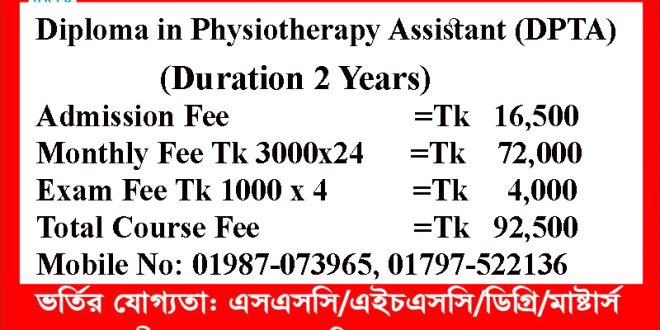
Diploma in Physiotherapy Assistant (DPTA) 2 Years: Mobile No. 01969947171, 01987-073965, 01797-522136.
Diploma in Physiotherapy Assistant. Mobile No. 01969947171, 01987-073965, 01797-522136. This short course of Physiotherapy contains 18 subjects in 4 semesters. 1st Semester contains 5 subjects. The subjects are Human Anatomy & Physiology, Chemistry & Pharmacology, First Aid & Treatment, Hematology & Pathology, and the Study of OTC Drugs & Medicine.
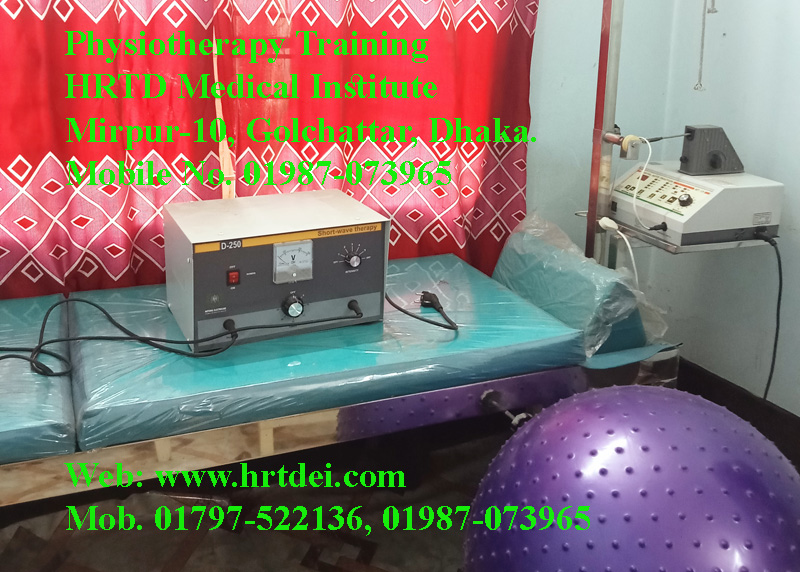
2nd semester of this short physiotherapy course contains 5 subjects. The subjects are Orthopedic Anatomy & Physiology, Neuroanatomy & Physiology, Cardiovascular Anatomy & Physiology, Electro Physics, and the Study of TENS.
3rd Semester of this course contains 4 subjects
3rd Semester of this course contains 4 subjects and the subjects are Microbiology, Bone Joints and diseases, Claytons Electrotherapy-1, and Therapeutic Exercise. 4th semester of this course contains 4 subjects and the subjects are Community Medicine-1, Electrotherapy & Hydrotherap, Clayton’s Electrotherapy-2, and Therapeutic Exercise.
Diploma in Physiotherapy Assistant Course Fee
Course fee for 2 years Physiotherapy Diploma Assistant Course Tk 92,500/- including admission fee Tk 16,500/- Monthly fee Tk 3000/- and exam fee Tk 1000×4 = 4000/-
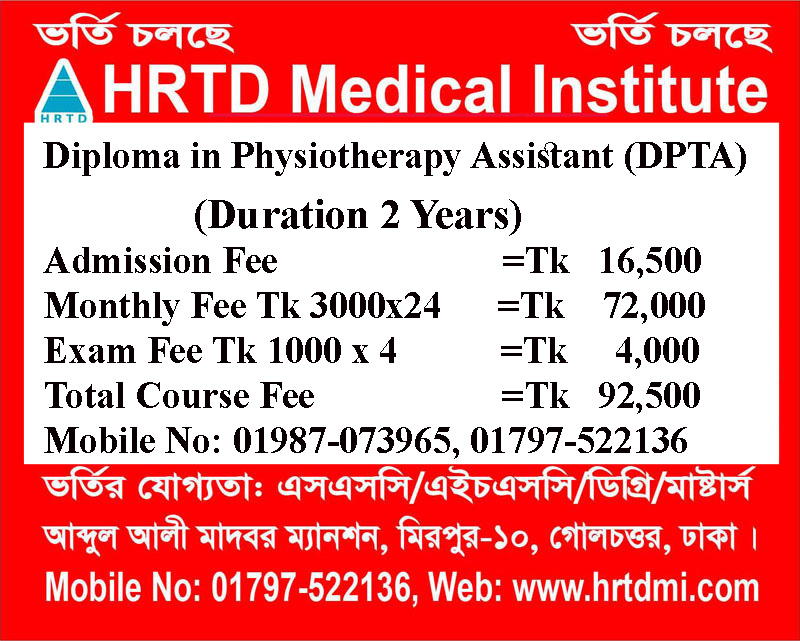
Location of Physiotherapy Training Center in Dhaka, Bangladesh
Location of Physiotherapy Training Center. Mobile No. 01969947171, 01987-073965, 01797-522136. HRTD Medical Institute, Abdul Ali Madbor Mansion, Section-6, Block-Kha, Road-1, Plot-11, Mirpur-10 Golchattar, Metro Rail Piller No. 249, Dhaka-1216.
Objectives of Physiotherapy Course/ Physiotherapy Diploma
একজন ফিজিওথেরাপিষ্ট এর পক্ষে একটি ফিজিওথেরাপী চেম্বার বা ফিজিওথেরাপী সেন্টার বা ফিজিওথেরাপী ক্লিনিক ম্যানেজ করা সম্ভব হয় না বা ম্যানেজ করা উচিৎ না । কারন সেখানে থাকে অনেক মেশিনারী এবং অনেক কাজ । যেমন মেশিনারী ম্যানেজমেন্ট, মার্কেটিং ম্যানেজমেন্ট, একাউন্টস ম্যানেজমেন্ট, ফিনেনশিয়াল ম্যানেজমেন্ট, রোগীদের ডেটা ম্যানেজমেন্ট, রোগীদের কাউন্সিলিং ইত্যাদি ।
ফিজিওথেরাপি ৩ বছর/ ৪ বছরের ডিপ্লোমা কোর্স সফলভাবে সমাপ্ত করার পরে, শিক্ষার্থীরা সক্ষম হবে:

(১) ফিজিওথেরাপি সম্পর্কিত অনেক জ্ঞান ও দক্ষতা অর্জন করতে পারবে ।
(২) বিভিন্ন ফিজিওথেরাপি সরঞ্জাম এবং আনুষাঙ্গিক পরিচালনা এবং রক্ষণাবেক্ষণের জ্ঞান ও দক্ষতা অর্জন করতে পারবে ।
(৩) ফিজিওথেরাপি সম্পর্কিত প্রয়োজনীয় ডকুমেন্টেশন বজায় রাখার জ্ঞান ও দক্ষতা অর্জন করতে পারবে ।
(৪) ফিজিওথেরাপি যন্ত্রগুলি পরিচালনার বিপদ এবং তাদের প্রতিরক্ষামূলক জ্ঞান ও দক্ষতা অর্জন করতে পারবে ।
(৫) ফিজিওথেরাপিউটিক কার্যক্রম তদারকি জ্ঞান ও দক্ষতা অর্জন করতে পারবে ।

(৬) ফিজিওথেরাপিউটিক কার্যক্রমের ভবিষ্যত উন্নয়ন ও পরিকল্পনায় অবদান রাখাতে পারবে।
Teachers for Diploma in Physiotherapy Assistant Course
- Dr. Amena Afroze Anu, MBBS, PGT
- Dr. Shamima, MBBS, PGT
- Dr. Tisha, MBBS, PGT
- Dr. Disha, MBBS, FCPS (FP)
- Dr. Sanjana Binte Ahmed, BDS, MPH
- Dr. Nurunnahar Keya, BDS
- Dr. Nazmun Nahar Juthi, BDS, PGT
- Dr. Md. Sakulur Rahman, MBBS, CCD
- Dr. Rayhan, BPT
- Dr. Abu Hurayra, BPT
- Dr. Lamia, MBBS,
- Dr, Sharmin Ankhi, MBBS, PGT
- Dr. Benzir, MBBS, FCPS (FP)
Total Subjects for Diploma in Physiotherapy Assistant Course 2 Years
1st Semester & 2nd Semester Subjects for Diploma in Physiotherapy Assistant Course
- Human Anatomy & Physiology
- Chemistry & Pharmacology-1
- First Aid & Treatment
- Hematology & Pathology
- Study of OTC Drugs
- Orthopedic Anatomy & Physiology
- Neuro Anatomy & Physiology
- Cardiovascular Anatomy & Physiology
- Electro Physics
- Study of TENS
3rd Semester & 4th Semester Subjects for Diploma in Physiotherapy Assistant Course
- Microbiology and Antimicrobial Drugs
- Bone Joints & Diseases
- Claytons Electrotherapy-1
- Therapeutic Exercise-1
- Community Medicine-1
- Electrotherapy & Hydrotherapy
- Claytons Electrotherapy-2
- Therapeutic Exercise-2
Human Anatomy and Physiology for Diploma in Physiotherapy Assistant Course
The Study of the body Structure and its function is Anatomy & Physiology. Here we discuss the systems of the human body and its organ, Tissues, and cells. The systems of the human body are the digestive system, Respiratory system, Cardiovascular system, Skeletal system, Muscular system, nervous system, Endocrine system, Immune System, Integumentary System and Urinary System.
Human Anatomy and Physiology is the study of the body’s structures (anatomy) and their functions (physiology). Anatomy focuses on the physical arrangement of cells, tissues, organs, and systems, while physiology explains how these structures work together to maintain life processes like movement, metabolism, and reproduction. The two are intertwined, as a structure’s form determines its function, and understanding one requires understanding the other.
Anatomy
- Definition:The scientific study of the body’s structures and their physical arrangement.
- Levels of Study:Can be studied at different levels, including:
- Gross Anatomy: The study of structures visible without a microscope, such as organs and organ systems.
- Microscopic Anatomy (Histology): The study of tissues and cells using a microscope.
- Methods of Study:Historically involved dissection, but now also uses advanced imaging techniques like MRI and CT scans to visualize structures in living people.
Physiology
- Definition: The study of how the body’s structures function to sustain life.
- Key Concepts:
- Complementarity of Structure and Function: The shape and form of a body structure are directly related to what it can do.
- Homeostasis: The body’s ability to maintain a stable internal environment, which is essential for survival.
- Examples: Studying how the heart regulates blood flow or how muscles contract and bring bones together.
Major Body Systems
Understanding human anatomy and physiology involves studying the body’s major systems, including:
Musculoskeletal System, Circulatory System, Nervous System, Digestive System, Respiratory System, Integumentary System, Endocrine System, Lymphatic System, Urinary System, and Reproductive System.
Why It’s Important
- Health Professions:It is a fundamental science for careers in medicine and other health fields.
- Personal Health:Knowledge of the human body helps in making informed health decisions and understanding medical information.
Pharmacology for Diploma in Physiotherapy Assistant Course 2 Years
Pharmacology is a broad field, but some areas are consistently considered high-yield and important. These include general principles like pharmacokinetics and pharmacodynamics, as well as specific drug classes and their mechanisms of action, particularly those related to the autonomic nervous system (ANS), central nervous system (CNS), and cardiovascular system (CVS). Additionally, understanding adverse drug reactions (ADRs), drug interactions, and clinical pharmacology is crucial.
General Pharmacology:
Pharmacogenetics : This field explores how genetic variations influence drug response, including individual differences in drug metabolism and efficacy.
Pharmacokinetics: This branch deals with how the body processes a drug, including absorption, distribution, metabolism, and excretion. Key concepts include bioavailability, first-pass metabolism, and kinetics of elimination (e.g., first-order vs. zero-order).
Pharmacodynamics: This area focuses on how drugs affect the body, including receptor interactions, drug-receptor binding, and the resulting physiological effects. Understanding dose-response relationships, including graded and quantal dose-response curves, is essential.
Drug Interactions: This involves understanding how multiple drugs can affect each other’s effects, including synergistic, antagonistic, and additive interactions.
Adverse Drug Reactions: This area focuses on understanding the potential harmful effects of drugs, including types of reactions, risk factors, and how to manage them.
Drug Regulation and Ethics: Understanding drug schedules, essential medicines lists, and the process of drug development (clinical trials) is important.
Specific Organ Systems:
- Autonomic Nervous System (ANS): This includes drugs that affect the sympathetic and parasympathetic nervous systems, including agonists and antagonists of adrenergic and cholinergic receptors. Important topics include the autonomic nervous system pathways, neurotransmitters, and specific drug classes like beta-blockers, cholinergics, and anticholinergics.
- Cardiovascular System: This area covers drugs used to treat hypertension, angina, heart failure, arrhythmias, and hyperlipidemia. Important topics include antihypertensives, antianginal drugs, antiarrhythmics, and lipid-lowering agents.
- Central Nervous System (CNS): This includes drugs that affect the brain and spinal cord, such as anesthetics, antiepileptics, antipsychotics, antidepressants, and drugs for neurodegenerative diseases. Important topics include local anesthetics, general anesthetics, drugs for Parkinson’s disease and epilepsy, and drugs for psychiatric disorders.
- Respiratory System: This includes drugs used to treat asthma, COPD, and other respiratory conditions.
- Endocrine System: This area covers drugs used to treat diabetes, thyroid disorders, and other endocrine conditions.
- Anti-infective Agents: This includes antibacterial, antiviral, antifungal, and antiparasitic drugs. Important topics include mechanisms of action, resistance, and specific drug classes.
Other Important Topics:
- Pharmacogenomics/Pharmacogenetics: The study of how genes affect a person’s response to drugs.
- Drug Resistance: Understanding how microorganisms develop resistance to antimicrobial drugs.
- Anti-inflammatory and Immunomodulatory Drugs: Including NSAIDs, corticosteroids, and immunosuppressants.
First Aid for Diploma in Physiotherapy Assistant Course 2 Years
The most important topics in first aid focus on preserving life, preventing deterioration, and promoting recovery. Key life-saving topics and skills include scene assessment, Cardiopulmonary Resuscitation (CPR), managing severe bleeding and choking, and addressing common medical emergencies.
Core First Aid Principles
Effective first aid is guided by a few core principles and an action plan to manage any incident safely and promptly:
- DRSABCD Action Plan: A widely taught mnemonic (Danger, Response, Send for help, Airway, Breathing, CPR, Defibrillation) that provides a systematic approach to emergencies.
- Scene Safety: The very first priority is to ensure the area is safe for yourself, bystanders, and the casualty before providing any aid.
- Calling for Help: Promptly calling emergency services is a critical step in any serious emergency.
- Personal Protection Equipment (PPE): Using gloves and breathing barriers helps prevent cross-infection from blood or bodily fluids.
Very Important Topics and Skills
The following topics cover essential, life-saving skills everyone should know:
| Topic | Key Skill / Action |
|---|---|
| Cardiac Arrest | Cardiopulmonary Resuscitation (CPR) and the use of an Automated External Defibrillator (AED) are vital for manually circulating blood and restoring heart rhythm until professional help arrives. |
| Choking | Knowing the Heimlich maneuver (abdominal thrusts) or back blows to clear an obstructed airway can be immediately life-saving. |
| Severe Bleeding | Applying direct, firm pressure to a wound with a clean cloth and, if necessary, elevating the injured limb or using a tourniquet can control excessive blood loss. |
| Shock | Recognizing signs of shock (pale, cold, clammy skin) and managing it by laying the person down, raising their legs, and keeping them warm are important. |
| Unconsciousness / Recovery Position | Placing an unconscious but breathing person into the recovery position helps ensure their airway remains clear and prevents them from choking on their own fluids. |
| Burns | Knowing how to treat different degrees of burns, typically using cool running water, and when to seek immediate medical attention. |
| Medical Emergencies | Recognizing the signs of common emergencies like heart attacks (chest pain, sweating, dizziness) and strokes (using the F.A.S.T. acronym: Face, Arm, Speech, Time) for a rapid response is crucial. |
Where to Learn More
Formal training provides hands-on practice and certification, which is highly recommended. You can find courses through authoritative organizations:
- American Red Cross
- St John Ambulance
- Bangladesh Red Crescent Society (BDRCS)
- National Safety Council
Cardiovascular Anatomy & Physiology for Diploma in Physiotherapy Assistant Course 2 Years
Cardiovascular Anatomy is a branch of Anatomy, and Cardiovascular Physiology is a branch of Physiology. These two subjects are related to cardiology. Cardiovascular Anatomy and Physiology are being studied in a single subject for Diploma Medical Courses, Paramedical Courses, and All Short Medical Courses.
কার্ডিওভাসকুলার অ্যানাটমি হল অ্যানাটমির একটি শাখা এবং কার্ডিওভাসকুলার ফিজিওলজি হল ফিজিওলজির একটি শাখা। এই দুটি বিষয় কার্ডিওলজি সম্পর্কিত। কার্ডিওভাসকুলার অ্যানাটমি এবং ফিজিওলজি ডিপ্লোমা মেডিকেল কোর্স, প্যারামেডিক্যাল কোর্স এবং সমস্ত শর্ট মেডিকেল কোর্সের জন্য একটি একক বিষয়ে অধ্যয়ন করা হচ্ছে।
We discuss here the Anatomy of the Heart, Cardiac Chambers, Cardiac Valves, Cardiac Wall, Cardiac Septum, Right Heart, Left Heat, Function of Right Heat, Functions of Left Heart, Aorta, Venecava, Artery, Vein, Capillary, Pulmonary Blood Circulation, Cerebral Blood Circulation, Renal Blood Circulation, Hepatic Blood Circulation, Portal Vein and Portal Circulation, Heart Beat, Pulse, Pulse Rate, Tachycardia, Bradycardia, Blood Pressure, Normal Blood Pressure, Hypertension, Hypotension, Stroke Volume, Cardiac Output, Heart Failure, etc. This Subject is the most essential for the Diploma in Medicine and Diploma in Surgery Course.
আমরা এখানে হার্টের অ্যানাটমি, কার্ডিয়াক চেম্বার, কার্ডিয়াক ভালভ, কার্ডিয়াক ওয়াল, কার্ডিয়াক সেপ্টাম, ডান হার্ট, বাম তাপ, ডান তাপের ফাংশন, বাম হার্টের কাজ, অ্যাওর্টা, ভেনেকাভা, ধমনী, শিরা, কৈশিক, পালমোনারি রক্ত সঞ্চালন নিয়ে আলোচনা করি। , সেরিব্রাল ব্লাড সার্কুলেশন, রেনাল ব্লাড সার্কুলেশন, হেপাটিক ব্লাড সঞ্চালন, পোর্টাল ভেইন এবং পোর্টাল সঞ্চালন, হার্ট বিট, পালস, পালস রেট, টাকাইকার্ডিয়া, ব্র্যাডিকার্ডিয়া, রক্তচাপ, স্বাভাবিক রক্তচাপ, উচ্চ রক্তচাপ, হাইপোটেনশন, স্ট্রোক ভলিউম, কার্ডিয়াক আউটপুট, হার্ট ফেইলিউর ইত্যাদি। ডিপ্লোমা ইন মেডিসিন এবং ডিপ্লোমা ইন সার্জারি কোর্স।
Hematology and Pathology for Diploma in Physiotherapy Assistant Course 2 Years
The study of Blood and Blood Disease is called Hematology and the Study of Pathos and Process of Disease Creation and Diagnosis is called Pathology. In Hematology and Pathology, we discuss blood cells, their structure and functions, Blood Diseases, Common Pathos and their pathogenesis, Atrophy, Hypertrophy, Metaplasia, Gangrene, Pathological Tests like TC, DC, ESR, Hemoglobin Percentage, etc.
রক্ত ও রক্তের রোগের অধ্যয়নকে বলা হয় হেমাটোলজি এবং স্টাডি অফ প্যাথোস এবং রোগ সৃষ্টি ও নির্ণয়ের প্রক্রিয়াকে প্যাথলজি বলা হয়। হেমাটোলজি এবং প্যাথলজিতে, আমরা রক্তের কোষ, তাদের গঠন এবং কার্যকারিতা, রক্তের রোগ, সাধারণ প্যাথোস এবং তাদের প্যাথোজেনেসিস, অ্যাট্রোফি, হাইপারট্রফি, মেটাপ্লাসিয়া, গ্যাংগ্রিন, প্যাথলজিকাল টেস্ট যেমন TC, DC, ESR, হিমোগ্লোবিন শতাংশ ইত্যাদি নিয়ে আলোচনা করি।
Very important topics in hematology include anemia, blood cancers (like leukemia and lymphoma), coagulation disorders (such as hemophilia), and blood cell production and function. Other key areas are red and white blood cell counts, platelet function, blood transfusions, and the study of hemoglobinopathies like sickle cell disease.
Core concepts and physiology
- Hemopoiesis: The process of blood cell formation in the bone marrow.
- Blood cell types: The structure, function, and types of erythrocytes (red blood cells), leukocytes (white blood cells), and platelets.
- Blood coagulation: The body’s mechanism for stopping bleeding, including primary and secondary hemostasis.
- Hemoglobin: The protein in red blood cells that carries oxygen and the study of related disorders.
Important disorders
- Anemia: A broad category of conditions where there aren’t enough healthy red blood cells to carry adequate oxygen, including different types of anemia.
- Hematological malignancies: Cancers of the blood, such as leukemia, lymphoma, and multiple myeloma.
- Bleeding and clotting disorders: Conditions like hemophilia and thrombotic disorders that involve problems with the coagulation system.
- Hemoglobinopathies: Genetic disorders affecting hemoglobin, with sickle cell disease being a prominent example.
Diagnosis and management
- Complete Blood Count (CBC): A standard test that provides a broad overview of blood health, including red blood cells, white blood cells, and platelets.
- Blood transfusion: The process of transferring blood and the associated hazards and management.
- Coagulation tests: Laboratory tests like PT, PTT, and INR used to evaluate bleeding and clotting disorders.
- Hematopoietic stem cell transplantation: A procedure used to treat certain blood disorders and cancers.
Pathology for Diploma in Physiotherapy Assistant Course 2 Years
Very important topics in pathology include General Pathology (cell injury, inflammation, neoplasia), Hematology (anemias, lymphomas, leukemia), and Systemic Pathology across multiple organ systems like the cardiovascular, respiratory, gastrointestinal, and renal systems. Key concepts include cell injury (necrosis, apoptosis), inflammation (mediators, chronic vs. acute), neoplasia (carcinogenesis, tumor markers), and genetic diseases.
General Pathology
- Cell Injury: Reversible and irreversible injury, necrosis, apoptosis, and free radical injury.
- Inflammation: Acute and chronic inflammation, inflammatory mediators, and healing.
- Hemodynamic Disorders: Edema, hemorrhage, thrombosis, embolism, infarction, and shock.
- Neoplasia: General aspects, cell cycle, carcinogenesis, and tumor markers.
- Immunopathology: Hypersensitivity reactions, immunodeficiency disorders, and autoimmune diseases.
- Genetic Diseases: Mendelian inheritance patterns, chromosomal abnormalities, and diagnosis of genetic disorders.
Hematology
- Anemias: Iron deficiency, megaloblastic, hemolytic, sickle cell, and thalassemia.
- Leukemia and Lymphoma: Acute and chronic leukemias, lymphomas, and plasma cell disorders.
- Blood Bank: Blood group systems and transfusion reactions.
- Coagulation: Coagulation disorders, hypercoagulable states, and disseminated intravascular coagulation (DIC).
Systemic Pathology
- Cardiovascular: Atherosclerosis, myocardial infarction, cardiomyopathy, and valvular heart disease.
- Respiratory: Pneumoconiosis, asthma, chronic obstructive pulmonary disease (COPD), and lung cancer.
- Gastrointestinal: Peptic ulcers, inflammatory bowel diseases, malabsorption syndromes, and esophageal diseases.
- Renal: Glomerulonephritis, renal failure, and diseases of the urinary tract.
- Liver: Hepatitis, cirrhosis, and gallstones.
- Central Nervous System: Neurodegenerative diseases, stroke, and brain tumors.
- Skin and Endocrine Systems: Also important areas, particularly for hormonal imbalances and skin conditions.
Microbiology and Antimicrobial Drugs for Diploma in Physiotherapy Assistant Course 2 Years
The Study of Microorganisms is called Microbiology. The Drugs that are used for the treatment of Infectious Diseases are Antimicrobial Drugs. Microorganisms are Bacteria, Protozoa, Fungus, and Virus. Antimicrobial Drugs are Antibiotic Drugs ( Antibacterial Drugs), Anti Protozoal Drugs, Anti Fungal Drugs, and Anti Viral Drugs. Antibacterial Drugs are Azithromycin, Erythromycin, Clarithromycin, Cefaclor, Cefixime, Cefuroxime, Ceftriaxone, Ciprofloxacin, Moxifloxacin, Doxicicline, Gentamycin, Neomycin, Flucloxacillin, Amoxicillin, Clindamycin, etc. Antiprotozoal Drugs are Metronidazole, Secnidazole, Tinidazole, Ornidazole, Nitazoxanide, etc. Antifungal Drugs are Fluconazole, Ketoconazole, Itraconazole, Econazole, Miconazole, Terbinafine, etc.
অণুজীবের অধ্যয়নকে মাইক্রোবায়োলজি বলা হয়। সংক্রামক রোগের চিকিত্সার জন্য যে ওষুধগুলি ব্যবহার করা হয় তা হল অ্যান্টিমাইক্রোবিয়াল ড্রাগ। অণুজীব হল ব্যাকটেরিয়া, প্রোটোজোয়া, ফাঙ্গাস এবং ভাইরাস। অ্যান্টিমাইক্রোবিয়াল ড্রাগগুলি হল অ্যান্টিবায়োটিক ড্রাগস (অ্যান্টিব্যাকটেরিয়াল ড্রাগস), অ্যান্টি প্রোটোজোয়াল ড্রাগস, অ্যান্টি ফাঙ্গাল ড্রাগস এবং অ্যান্টি ভাইরাল ড্রাগস। ব্যাকটেরিয়ারোধী ওষুধগুলি হল Azithromycin, Erythromycin, Clarithromycin, Cefaclor, Cefixime, Cefuroxime, Ceftriaxone, Ciprofloxacin, Moxifloxacin, Doxicicline, Gentamycin, Neomycin, Flucloxacillin, Amoxicillin, ক্লিন্ডাজোল, ক্লিন্ডামাইসিন, ক্লিনিডামাইসিন ইত্যাদি। Secnidazole, Tinidazole, Ornidazole, Nitazoxanide, ইত্যাদি অ্যান্টিফাঙ্গাল ওষুধ হল Fluconazole, Ketoconazole, Itraconazole, Econazole, Miconazole, Terbinafine ইত্যাদি।
Study of OTC Drugs for Diploma in Physiotherapy Assistant (DPTA)Course
OTC Drugs are important for all Medical Courses Courses, Diploma Medical Courses, LMAF Courses, and RMP Courses. It is also important for the Diploma in Physiotherapy. These OTC Drugs can be sold or purchased without any prescription from Registered MBBS Doctors. These Drugs are Emergency and Safe for the patients. The study of OTC Drugs improves the quality of practice. Some OTC Drugs are Albendazole, Ascorbic Acid, Calcium, Multivitamins, Vitamin B Complex, Omeprazole, Oral Rehydration Salt, Salbutamol, etc.
The study of Over-The-Counter (OTC) drugs is an important topic in healthcare research, focusing on responsible self-medication, potential for misuse, patient education, safety considerations in specific populations, and regulatory oversight.
Key aspects and important topics include:
1. Responsible Self-Care and Benefits
OTC medicines allow individuals to manage minor, self-limiting ailments (such as mild headaches, fever, cough, cold, pain, and acidity) quickly and at a lower cost, reducing the burden on healthcare systems. Studies show a high prevalence of OTC drug usage for these conditions.
2. Risks, Misuse, and Abuse
Despite their benefits, the widespread use and easy availability of OTC drugs lead to significant risks:
- Adverse effects and drug interactions: OTC medicines can interact with other prescription drugs, foods, and existing health conditions (e.g., high blood pressure or liver disease).
- Overdosing and long-term side effects: Misuse of common medications like acetaminophen can lead to liver damage. Long-term, irrelevant use can initiate permanent chronic diseases.
- Masking serious illnesses: Using OTC drugs might mask the symptoms of a more serious underlying condition, delaying proper medical diagnosis and treatment.
- Abuse for psychoactive effects: Some OTC drugs containing ingredients like codeine or dextromethorphan are abused for their psychoactive effects.
3. Patient Knowledge and Education
Research consistently highlights gaps in public and even health science students’ knowledge about the safe use of OTC products. Important topics in this area include:
- Awareness of safety and risks: Many users mistakenly believe that all OTC drugs are inherently safe.
- Reading medication leaflets/labels: Studies show varying rates of people reading instructions and warnings on packaging.
- Influence of advertising and social circles: Commercial advertising and peer recommendations play a major role in driving OTC use, sometimes leading to irrational choices.
- Consulting pharmacists: The role of pharmacists is crucial in guiding patients toward responsible use, though consultation rates vary.
4. Special Populations
Certain populations require extra caution when using OTC drugs:
- Pregnant and breast-feeding women: These groups need to be extra cautious and consult healthcare professionals.
- Children and infants: Health authorities often advise against giving certain cough and cold medications to young children due to potential life-threatening side effects.
5. Regulatory Oversight and Policy
The regulation of OTC drugs is a vital topic, especially in countries where a clear legal definition for “OTC” is lacking. Key issues include:
- Formal classification of drugs: Establishing clear legal categories for OTC medicines helps in better regulation of their sale and distribution.
- Enforcing prescription drug rules: Strict regulations are needed to prevent the illegal over-the-counter sale of prescription-only medications, a rampant issue in some regions.
- Labeling standards: Clear, simple-to-understand “Drug Facts” labels (as in the US) are essential for safe use without medical guidance.
- Online pharmacies: The rise of online sales necessitates stringent regulatory mechanisms to prevent misuse and abuse.
In conclusion, studying OTC drugs involves a balance between promoting self-care and mitigating the significant public health risks associated with their misuse. This calls for a multi-faceted approach involving education, strong regulation, and the active involvement of healthcare professionals like pharmacists.
Treatment/Practice of Medicine for Diploma in Physiotherapy Assistant(DPTA)In Bangladesh Course
The study of Disease and Treatment is called the Practice of Medicine. This subject is important for a Diploma Medical Practitioner, Diploma Medical Assistant, and Rural Medical Practitioner. This subject discusses some common diseases. The discussion points for the Practice of Medicine are the Definition of Disease, Causes of Disease, Clinical Features of Disease ( Symptoms and Signs), Investigation of Disease, Treatment of Disease, Complication of Disease, and Advice for the Patients. To understand the diseases, the movement of doctors, and their prescriptions, this subject should be studied by physiotherapy students.
The most important topics in the practice of medicine span foundational knowledge, core clinical areas, and essential professional skills.
Foundational Knowledge
A strong grasp of the basic sciences is crucial, as clinical medicine is built upon these principles:
- Anatomy & Physiology: Essential for understanding normal bodily functions and physical examination.
- Pathology: Understanding disease mechanisms is fundamental to diagnosis and management.
- Pharmacology: Critical for safe and effective drug therapy and understanding drug interactions.
- Microbiology/Immunology: Key for understanding infectious diseases and the body’s immune responses.
- Biochemistry and Genetics: Important for understanding metabolic processes, inherited diseases, and modern genomic medicine.
Core Clinical Areas (Internal Medicine)
Medical practice heavily focuses on diagnosing and managing diseases across various body systems. Key areas and topics include:
| System | Important Topics |
|---|---|
| Cardiovascular (CVS) | Myocardial infarction (MI), congestive heart failure, hypertension, arrhythmias (e.g., atrial fibrillation), infective endocarditis, and rheumatic heart disease. |
| Respiratory (RS) | Asthma (acute severe asthma management), COPD, pneumonia (community-acquired and nosocomial), tuberculosis, pulmonary embolism, and lung carcinoma. |
| Renal | Acute kidney injury (AKI), chronic kidney disease (CKD), nephrotic and nephritic syndromes, and electrolyte imbalances (hyperkalemia, hyponatremia). |
| Gastroenterology (GIT) | Peptic ulcer disease, H. pylori management, liver cirrhosis and its complications (ascites, hepatic encephalopathy), inflammatory bowel disease (IBD), and acute pancreatitis. |
| Endocrinology | Diabetes mellitus (including DKA and hyperosmolar coma), thyroid disorders (hypo/hyperthyroidism, thyroid storm), and adrenal insufficiency. |
| Neurology | Stroke (ischemic and hemorrhagic), meningitis, epilepsy and status epilepticus, Parkinson’s disease, Alzheimer’s disease, and Guillain-Barré syndrome. |
| Infectious Diseases | HIV/AIDS, malaria, dengue, typhoid, hepatitis B and C, and emerging infectious diseases (e.g., COVID-19). |
| Hematology | Anemias (iron deficiency, megaloblastic, aplastic), leukemias, lymphomas, and bleeding/platelet disorders. |
Essential Professional Skills and Topics
Beyond disease-specific knowledge, successful medical practice requires competency in:
- Clinical Skills: History taking, physical examination, and diagnostic reasoning.
- Communication Skills: Effective interaction with patients and the healthcare team.
- Medical Ethics and Law: Adhering to professional conduct, ensuring patient safety, and navigating legal issues.
- Evidence-Based Medicine: Integrating individual expertise with the best available clinical evidence for patient care decisions.
- Patient Safety and Quality Improvement: Understanding how to reduce medical errors and improve care delivery.
- Public Health and Prevention: Understanding disease prevention, nutrition, lifestyle impacts on health, and the social determinants of health.
Therapeutic Exercise-1 for Diploma in Physiotherapy Assistant Course 2 Years
Exercise Therapies are discussed in Therapeutic Exercise. After completing Theory Classes, Practical Classes are done. Topics for Therapeutic Exercise-1 are Lever, Types of Lever, 1st Degree Lever, Pulley, Types of Pulley, Movable Pulley, Energy, Types of Energy, Kinetic Energy, Axis, Types of Axis, Plane, Types of Plane, Names of Shoulder Movement, Names of Hip Movement, Names of Wrist Movement, MCP Movement, Range of Motion of Elbow Joint, Muscle action, Types of Muscle action, Muscle work, Types of Muscle work, Types of Fundamental Position, Pelvic tilt, Types o Pelvic tilt, Relax Passive Movement, Indication of Relax Passive Movement, Contraindication of Relax Passive Movement,
ব্যায়াম থেরাপি থেরাপিউটিক ব্যায়াম আলোচনা করা হয়. থিওরি ক্লাস শেষ করার পর ব্যবহারিক ক্লাস করা হয়। থেরাপিউটিক এক্সারসাইজ-১-এর বিষয়গুলো হলো লিভার, লিভারের ধরন, ১ম ডিগ্রি লিভার, পুলি, পুলির প্রকার, চলনশীল পুলি, শক্তি, শক্তির প্রকার, গতিশক্তি, অক্ষ, অক্ষের প্রকার, সমতল, সমতলের ধরন, নাপুল। আন্দোলন, নিতম্ব আন্দোলনের নাম, কব্জির নড়াচড়ার নাম, MCP মুভমেন্ট, কনুই জয়েন্টের গতির পরিসর, পেশীর ক্রিয়া, পেশীর ক্রিয়ার ধরন, পেশীর কাজ, পেশীর কাজের ধরন, মৌলিক অবস্থানের ধরন, শ্রোণী কাত, পেলভিক কাত, শিথিলকরণ, নিষ্ক্রিয় গতির ধরন প্যাসিভ আন্দোলন শিথিল করুন, প্যাসিভ মুভমেন্ট শিথিল করার বিরোধীতা

Types of skeletal muscle fibers, Clinical Examination of the Motor Nervous System, Clinical Examination of the Sensory Nervous System, Clinical Examination of Cranial Nerves, Clinical Examination of the Cardiovascular System, Measurement of the Pelvic Angle of Inclination, Factors affecting the Joint Range of Motion, Starting and Derived Positions, Suspension therapy, Advantage of Suspension therapy, Names of Suspension Instrument, Types of Suspension Therapy, etc.
কঙ্কালের পেশী তন্তুর ধরন, মোটর স্নায়ুতন্ত্রের ক্লিনিকাল পরীক্ষা, সংবেদনশীল স্নায়ুতন্ত্রের ক্লিনিকাল পরীক্ষা, ক্রানিয়াল স্নায়ুর ক্লিনিকাল পরীক্ষা, কার্ডিওভাসকুলার সিস্টেমের ক্লিনিক্যাল পরীক্ষা, পেলভিক প্রবণতার কোণ পরিমাপ, জোড়ের সীমাকে প্রভাবিত করার কারণগুলি , শুরু এবং প্রাপ্ত অবস্থান, সাসপেনশন থেরাপি, সাসপেনশন থেরাপির সুবিধা, সাসপেনশন যন্ত্রের নাম, সাসপেনশন থেরাপির প্রকারভেদ ইত্যাদি।
Therapeutic Exercise-2 for Diploma in Physiotherapy Assistant Course 2 Years
Topics for Therapeutic Exercise-2 are Force, Types of Force, Center of Gravity, Line of Gravity, Equilibrium, Types of Equilibrium, Second Order Lever, Third Order Lever, Types of Motion, Newton’s Law, Some Anatomical Movement, Flexion, Adduction, Medical Rotation, Eversion, ROM, Types of ROM, Isotonic Muscle Contraction, Physiological changes during exercise, Physiological changes in heart during exercise, Physiological changes in Respiratory System, Spasticity grading, Incoordination test, Goniometry, Types of Goniometer, Movement of Ankle Joint, Movement of Elbow Joint, Movement of Knee Joint, ROM of Supination and Pronation, ROM of Knee Joint, Derived Position of Standing, Derived Position Sitting, Derived Position of Lying, Derived Position of Kneeling, Derived Position of Hanging, Registered Exercise, Types of Registered Exercise, Crutch, Types of Crutch, etc.
থেরাপিউটিক এক্সারসাইজ-২-এর বিষয়গুলো হলো বল, শক্তির ধরন, মাধ্যাকর্ষণ কেন্দ্র, মাধ্যাকর্ষণ রেখা, ভারসাম্য, ভারসাম্যের ধরন, সেকেন্ড অর্ডার লিভার, থার্ড অর্ডার লিভার, গতির ধরন, নিউটনের সূত্র, কিছু শারীরবৃত্তীয় নড়াচড়া, বাঁকানো, আড্ডা। মেডিকেল রোটেশন, এভারসন, রম, এর প্রকারগুলি রম, আইসোটোনিক পেশী সংকোচন, ব্যায়ামের সময় শারীরবৃত্তীয় পরিবর্তন, ব্যায়ামের সময় হার্টের শারীরবৃত্তীয় পরিবর্তন, শ্বাসযন্ত্রের শারীরবৃত্তীয় পরিবর্তন, স্প্যাস্টিসিটি গ্রেডিং, ইনকোঅর্ডিনেশন পরীক্ষা, গনিওমেট্রি, গনিওমিটারের ধরন, গোড়ালি জয়েন্টের নড়াচড়া, কনুই জয়েন্টের নড়াচড়া, কোণের সংযোগস্থলের নড়াচড়া , সুপিনেশন এবং প্রোনেশনের রম, হাঁটুর রম জয়েন্ট, দাঁড়ানো অবস্থান, বসা অবস্থান থেকে উদ্ভূত, মিথ্যা বলার অবস্থান, হাঁটু গেঁড়ে নেওয়ার অবস্থান, ঝুলন্ত অবস্থান, নিবন্ধিত ব্যায়াম, নিবন্ধিত অনুশীলনের ধরন, ক্রাচ, ক্রাচের ধরন ইত্যাদি।
Orthopedic Anatomy for Diploma in Physiotherapy Assistant Course 2 Years
Orthopedic anatomy focuses on the structure, function, and relationships of the musculoskeletal system, encompassing bones, joints, muscles, tendons, ligaments, and nerves. Key topics for study in orthopedics, ranging from undergraduate to postgraduate levels, are structured around regional anatomy, trauma management, pathology, and developmental disorders.
Here are the main topics in Orthopedic Anatomy:
1. Fundamental Musculoskeletal Anatomy
- Bone Structure and Function: Study of cortical and cancellous bone, ossification, and bone metabolism.
- Joint Anatomy: Structure of joints, articular cartilage, ligaments, and synovial membranes.
- Muscles and Tendons: Anatomy of major muscle groups, including origins, insertions, nerve supply, and action.
- Growth Plate (Physis): Structure and role in endochondral ossification, particularly for pediatric orthopedics.
2. Regional Anatomy and Clinical Conditions
- Shoulder and Arm: Rotator cuff, glenohumeral joint, biceps, brachial plexus, and associated nerves.
- Elbow and Forearm: Humerus (proximal and shaft), forearm bones (radius/ulna), nerve anatomy (radial, ulnar, median).
- Wrist and Hand: Carpal bones, scaphoid, metacarpals, phalanges, and hand tendons.
- Spine and Vertebral Column: Cervical, thoracic, and lumbar spine, spinal cord, disc anatomy, and surrounding musculature.
- Hip and Thigh: Hip joint capsule, femur (neck and shaft), gluteal muscles, and pelvic anatomy.
- Knee and Leg: Knee joint (ligaments and menisci), patella, tibia, and fibula.
- Ankle and Foot: Ankle mortise, talus, calcaneum, and arches of the foot.
3. Traumatology (Skeletal Trauma)
- Fracture Principles: Definition, classification, healing mechanisms (primary vs. secondary), and factors affecting healing.
- Specific Fracture Management: Common fractures like Clavicle, Supracondylar Humerus, Colles, Hip, Femur Shaft, Patella, Tibia, and Calcaneum.
- Dislocations: Shoulder, elbow, hip, and knee dislocations.
- Complications of Fractures: Compartment syndrome, fat embolism, myositis ossificans, Avascular Necrosis (AVN), and Non-union/Delayed union.
4. Orthopedic Pathology and Disorders
- Infections: Acute and chronic osteomyelitis, septic arthritis, and Tuberculosis (Pott’s spine).
- Bone Tumors: Benign (osteochondroma, giant cell tumor) and Malignant (osteosarcoma, Ewing’s sarcoma) tumors.
- Metabolic Diseases: Rickets, Osteomalacia, Osteoporosis, and Hyperparathyroidism.
- Degenerative Disorders: Osteoarthritis, rheumatoid arthritis, and spondylosis.
5. Specialized Areas
- Pediatric Orthopedics: Congenital Dislocation of Hip (CDH/DDH), Congenital Talipes Equinovarus (CTEV/Clubfoot), and Perthes’ disease.
- Neuromuscular Disorders: Cerebral palsy and poliomyelitis.
- Peripheral Nerve Injuries: Brachial plexus injury, radial, ulnar, and median nerve injuries.
6. Surgical Anatomy and Techniques
- Surgical Approaches: Knowledge of safe, anatomical approaches to bones and joints.
- Implants and Fixation: Techniques for internal (plates, nails, screws) and external fixation.
- Amputations: Indications, levels, and anatomical considerations.
High-Yield Anatomy Topics (for Exams)
- Sciatic nerve and its branches.
- Brachial plexus anatomy.
- Rotator cuff muscles.
- Blood supply to the femoral head.
- Ligaments of the knee joint.
Electro Physics for Diploma in Physiotherapy Assistant Course 2 Years
Electro Physics, which encompasses electricity, magnetism, and electromagnetism, is a core branch of physics focused on the behavior of electric charges and fields. The subject spans from fundamental theory to applied electronics and solid-state devices.
Here are the main topics of Electro Physics:
1. Electrostatics (Charges at Rest)
- Electric Charge and Coulomb’s Law: Principles of charge quantization, conservation, and force between charges.
- Electric Fields and Potential: Calculation of electric field intensity (
), potential (
), and potential energy.
- Gauss’s Law: Applications to charge distributions (lines, sheets, spheres).
- Capacitance and Dielectrics: Energy storage, types of capacitors, dielectric constant, and polarization.
2. Electrodynamics (Charges in Motion)
- Current Electricity: Drift velocity, Ohm’s law, resistivity, and conductivity.
- Circuit Analysis: Kirchhoff’s laws (KVL, KCL), series/parallel circuits, and network theorems.
- Magnetostatics: Biot-Savart Law, Ampere’s Law, magnetic field calculations, and force on moving charges (Lorentz force).
- Electromagnetic Induction: Faraday’s law, Lenz’s law, self and mutual inductance.
- Alternating Current (AC) Circuits: RMS values, impedance, reactance, resonance, and transformers.
3. Electromagnetic Waves and Fields
- Maxwell’s Equations: The fundamental equations unifying electricity and magnetism (Gauss’s laws, Faraday’s law, Ampere-Maxwell law).
- Electromagnetic Waves: Propagation in conducting and non-conducting media, Poynting vector, and reflection/refraction.
- Antennas and Waveguides: Principles of radiation and transmission lines.
4. Applied Electro Physics & Electronics
- Solid State Physics & Semiconductors: Band theory, doping, p-n junctions, diodes, and transistors.
- Digital Electronics: Boolean algebra, logic gates, flip-flops, and counters.
- Electronics Circuits: Amplifiers, operational amplifiers (Op-amps), and filters.
- Optoelectronics: Interaction of light and matter, lasers, and fiber optics.
5. Advanced Topics
- Plasma Physics: High-temperature ionized gas behavior and industrial applications.
- Quantum Mechanics: Basic concepts required for understanding semiconductors and solid-state devices.
- Relativistic Electrodynamics: Behavior of fields in different reference frames.
Core Mathematical Tools
- Vector Calculus (Gradient, Divergence, Curl, Laplace/Poisson equations).
- Differential Equations.
- Complex Variables and Fourier Analysis.
Community Medicine-1 for Diploma in Physiotherapy Assistant Course 2 Years
Community Medicine focuses on preventing disease and promoting health through organized community efforts, key topics include Epidemiology, Biostatistics, Environmental Health, Nutrition, and Communicable/Non-Communicable Disease Control. It emphasizes primary health care, Reproductive and Child Health (RMNCH+A), Health Management, and National Health Programs.
Key Topics in Community Medicine:
- Epidemiology: Principles of disease, epidemiological methods (observational/experimental studies), and disease dynamics.
- Communicable & Non-Communicable Diseases: Prevention and control of TB, COVID-19, Malaria, Dengue, Hypertension, Diabetes, and Obesity.
- Environmental Health: Safe water supply, air quality, noise pollution, radiation, and biomedical waste management.
- Biostatistics & Research Methodology: Data collection, interpretation, and analysis.
- Nutrition & Nutritional Disorders: Balanced diet, nutritional assessment, and deficiency diseases.
- Reproductive & Child Health (RMNCH+A): Family planning, maternal health, child health, and immunization.
- Health Education & Communication: Behavioral change communication and counselling.
- Public Health Administration: National Health Programs, health systems, and disaster management.
- Sociology & Behavioral Science: Social determinants of health.
Core Areas of Focus:
- Concept of Health & Disease: Determinants and indicators of health.
- Primary Health Care: Role of primary care in the health system.
- Demography: Population trends and family planning.
Study of TENS for Diploma in Physiotherapy Assistant Course 2 Years
Based on the provided search results, the study of Transcutaneous Electrical Nerve Stimulation (TENS) in physiotherapy involves understanding its mechanisms, application techniques, and clinical evidence for pain management. Key topics for study include:
1. Physiological Mechanisms of Action
- Gate Control Theory: The primary mechanism where high-frequency TENS stimulates large-diameter (Aβ) sensory fibers, which “closes the gate” at the spinal cord level to pain signals from Aδ and C fibers.
- Endogenous Opioid System: Low-frequency TENS stimulates Aδ fibers, causing the release of endorphins and enkephalins, which inhibit pain transmission.
- Peripheral Mechanisms: TENS may increase local blood flow (especially with motor-level intensity >25% above threshold) and reduce substance P in dorsal root ganglia, facilitating tissue repair. Physiopedia +4
2. TENS Parameters and Types
- Conventional TENS (High Frequency): 50–150 Hz, 50–80 μs pulse width, low intensity (comfortable sensation). Best for acute pain.
- Acupuncture-like TENS (Low Frequency): 1–10 Hz, 100–250 μs pulse width, high intensity (motor-level twitch). Best for chronic pain.
- Burst TENS: Combines low-frequency and high-frequency stimulation (usually 100 Hz bursts at 2-3 Hz).
- Intensity/Dosage: Crucially, the intensity must be “strong but comfortable” for effective pain relief. Physiopedia +4
3. Clinical Applications in Physiotherapy
- Musculoskeletal Pain: Osteoarthritis (especially knee), low back pain, and myofascial pain.
- Postoperative Pain: Used to reduce analgesic consumption.
- Acute/Chronic Conditions: Sports injuries, phantom limb pain, and diabetic neuropathy.
- Pain during Movement: Applying TENS during exercise or activity is often more effective than at rest. National Institutes of Health (.gov) +7
4. Electrode Placement
- Techniques: Direct (on/around pain site), dermatomal, spinal nerve root, or contralateral (mirror) placement.
- Acupuncture Sites: Placing electrodes on acupoints may increase pain relief. Physiopedia +2
5. Contraindications and Safety
- Absolute Contraindications: Cardiac pacemakers/implanted devices, over the carotid sinus, or over active malignant tumors.
- Relative/Precautions: Pregnancy (avoid abdomen/low back), epilepsy, damaged or numb skin, and not to be used while driving. Physiopedia +2
6. Evidence Base and Limitations
- Efficacy: Evidence suggests TENS is superior to placebo for pain relief, but results are often inconsistent due to poor study designs (e.g., inadequate intensity, small sample sizes).
- Analgesic Tolerance: Daily, identical application of TENS can lead to tolerance, requiring stimulation parameters to be changed (e.g., mixing frequencies) to maintain effectiveness. National Institutes of Health (.gov) +2
7. Other Topics
- Impedance of Current Flow: Understanding how skin impedance affects electrical current flow, particularly for higher frequency signals.
- Difference between TENS and IF: Understanding the distinction between TENS (low-frequency current) and Interferential Therapy (IFC).
Bone Joints & Diseases for Diploma in Physiotherapy Assistant Course 2 Years
The study of bone joints and diseases (often encompassed within orthopedics and rheumatology) focuses on the anatomy, physiology, and pathologies of the musculoskeletal system. The main topics are structured around bone density, structural abnormalities, joint degeneration, inflammation, and infections. Healthdirect +4
Here are the main topics for a comprehensive study of Bone Joints & Diseases:
1. Anatomy and Physiology of Bones and Joints
- Bone Structure: Composition (calcium, collagen), structure (cortical vs. cancellous), and bone modeling/remodeling (osteoblasts and osteoclasts).
- Joint Anatomy: Classification of joints based on movement (synarthrosis, amphiarthrosis, diarthrosis) and structure (fibrous, cartilaginous, synovial).
- Connective Tissues: Function of cartilage, ligaments, tendons, and the synovial membrane. Healthdirect +3
2. Common Bone Diseases and Disorders
- Osteoporosis: Decreased bone density and mass leading to fragility fractures, primarily affecting postmenopausal women.
- Paget’s Disease of Bone: Disordered bone remodeling, causing weak, enlarged, and deformed bones.
- Osteogenesis Imperfecta: Genetic “brittle bone” disease.
- Osteomyelitis: Bone infection, frequently caused by Staphylococcus aureus or spreading from nearby infections.
- Bone Cancer: Primary (originating in bone) and secondary (metastatic) tumors.
- Rickets/Osteomalacia: Softening of bones due to Vitamin D deficiency.
- Fractures: Types (e.g., greenstick, comminuted) and mechanisms of healing. ScienceDirect.com +6
3. Joint Diseases (Arthropathies)
- Osteoarthritis (OA): Degenerative, “wear-and-tear” disease affecting joint cartilage, commonly in knees, hips, and hands.
- Rheumatoid Arthritis (RA): Chronic autoimmune disorder leading to synovial membrane inflammation and joint deformation.
- Gout: Inflammatory arthritis caused by uric acid crystal deposition.
- Spondyloarthropathies: Inflammatory diseases affecting the spine (e.g., Ankylosing Spondylitis).
- Septic Arthritis: Infection within the joint capsule.
- Bursitis/Tendinitis: Inflammation of the bursa or tendons, often from overuse. ScienceDirect.com +5
4. Spinal Disorders
- Herniated Disks: Damage to spinal disc cushions.
- Scoliosis: Abnormal lateral curvature of the spine.
- Spinal Stenosis: Narrowing of the spinal canal. National Institutes of Health (NIH) | (.gov) +2
5. Diagnostics and Treatment
- Imaging Modalities: Radiographs (X-ray), MRI, CT scans, and Bone Scintigraphy (bone scans).
- Laboratory Tests: Complete blood count (CBC), erythrocyte sedimentation rate (ESR), C-reactive protein (CRP), and serum calcium/Vitamin D.
6. Aging and Metabolic Changes
- Sarcopenia: Age-related loss of muscle mass.
- Bone Density Loss: Natural decline in bone strength after age 30
Claytons Electrotherapy-1 for Diploma in Physiotherapy Assistant Course 2 Years
Clayton’s Electrotherapy (specifically focusing on 1st-year BPT syllabus and the 9th/10th editions) focuses on the fundamental principles, physical laws, and low-frequency currents used in physiotherapy.
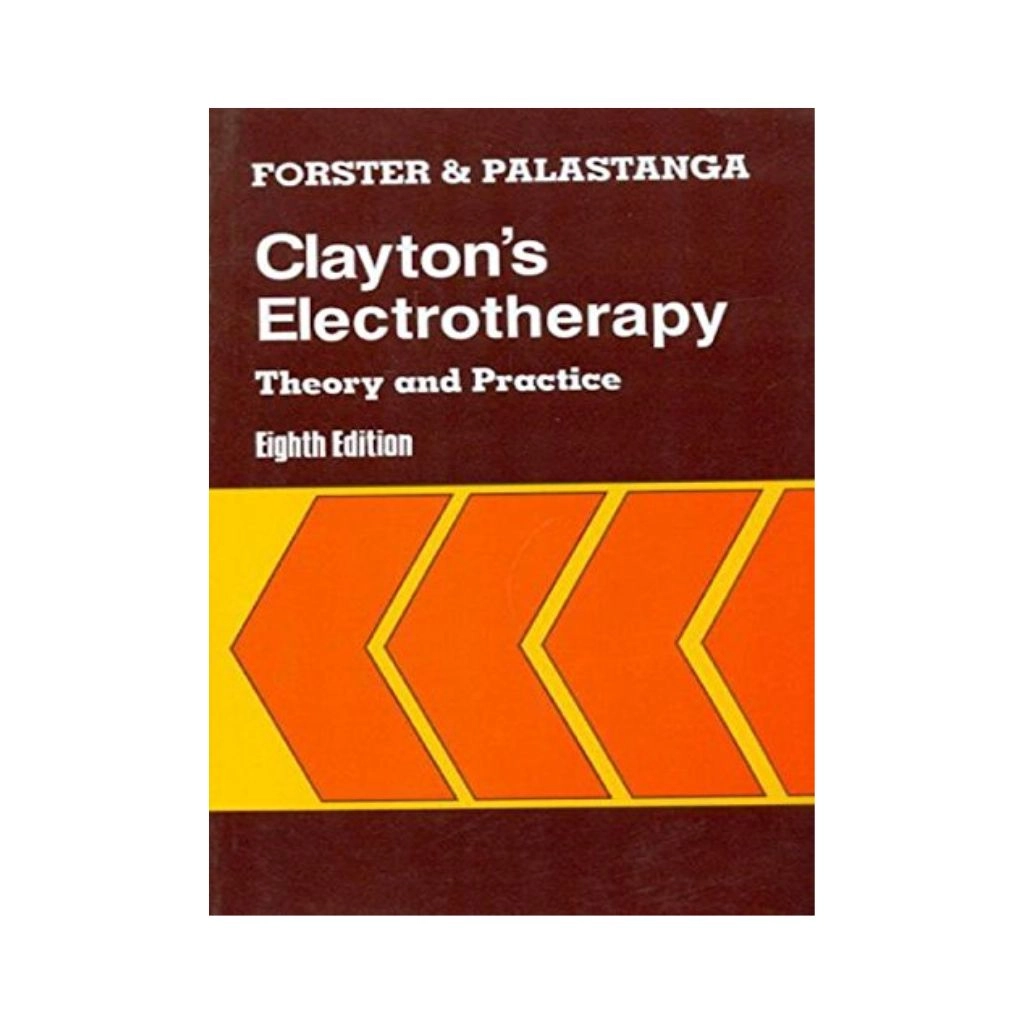
Here are the main topics for Clayton’s Electrotherapy-1:
1. Physics and Principles of Electrotherapy
- Fundamental Physics: Atomic structure, electron theory, conductors, insulators, and semiconductors.
- Electricity: Basic principles of static electricity and current electricity (Direct and Alternating Current).
- Electrical Safety: Importance of earthing, dangers of electricity, electric shock (micro/macro currents), and safety measures.
- Circuits: Electrical components, condensers (capacitors), transformers, and rectifier valves.
2. Physiological Effects of Electrical Currents
- Nerve and Muscle Physiology: Resting membrane potential, action potential, and propagation of nerve impulses.
- Tissue Repair: Mechanisms of electrical stimulation to promote tissue healing.
- Pain Modulation: Theories of pain relief, specifically the Pain Gate Control Theory.
3. Low-Frequency Currents (Electrotherapy 1 Main Focus)
- Direct Current (DC): Principles of Constant Direct Current (Galvanic Current) and its physiological effects.
- Iontophoresis: Methods of applying drugs using electrical current.
- Interrupted Direct Current (IDC): Used in the stimulation of denervated muscles.
- Faradic Current: Production, effects, and therapeutic uses of Faradism.
- TENS: Transcutaneous Electrical Nerve Stimulation, including application principles.
- Interferential Current (IFT): Principles and clinical applications.
4. Electrodiagnosis
- Strength-Duration (SD) Curve: Plotting and interpretation of curves for innervated, partially denervated, and fully denervated muscles.
- Chronaxie and Rheobase: Definition and measurement.
- Motor Points: Identification and stimulation techniques.
5. Other Modalities (Often introduced in Elec-1)
- Superficial Heat: Hydrocollator packs and paraffin wax baths.
- Cryotherapy: Principles and therapeutic uses of cold.
6. Clinical Application & Safety
- Patient Preparation: Electrode types, sizes, and placement techniques.
- Contraindications: Dangers of electricity and contraindications for specific modalities.
মানুষের জীবনে ফিজিওথেরাপির ভুমিকা ?
মানুষের জীবনে ফিজিওথেরাপির ভূমিকা অপরিহার্য। এটি ওষুধবিহীন চিকিৎসাপদ্ধতি হিসেবে শারীরিক ব্যথা হ্রাস, জয়েন্টের সচলতা পুনরুদ্ধার, পেশির শক্তি বৃদ্ধি এবং দৈনন্দিন কার্যক্ষমতা উন্নত করতে সাহায্য করে । আঘাত বা অপারেশনের পর পুনর্বাসন, দীর্ঘস্থায়ী রোগ (যেমন- বাত, কোমর ব্যথা) ব্যবস্থাপনা এবং পক্ষাঘাতগ্রস্ত রোগীদের স্বাভাবিক জীবনে ফেরাতে এটি গুরুত্বপূর্ণ ভূমিকা পালন করে ।
মানুষের জীবনে ফিজিওথেরাপির প্রধান ভূমিকাগুলো নিচে আলোচনা করা হলো:
- ব্যথা উপশম ও নিয়ন্ত্রণ: ওষুধের ওপর নির্ভরশীলতা কমিয়ে ঘাড়, কোমর, কাঁধ ও হাঁটুর দীর্ঘমেয়াদী ব্যথা কমাতে ব্যায়াম ও থেরাপির মাধ্যমে কাজ করে ।
- শারীরিক কার্যক্ষমতা ও সচলতা বৃদ্ধি: আঘাত বা স্ট্রোকের পর পেশি ও হাড়ের নড়াচড়া বা জয়েন্টের সচলতা পুনরুদ্ধার করতে সাহায্য করে, যা রোগীকে কর্মক্ষম করে তোলে ।
- অপারেশন পরবর্তী পুনর্বাসন: বড় কোনো অস্ত্রোপচারের পর দ্রুত স্বাভাবিক জীবনে ফিরে আসার জন্য ফিজিওথেরাপি অপরিহার্য ।
- আঘাত প্রতিরোধ (Injury Prevention): ক্রীড়াবিদ বা সাধারণ মানুষের পেশি ও হাড়ের শক্তি বাড়িয়ে ভবিষ্যতে আঘাত পাওয়ার ঝুঁকি কমিয়ে দেয় ।
- দীর্ঘস্থায়ী রোগ ব্যবস্থাপনা: ডায়াবেটিস, হাড় ক্ষয় বা বাতের মতো সমস্যায় শরীরের সক্ষমতা ধরে রাখতে সাহায্য করে ।
- ব্যালেন্স ও কার্যকারিতা উন্নয়ন: বয়স্ক বা স্নায়বিক সমস্যায় ভারসাম্য উন্নত করতে এবং হাঁটাচলার ক্ষমতা বাড়াতে কার্যকরী ভূমিকা রাখে ।
মূলত, ফিজিওথেরাপি কেবল রোগ নিরাময় নয়, বরং জীবনযাত্রার মান উন্নয়ন (Quality of Life) এবং দীর্ঘমেয়াদী সুস্থতা নিশ্চিত করে ।