 HRTD Medical Institute

Physiotherapy Best Course in Dhaka Details
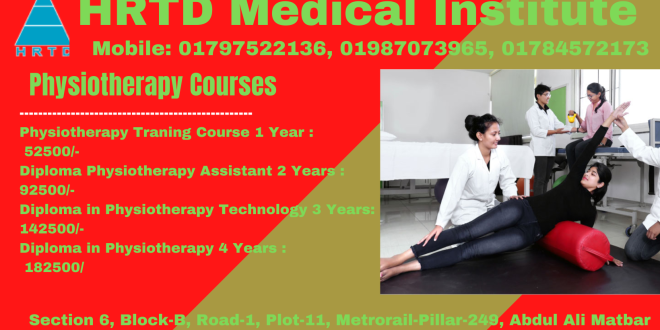
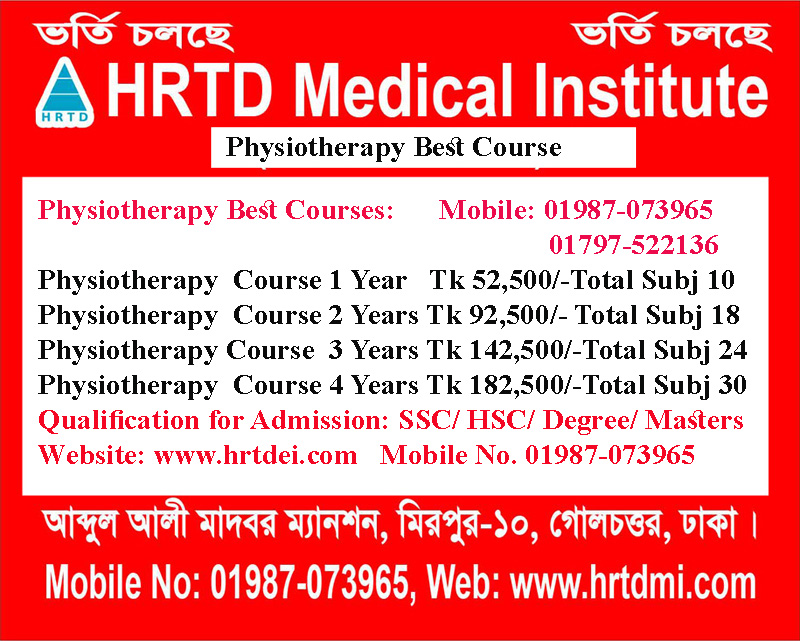
Physiotherapy Best Course in Dhaka. Mobile No. 01987-073965, 01797-522136. Physiotherapy Best Courses are Physiotherapy Course 1 Year, Physiotherapy Course 2 Years, Physiotherapy Course 3 Years, and Physiotherapy Course 4 Years.
Total Fee for Physiotherapy Best Course in Dhaka
Fees for Physiotherapy Best Course in Dhaka. Mobile No. 01987-073965, 01797-522136. Physiotherapy Course 1 Year Tk 52500/-, Physiotherapy Course 2 Years Tk 92500/-, Physiotherapy Course 3 Years Tk 142500/-, and Physiotherapy Course 4 Years Tk 182500/-.
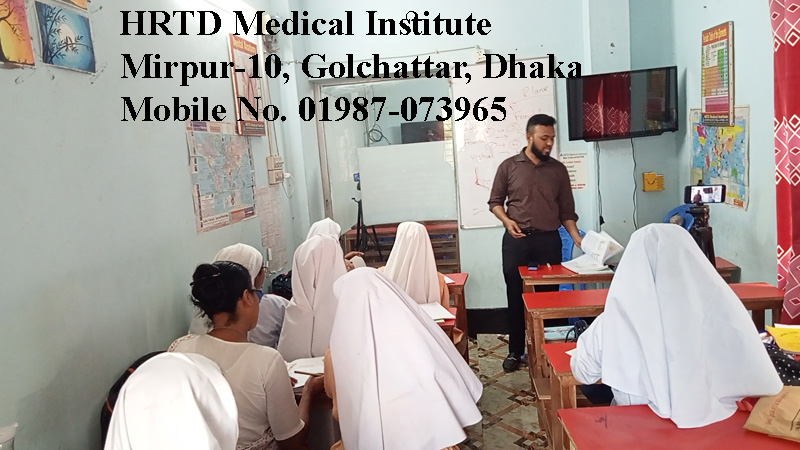
Physiotherapy Best Course Location in Dhaka. Mobile No. 01987-073965, 01797-522136. HRTD Medical Institute, Section-6, Block-Kha, Road-1, Plot-11, Mirpur-10 Golchattar, Metro Rail Piller No. 249. Dhaka-1216.
Location for Physiotherapy Best Course In Dhaka
Location for Diploma in Physiotherapy 4 Years Course: Mobile Phone Number 01797522136, 01987073965. HRTD Medical Institute, Abdul Ali Madbor Mansion, Section-6, Block-Kha, Road-1, Plot-11, Metro Rail Piller Number 249, Mirpur-10 Golchattar, Dhaka-1216. This Institute is situated just by the West Side of Agrani Bank and the South Side of Islami Bank and Janata Bank Limited.
Admission Fee for Physiotherapy Best Course in Dhaka
Admission Fee for Physiotherapy Course in Dhaka. Mobile No. 01987-073965, 01797-522136. Physiotherapy 1 Year Admission Fee Tk 10500/-, Physiotherapy 2 Years Admission Fee Tk 16500/-, Physiotherapy 3 Years Admission Fee Tk 20500/-, and Physiotherapy 4 Years Admission Fee Tk 30500/-.
Which course is best for physiotherapy?
The best course for those interested in pursuing a career in physiotherapy is a degree in physical therapy. This degree program teaches students the fundamentals of physical therapy, such as anatomy and physiology, kinesiology, biomechanics, and therapeutic exercise.
It also provides students with an understanding of how to assess, diagnose, and treat patients with physical disabilities or injuries. Additionally, students learn about wound care, rehabilitation techniques, and patient education.
After completing their degree, students can pursue a career in physical therapy, which may include working in a hospital, clinic, or private practice.
Demand of Physiotherapy
There is a huge demand for physiotherapy worldwide. The modern world is looking for modern physiotherapy because painkiller drugs are destroying the nephron of our kidneys.
Treatment areas by Physiotherapy
Physiotherapy is mainly focused on the treatment of pain. Pain is not a disease but an important symptoms of maximum disease. Physiotherapy is used for the management of Low back pain, Back pain, Shoulder pain, Frozen shoulder, Belse palsy, Partial Paralysis, Complete Paralysis, etc.
Future of Physiotherapy
The future of Physiotherapy is too much better. Treatment with Physiotherapy is easy and safe. So the treatment option is expanding day after day in the world.
What does a physiotherapist do?
A physiotherapist is a healthcare professional who works with patients to diagnose and treat physical issues such as pain, injury, and disability. Physiotherapists use a combination of physical treatments, exercises, and lifestyle advice to help their patients regain and maintain their physical health.
Physiotherapists assess the patient’s condition using various techniques such as analyzing the patient’s posture, movement, balance, coordination, and strength. They also use assessment tools such as X-rays and MRI scans to get an accurate diagnosis.
Based on the diagnosis, they develop a treatment plan that may include manual therapy, therapeutic exercises, and lifestyle advice. Manual therapy involves manipulating the patient’s joints, muscles, and connective tissues to improve range of motion, reduce pain, and increase strength.
Therapeutic exercises are tailored to the individual patient to help improve strength and mobility. These exercises may include stretching, strengthening, balance, and coordination exercises. Physiotherapists also teach their patients how to use assistive devices such as crutches, walkers, and wheelchairs.
In addition to providing physical treatments and exercises, physiotherapists also provide lifestyle advice to their patients. This may include educating them about nutrition, sleeping habits, and proper body mechanics. They may also refer patients to other healthcare professionals for additional treatments such as occupational therapy, speech therapy, or psychological counseling.
Physiotherapists work closely with their patients to help them achieve their physical goals and improve their quality of life. They are an important part of the healthcare team, and their expertise is invaluable when it comes to helping people regain their physical health.
Teachers for Physiotherapy Best Course In Dhaka
- Dr. Md. Sakulur Rahman, MBBS, CCD (BIRDEM), Course Director
- Dr. Sanjana Binte Ahmed, BDS, MPH, Assistant Course Director
- Dr. Tisha, MBBS, PGT Gyne, Assistant Course Director
- Dr. Suhana, MBBS, PGT Medicine
- Dr. Danial Hoque, MBBS, C-Card
- Dr. Tisha, MBBS
- Dr. Afrin Jahan, MBBS, PGT Medicine
- Dr. Ananna, MBBS
- Dr. Lamia Afroze, MBBS
- Dr. Amena Afroze Anu, MBBS, PGT Gyne, Assistant Course Director
- Dr. Farhana Antara, MBBS,
- Dr. Nazmun Nahar Juthi, BDS, PGT
- Dr. Farhana Sharna, MBBS
- Dr. Bushra, MBBS
- Dr. Turzo, MBBS
- Dr. Kamrunnahar Keya, BDS, PGT (Dhaka Dental College)
- Dr. Shamima, MBBS, PGT Gyne
- Dr. Alamin, MBBS
- Dr. Benzir Belal, MBBS, FCPS( FP)
- Dr. Disha, MBBS, FCPS (FP)
- Dr. Mahinul Islam, MBBS
- Dr. Tisha, MBBS, PGT Medicine
- Dr. Anika, MBBS, PGT
- Dr. Jannatul Ferdous, MBBS, PGT Gyne
- Dr. Jannatul Aman, MBBS, PGT
- Dr. Rayhan, BPT
- Dr. Abu Hurayra, BPT
- Dr. Sharmin Ankhi, MBBS, PGT Medicine
- Md. Monir Hossain, B Pharm, M Pharm
- Md. Monirul Islam, B Pharm, M Pharm
- Md. Feroj Ahmed, BSc Pathology, PDT Medicine
Class System for Physiotherapy Courses
Weekly Class 3 hours. For Regular Students Friday 1 hour, Saturday 1 hour, and Monday 1 hour. For Job holders, Friday is 3 hours, or Monday is 3 hours. Morning Shift 9:00 am to 12:00 pm, and Evening Shift 3:00 pm to 6:00 pm.
Physiotherapy Chamber Starting & Establishment
After completing the Diploma in Physiotherapy Course you can start a Physiotherapy chamber in any location in Bangladesh. You need to obtain The Registration and The License from the Respective Authority of the Government of the People’s Republic of Bangladesh. We only help our students obtain registration and licenses for the Starting & Establishment of Physiotherapy Chamber.
ডিপ্লোমা ইন ফিজিওথেরাপি কোর্স সম্পন্ন করার পর আপনি বাংলাদেশের যেকোনো স্থানে একটি ফিজিওথেরাপি চেম্বার শুরু করতে পারেন। আপনাকে গণপ্রজাতন্ত্রী বাংলাদেশ সরকারের সংশ্লিষ্ট কর্তৃপক্ষের কাছ থেকে নিবন্ধন এবং লাইসেন্স পেতে হবে। আমরা শুধুমাত্র আমাদের ছাত্রদের ফিজিওথেরাপি চেম্বারের শুরু ও প্রতিষ্ঠার জন্য নিবন্ধন এবং লাইসেন্স পেতে সাহায্য করি।
Objectives of the Physiotherapy Diploma Course
একজন ফিজিওথেরাপিষ্ট এর পক্ষে একটি ফিজিওথেরাপী চেম্বার বা ফিজিওথেরাপী সেন্টার বা ফিজিওথেরাপী ক্লিনিক ম্যানেজ করা সম্ভব হয় না বা ম্যানেজ করা উচিৎ না । কারন সেখানে থাকে অনেক মেশিনারী এবং অনেক কাজ । যেমন মেশিনারী ম্যানেজমেন্ট, মার্কেটিং ম্যানেজমেন্ট, একাউন্টস ম্যানেজমেন্ট, ফিনেনশিয়াল ম্যানেজমেন্ট, রোগীদের ডেটা ম্যানেজমেন্ট, রোগীদের কাউন্সিলিং ইত্যাদি ।
ফিজিওথেরাপি ৩ বছর/ ৪ বছরের ডিপ্লোমা কোর্স সফলভাবে সমাপ্ত করার পরে, শিক্ষার্থীরা সক্ষম হবে:
(১) ফিজিওথেরাপি সম্পর্কিত অনেক জ্ঞান ও দক্ষতা অর্জন করতে পারবে ।
(২) বিভিন্ন ফিজিওথেরাপি সরঞ্জাম এবং আনুষাঙ্গিক পরিচালনা এবং রক্ষণাবেক্ষণের জ্ঞান ও দক্ষতা অর্জন করতে পারবে ।
(৩) ফিজিওথেরাপি সম্পর্কিত প্রয়োজনীয় ডকুমেন্টেশন বজায় রাখার জ্ঞান ও দক্ষতা অর্জন করতে পারবে ।
(৪) ফিজিওথেরাপি যন্ত্রগুলি পরিচালনার বিপদ এবং তাদের প্রতিরক্ষামূলক জ্ঞান ও দক্ষতা অর্জন করতে পারবে ।
(৫) ফিজিওথেরাপিউটিক কার্যক্রম তদারকি জ্ঞান ও দক্ষতা অর্জন করতে পারবে ।
(৬) ফিজিওথেরাপিউটিক কার্যক্রমের ভবিষ্যত উন্নয়ন ও পরিকল্পনায় অবদান রাখাতে পারবে।
Subjects for Physiotherapy Best Course In Dhaka
- Human Anatomy & Physiology
- Chemistry & Pharmacology-1
- First Aid & Treatment
- Hematology & Pathology
- Study of OTC Drugs
- Orthopedic Anatomy & Physiology
- Neuro Anatomy & Physiology
- Cardiovascular Anatomy & Physiology
- Electro Physics
- Study of TENS
- Microbiology and Antimicrobial Drugs
- Bone Joints & Diseases
- Claytons Electrotherapy-1
- Therapeutic Exercise-1
- Community Medicine-1
- Electrotherapy & Hydrotherapy
- Claytons Electrotherapy-2
- Therapeutic Exercise-2
- Anatomy of Backbone
- Back Pain & Physiotherapy Treatment
- Skin Anatomy & Physiology
- Vertebral Muscles & Their Abnormalities
- Physiotherapy Equipment
- Neuromuscular Coordination
- Management of Hypertension & Hypotension
- Disability & Rehabilitation
- Neurogenic Disorders & Physiotherapy
- Community Medicine-2
- Paralysis & Physiotherapy Treatment
Subjects Details For Physiotherapy Best Course In Dhaka
Human Anatomy and Physiology for Physiotherapy Best Course in Dhaka
The study of the Body Structure and its functions is Anatomy and Physiology. Here we discuss the systems of the Human Body and its Organs, Tissues, and Cells. The systems of the Human Body are the Digestive System, Respiratory System, Cardiovascular System, Skeletal System, Muscular System, Nervous System, Endocrine System, Immune System, Lymphatic System, Integumentary System, and Urinary System.
শারীরিক গঠন এবং এর কার্যাবলীর অধ্যয়ন হল অ্যানাটমি এবং ফিজিওলজি। এখানে আমরা মানবদেহের সিস্টেম এবং এর অঙ্গ, টিস্যু এবং কোষ নিয়ে আলোচনা করি। মানবদেহের সিস্টেমগুলি হ’ল হজম সিস্টেম, শ্বাসযন্ত্র, কার্ডিওভাসকুলার সিস্টেম, কঙ্কাল সিস্টেম, পেশীতন্ত্র, স্নায়ুতন্ত্র, এন্ডোক্রাইন সিস্টেম, ইমিউন সিস্টেম, লিম্ফ্যাটিক সিস্টেম, ইন্টিগুমেন্টারি সিস্টেম এবং ইউরিনারি সিস্টেম।
Pharmacology-1 for Physiotherapy Best Course In Dhaka
The study of Drugs and Medicine is called Pharmacology. Here we discuss group-wise drugs and their medicines in Pharmacology-1. Common Groups of Drugs are Pain Killer Drugs, Anti Ulcer Drugs, Anti Vomiting Drugs, Laxative Drugs, Motility Drugs, Antimotility Drugs, Bronchodilator Drugs, Antibiotic Drugs, Anti Fungal Drugs, Anti Protozoal Drugs, Anti Viral Drugs, Anthelmintic Drugs, Anti Hypertensive Drugs, Beta Blocker Drugs, Calcium Channel Blocker Drugs, ACE Inhibitor Drugs, Hemostatic Drugs, Analgesic Drugs, Antipyretic Drugs, Anti Thrombotic Drugs, etc.
ওষুধ ও ওষুধের অধ্যয়নকে ফার্মাকোলজি বলা হয়। এখানে আমরা ফার্মাকোলজি-১ এ গ্রুপভিত্তিক ওষুধ ও তাদের ওষুধ নিয়ে আলোচনা করেছি। ওষুধের সাধারণ গ্রুপগুলি হল পেইন কিলার ড্রাগস, অ্যান্টি আলসার ড্রাগস, অ্যান্টি-ভোমিটিং ড্রাগস, ল্যাক্সেটিভ ড্রাগস, মোটিলিটি ড্রাগস, অ্যান্টিমোটিলিটি ড্রাগস, ব্রঙ্কোডাইলেটর ড্রাগস, অ্যান্টিবায়োটিক ড্রাগস, অ্যান্টি ফাংগাল ড্রাগস, অ্যান্টি প্রোটোজোয়াল ড্রাগস, অ্যান্টি ভাইরাল ড্রাগস, অ্যান্টি-ভাইরাল ড্রাগস, অ্যান্টি-অ্যান্টিভেনস ড্রাগস। , বিটা ব্লকার ওষুধ, ক্যালসিয়াম চ্যানেল ব্লকার ড্রাগস, এসিই ইনহিবিটর ড্রাগস, হেমোস্ট্যাটিক ড্রাগস, অ্যানালজেসিক ড্রাগস, অ্যান্টিপাইরেটিক ড্রাগস, অ্যান্টি থ্রম্বোটিক ড্রাগস ইত্যাদি।
Study of OTC Drugs for Physiotherapy Best Course In Dhaka
OTC Drugs are important for all Medical Assistant Courses, Diploma Medical Courses, LMAF Courses, and RMP Courses. It is also important for the Physiotherapy and Nutrition Course. These OTC Drugs can be sold or purchased without any prescription from Registered MBBS Doctors. These Drugs are Emergency and Safe for the patients. The study of OTC Drugs improves the quality of practice. Some OTC Drugs are Albendazole, Ascorbic Acid, Calcium, Multivitamins, Vitamin B Complex, Omeprazole, Oral Rehydration Salt, Salbutamol, etc.
OTC ড্রাগগুলি সমস্ত মেডিকেল অ্যাসিস্ট্যান্ট কোর্স, ডিপ্লোমা মেডিকেল কোর্স, LMAF কোর্স এবং RMP কোর্সের জন্য গুরুত্বপূর্ণ। এটি ফিজিওথেরাপি এবং পুষ্টি কোর্সের জন্যও গুরুত্বপূর্ণ। এই OTC ওষুধগুলি নিবন্ধিত এমবিবিএস ডাক্তারদের কাছ থেকে কোনও প্রেসক্রিপশন ছাড়াই বিক্রি বা কেনা যায়। এই ওষুধগুলি জরুরী এবং রোগীদের জন্য নিরাপদ। ওটিসি ওষুধের অধ্যয়ন অনুশীলনের মান উন্নত করে। কিছু ওটিসি ওষুধ হল অ্যালবেনডাজল, অ্যাসকরবিক অ্যাসিড, ক্যালসিয়াম, মাল্টিভিটামিন, ভিটামিন বি কমপ্লেক্স, ওমেপ্রাজল, ওরাল রিহাইড্রেশন সল্ট, সালবুটামল ইত্যাদি।
First Aid for Physiotherapy Best Course In Dhaka
First Aid is an important subject for Medical Courses including Diplomas in Medicine& Surgery Course, RMP Courses, LMAF Courses, Paramedical Courses, DMA Courses, DMS Courses, Nursing Courses, Dental Courses, Pathology Courses, Physiotherapy Courses, Caregiver Courses, etc. Here we discuss Shock, Classification Shock, Causes of Shock, Stages of Shock, Clinical Features of Shock, Hypovolemic Shock, Cardiogenic Shock, Neurogenic Shock, Traumatic Shock, Burn Shock, Electric Shock, Psychogenic Shock, Anaphylactic Shock, First Aid of Shock, First Aid of Cut, First of Snake Bite, First Aid of Accidental Injury, etc.
Hematology and Pathology for Physiotherapy Best Course In Dhaka
The study of Blood and Blood Disease is called Hematology and the Study of Pathos and Process of Disease Creation and Diagnosis is called Pathology. In Hematology and Pathology, we discuss blood cells, their structure and functions, Blood Diseases, Common Pathos and their pathogenesis, Atrophy, Hypertrophy, Metaplasia, Gangrene, Pathological Tests like TC, DC, ESR, Hemoglobin Percentage, etc.
রক্ত ও রক্তের রোগের অধ্যয়নকে বলা হয় হেমাটোলজি এবং স্টাডি অফ প্যাথোস এবং রোগ সৃষ্টি ও নির্ণয়ের প্রক্রিয়াকে প্যাথলজি বলা হয়। হেমাটোলজি এবং প্যাথলজিতে, আমরা রক্তের কোষ, তাদের গঠন এবং কার্যকারিতা, রক্তের রোগ, সাধারণ প্যাথোস এবং তাদের প্যাথোজেনেসিস, অ্যাট্রোফি, হাইপারট্রফি, মেটাপ্লাসিয়া, গ্যাংগ্রিন, প্যাথলজিকাল টেস্ট যেমন TC, DC, ESR, হিমোগ্লোবিন শতাংশ ইত্যাদি নিয়ে আলোচনা করি।
Practice of Medicine for Physiotherapy Best Course In Dhaka
The study of Disease and Treatment is called the Practice of Medicine. This subject is important for all medical practitioners, Diploma Medical Practitioners, Diploma Medical Assistants, and Rural Medical Practitioners. This subject is also important for all medical-related workers, nurses, and pharmacists to understand the movement of disease and treatment.
রোগ এবং চিকিত্সার অধ্যয়নকে মেডিসিনের অনুশীলন বলা হয়। এই বিষয়টি সকল মেডিকেল প্র্যাকটিশনার, ডিপ্লোমা মেডিকেল প্র্যাকটিশনার, ডিপ্লোমা মেডিকেল অ্যাসিস্ট্যান্ট এবং গ্রামীণ চিকিৎসা অনুশীলনকারীদের জন্য গুরুত্বপূর্ণ। রোগ এবং চিকিত্সার গতিবিধি বোঝার জন্য সমস্ত চিকিৎসা-সম্পর্কিত কর্মী, নার্স এবং ফার্মাসিস্টদের জন্যও এই বিষয়টি গুরুত্বপূর্ণ।
This subject discusses some common diseases. The discussion points for the Practice of Medicine are the Definition of Disease, Causes of Disease, Clinical Features of Disease ( Symptoms and Signs), Investigation of Disease, Treatment of Disease, Complication of Disease, and Advice for the Patients.
Orthopedic Anatomy & Physiology for Physiotherapy Best Course In Dhaka
Orthopedic anatomy and physiology is the study of the structure (anatomy) and function (physiology) of the musculoskeletal system. This complex system provides form, stability, and movement to the body, and includes bones, muscles, joints, tendons, and ligaments.
Anatomy Anatomy of the Musculoskeletal System
The primary components of the musculoskeletal system are:
Ligaments: Tough bands of connective tissue that connect bones to other bones, providing joint stability.
Bones: Provide the body’s structural support, protect internal organs, store minerals (like calcium), and produce blood cells in the bone marrow.
Joints: Areas where two or more bones meet, allowing for movement. Key structures in joints include cartilage (a slippery connective tissue that allows smooth movement) and synovial fluid.
Muscles: Skeletal muscles are responsible for movement and joint stability through contraction. They are composed of fibers containing actin and myosin, the contractile proteins.
Tendons: Strong, fibrous connective tissues that connect muscles to bones, enabling movement.
Physiology of the Musculoskeletal System
The physiology focuses on how these components work together:
- Movement: Muscles contract and pull on tendons, which in turn move the bones around a joint. The coordinated action of various muscle groups, facilitated by the nervous system, is essential for controlled movement.
- Bone Remodeling: Bone is a living tissue that undergoes a continuous process of remodeling throughout life. This involves a balance between:
- Osteoblasts: Cells that form new bone tissue.
- Osteoclasts: Cells that break down (resorb) old bone tissue.
- Osteocytes: Mature bone cells that help maintain the bone as living tissue.
- Support and Protection: The skeleton bears the body’s weight and withstands physical stress, while the spine, for example, provides flexibility, stability, and protection for the delicate spinal cord.
Neuro Anatomy & Physiology for Physiotherapy Best Course In Dhaka
Neuroanatomy is the study of the structure and organization of the nervous system, while neurophysiology is the study of its function, focusing on how neurons communicate to control body processes, thoughts, and sensations.
Neuroanatomy: Structure of the Nervous System
The nervous system is divided into two main parts: the central nervous system (CNS) and the peripheral nervous system (PNS).
Central Nervous System (CNS)
The CNS is the body’s command center, consisting of the brain and spinal cord, protected by the skull and vertebrae, as well as by membranes called meninges and cerebrospinal fluid
- Brain: The central organ responsible for thought, emotion, memory, sensation, and movement. It is divided into several major regions, including the cerebrum (for higher functions), the cerebellum (for coordination), and the brainstem (for vital autonomic functions like breathing and heart rate).
- Spinal Cord: A vital pathway for transmitting motor commands from the brain to the body and relaying sensory information from the body to the brain
Peripheral Nervous System (PNS)
The PNS consists of nerves and ganglia outside the CNS that connect the CNS to the rest of the body.
- Somatic Nervous System: Controls voluntary movements by sending signals to skeletal muscles.
- Autonomic Nervous System (ANS): Regulates involuntary body functions such as heart rate, digestion, and respiration to maintain homeostasis. It is further divided into:
- Sympathetic Nervous System: Prepares the body for a “fight-or-flight” response in emergencies.
- Parasympathetic Nervous System: Has a calming effect, responsible for “rest-and-digest” functions.
Neurophysiology: Function of the Nervous System
The primary function of the nervous system is communication, which relies on specialized nerve cells called neurons.
- Neurons: The basic building blocks of the nervous system. They receive signals via dendrites, process them in the cell body, and transmit signals along an axon to other neurons or effector cells (muscles and glands).
- Action Potentials: Neurons communicate using rapid, all-or-none electrochemical impulses.
- When a neuron is sufficiently stimulated, voltage-gated ion channels open, allowing ions (like sodium and potassium) to flow across the cell membrane, creating a brief change in electrical potential that travels down the axon.
- Synaptic Transmission: At the end of the axon, a microscopic gap called the synapse is crossed by chemical messengers called neurotransmitters.
- Neurotransmitters are released from the presynaptic neuron and bind to receptors on the postsynaptic neuron, causing either an excitatory (promoting a new signal) or inhibitory (suppressing a signal) response.
- Glial Cells: Non-neuronal support cells (e.g., oligodendrocytes and Schwann cells) that provide structural support, nutrition, and electrical insulation (myelin) for neurons, allowing for faster signal transmission.
Cardiovascular Anatomy &Physiology for Physiotherapy Best Course In Dhaka
The cardiovascular system, also known as the circulatory system, consists of the heart, blood vessels (arteries, capillaries, and veins), and blood. Its primary function is to transport oxygen, nutrients, and hormones to the body’s tissues while removing metabolic waste products like carbon dioxide.
Anatomy of the Cardiovascular System
The cardiovascular system is a closed system with three main anatomical components:
- Heart: This muscular pump in the chest cavity has four chambers: right atrium and ventricle, and left atrium and ventricle. Four valves (tricuspid, pulmonary, mitral, and aortic) ensure blood flows in one direction. The coronary arteries supply blood to the heart muscle itself.
- Blood Vessels: These tubes transport blood.
- Arteries carry high-pressure blood away from the heart and have thick, elastic walls. The aorta is the largest.
- Capillaries are tiny, thin vessels where gas and nutrient exchange occurs between blood and tissues.
- Veins carry low-pressure blood back to the heart. They have thinner walls than arteries and contain valves to prevent backflow. The superior and inferior vena cava are the largest veins, returning blood to the right atrium.
- Blood: The transport medium composed of plasma, red blood cells, white blood cells, and platelets.
Physiology of the Cardiovascular System
The system functions through two main circulatory loops and an electrical system:
Circulation Loops
- Pulmonary Circulation: The right heart pumps deoxygenated blood to the lungs for oxygenation, then it returns to the left atrium.
- Systemic Circulation: The left heart pumps oxygenated blood to the body, and deoxygenated blood returns to the right atrium.
The Cardiac Cycle and Electrical Conduction
The heart’s rhythm involves contraction (systole) and relaxation (diastole), regulated by an electrical conduction system.
- The sinoatrial (SA) node starts the impulse in the right atrium.
- The impulse spreads through the atria and is delayed at the atrioventricular (AV) node.
- The impulse then travels through the bundle of His and Purkinje fibers, causing ventricular contraction.
Electric Physics for Physiotherapy Best Course In Dhaka
Electrophysics is the branch of physics that studies the physical phenomena resulting from the interaction of electric and magnetic fields with matter. It is essentially a combination of electrostatics and magnetism, unified under the theory of electromagnetism, which is one of the four fundamental forces of nature.
Core Principles
The foundational principles of electrophysics are described by Maxwell’s equations, which provide a complete classical description of electric and magnetic fields and their interactions. Key concepts include:
- Electric Charges: Like charges repel each other, while opposite charges attract with a force inversely proportional to the square of the distance between them (Coulomb’s Law).
- Magnetic Poles: Magnetic fields are generated by moving electric charges (currents). North poles and south poles always exist in pairs (no magnetic monopoles exist).
- Electromagnetic Induction: A changing magnetic field induces an electric field and current (Faraday’s Law of Induction), while an electric current or changing electric field creates a magnetic field (Ampère’s Law with Maxwell’s addition).
- Electromagnetic Waves: Oscillating electric and magnetic fields can propagate as waves through a vacuum at the speed of light. This vast range of frequencies makes up the electromagnetic spectrum, including radio waves, visible light, and X-rays.
Areas of Study and Applications
Electrophysics spans theoretical and applied fields, bridging fundamental physics with practical engineering.
Areas of Study
- Electromagnetism and Electrodynamics: The behavior of electric and magnetic fields and waves.
- Solid-State Physics: Understanding the electrical properties of materials, leading to semiconductor technology and transistors.
- Optics and Photonics: The study of light’s behavior, propagation, and interaction with materials, applied in fiber optics, lasers, and solar cells.
- Quantum Electrodynamics (QED): A quantum theory that describes how light and matter interact.
- Micro/Nanoelectromechanical Systems (MEMS/NEMS): The design and fabrication of miniature devices with electrical, mechanical, and biological applications.
Key Applications
- Power Generation and Distribution: The principles of electromagnetic induction are fundamental to electric generators and transformers.
- Telecommunications: Radio, television, mobile phones, and wireless internet all rely on the transmission and reception of electromagnetic waves.
- Medical Imaging: Techniques like Magnetic Resonance Imaging (MRI) use powerful magnetic fields and radio waves to produce detailed internal images.
- Motors and Actuators: The interaction between magnetic fields and electric currents is the basis for all electric motors, from household appliances to industrial machinery.
- Computing and Electronics: Electrophysics principles are crucial in designing integrated circuits, sensors, and nanotechnology.
Study of TENS for Physiotherapy Best Course In Dhaka
Studies on Transcutaneous Electrical Nerve Stimulation (TENS) show it’s a non-invasive pain relief therapy that works by sending low-voltage electrical pulses through electrodes placed on the skin to stimulate nerves, which can block pain signals or trigger the release of the body’s natural painkillers. Research indicates TENS is effective for various painful conditions like chronic musculoskeletal pain and osteoarthritis, and can also be effective for acute pain, though evidence for other chronic pains can be inconsistent due to factors like differing study methodologies.
How it works
- Pain Gate Theory: TENS stimulates sensory nerves, which overrides or “gates” the transmission of pain signals to the brain.
- Endogenous Opioid System: Electrical stimulation can trigger the brain to release endorphins and other pain-reducing chemicals, which help to lower pain perception.
- Customization: TENS units allow for adjustable settings, including intensity, frequency, and pulse width, which are critical for effective pain relief
Effectiveness
- Effective conditions: Studies have shown TENS is effective for certain types of pain, including:
- Knee osteoarthritis
- Acute pain, such as in postoperative settings
- Localized muscle pain
- Acute orofacial pain
- Inconsistent evidence: Research has been inconclusive for other chronic pain conditions, such as chronic low back pain and rheumatoid arthritis, often due to methodological flaws in the studies, such as small sample sizes and inconsistent parameter reporting.
- Tolerance: Some studies have shown that repeated use of TENS can lead to tolerance, but strategies like using mixed-frequency TENS or increasing intensity can alleviate this.
Safety and contraindications
- Generally safe: When used within the manufacturer’s guidelines, TENS has minimal side effects compared to drug therapies.
- Contraindications: It is crucial to avoid use in individuals with certain conditions, such as those with pacemakers or epilepsy.
- Precautions: It should also be avoided over the carotid sinus, through the eyes, or on broken skin. Pregnant women should consult their doctor before use.

Bone Joints & Diseases for Physiotherapy Best Course In Dhaka
Bone and joint diseases encompass a wide range of conditions that cause pain, stiffness, and reduced mobility. Common examples include osteoarthritis (wear-and-tear), rheumatoid arthritis (autoimmune), osteoporosis (weakened bones), and gout (uric acid buildup).
These conditions can affect people of all ages and vary in severity from short-lived injuries to chronic diseases causing permanent disability.
Common Bone Diseases
- Osteoporosis: The most common bone disease, where bones become weak and brittle due to bone loss, increasing the risk of fractures. It often has no symptoms until a fracture occurs.
- Osteomyelitis: An infection of the bone, which can be acute or chronic and requires prompt medical attention.
- Paget’s Disease of Bone: A metabolic bone disease that causes abnormally large, weakened bones.
- Bone Tumors/Cancer: Rare, but can affect bone tissue, causing pain and a noticeable lump.
- Osteogenesis Imperfecta: A genetic disorder, also known as brittle bone disease, which leads to a tendency for bones to fracture easily.
Common Joint Diseases
- Osteoarthritis: The most common form of arthritis, resulting from the breakdown of protective cartilage in the joints, leading to bones rubbing against each other. It typically affects the hands, knees, hips, and spine.
- Rheumatoid Arthritis (RA): An autoimmune and inflammatory disease where the immune system attacks the lining of the joints, causing painful swelling, stiffness, and potential joint deformity.
- Gout: A painful form of arthritis caused by the accumulation of uric acid crystals in the joints, most often in the big toe.
- Bursitis: Inflammation of the bursae, the fluid-filled sacs that cushion the joints, typically due to overuse or injury.
- Tendinitis: Inflammation of the tendons, the flexible cords that connect muscle to bone.
- Lupus: A systemic autoimmune disease that can affect multiple organs, including the joints, causing pain and inflammation.
- Ankylosing Spondylitis: A type of arthritis that primarily affects the spine, potentially leading to spinal fusion and rigidity.
- Psoriatic Arthritis: A form of arthritis that affects some individuals with the skin condition psoriasis.
General Causes
Causes for these conditions vary widely, including:
- Age (a primary risk factor for osteoarthritis and osteoporosis)
- Autoimmune disorders (rheumatoid arthritis, lupus)
- Infections (septic arthritis, osteomyelitis)
- Genetics/family history
- Injury or overuse (fractures, bursitis, tendinitis)
- Lifestyle factors (obesity, diet, smoking, alcohol consumption)
Treatment
Treatment depends on the specific condition and severity, but general approaches include:
- Medications (pain relievers, anti-inflammatories, specialized drugs for autoimmune conditions)
- Physical therapy and exercise to improve mobility and strength
- Lifestyle modifications such as weight management and dietary changes
- Surgery, such as arthroscopy or joint replacement, for severe cases
For more information on symptoms and treatment, it is best to consult the National Institutes of Health (NIH) or the Cleveland Clinic.
Microbiology and Antimicrobial Drugs for Physiotherapy Best Course In Dhaka
Microbiology is the scientific study of microorganisms or microbes—tiny life forms like bacteria, viruses, fungi, algae, and protozoa that are too small to be seen with the naked eye. This field is crucial for understanding life on Earth and has immense practical applications in medicine, agriculture, biotechnology, and environmental science
Microbiology is a broad and interdisciplinary field with many specialized branches:
- Bacteriology: The study of bacteria, single-celled organisms found in almost every environment.
- Virology: The study of viruses, which are on the borderline between living and non-living, and their disease-causing properties.
- Mycology: The study of fungi, including yeasts and molds, some of which are used in food production and medicine.
- Protozoology: The study of protozoa, single-celled eukaryotic organisms, many of which can cause diseases like malaria.
- Immunology: The study of the immune system and how the body responds to infections and foreign substances.
- Medical Microbiology: Focuses on pathogenic (disease-causing) microbes and the diagnosis, treatment, and prevention of infectious diseases in humans.
- Environmental Microbiology: Examines the role of microorganisms in natural environments, including nutrient cycling, waste degradation, and bioremediation.
- Industrial Microbiology: Uses microbes in industrial processes, such as the production of antibiotics, enzymes, and fermented products like alcohol and cheese.
Importance of Microbiology
The study and application of microbiology are vital to modern society:
- Health and Medicine: It is fundamental to the development of vaccines (e.g., smallpox, COVID-19) and antibiotics (like penicillin). It helps in diagnosing diseases and controlling outbreaks.
- Environment: Microbes are essential for maintaining the planet’s health by breaking down dead organic matter and recycling crucial elements like carbon and nitrogen. They are also used in cleaning up oil spills and treating wastewater (bioremediation).
- Food Production: Microorganisms play a key role in fermentation processes used to produce foods and beverages such as bread, yogurt, cheese, and beer.
- Biotechnology and Research: Microbes are extensively used in genetic engineering to produce valuable products like human insulin and growth hormones.
Antimicrobial drugs are a broad class of medications used to kill or inhibit the growth of microorganisms, including bacteria, fungi, virb uses, and parasites. They work by targeting specific structures or metabolic pathways unique to the microbe, with minimal harm to the host.
Classification of Antimicrobial Drugs
Antimicrobials are typically classified by the type of microbe they target:
- Antibiotics (Antibacterials): Used to treat bacterial infections. Examples include penicillin, amoxicillin, and vancomycin. They can be either bactericidal (kill bacteria) or bacteriostatic (inhibit bacterial growth).
- Antifungals: Treat fungal infections like athlete’s foot or thrush. Examples include miconazole and ketoconazole.
- Antivirals: Specific drugs used for treating viral infections, such as HIV or herpes viruses. Examples include acyclovir.
- Antiparasitics: Treat diseases caused by parasites, such as malaria or giardiasis.
Mechanisms of Action
Antimicrobial drugs employ selective toxicity to target microbes without harming human cells. Common mechanisms include:
- Inhibition of cell wall synthesis: Many antibiotics (like penicillins and cephalosporins) target the bacterial cell wall, which is absent in human cells, causing the bacterium to burst.
- Inhibition of protein synthesis: Drugs like tetracyclines and macrolides bind to bacterial ribosomes (70S) and block protein production, while generally leaving human ribosomes (80S) unaffected.
- Inhibition of nucleic acid synthesis: Certain drugs interfere with bacterial DNA or RNA replication. For example, fluoroquinolones block enzymes necessary for DNA coiling.
- Disruption of cell membranes: Some agents, such as polymyxins, damage the cell membrane integrity, leading to leakage of essential substances.
- Inhibition of metabolic pathways: Drugs like sulfonamides and trimethoprim block the synthesis of folic acid, a compound essential for microbial metabolism but obtained through diet by humans.
Antimicrobial Resistance (AMR)
The misuse and overuse of antimicrobial drugs are the primary drivers of antimicrobial resistance (AMR), a major global public health threat. AMR occurs when microorganisms evolve and no longer respond to the drugs designed to kill them, making infections difficult or impossible to treat.
Strategies to combat AMR include:
- Appropriate prescribing: Ensuring antimicrobials are only used when necessary and for the correct duration.
- Antimicrobial stewardship: Systematic efforts to educate healthcare professionals on evidence-based guidelines for prescribing and administering antimicrobials.
- Infection prevention: Practicing good hygiene, sanitation, and vaccination to prevent infections in the first place.
Anatomy of Backbone for Physiotherapy Best Course In Dhaka
The backbone, or vertebral column, is a complex structure of 33 stacked bones (vertebrae) that provides the body’s main vertical support, allows for movement, and protects the delicate spinal cord. It is divided into five main regions
Regions of the Backbone
The spine forms a natural S-shaped curve when viewed from the side, which helps absorb shock and maintain balance. It is composed of the following regions:
- Cervical Spine (C1-C7): The neck region, consisting of seven small, highly mobile vertebrae that support the head’s weight and allow for movements like nodding and rotating the head.
- Thoracic Spine (T1-T12): The mid-back region, with 12 vertebrae that connect to the rib cage, providing stability and protecting internal organs like the heart and lungs. Its range of motion is limited compared to the cervical and lumbar regions.
- Lumbar Spine (L1-L5): The lower back, consisting of five large, sturdy vertebrae that bear the majority of the body’s weight and are crucial for bending and lifting.
- Sacrum (S1-S5): Located in the pelvis, this section is made up of five vertebrae that are fused together by adulthood to form a single, triangular bone. It connects the spine to the hip bones, forming the pelvic girdle.
- Coccyx (tailbone): The very bottom of the spine, typically composed of four small, fused vertebrae, which serves as an attachment point for pelvic floor muscles and ligaments.
Each individual vertebra (except for the first two cervical vertebrae) shares a basic structure:
- Vertebral Body: The large, cylindrical, weight-bearing portion at the front.
- Vertebral Arch: A bony arch at the back that encloses the spinal canal. It is formed by two pedicles and two laminae.
- Processes: Projections from the arch where muscles and ligaments attach and form joints, including the spinous process (felt as bumps along the back), two transverse processes, and four articular processes (facet joints).
Soft Tissues and Nerves
- Intervertebral Discs: Flat, round cushions made of a tough outer ring (annulus fibrosus) and a gel-like center (nucleus pulposus). They act as shock absorbers and allow for movement between the vertebrae.
- Ligaments: Strong, fibrous bands of connective tissue that connect bones to other bones, stabilizing the spine. Major ligaments include the anterior and posterior longitudinal ligaments.
- Muscles: Extensor muscles (back) and flexor muscles (abdomen) support the spine and allow for movement.
- Spinal Cord and Nerves: The delicate spinal cord is a column of nerves protected within the bony spinal canal. It acts as an information highway between the brain and body. Thirty-one pairs of spinal nerves branch out from the cord and exit through openings (intervertebral foramina) between the vertebrae to reach the rest of the body.
Low Backpain Management Physiotherapy Best Course in Dhaka
Definition of Low Back Pain
- Low back pain is pain located in the lumbar region of the spine, extending from the lower edge of the ribs to the gluteal fold.
- It can be acute (less than 6 weeks), sub-acute (6-12 weeks), or chronic (more than 12 weeks) in duration.
- It’s often classified as mechanical (related to muscle or joint problems) or non-mechanical (caused by other conditions).
কোমরের নিচের দিকে ব্যথা হলো মেরুদণ্ডের কটিদেশীয় অঞ্চলে অবস্থিত ব্যথা, যা পাঁজরের নিচের প্রান্ত থেকে গ্লুটিয়াল ভাঁজ পর্যন্ত বিস্তৃত।

এটি তীব্র (৬ সপ্তাহের কম), উপ-তীব্র (৬-১২ সপ্তাহ) অথবা দীর্ঘস্থায়ী (১২ সপ্তাহের বেশি) হতে পারে।

এটি প্রায়শই যান্ত্রিক (পেশী বা জয়েন্টের সমস্যার সাথে সম্পর্কিত) বা অ-যান্ত্রিক (অন্যান্য অবস্থার কারণে) হিসাবে শ্রেণীবদ্ধ করা হয়।
Causes of Low Back Pain
- Mechanical Causes:
- Muscle or ligament strain: Often due to overuse, improper lifting, or injury.
- Intervertebral disc problems: Annular tears, herniation, or degenerative disc disease.
- Facet joint problems: Osteoarthritis or other issues with the joints connecting vertebrae.
- Spinal stenosis: Narrowing of the spinal canal, putting pressure on nerves.
- Spondylolisthesis: A vertebra slipping forward over another.
পেশী বা লিগামেন্টে টান: প্রায়শই অতিরিক্ত ব্যবহার, অনুপযুক্ত উত্তোলন, বা আঘাতের কারণে।
ইন্টারভার্টেব্রাল ডিস্ক সমস্যা: অ্যানুলার টিয়ার, হার্নিয়েশন, অথবা ডিজেনারেটিভ ডিস্ক রোগ।

মুখের জয়েন্টের সমস্যা: অস্টিওআর্থারাইটিস বা কশেরুকার সংযোগকারী জয়েন্টগুলির অন্যান্য সমস্যা।

স্পাইনাল স্টেনোসিস: মেরুদণ্ডের খাল সংকুচিত হয়ে যাওয়া, স্নায়ুর উপর চাপ সৃষ্টি করা।

স্পন্ডাইলোলিস্থেসিস: একটি কশেরুকা অন্যটির উপর দিয়ে সামনের দিকে পিছলে যাওয়া।
- Non-Mechanical Causes:
- Arthritis: Including osteoarthritis and ankylosing spondylitis.
- Infections: Such as spondylodiscitis.
- Tumors: Both cancerous and non-cancerous can cause back pain.
- Fractures: Including osteoporotic fractures in older adults.
- Referred pain: Pain originating from other areas, like the abdomen or kidneys, can be felt in the back.
- Other factors:Age, lack of exercise, excess weight, psychological factors, and smoking can increase the risk of low back pain.
আর্থ্রাইটিস: অস্টিওআর্থারাইটিস এবং অ্যাঙ্কাইলোজিং স্পন্ডিলাইটিস সহ।
সংক্রমণ: যেমন স্পন্ডাইলোডিসাইটিস।
টিউমার: ক্যান্সারযুক্ত এবং অ-ক্যান্সারযুক্ত উভয় ধরণের কারণেই পিঠে ব্যথা হতে পারে।

ফ্র্যাকচার: বয়স্কদের মধ্যে অস্টিওপোরোটিক ফ্র্যাকচার সহ।

উল্লেখিত ব্যথা: পেট বা কিডনির মতো অন্যান্য জায়গা থেকে উদ্ভূত ব্যথা পিঠে অনুভূত হতে পারে।

অন্যান্য কারণ: বয়স, ব্যায়ামের অভাব, অতিরিক্ত ওজন, মানসিক কারণ এবং ধূমপান কোমরের ব্যথার ঝুঁকি বাড়িয়ে দিতে পারে।
Clinical Features of Low Back Pain
- Pain can range from a dull ache to a sharp, shooting pain.
- Pain may be localized to the lower back or radiate down the leg (sciatica).
- Pain can be aggravated by certain movements or positions.
- Other symptoms may include stiffness, muscle spasms, and limited range of motion.
ব্যথা মৃদু ব্যথা থেকে শুরু করে তীব্র, তীক্ষ্ণ ব্যথা পর্যন্ত হতে পারে।

ব্যথা পিঠের নিচের অংশে স্থানীয়ভাবে ছড়িয়ে পড়তে পারে অথবা পা পর্যন্ত ছড়িয়ে পড়তে পারে (সায়াটিকা)।

কিছু নড়াচড়া বা অবস্থানের কারণে ব্যথা আরও বাড়তে পারে।

অন্যান্য লক্ষণগুলির মধ্যে শক্ত হয়ে যাওয়া, পেশীতে খিঁচুনি এবং সীমিত গতিবিধি অন্তর্ভুক্ত থাকতে পারে।
Diagnosis of Low Back Pain
- History and Physical Examination:A detailed account of the pain’s onset, location, duration, and severity, along with a physical assessment to check for muscle strength, reflexes, and range of motion, are crucial in determining the cause.
- Red Flags:Certain symptoms, such as fever, weight loss, numbness or tingling, bowel or bladder dysfunction, or pain that radiates down the leg, may indicate a serious underlying condition and require further investigation.
- Imaging:X-rays, CT scans, and MRI are used to visualize the spine and surrounding structures, particularly when red flags are present or when conservative treatment fails to provide relief after a few weeks.
- Other Tests:Blood tests (like CBC, ESR) may be used to rule out infection or inflammation. Electromyography (EMG) can help assess nerve function.
ইতিহাস এবং শারীরিক পরীক্ষা: ব্যথার সূত্রপাত, অবস্থান, সময়কাল এবং তীব্রতার বিস্তারিত বিবরণ, পেশীর শক্তি, প্রতিচ্ছবি এবং গতির পরিসর পরীক্ষা করার জন্য শারীরিক মূল্যায়নের সাথে সাথে কারণ নির্ধারণ করা অত্যন্ত গুরুত্বপূর্ণ। লাল লক্ষণ: জ্বর, ওজন হ্রাস, অসাড়তা বা ঝাঁকুনি, অন্ত্র বা মূত্রাশয়ের কর্মহীনতা, অথবা পায়ে ব্যথার মতো কিছু লক্ষণ গুরুতর অন্তর্নিহিত অবস্থার ইঙ্গিত দিতে পারে এবং আরও তদন্তের প্রয়োজন হতে পারে। ইমেজিং: মেরুদণ্ড এবং আশেপাশের কাঠামো কল্পনা করার জন্য এক্স-রে, সিটি স্ক্যান এবং এমআরআই ব্যবহার করা হয়, বিশেষ করে যখন লাল লক্ষণ উপস্থিত থাকে বা যখন কয়েক সপ্তাহ পরে রক্ষণশীল চিকিৎসা উপশম করতে ব্যর্থ হয়। অন্যান্য পরীক্ষা: সংক্রমণ বা প্রদাহ বাতিল করার জন্য রক্ত পরীক্ষা (যেমন সিবিসি, ইএসআর) ব্যবহার করা যেতে পারে। ইলেক্ট্রোমায়োগ্রাফি (EMG) স্নায়ুর কার্যকারিতা মূল্যায়ন করতে সাহায্য করতে পারে।
Investigations of Low Back Pain
- Radiography (X-ray):Helpful for detecting fractures, dislocations, and other bony abnormalities.
- Computed Tomography (CT) Scan:Provides more detailed images of bones and can be used to assess fractures, spinal stenosis, and other conditions.
- Magnetic Resonance Imaging (MRI):Provides excellent visualization of soft tissues, including discs, ligaments, and muscles, and is useful for diagnosing herniated discs, spinal cord compression, and other soft tissue injuries.
- Blood Tests:Help identify infection, inflammation, or other systemic conditions that may be contributing to back pain.
- Electromyography (EMG):Assesses nerve and muscle function to identify nerve damage or impingement.
- Discography:Involves injecting dye into the spinal discs to assess disc integrity and identify potential sources of pain, but is generally reserved for specific situations.
রেডিওগ্রাফি (এক্স-রে): ফ্র্যাকচার, স্থানচ্যুতি এবং অন্যান্য হাড়ের অস্বাভাবিকতা সনাক্তকরণে সহায়ক।

কম্পিউটেড টমোগ্রাফি (সিটি) স্ক্যান: হাড়ের আরও বিস্তারিত চিত্র প্রদান করে এবং ফ্র্যাকচার, স্পাইনাল স্টেনোসিস এবং অন্যান্য অবস্থার মূল্যায়ন করতে ব্যবহার করা যেতে পারে।

ম্যাগনেটিক রেজোন্যান্স ইমেজিং (এমআরআই): ডিস্ক, লিগামেন্ট এবং পেশী সহ নরম টিস্যুগুলির চমৎকার ভিজ্যুয়ালাইজেশন প্রদান করে এবং হার্নিয়েটেড ডিস্ক, স্পাইনাল কর্ড কম্প্রেশন এবং অন্যান্য নরম টিস্যুর আঘাত নির্ণয়ের জন্য কার্যকর।

রক্ত পরীক্ষা: সংক্রমণ, প্রদাহ, বা অন্যান্য সিস্টেমিক অবস্থা সনাক্ত করতে সাহায্য করে যা পিঠের ব্যথার কারণ হতে পারে।

ইলেক্ট্রোমায়োগ্রাফি (ইএমজি): স্নায়ুর ক্ষতি বা আঘাত সনাক্ত করতে স্নায়ু এবং পেশীর কার্যকারিতা মূল্যায়ন করে।

ডিসকোগ্রাফি: ডিস্কের অখণ্ডতা মূল্যায়ন এবং ব্যথার সম্ভাব্য উৎস সনাক্ত করতে মেরুদণ্ডের ডিস্কে রঞ্জক ইনজেকশন জড়িত, তবে সাধারণত নির্দিষ্ট পরিস্থিতিতে এটি সংরক্ষিত থাকে।
Treatment of Low Back Pain
- Conservative Management:
- Medications: Pain relievers like NSAIDs (ibuprofen, naproxen), acetaminophen, and in some cases, muscle relaxants can help manage pain.
- Physical Therapy: Exercises, stretches, and manual therapy can improve flexibility, strength, and posture, and help manage pain.
- Patient Education: Understanding the causes of back pain and learning proper lifting techniques, posture, and ergonomic principles can help prevent future episodes.
ওষুধ: ব্যথা উপশমকারী যেমন NSAIDs (আইবুপ্রোফেন, ন্যাপ্রোক্সেন), অ্যাসিটামিনোফেন এবং কিছু ক্ষেত্রে, পেশী শিথিলকারী ব্যথা নিয়ন্ত্রণে সাহায্য করতে পারে।

শারীরিক থেরাপি: ব্যায়াম, স্ট্রেচিং এবং ম্যানুয়াল থেরাপি নমনীয়তা, শক্তি এবং ভঙ্গি উন্নত করতে পারে এবং ব্যথা নিয়ন্ত্রণে সাহায্য করতে পারে।

রোগীর শিক্ষা: পিঠের ব্যথার কারণগুলি বোঝা এবং সঠিক উত্তোলন কৌশল, ভঙ্গি এবং এরগনোমিক নীতিগুলি শেখা ভবিষ্যতের পর্বগুলি প্রতিরোধ করতে সাহায্য করতে পারে।
- Other Therapies:
- Heat/Cold Therapy: Applying heat or ice packs can help reduce pain and inflammation.
- Cognitive Behavioral Therapy (CBT): Can help individuals develop coping strategies for managing chronic pain and associated psychological distress.
- Acupuncture: Some evidence suggests acupuncture may be helpful for pain relief, according to some studies.
- Surgery:Considered for severe cases that do not respond to conservative treatment, or when there is evidence of nerve compression or other structural problems.
তাপ/ঠান্ডা থেরাপি: তাপ বা বরফের প্যাক প্রয়োগ করলে ব্যথা এবং প্রদাহ কমাতে সাহায্য করতে পারে।

কগনিটিভ বিহেভিওরাল থেরাপি (CBT): দীর্ঘস্থায়ী ব্যথা এবং সংশ্লিষ্ট মানসিক যন্ত্রণা পরিচালনার জন্য ব্যক্তিদের মোকাবেলার কৌশল তৈরিতে সাহায্য করতে পারে।

আকুপাংচার: কিছু গবেষণা অনুসারে, কিছু প্রমাণ ইঙ্গিত দেয় যে আকুপাংচার ব্যথা উপশমের জন্য সহায়ক হতে পারে।

অস্ত্রোপচার: রক্ষণশীল চিকিৎসায় সাড়া না দেওয়া গুরুতর ক্ষেত্রে, অথবা যখন স্নায়ু সংকোচন বা অন্যান্য কাঠামোগত সমস্যার প্রমাণ থাকে, তখন এটি বিবেচনা করা হয়।
Complications of Low Back Pain
- Chronic Pain:Back pain can become chronic, leading to persistent pain, disability, and psychological distress.
- Recurrent Pain:Episodes of back pain can recur, even with treatment, and can be difficult to manage.
- Nerve Damage:In severe cases, nerve compression or damage can lead to numbness, tingling, weakness, or bowel or bladder dysfunction.
দীর্ঘস্থায়ী ব্যথা: পিঠের ব্যথা দীর্ঘস্থায়ী হতে পারে, যার ফলে ক্রমাগত ব্যথা, অক্ষমতা এবং মানসিক যন্ত্রণা হতে পারে।

পুনরাবৃত্ত ব্যথা: পিঠের ব্যথার এই ঘটনাগুলি চিকিৎসার পরেও পুনরাবৃত্তি হতে পারে এবং পরিচালনা করা কঠিন হতে পারে।

স্নায়ুর ক্ষতি: গুরুতর ক্ষেত্রে, স্নায়ুর সংকোচন বা ক্ষতির ফলে অসাড়তা, ঝিঁঝিঁ পোকা, দুর্বলতা, অথবা অন্ত্র বা মূত্রাশয়ের কর্মহীনতা দেখা দিতে পারে।
Antidepressants for the Management of Low Back Pain
Antidepressants may increase neurotransmitters in the spinal cord that reduce pain signals. But they don’t work immediately. You may feel some relief from an antidepressant after a week or so, but maximum relief may take several weeks. People generally experience moderate pain relief from antidepressants.
Antidepressants are classified based on their chemical structure and how they work. One of the most effective groups of antidepressants for pain is known as the tricyclics.
Tricyclic antidepressants
Tricyclic antidepressants are the most common type of antidepressant used for pain. They include:
- Amitriptyline
- Nortriptyline (Pamelor)
- Protriptyline (Vivactil)
- Doxepin (Silenor)
- Imipramine (Tofranil)
- Clomipramine (Anafranil)
- Desipramine (Norpramin)
Side effects of tricyclic antidepressants
Side effects of tricyclic antidepressants may include:
- Blurred vision
- Drowsiness
- Dry mouth
- Nausea
- Lightheadedness on standing up due to a drop in blood pressure (orthostatic hypotension)
- Weight gain
- Difficulty thinking clearly
- Constipation
- Difficulty urinating
- Heart rhythm problems
- Problems having sexual intercourse
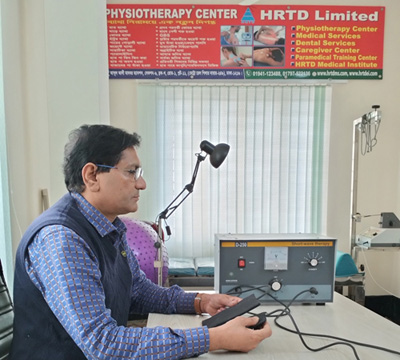
Physiotherapy Equipment for Physiotherapy Best Course in Dhaka
Physiotherapy equipment encompasses a wide range of devices and tools used to assess, treat, and aid in patient rehabilitation through various modalities like exercise, electrotherapy, and heat/cold application.
Electrotherapy and Pain Management Devices
These machines use electrical currents and other physical agents to alleviate pain, reduce inflammation, and promote tissue healing.
- Transcutaneous Electrical Nerve Stimulation (TENS) Unit: Delivers low-voltage electrical currents to the skin through electrodes to disrupt pain signals and manage chronic pain conditions.
- Electrical Muscle Stimulation (EMS) Machine: Sends electrical impulses to activate muscles, which is useful for muscle re-education, preventing atrophy, and strengthening muscles that are difficult to engage voluntarily.
- Therapeutic Ultrasound Machine: Emits high-frequency sound waves that penetrate deep into tissues, generating heat and promoting circulation and tissue repair in soft tissue injuries.
- Interferential Therapy (IFT) Machine: Uses medium-frequency currents to provide pain relief and muscle stimulation, reaching deeper tissues than TENS.
- Laser Therapy Units: Use specific wavelengths of light to accelerate tissue regeneration and reduce pain in conditions like sports traumas and arthritic pathologies.
- Shortwave Diathermy Units: Provide deep heat therapy to muscle layers to soothe muscle spasms and reduce pain.
Exercise and Rehabilitation Equipment
These tools are central to improving strength, range of motion, balance, and overall physical function.
- Resistance Bands/Tubes: Elastic bands of varying resistance levels used for progressive strength training and enhancing flexibility.
- Exercise Balls (Theraballs): Large, inflatable balls that provide an unstable surface for exercises targeting balance, core strength, and stability.
- Dumbbells and Weights: Free weights and ankle/wrist cuffs provide graded resistance for strengthening specific muscle groups.
- Foam Rollers: Used for self-massage and myofascial release to relieve muscle tension and improve flexibility.
- Balance Boards: Devices with an unstable base (like the BOSU Balance Trainer) to improve balance, coordination, and lower extremity stability.
- Cardiovascular Equipment: Includes treadmills, stationary bikes, and upper body ergometers used for improving endurance, cardiovascular fitness, and gait training in a controlled environment.
- Continuous Passive Motion (CPM) Machine: A device that gently moves a joint (often the knee) through a set range of motion for an extended period after surgery to aid recovery and prevent stiffness.
- Parallel Bars: Railing systems that provide support for patients relearning to walk or needing stability during gait training.
Manual Therapy and Support Tools
These items support hands-on treatment and patient comfort.
- Treatment Tables: Sturdy, often height-adjustable tables that provide a comfortable and supportive surface for patient assessment and manual therapy techniques.
- Hot and Cold Packs: Reusable gel packs used to apply heat (for muscle spasms) or cold (for inflammation and swelling) therapy.
- Goniometer: A diagnostic tool used to measure joint angles and range of motion (ROM) to track progress.
- Massage Guns: Percussion therapy devices used for deep tissue massage to relieve muscle soreness and tension.
- Cervical/Lumbar Traction Devices: Equipment that applies controlled stretching to the spine to relieve pressure on nerves caused by conditions like herniated discs.
Neurogenic Disorders & Physiotherapy for Physiotherapy Best Course in Dhaka
Neurogenic disorders, also known as neurological disorders, are conditions that affect the central and peripheral nervous systems (the brain, spinal cord, and nerves). These disorders disrupt normal function, leading to a wide range of physical, cognitive, and emotional symptoms. According to the World Health Organization (WHO), neurological conditions are the leading cause of disability worldwide, affecting over three billion people globally
Common Types of Neurological Disorders
There are hundreds of neurological disorders, which can be grouped into several categories.
- Neurodegenerative conditions: Characterized by the progressive loss of neurons, these diseases worsen over time. Examples include:
- Alzheimer’s disease and other dementias: Affect memory, thinking, and behavior.
- Parkinson’s disease: Impacts movement due to a lack of dopamine in the brain.
- Multiple sclerosis (MS): An autoimmune condition affecting the protective layer of nerve pathways.
- Amyotrophic lateral sclerosis (ALS): A motor neuron disease that causes muscle weakness and eventual paralysis.
- Huntington’s disease: An inherited condition causing involuntary movements and cognitive decline.
- Brain conditions: Include issues like stroke, epilepsy, and migraines.
- Spine conditions: Such as spina bifida and spinal cord injuries.
- Peripheral nerve conditions: Affect nerves outside the brain and spinal cord, like carpal tunnel syndrome and Bell’s palsy.
- Functional Neurological Disorder (FND): Involves problems with how brain networks work, rather than structural damage, resulting in physical symptoms like seizures or movement problems.
Common Symptoms
Symptoms of neurological disorders vary widely depending on the affected part of the nervous system. They may include:
- Pain (headaches, back, or neck pain)
- Muscle weakness, stiffness, tremors, or paralysis
- Coordination and balance problems
- Numbness, tingling, or loss of sensation
- Vision or hearing problems
- Speech difficulties (slurred or slow speech)
- Seizures or changes in consciousness
- Memory loss, confusion, or difficulty concentrating
- Mood and behavioral changes
Causes
The causes of neurological disorders can include:
- Genetics: Inherited faulty genes (e.g., Huntington’s disease).
- Infections: Such as meningitis or encephalitis.
- Trauma: Injuries to the brain or spinal cord.
- Autoimmune disorders: The immune system attacks the nervous system (e.g., MS).
- Vascular issues: Problems with blood vessels, leading to conditions like stroke.
- Environmental factors: Exposure to toxins or malnutrition.
- Degenerative processes: The gradual breakdown of nerve cells over time (e.g., Parkinson’s).
Diagnosis and Treatment
Diagnosis often involves a thorough physical examination, a review of symptoms, and various tests like blood work, imaging scans (MRI, CT), or electrical activity tests (EEG).
Treatment options vary based on the specific disorder and its severity, and a multidisciplinary approach is often used. Treatments can include:
- Medication to manage symptoms or slow progression.
- Physical, occupational, and speech therapy.
- Lifestyle changes, such as a healthy diet and exercise.
- Surgical procedures to correct structural issues or implant devices like deep brain stimulators.
- Psychological support to help cope with the condition.