 HRTD Medical Institute



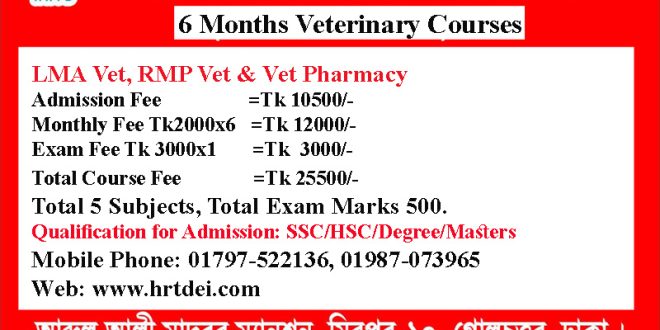
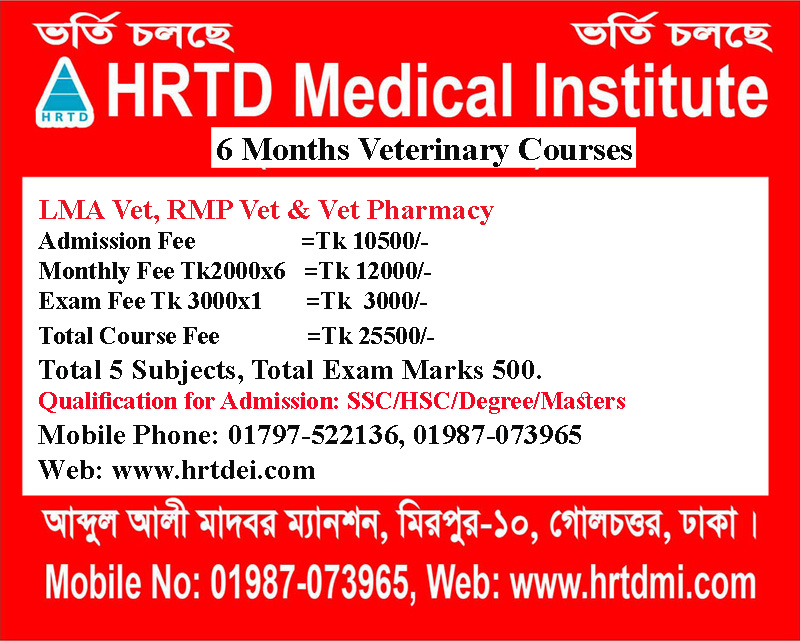
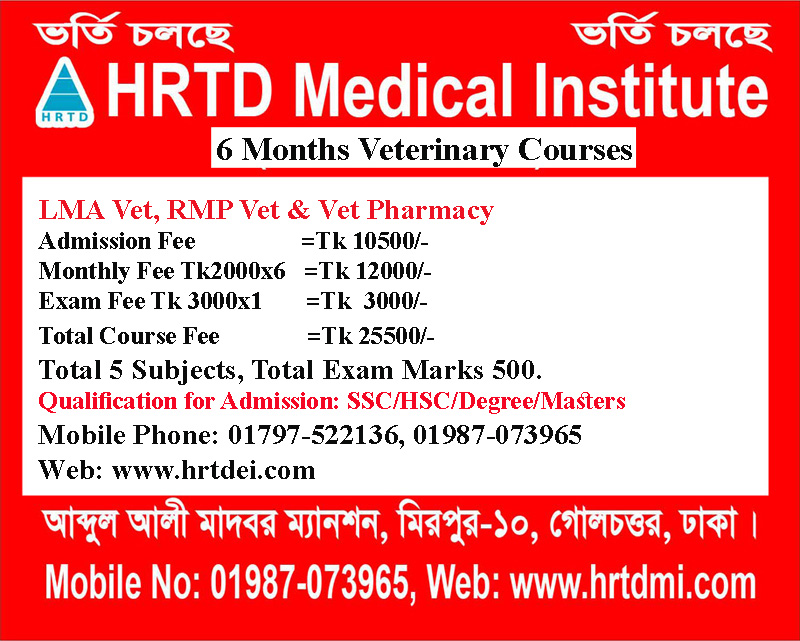
6 Months Veterinary Course Details
6 Months Veterinary Course. Mobile Phone 01969947171, 01797522136, 01797522136. 6 Months Veterinary Course is a short course in the animal and poultry sectors. This Veterinary Course contains 5 Subjects. Course Name LMA Vet 6 Months, RMP Vet 6 Months, and Vet Pharmacy 6 Months. All Courses are available at HRTD Medical Institute. The subjects of the 6-month Veterinary Course are almost the same except for some internal changes. The subjects of 6 Months of Veterinary Courses are Veterinary Anatomy & Physiology, Chemistry & Veterinary Pharmacology, Animal Disease & Treatment, First Aid & Vaccination, and Cattle Farm management.
Location of 6 Months Veterinary Course
Location of 6 Months Veterinary Course. Mobile Phone 01969947171, 01797522136, 01987073965. HRTD Medical Institute, Section-6, Block-Kha, Raod-1, Plot-11, Metro Rail Piller No. 249.
6 Months Veterinary Courses Fees
The 6-Month Veterinary Course Fee is Tk 26500 including the admission Fee is Tk 10,500/-, the Monthly fee is Tk 2500, and the exam fee of Tk 1000. Though 6 Months Veterinary Course is very short course, you can learn many practical works and primary treatment from hear.
Hostel Facilities in HRTD Medical Institute for 6 Months Veterinary Course
Hostal & Meal Facilities
The Institute has hostel facilities for the students. Students can take a bed in the hostel.
Hostel Fee Tk 3000/- Per Month
Meal Charges Tk 3000/- Per Month. ( Approximately )
হোস্টাল ও খাবার সুবিধা
ইনস্টিটিউটে শিক্ষার্থীদের জন্য হোস্টেল সুবিধা রয়েছে। ছাত্ররা হোস্টেলে বিছানা নিতে পারে।
হোস্টেল ফি 3000/- টাকা প্রতি মাসে,
খাবারের চার্জ 3000/- টাকা প্রতি মাসে।(প্রায়)
Teachers For 6 Months Veterinary Course
Dr. Mosharof (DVM)
Dr. Ripon (DVM)
Dr. Parija (DVM)
Dr. Khondoker Nabiul Islam (BScAH, MS in Poultry Science, PGDPM)
Dr. Sakulur Rahman (MBBS,CCD)
Dr. Tisha (MBBS)
Dr. Disha (FCPS)
Dr. Suhana (MBBS, PGT)
Dr. Shamima (MBBS,PGT)
Dr.Layla (MBBS)
Dr. Farabi (MBBS)
Dr.Rajoan (MBBS)
Subjact for 6 Months Veterinary Course
Veterinary Anatomy & Physiology
Veterinary Pharmacology
Practice of Veterinary Medicine
Animal & Poultry Vaccination
Veterinary Microbiology
Hematology & Pathology
Practical for 6 Months Veterinary Course
Practical Works for Veterinary 6 Months Course: Mobile Phone 01969947171, 01797522136, 01987073965. Understanding of heartbeat, Heart Rate, Pulse Rate, Weak Pulse, Strong Pulse, Normal Pulse, Tachycardia, Bradycardia, Heart Sound, Normal Heart Sound, Measurement of Blood Pressure, Systolic Blood Pressure, Diastolic Blood Pressure, Pulse Pressure, Mean Blood Pressure, Hypertension, Hypotension, Hypertension Emergency, Emergency Management of Hypertension, Emergency Management of Hypotension, Emergency Management of Hypertension Urgency,
Pushing Injection, Pushing IM Injection, Pushing IV Injections, Setting of Cannula, Cleaning, Dressing, Bandaging, Stitching, Diabetic Checking, Blood Glucose Measurement, Report Understanding of Diabetic Patient, Report Understanding of Hypertensive Patient, Prescription Understanding of Diabetic Patient, Prescription Understanding of Hypertensive Patient, Prescription Understanding of Hypotensive Patient,
Application of Ophthalmic Drugs, Application of Pediatric Drugs, Inhalation, Exhalation, Use of Inhaler, Use of Rotahaler, Use of Nebulizer Machine, Management of Oral Dose Schedule, Application of Ointment and Cream, Setting Splinter, First Aid of Shock, First Aid of Snake Bite, First Aid of Burn, First Aid of Electric Shock, Emergency Management of Anaphylactic Shock, CPR Application Process, Uges of Antiseptic Drugs, Dosage forms of Drugs, Application of Sublingual Rout, Auscultation, Pulmonary Auscultation, etc.
Veterinary Anatomy & Physiology for 6 Months Veterinary Course
What is Anatomy and Physiology?
Ans:-Anatomy (ব্যবচ্ছেদ বিদ্যা): চিকিৎসা বিজ্ঞানের যে শাখায় দেহের গঠন নিয়ে আলোচনা করা হয় তাকে Anatomy বলে। যেমন Heart, Lung এবং Liver এর গঠন।
Physiology (শারীর বিদ্যা): চিকিৎসা বিজ্ঞানের যে শাখায় দেহে সংঘটিত বিভিন্ন কাজ নিয়ে আলোচনা করা হয় তাকে Physiology বলে। যেমন Heart, Lung এবং Liver এবং Blood এর কাজ।
Anatomy এবং Physiology চিকিৎসা বিজ্ঞানের জন্য গুরুত্বপূর্ণ কেন?
Ans:- Anatomy পাঠ করলে দেহের কোষ, কলা, Organ ও System এর গঠন সম্পর্কে বিস্তারিত জানা যায়। Physiology পাঠ করলে দেহের কোষ, কলা, Organ ও System এর কাজ সম্পর্কে বিস্তারিত জানা যায়। দেহের গঠনগত ও কার্যগত অস্বাভাবিকতা হচ্ছে রোগ বা disease. সুতরাং Anatomy এবং Physiology পাঠ করলে রোগ নির্ণয় করা সহজ হয়। ফলে রোগের চিকিৎসা করাও সহজ হয়। তাই Anatomy এবং Physiology চিকিৎসা বিজ্ঞানের জন্য খুব গুরুত্বপূর্ণ।
Mantion the names of system of Vet body. Ans:-The systems of Vet body are [According to PCB]:
(1) Blood & Blood Circulatory System (রক্ত ও রক্ত সংবহন তন্ত্র)
(2) Nervous System (স্নায়ু তন্ত্র)
(3) Digestive system (পরিপাক তন্ত্র)
(4) Respiratory system (শ্বাস তন্ত্র)
(5) Excretory System (রেচন তন্ত্র)
(6) Reproductive system (প্রজনন তন্ত্র)
(7) Endocrine system (অন্তঃক্ষরা গ্রন্থি তন্ত্র)
(8) Muscular system (পেশী তন্ত্র)
(9) Skeletal System (কংকাল তন্ত্র)
[বিঃদ্র: ১ম সেমিস্টারে Digestive System, Respiratory System এবং Blood & Blood Circulatory System বেশি প্রয়োজনীয়।]
Digestive system (পরিপাক তন্ত্র)
Digestive system এবং digestion কাকে বলে?
Ans:-Digestive system: দেহের যে system দ্বারা খাদ্য পরিপাক হয়
তাকে Digestive system বলে।
Digestion: খাদ্য থেকে খাদ্যের উপাদান গুলি বের করার প্রক্রিয়াকে
Digestion বা পরিপাক বা হজম বলে।
Mention the names of food components (খাদ্যের উপাদান).
Ans:- Names of food components:
(1) Protein (আমিষ)
(2) Fat (শ্লেহ/ চবি)
(3) Carbohydrate (শর্করা)
(4) Water (পানি)
(5) Vitamin (খাদ্যপ্রান)
(6) Mineral (খনিজ)
Mention the sources of food components. Ans:- Sources of food components:
(1) Sources of Protein: মাছ, মাংষ, ডিম, দুধ।
(2) Sources of fat: তেল, ঘী, মাখন, মাংসের চর্বি।
(3) Sources of carbohydrate: চাল, গম, ভুট্টা, যব, আলু।
(4) Sources of water: রসালো খাবার, টিউবয়েল, নদী নালা।
(5) Sources of vitamin: কলিজা, ডিমের কুসুম, শাক সবজি।
(6) Sources of mineral: ফলমূল, শাক সবজি, লেবু।
Digestive system এর Organ গুলি কি কি?
Ans:- Digestive system এর Organ গুলি হচ্ছেঃ
(1) Oral cavity (মুখ গহবর)
(2) Tongue (জিহবা) [Glossa]
(3) Esophagus (খাদ্যনালী)
(4) Stomach (পাকস্থলী) [Gastro]
(5) Small Intestine (ক্ষুদ্র অস্ত্র) [Entaron]
(6) Large Intestine (বৃহৎ অস্ত্র) [Colon]
(7) Rectum (মলাশয়) [Proctus]
(8) Anus (মলদ্বার / পায়ু)
(9) Appendix (উপাঙ্গ)
Digestive system এর কাজ সমুহ কি কি?
Ans:- Digestive system এর কাজ সমুহ হচ্ছেঃ
(1) খাদ্য গ্রহন করা।
(2) খাদ্য সনচয় করে রাখা।
(3) Digestive juice নিঃসরন করা।
(4) খাদ্যের জীবানু ধবংস করা।
(5) খাদ্য পরিপাক করা।
(6) খাদ্যের উপাদান শোষন করা।
(7) বর্জ পদার্থ বের করে দেওয়া।
Digestive juice কাকে বলে?
Ans:- দেহ থেকে নিঃসৃত যে সকল রস খাদ্য পরিপাকে অংশ গ্রহন করে তাদেরকে Digestive juice বলে।
Digestive juice গুলি Digestive system এর Organ থেকে এবং Digestive system এর কিছু সহকারী Organ থেকে নিঃসৃত হয়ে খাদ্য পরিপাকে অংশ গ্রহন করে।
Mention the names of digestive juices.
Ans:- Names of digestive juices:
(1) Saliva
(2) Gastric Juice
(3) Pancreatic Juice
(4) Bile
(5) Intestinal Juice
(6) Brunners gland এর Juice.
Stomach কি? Stomach wall এর চারটি Layer এর নাম উল্লেখ কর।
Ans:- Stomach: Digestive system এর যে Organ এ খাদ্য সঞ্চয় থাকে, খাদ্য পেষ্ট হয় এবং খাদ্য কিছুটা পরিপাক হয় তাকে Stomach বলে।
Stomach wall এর চারটি Layer এর নাম:
(1) Serous Membrane
(2) Muscle Layer
(3) Sub Mucosa
(4) Mucosa
Stomach Anatomy
Mention the functions of stomach.
Ans:- Functions of stomach:
(1) খাদ্য সঞ্চয় করা।
(2) Gastric Juice নিঃসরন করা।
(3) খাদ্যের জীবানু ধবংস করা।
(4) খাদ্য পরিপাক করা।
(5) খাদ্যের উপাদান শোষন করা।
Gastric Juice এর প্রধান উপাদান গুলি কি কি ?
Ans:- Gastric Juice এর প্রধান উপাদান গুলি হচ্ছেঃ
(1) Hydrochloric acid (HCl acid)
(2) Pepsin – ইহা protein জাতীয় খাদ্যকে পরিপাক করে।
(3) Water
Mention the 4 compartment of cow stomach
Poultry Anatomy & Physiology for 6 Months Veterinary Course
Poultry anatomy and physiology is the study of the physical structures (anatomy) and biological functions (physiology) of domesticated birds like chickens, ducks, turkeys, and quails. It provides essential knowledge for maximizing bird performance, recognizing early signs of illness, and ensuring proper welfare.
Understanding the structural design and bodily functions of poultry is critical for efficient farming and flock management. The study of poultry biology is broken down into several key physiological systems:
1. Digestive System
Unlike mammals, poultry do not have teeth. Food is swallowed whole and processed through specialized organs:
- Crop: A pouch that stores and softens dry feed with mucus before digestion.
- Proventriculus: The “true stomach,” which secretes acids and enzymes.
- Gizzard (Ventriculus): A highly muscular organ that grinds down feed using ingested stones or grit.
- Cloaca: The common exit point for the digestive, urinary, and reproductive tracts.
2. Respiratory System
Poultry possess a highly efficient respiratory tract adapted for high metabolic demands.
- Air Sacs: Birds have nine interconnected air sacs that allow air to flow continuously through the lungs in both inhalation and exhalation.
- Syrinx: The vocal organ of birds, located at the base of the trachea (instead of a larynx).
3. Skeletal and Muscular Systems
Poultry skeletons are uniquely adapted for flight and egg production:
- Pneumatic Bones: Many bones are hollow and connected to the respiratory system, making the bird lightweight.
- Medullary Bone: A specialized bone tissue that acts as a calcium reservoir for female hens to produce eggshells.
- Breast vs. Leg Meat: Flight muscles consist mostly of fast-twitch, “white” muscle fibers, while leg muscles contain sustained-use, myoglobin-rich “dark” muscle fibers.
4. Reproductive System
In hens, reproduction relies on the oviduct, where a single yolk transforms into a fully shelled egg. The process takes about \(24\) to \(26\) hours and consists of distinct sections: the infundibulum (fertilization), magnum (egg white formation), isthmus (shell membranes), and the shell gland (calcareous shell).
5. Integumentary System
The outer layer of the bird, which includes feathers, skin, and specialized vascular tissues:
- Comb and Wattles: Fleshy growths on the head used for temperature regulation and sexual display.
- Oil Gland: Secretes oils that birds use to preen and waterproof their feathers.
Veterinary Pharmacology for 6 Months Veterinary Course
Define Pharmacology. Why pharmacology is important for medical science ?
Pharmacology is the biomedical science that studies how chemical substances and drugs interact with biological systems. It explores a drug’s origins, chemical properties, biological effects, and mechanisms of action, encompassing two primary branches: pharmacokinetics (what the body does to the drug) and pharmacodynamics (what the drug does to the body).
Pharmacology is absolutely essential to medical science because it establishes the scientific foundation for safe, effective, and tailored treatments. Its critical importance spans several key areas:
- Drug Development and Safety: It supports the discovery and testing of new medications, ensuring they are safe for human use by identifying optimal dosages, toxicity levels, and potential side effects.
- Mechanisms of Action: By understanding how a drug alters biochemical functions at the cellular and molecular levels, doctors can accurately target diseases.
- Preventing Drug Interactions: It guides healthcare providers in recognizing how multiple medications may interact with one another or with certain foods, preventing adverse effects and toxicity.
- Personalized Medicine: Advances in pharmacology (such as pharmacogenomics) allow therapies to be tailored to an individual patient’s genetic makeup, optimizing effectiveness and minimizing negative reactions.
If you would like to explore this further, let me know if you want to focus on:
- The differences between pharmacokinetics and pharmacodynamics
- How pharmacology differs from pharmacy
- Specific examples of how pharmacogenomics is used in modern clinical treatment
Drug & Medicine কাকে বলে তা উদাহরন সহ লিখ ?
ড্রাগ (Drug) হলো যেকোনো রাসায়নিক পদার্থ যা শরীরে প্রবেশ করার পর তার স্বাভাবিক গঠন বা কার্যকারিতায় পরিবর্তন আনে। অন্যদিকে, মেডিসিন (Medicine) হলো সেই ড্রাগ, যা কোনো নির্দিষ্ট রোগ নির্ণয়, প্রতিরোধ বা চিকিৎসার জন্য চিকিৎসকের পরামর্শ অনুযায়ী নিয়ন্ত্রিত মাত্রায় ব্যবহার করা হয়। সহজ কথায়, সব মেডিসিনই ড্রাগ, কিন্তু সব ড্রাগ মেডিসিন নয়।
ড্রাগ (Drug)-এর উদাহরণ:
- নিকোটিন (Nicotine): যা তামাকের মধ্যে থাকে এবং স্নায়ুতন্ত্রকে উদ্দীপিত করে।
- ক্যাফেইন (Caffeine): যা চা বা কফির মধ্যে থাকে এবং সাময়িক ক্লান্তি দূর করে।
- কোকেন (Cocaine): এটি একটি ক্ষতিকারক নেশাজাতীয় ড্রাগ বা মাদক।
মেডিসিন (Medicine)-এর উদাহরণ:
- প্যারাসিটামল (Paracetamol): জ্বর ও ব্যথা কমানোর ওষুধ (যেমন- নাপা, এইস)।
- অ্যান্টাসিড (Antacid): এসিডিটি বা গ্যাস্ট্রিকের সমস্যা দূর করার ওষুধ (যেমন- অ্যান্টাসিড, ম্যাক্সপ্রো)।
- অ্যান্টিবায়োটিক (Antibiotic): ব্যাকটেরিয়াজনিত সংক্রমণ ধ্বংস করার ওষুধ (যেমন- অ্যামোক্সিসিলিন)।
Drug এবং Medicine এর মধ্যে পার্থক্য লিখ ?
সাধারণ অর্থে ড্রাগ (Drug) এবং মেডিসিন (Medicine) একই মনে হলেও, চিকিৎসা বিজ্ঞানের ভাষায় এদের মধ্যে সুস্পষ্ট পার্থক্য রয়েছে। সহজ কথায়, সকল মেডিসিনই ড্রাগ, কিন্তু সকল ড্রাগ মেডিসিন নয়।
ড্রাগ ও মেডিসিনের প্রধান পার্থক্যগুলো নিচে দেওয়া হলো:
| বৈশিষ্ট্যের ভিত্তি | ড্রাগ (Drug) | মেডিসিন (Medicine) |
|---|---|---|
| সংজ্ঞা | যে কোনো রাসায়নিক পদার্থ যা শরীরে প্রবেশ করলে তার স্বাভাবিক কার্যকারিতায় পরিবর্তন ঘটে। | ড্রাগের একটি নিরাপদ ও নির্দিষ্ট রূপ, যা রোগ নিরাময়, উপশম বা প্রতিরোধের জন্য ব্যবহৃত হয়। |
| গঠন | এটি মূলত খাঁটি বা মূল রাসায়নিক উপাদান (Active Pharmaceutical Ingredient বা API)। | ড্রাগের সাথে বিভিন্ন অতিরিক্ত উপাদান (যেমন- বাইন্ডার, ফিলার, সিরাপ বা কোটিং) মিশিয়ে খাওয়ার উপযোগী করা হয়। |
| উদ্দেশ্য | শারীরিক ও মানসিক কার্যকারিতায় পরিবর্তন আনা। ভালো বা খারাপ উভয় প্রভাবই থাকতে পারে। | নির্দিষ্ট মাত্রা অনুযায়ী কেবল রোগ নিরাময় ও স্বাস্থ্যের উন্নতি করা। |
| ব্যবহার ও প্রেসক্রিপশন | এটি প্রেসক্রিপশন ছাড়াও হতে পারে। উদাহরণ: ক্যাফেইন, নিকোটিন, প্যারাসিটামল, এমনকি নেশাজাতীয় দ্রব্য। | সাধারণত ডাক্তারের প্রেসক্রিপশন অনুযায়ী নির্দিষ্ট মাত্রায় সেবন করতে হয়। |
| নিরাপত্তা | অপব্যবহারে পার্শ্বপ্রতিক্রিয়া বা আসক্তি হতে পারে। | কঠোর ক্লিনিক্যাল ট্রায়াল ও সরকারি অনুমোদন সাপেক্ষে সম্পূর্ণ নিরাপদ। |
Anty ulcer drug কাকে বলে? Anty ulcer drug এর ৫ টি generic name লিখ
যে সকল ঔষধ পাকস্থলীর অতিরিক্ত এসিডিটি কমায়, বুক জ্বালাপোড়া দূর করে এবং পাকস্থলী বা অন্ত্রের পেপটিক আলসার নিরাময় ও প্রতিরোধে কাজ করে, সেগুলোকে Anti-ulcer drug বলা হয়। এগুলো গ্যাস্ট্রিক অ্যাসিডের ক্ষরণ নিয়ন্ত্রণ করে বা পাকস্থলীর ভেতরের আস্তরণকে অ্যাসিডের ক্ষতি থেকে রক্ষা করে।
Anti-ulcer drug হিসেবে বহুল ব্যবহৃত ৫টি Generic name নিচে দেওয়া হলো:
১. Omeprazole (ওমেপ্রাজল)
২. Esomeprazole (এসোমেপ্রাজল)
৩. Pantoprazole (প্যান্টোপ্রাজল)
৪. Famotidine (ফ্যামোটিডিন)
৫. Rabeprazole (র্যাবেপ্রাজল)
Antiprotozoa drug কাকে বলে? এর ৫ টি generic name লিখ
যেসব ওষুধ বা ফার্মাসিউটিক্যাল এজেন্ট এককোষী পরজীবী প্রোটোজোয়া (যেমন: Entamoeba histolytica, Giardia lamblia) দ্বারা সৃষ্ট সংক্রমণ ধ্বংস করতে বা তাদের বংশবৃদ্ধি রোধ করতে ব্যবহৃত হয়, সেগুলোকে Antiprotozoal drug (অ্যান্টিপ্রোটোজোয়াল ড্রাগ) বলে। এগুলো অ্যামিবিয়াসিস, জিয়ার্ডিয়াসিস ও ম্যালেরিয়ার মতো রোগের চিকিৎসায় ব্যবহৃত হয়।
Antiprotozoal ড্রাগের ৫টি পরিচিত জেনেরিক নেম হলো:
- মেট্রোনিডাজল (Metronidazole): অ্যামিবিয়াসিস ও জিয়ার্ডিয়াসিসের মতো সংক্রমণের ক্ষেত্রে বহুল ব্যবহৃত একটি ওষুধ।
- টিনিডাজল (Tinidazole): প্রোটোজোয়া ঘটিত নানা সংক্রমণ এবং ডায়রিয়া প্রতিরোধে কার্যকর।
- নাইটাজোক্সানাইড (Nitazoxanide): বিভিন্ন ধরনের পরজীবী সংক্রমণ ও পেটের পীড়ায় এটি অত্যন্ত কার্যকর।
- ক্লোরোকুইন (Chloroquine): ম্যালেরিয়া রোগের চিকিৎসায় সবচেয়ে বেশি ব্যবহৃত একটি অ্যান্টিপ্রোটোজোয়াল এজেন্ট।
- অরনিডাজল (Ornidazole): প্রোটোজোয়া এবং অ্যানেরোবিক ব্যাকটেরিয়াজনিত সংক্রমণের চিকিৎসায় নির্দেশিত।
Practice of Veterinary Medicine for 6 Months Veterinary Course
The practice of veterinary medicine is a comprehensive science encompassing the prevention, diagnosis, and treatment of animal diseases. The academic and practical study of this field spans foundational biology, diagnostic pathology, and clinical therapeutics across a wide array of domestic, agricultural, and exotic animal species.
The main topics in veterinary medicine are structured to build from basic animal biology to advanced clinical practices:
1. Basic & Pre-Clinical Sciences
These subjects form the foundation of how healthy animals function:
- Veterinary Anatomy & Histology: The structural organization of animal bodies at both the gross and microscopic levels.
- Veterinary Physiology & Biochemistry: The biochemical and physical processes that govern normal bodily functions.
- Animal Nutrition & Husbandry: Dietary requirements, metabolic processes, and livestock/pet management.
- Animal Genetics & Breeding: The principles of heredity and selective breeding in animals.
2. Para-Clinical Sciences
These topics focus on disease agents, the damage they cause, and how to stop them:
- Veterinary Pathology: The study of the causes and nature of diseases, focusing on tissue changes.
- Veterinary Microbiology & Immunology: The study of bacteria, viruses, fungi, and the animal immune system’s response to them.
- Veterinary Parasitology: Identification and management of internal and external parasites (e.g., worms, ticks).
- Veterinary Pharmacology & Toxicology: The preparation, use, and effects of drugs and poisons in animals.
3. Clinical Sciences
The hands-on practice of diagnosing, treating, and managing animal health:
- Veterinary Medicine & Therapeutics: Diagnosis and medical treatment of systemic diseases in companion, equine, and production animals.
- Veterinary Surgery & Anesthesiology: Pre-operative care, surgical techniques (orthopedic, soft tissue), and pain management.
- Veterinary Obstetrics & Reproduction: Managing breeding, pregnancy, and reproductive disorders.
- Diagnostic Imaging: The use of X-rays, ultrasounds, and CT scans.
4. Public Health & Preventive Medicine
The application of veterinary knowledge to protect both animal and human populations:
- Veterinary Public Health: Monitoring, controlling, and preventing zoonotic diseases (diseases passed between animals and humans) and ensuring food safety.
- Ethology & Animal Welfare: Understanding natural animal behaviors and protecting their physical and mental well-being.
ক্ষুরা রোগ কি? ক্ষুরা রোগের কারন, লক্ষন ও চিকিৎসা কি?
ক্ষুরা রোগ (Foot and Mouth Disease বা FMD) গবাদিপশুর একটি অত্যন্ত সংক্রামক ও মারাত্মক ভাইরাসজনিত রোগ。 গরু, মহিষ, ছাগল ও ভেড়ার মতো দ্বিখুরবিশিষ্ট প্রাণী এতে আক্রান্ত হয়。
কারণ
- ভাইরাস: এটি ‘পিকোরনাভিরিডি’ (Picornaviridae) পরিবারের ‘অ্যাপথোভাইরাস’ (Aphthovirus) দ্বারা সৃষ্ট。
- বিস্তার: আক্রান্ত পশুর লালা, মলমূত্র, দুধ এবং ক্ষতের তরলের মাধ্যমে ভাইরাস ছড়ায়。 এছাড়া বাতাস, দূষিত খাদ্য এবং খামারের কর্মীদের কাপড়ের মাধ্যমেও সুস্থ পশুকে আক্রান্ত করতে পারে。
লক্ষণ
- তীব্র জ্বর: পশুর শরীরের তাপমাত্রা ১০৪° থেকে ১০৭° ফারেনহাইট পর্যন্ত উঠতে পারে。
- মুখে ঘা: জিহ্বা, দাঁতের মাড়ি ও ঠোঁটে ফোস্কা ও পরে ঘা দেখা দেয়。 মুখ দিয়ে প্রচুর পরিমাণে লালা ঝরে এবং সাদা ফেনা তৈরি হয়。
- পায়ের ঘা: ক্ষুরের মাঝখানে ও উপরের অংশে ফোস্কা পড়ে এবং পরে ঘা হয়。 এর ফলে পশু খুঁড়িয়ে হাঁটে。
- খাদ্য ও দুধ উৎপাদন কমে যাওয়া: মুখে ব্যথার কারণে পশু খেতে পারে না এবং দুধেল গাভীর দুধ উৎপাদন মারাত্মকভাবে হ্রাস পায়。 বাছুর হঠাৎ মারা যেতে পারে。
চিকিৎসা
ক্ষুরা রোগ ভাইরাসজনিত হওয়ায় এর নির্দিষ্ট কোনো অ্যান্টিবায়োটিক নেই, তবে লক্ষণ অনুযায়ী চিকিৎসা ও পরিচর্যা করলে পশু সুস্থ হয়ে ওঠে:
- আলাদা রাখা: আক্রান্ত পশুকে সুস্থ পশু থেকে দূরে শুকনো ও পরিষ্কার জায়গায় রাখতে হবে。 কাদা-পানিতে রাখা যাবে না。
- মুখ পরিষ্কার: ১০ গ্রাম ফিটকিরি ১ লিটার পানিতে মিশিয়ে বা পটাশিয়াম পারম্যাঙ্গানেট (KMnO4) মিশ্রিত পানি দিয়ে পশুর মুখ দিনে ৩-৪ বার ধুয়ে দিতে হবে。
- মুখে প্রলেপ: মুখের ঘা শুকানোর জন্য সোহাগার খৈ ও মধুর মিশ্রণ ব্যবহার করা যায়。
- পায়ের চিকিৎসা: খাওয়ার সোডা বা পটাশ মিশ্রিত পানি দিয়ে পায়ের ঘা পরিষ্কার করে অ্যান্টিসেপটিক পাউডার (যেমন- সালফানাসাইড) লাগাতে হবে。
- খাবার: পশুকে নরম খাবার ও সহজে হজমযোগ্য দানাদার খাবার দিতে হবে
Anthrax কি? Anthrax এর কারন, লক্ষন ও চিকিৎসা উল্লেখ কর
অ্যানথ্রাক্স হলো একটি মারাত্মক ও সংক্রামক রোগ, যা ব্যাসিলাস অ্যানথ্রাসিস (Bacillus anthracis) নামক ব্যাকটেরিয়ার কারণে হয়ে থাকে। এটি মূলত গবাদিপশু (যেমন: গরু, ছাগল, ভেড়া) থেকে মানুষে ছড়ায়। মানুষ থেকে মানুষে এই রোগ সাধারণত ছড়ায় না।
রোগটির কারণ, লক্ষণ ও চিকিৎসা নিচে দেওয়া হলো:
অ্যানথ্রাক্সের কারণ
অ্যানথ্রাক্সের জীবাণু প্রতিকূল পরিবেশে মাটিতে স্পোর (রেণু) হিসেবে বছরের পর বছর সুপ্ত অবস্থায় বেঁচে থাকতে পারে। মূলত তিনটি উপায়ে মানুষ এই ব্যাকটেরিয়া দ্বারা সংক্রমিত হতে পারে: [1, 2]
- ত্বক বা চামড়ার মাধ্যমে: সংক্রমিত পশুর চামড়া, পশম, বা হাড়ের সংস্পর্শে এলে এবং ত্বকে কোনো কাটা বা আঁচড় থাকলে।
- শ্বাস-প্রশ্বাসের মাধ্যমে: বাতাসের মাধ্যমে ব্যাকটেরিয়ার রেণু ফুসফুসে প্রবেশ করলে (এটি সবচেয়ে মারাত্মক ধরন)।
- খাবারের মাধ্যমে: অ্যানথ্রাক্সে আক্রান্ত পশুর ভালোভাবে সিদ্ধ না করা মাংস বা দূষিত খাবার খেলে।
অ্যানথ্রাক্সের লক্ষণ
জীবাণু শরীরে প্রবেশের পর সংক্রমণের ধরন অনুযায়ী লক্ষণগুলো প্রকাশ পায়:
- ত্বকের অ্যানথ্রাক্স (সবচেয়ে সাধারণ): আক্রান্ত স্থানে চুলকানিযুক্ত ছোট ফোস্কা দেখা দেয়, যা পরবর্তীতে ব্যথাহীন কালো ঘা বা আলসারে পরিণত হয়। এর চারপাশে ফুলে যায় এবং জ্বর থাকতে পারে।
- ফুসফুসের অ্যানথ্রাক্স: প্রাথমিক লক্ষণ সাধারণ সর্দির মতো হলেও পরে প্রচণ্ড শ্বাসকষ্ট, বুকে ব্যথা, কাঁপুনি দিয়ে জ্বর ও ঘাম হতে পারে।
- অন্ত্র বা পেটের অ্যানথ্রাক্স: বমি বমি ভাব, ক্ষুধামন্দা, তীব্র পেটে ব্যথা, রক্তবমি এবং রক্তযুক্ত ডায়রিয়া হয়।
অ্যানথ্রাক্সের চিকিৎসা
- অ্যান্টিবায়োটিক: অ্যানথ্রাক্সের প্রধান ও কার্যকর চিকিৎসা হলো অ্যান্টিবায়োটিক (যেমন- পেনিসিলিন, ডক্সিসাইক্লিন বা সিপ্রোফ্লক্সাসিন)। সংক্রমণ শুরু হওয়ার পরপরই চিকিৎসা শুরু করলে পুরোপুরি সুস্থ হওয়া সম্ভব।
- অন্যান্য চিকিৎসা: রোগীকে হাসপাতালে ভর্তি করে প্রয়োজন অনুযায়ী অ্যান্টিটক্সিন ওষুধ এবং শিরায় স্যালাইন বা অন্যান্য সাপোর্টিভ চিকিৎসা দেওয়া হতে পারে।
Pneumonia কি? Pneumonia এর কারন, লক্ষন ও চিকিৎসা উল্লেখ কর
নিউমোনিয়া হলো ফুসফুসের এক ধরনের তীব্র সংক্রমণ, যা ফুসফুসের ছোট বায়ুথলি বা অ্যালভিওলিতে (Alveoli) প্রদাহ সৃষ্টি করে। এর ফলে বায়ুথলিগুলোতে তরল বা পুঁজ জমে যায়, যার কারণে শ্বাস নিতে কষ্ট হয়। শিশুদের এবং বয়স্কদের ক্ষেত্রে এটি মারাত্মক আকার ধারণ করতে পারে।
নিউমোনিয়ার কারণ
নিউমোনিয়া সাধারণত ব্যাকটেরিয়া, ভাইরাস বা ছত্রাকের মতো অণুজীবের সংক্রমণের কারণে হয়ে থাকে।
- ব্যাকটেরিয়া: সবচেয়ে সাধারণ ব্যাকটেরিয়া হলো Streptococcus pneumoniae, যা ব্যাকটেরিয়াল নিউমোনিয়ার প্রধান কারণ। এছাড়া Mycoplasma pneumoniae এবং Haemophilus influenzae এর অন্যতম কারণ।
- ভাইরাস: ইনফ্লুয়েঞ্জা (ফ্লু), রেসপিরেটরি সিনসিশিয়াল ভাইরাস (RSV), এবং কোভিড-১৯ (COVID-19)।
- ছত্রাক (Fungas): দুর্বল রোগ প্রতিরোধ ক্ষমতা সম্পন্ন ব্যক্তিদের ফাঙ্গাল নিউমোনিয়া হতে পারে।
নিউমোনিয়ার লক্ষণ
লক্ষণগুলো মৃদু থেকে গুরুতর হতে পারে। সাধারণ লক্ষণগুলোর মধ্যে রয়েছে:
- কাশি (cough) যা থেকে হলুদ, সবুজ বা রক্তমিশ্রিত কফ বা শ্লেষ্মা বের হতে পারে।
- জ্বর, কাঁপুনি ও অতিরিক্ত ঘাম হওয়া।
- শ্বাস নেওয়ার সময় বা কাশির সময় বুকে ব্যথা হওয়া।
- দ্রুত ও সশব্দে শ্বাস নেওয়া বা শ্বাসকষ্ট হওয়া।
- ক্লান্তি, দুর্বলতা, এবং ক্ষুধা হ্রাস পাওয়া।
- বমি বমি ভাব, বমি বা ডায়রিয়া।
নিউমোনিয়ার চিকিৎসা
রোগের ধরন ও তীব্রতার ওপর ভিত্তি করে চিকিৎসা দেওয়া হয়:
- ব্যাকটেরিয়াল নিউমোনিয়া: চিকিৎসকের পরামর্শ অনুযায়ী নির্দিষ্ট মাত্রার অ্যান্টিবায়োটিক সম্পূর্ণ কোর্স গ্রহণ করতে হবে।
- ভাইরাল নিউমোনিয়া: অ্যান্টিবায়োটিকে ভাইরাস মরে না, তবে চিকিৎসকের পরামর্শে অ্যান্টিভাইরাল ওষুধ বা উপসর্গের চিকিৎসার (জ্বর, ব্যথার ওষুধ) প্রয়োজন হতে পারে।
- অন্যান্য চিকিৎসা ও সতর্কতা: প্রচুর তরল পান করতে হবে, পর্যাপ্ত বিশ্রাম নিতে হবে এবং শ্বাসকষ্ট বেশি হলে হাসপাতালে ভর্তি হয়ে অক্সিজেন সাপোর্টের প্রয়োজন হতে পারে।
রক্ত আমাশয় বা Coccidiosis কক্সিডিওসিস কি ? রক্ত আমাশয়ের কারন, লক্ষন ও চিকিৎসা উল্লেখ কর
রক্ত আমাশয় বা ককসিডিওসিস (Coccidiosis) হলো প্রধানত পশুপাখির অন্ত্রের একটি মারাত্মক সংক্রামক রোগ। এটি আইমেরিয়া (Eimeria) নামক এককোষী পরজীবী (প্রোটোজোয়া) দ্বারা সৃষ্ট হয়। মানবদেহের রক্ত আমাশয় সাধারণত শিগেল্লা (Shigella) ব্যাকটেরিয়া বা এন্টামিবা (Entamoeba) নামক পরজীবী দ্বারা হয়ে থাকে।
১. কারণ (Causes)
- সংক্রমিত পরিবেশ: অপরিচ্ছন্ন ও স্যাঁতসেঁতে পরিবেশ, দূষিত পানি ও খাদ্যের মাধ্যমে এই পরজীবীর ডিম বা উসিস্ট (Oocysts) শরীরে প্রবেশ করে।
- প্রাণীদের ক্ষেত্রে: গবাদিপশু (গরু, বাছুর) এবং হাঁস-মুরগির (বিশেষ করে ব্রয়লার বা সোনালী) ক্ষেত্রে এই রোগটি বেশি দেখা যায়।
- মানবদেহের ক্ষেত্রে: অস্বাস্থ্যকর খাদ্যাভ্যাস ও অপরিশোধিত পানি পান করার কারণে আমাশয় হতে পারে।
২. লক্ষণ (Symptoms)
পশুপাখি বা মানবদেহ—যাদের ক্ষেত্রেই হোক না কেন, লক্ষণগুলো প্রায় একই রকম হয়ে থাকে:
- রক্ত মিশ্রিত মল: মলের সাথে প্রচুর পরিমাণে রক্ত ও শ্লেষ্মা বা মিউকাস (আম) যাওয়া।
- পেটে ব্যথা: পেটে তীব্র মোচড় দেওয়া এবং ক্র্যাম্পিং।
- ডায়রিয়া বা পাতলা পায়খানা: ঘন ঘন দুর্গন্ধযুক্ত পাতলা পায়খানা।
- অন্যান্য উপসর্গ: অতিরিক্ত দুর্বলতা, বমি বমি ভাব, ক্ষুধামন্দা, জ্বর এবং পানিশূন্যতা (Dehydration) দেখা দেওয়া।
৩. চিকিৎসা (Treatment)
- পশুপাখির ক্ষেত্রে: ককসিডিওসিসের চিকিৎসায় অ্যান্টি-ককসিডিয়াল ওষুধ (যেমন- Amprolium, Sulphadimidine) ব্যবহার করা হয়। প্রাণিসম্পদ বিশেষজ্ঞের পরামর্শ অনুযায়ী সঠিক মাত্রায় ওষুধ ও স্যালাইন খাওয়াতে হবে।
- মানবদেহের ক্ষেত্রে: চিকিৎসকের পরামর্শ অনুযায়ী অ্যান্টিবায়োটিক (যেমন- Metronidazole, Ciprofloxacin) এবং পানিশূন্যতা পূরণের জন্য পর্যাপ্ত খাবার স্যালাইন বা শিরায় স্যালাইন দেওয়া প্রয়োজন হতে পারে।
Ketosis রোগ কি? এর কারন, লক্ষন ও চিকিৎসা উল্লেখ কর
কেটোসিস (Ketosis) হলো শরীরের একটি স্বাভাবিক বিপাকীয় প্রক্রিয়া। যখন শরীরে গ্লুকোজ বা কার্বোহাইড্রেটের ঘাটতি দেখা দেয়, তখন শরীর শক্তি উৎপাদনের জন্য সঞ্চিত চর্বি ভাঙতে শুরু করে। এই চর্বি ভেঙে ‘কিটোন’ (Ketones) নামক উপাদান তৈরি হয় এবং শরীর তখন গ্লুকোজের পরিবর্তে কিটোনকে প্রধান জ্বালানি হিসেবে ব্যবহার করে。
কেটোসিস হওয়ার কারণ
মানুষের ক্ষেত্রে মূলত খাদ্যাভ্যাস এবং কিছু শারীরিক অবস্থার কারণে এই প্রক্রিয়াটি ঘটে–
- কার্বোহাইড্রেট জাতীয় খাবার কম খাওয়া: খাদ্যতালিকায় শর্করার পরিমাণ খুব সীমিত করা (যেমন: কিটোজেনিক বা ‘কিটো’ ডায়েট)。
- উপোস বা অনাহার: দীর্ঘ সময় উপোস থাকলে বা পর্যাপ্ত খাবার না খেলে。
- অতিরিক্ত শারীরিক পরিশ্রম: দীর্ঘ সময় ধরে ভারী ব্যায়াম করলে শরীরে গ্লুকোজের ঘাটতি হয়。
- ডায়াবেটিস: টাইপ-১ ডায়াবেটিসে পর্যাপ্ত ইনসুলিনের অভাবে কোষগুলো গ্লুকোজ গ্রহণ করতে পারে না, ফলে বাধ্য হয়ে শরীর চর্বি পোড়াতে শুরু করে。
(দ্রষ্টব্য: গবাদিপশুর—যেমন গাভী বা ছাগলের—ক্ষেত্রে বাচ্চা প্রসবের পর কার্বোহাইড্রেট ও ফ্যাটি এসিডের বিপাক ত্রুটির কারণেও এই রোগটি হয়ে থাকে。)
সাধারণ লক্ষণ
শরীর যখন কিটোসিস অবস্থায় প্রবেশ করে, তখন কিছু লক্ষণ বা পার্শ্বপ্রতিক্রিয়া দেখা যেতে পারে–
- মুখের দুর্গন্ধ: কিটোনের একটি রূপ (অ্যাসিটোন) নিঃশ্বাসের মাধ্যমে বের হওয়ার সময় মুখে ফলের মতো বা কিছুটা ধাতব গন্ধ হতে পারে。
- ক্লান্তি ও দুর্বলতা: শুরুতে শক্তির উৎস পরিবর্তনের সময় দুর্বল বা ঝিমুনি লাগতে পারে।
- ওজন হ্রাস: দ্রুত শরীরের মেদ বা ফ্যাট কমতে থাকে。
- হজম সমস্যা: কোষ্ঠকাঠিন্য বা বমি ভাব দেখা দেওয়া।
বিশেষ সতর্কতা: ডায়াবেটিসে আক্রান্তদের ক্ষেত্রে মাত্রাতিরিক্ত কিটোন তৈরি হলে তা ডায়াবেটিক কিটোএসিডোসিস (DKA) নামের মারাত্মক জটিলতার রূপ নিতে পারে। এটি হলে রক্ত অতিরিক্ত এসিডিক হয়ে পড়ে এবং তাৎক্ষণিক জরুরি চিকিৎসার প্রয়োজন হয়।
চিকিৎসা
কোন পরিস্থিতিতে কিটোসিস হচ্ছে, তার ওপর এর চিকিৎসা নির্ভর করে–
- স্বাভাবিক বা ডায়েটজনিত কিটোসিস: যদি জেনেশুনে ওজন কমানোর জন্য কিটো ডায়েট করা হয়, তবে প্রচুর পরিমাণে পানি পান করা এবং পর্যাপ্ত ইলেকট্রোলাইট গ্রহণ করা উচিত।
- ডায়াবেটিক কিটোএসিডোসিস (রোগীদের ক্ষেত্রে): এটি একটি জীবনসংকটাপন্ন অবস্থা。 আক্রান্ত ব্যক্তির দ্রুত হাসপাতালে ভর্তি হয়ে শিরায় ইনসুলিন থেরাপি (IV), তরল (Saline) এবং ইলেকট্রোলাইট প্রতিস্থাপনের চিকিৎসা নিতে হয়
Mastitis বা Mammitis কি? Mastitis বা Mammitis রোগের কারন, লক্ষন ও চিকিৎসা উল্লেখ কর
Mastitis বা Mammitis হলো স্তন্যপায়ী প্রাণীদের (বিশেষ করে গাভী, ছাগল ও ভেড়ার) স্তনগ্রন্থি বা বাঁটের একটি প্রদাহজনিত রোগ। প্রধানত ব্যাকটেরিয়া বা অন্যান্য জীবাণুর সংক্রমণ, আঘাত বা অস্বাস্থ্যকর পরিবেশের কারণে এই রোগ হয়। এতে বাঁট ফুলে যায়, দুধের মান কমে যায় এবং পশুর তীব্র ব্যথা হয়। [1]
কারণসমূহ
- ব্যাকটেরিয়া সংক্রমণ: স্টেফাইলোককাস, স্ট্রেপ্টোককাস ও কলিফর্ম জাতীয় ব্যাকটেরিয়ার আক্রমণ।
- বাঁটে আঘাত: বাঁটে বা স্তনে কোনো ধরণের যান্ত্রিক আঘাত বা ক্ষত লাগা।
- খারাপ ব্যবস্থাপনা: গোয়ালে অস্বাস্থ্যকর ও ভেজা পরিবেশ এবং বাঁটের সঠিক যত্ন না নেওয়া।
- দুধ সঠিকভাবে না দোহন: বাঁটে দুধ জমে থাকা বা পুরোপুরি দোহন না করা।
লক্ষণসমূহ
- স্তনের পরিবর্তন: বাঁট বা স্তন লাল হয়ে যাওয়া, ফুলে যাওয়া এবং গরম অনুভূত হওয়া।
- পশুর কষ্ট: পশু ব্যথা অনুভব করে এবং হাত দিলে নড়াচড়া করে বা লাথি মারে।
- দুধের পরিবর্তন: দুধ ছানা ছানা হয়ে যাওয়া, রক্ত বা পুঁজ আসা এবং দুধের পরিমাণ কমে যাওয়া।
- সাধারণ লক্ষণ: পশুর জ্বর হওয়া, খাবার না খাওয়া এবং দুর্বল হয়ে পড়া। [1, 2]
চিকিৎসা
- অ্যান্টিবায়োটিক: ভেটেরিনারি চিকিৎসকের পরামর্শ অনুযায়ী নির্দিষ্ট অ্যান্টিবায়োটিক ও অ্যান্টি-ইনফ্লেমেটরি ওষুধ ব্যবহার করা।
- দুধ দোহন: আক্রান্ত বাঁট থেকে ঘন ঘন পুঁজযুক্ত দুধ বের করে পরিষ্কার রাখা।
- ম্রিয়মাণ সেবা: বাঁটে কুসুম গরম পানির সেঁক বা বরফ দেওয়া (অবস্থা বুঝে) এবং চিকিৎসকের নির্দেশিত মলম ব্যবহার করা।
- আইসোলেশন: আক্রান্ত পশুকে আলাদা ও পরিষ্কার স্থানে রাখা।
Poultry Vaccination for 6 Months Veterinary Course
রোগ প্রতিরোধ ও ভ্যাকসিন ভেটেরিনারি
প্রাণী চিকিৎসাবিজ্ঞানে (ভেটেরিনারি) রোগ প্রতিরোধ ও ভ্যাকসিন হলো গৃহপালিত ও খামারের পশু-পাখির সুস্বাস্থ্য বজায় রাখার সবচেয়ে কার্যকরী ও সাশ্রয়ী উপায়। সঠিক নিয়মে টিকা প্রদান ও জৈব-নিরাপত্তা নিশ্চিত করার মাধ্যমে মারাত্মক সংক্রামক রোগ ও অর্থনৈতিক ক্ষতি রোধ করা সম্ভব।
রোগ প্রতিরোধের উপায়
- জৈব-নিরাপত্তা: খামার ও পশুর বাসস্থান সবসময় পরিষ্কার ও জীবাণুমুক্ত রাখুন।
- সুষম খাদ্য: প্রাণী ও পশুপাখিকে পুষ্টিকর খাবার ও নিরাপদ পানি সরবরাহ করুন।
- পরজীবী নিয়ন্ত্রণ: নিয়মিত বিরতিতে কৃমির ওষুধ ও বাহ্যিক পরজীবীনাশক ব্যবহার করুন।
- সঙ্গনিরোধ (Quarantine): নতুন কোনো পশু খামারে আনার আগে তাকে কিছুদিন আলাদা রেখে স্বাস্থ্য পরীক্ষা করুন।
ভেটেরিনারি ভ্যাকসিনের ভূমিকা ও নিয়ম
- রোগ প্রতিরোধ: ভ্যাকসিন প্রাণীর দেহে রোগ প্রতিরোধ ক্ষমতা (অ্যান্টিবডি) তৈরি করে যা ভবিষ্যৎ আক্রমণ থেকে রক্ষা করে।
- প্রধান টিকা: গবাদিপশুর তড়কা (Anthrax), খুরা রোগ (FMD), পিপিআর (PPR) এবং কুকুরের র্যাবিস বা জলাতঙ্ক রোগ প্রতিরোধে নিয়মিত টিকা দেওয়া আবশ্যক।
- নিয়মাবলী: সর্বদা সুস্থ প্রাণীকে নির্দিষ্ট মাত্রায় টিকা দিতে হবে। টিকার কার্যকারিতা বজায় রাখতে সঠিক কোল্ড চেইন বা ঠান্ডা তাপমাত্রায় সংরক্ষণ নিশ্চিত করতে হবে।
- বুস্টার ডোজ: প্রথম ডোজের পর নিয়ম অনুযায়ী নির্দিষ্ট সময়ে বুস্টার ডোজ প্রদান করা জরুরি।
শরীরের রোগ প্রতিরোধ ব্যবস্থা
শরীরের রোগ প্রতিরোধ ব্যবস্থা (Immune System) হলো কোষ, টিস্যু ও অঙ্গের একটি জটিল জাল যা শরীরকে ক্ষতিকর জীবাণু, ভাইরাস, ব্যাকটেরিয়া এবং ক্যানসার কোষের মতো অস্বাভাবিক পরিবর্তন থেকে রক্ষা করে। এটি নিজস্ব ও পর-এর মধ্যে পার্থক্য করে রোগ সৃষ্টিকারী উপাদান ধ্বংস করে।
মূল অঙ্গ ও উপাদান
- শ্বেত রক্তকণিকা: জীবাণু আক্রমণ করলে লড়াই করে।
- অস্থিমজ্জা (Bone marrow): নতুন রক্তকোষ তৈরি করে।
- প্লীহা (Spleen): রক্ত ছেঁকে জীবাণু ও পুরনো কোষ সরায়।
- লসিকা গ্রন্থি: রোগ প্রতিরোধক রস ফিল্টার করে।
কাজ করার পদ্ধতি
- স্বাভাবিক সুরক্ষা: ত্বক ও শ্লেষ্মা বাইরে থেকে জীবাণু ঢুকতে বাধা দেয়।
- আক্রমণ প্রতিহত: জীবাণু প্রবেশ করলে শ্বেত রক্তকণিকা অ্যান্টিবডি তৈরি করে তাদের নিষ্ক্রিয় করে।
- স্মৃতিশক্তি: পুরোনো আক্রমণ মনে রাখে যাতে ভবিষ্যতে দ্রুত হারাতে পারে।
রোগ প্রতিরোধ ক্ষমতা বাড়ানোর উপায়
- সুষম খাদ্য: শাকসবজি, টক ফল ও ভিটামিন সি সমৃদ্ধ খাবার খাওয়া।
- পর্যাপ্ত ঘুম: শরীরকে সুস্থ ও সক্রিয় রাখতে বিশ্রাম নেওয়া।
- নিয়মিত ব্যায়াম: রক্ত চলাচল ও কোষের কার্যকারিতা ঠিক রাখা।
যে সমস্ত কারণে ভ্যাকসিন এর কার্যকারিতা কমে
সময়ের সাথে বা বিভিন্ন জৈবিক ও বাহ্যিক কারণে ভ্যাকসিনের কার্যকারিতা কমে যেতে পারে। প্রধান কারণগুলোর মধ্যে রয়েছে ভাইরাসের রূপান্তর বা মিউটেশন, শরীরে রোগপ্রতিরোধ ক্ষমতা বা অ্যান্টিবডির মাত্রা প্রাকৃতিকভাবে হ্রাস পাওয়া, এবং টিকার সঠিক সংরক্ষণ বা কোল্ড চেইনে ত্রুটি থাকা। [1, 2, 3, 4]
কার্যকারিতা কমার প্রধান কারণসমূহ
- ভাইরাসের রূপান্তর (মিউটেশন): ভাইরাস বা ব্যাকটেরিয়া নিজেদের গঠন বদলে নতুন ধরন বা ভ্যারিয়েন্ট তৈরি করলে আগের টিকার কার্যকারিতা সেই নতুন রূপের বিরুদ্ধে কমে যায়। [1]
- ইমিউনিটির মেয়াদ শেষ হওয়া: সময় গড়ানোর সাথে সাথে শরীরের রোগপ্রতিরোধ ক্ষমতা বা অ্যান্টিবডির পরিমাণ প্রাকৃতিকভাবে কমতে শুরু করে। [1]
- সংরক্ষণ ও তাপমাত্রার ত্রুটি (কোল্ড চেইন): নির্দিষ্ট তাপমাত্রা বজায় রেখে টিকা সংরক্ষণ না করলে বা ফ্রিজ থেকে বের করে বেশিক্ষণ রাখলে ভ্যাকসিনের গুণগত মান নষ্ট হয়। [1]
- শারীরিক জটিলতা বা রোগপ্রতিরোধ দুর্বলতা: গ্রহীতার যদি আগে থেকেই রোগ প্রতিরোধ ক্ষমতা দুর্বল থাকে বা তিনি এমন ওষুধ খান যা ইমিউনিটি কমায়, তবে টিকায় আশানুরূপ কাজ হয় না। [1]
- ভুল মাত্রার প্রয়োগ: নির্দেশিত মাত্রার চেয়ে কম বা বেশি পরিমাণে টিকা প্রয়োগ করা হলে কিংবা পূর্ণাঙ্গ ডোজ সম্পন্ন না করলে সুরক্ষা কমে যায়। [1]
Veterinary Microbiology for 6 Months Veterinary Course
Veterinary microbiology is a specialized branch of veterinary medicine focused on studying microorganisms—such as bacteria, viruses, fungi, and parasites—that affect animal health. It is essential for diagnosing, treating, and preventing infectious diseases in livestock, companion animals, and wildlife.
Veterinary microbiologists play a critical role at the intersection of animal and human health through several key areas:
1. Core Disciplines
The field is broken down into specific microbial sub-specialties:
- Bacteriology: Studies bacteria and the diseases they cause, like bovine mastitis or canine kennel cough.
- Virology: Focuses on viral threats such as rabies and feline leukemia.
- Mycology: Deals with fungal infections (e.g., ringworm).
- Parasitology: Examines internal and external parasites (e.g., worms, ticks, and fleas).
2. Zoonotic Disease Control
A major focus is monitoring zoonoses—diseases that can naturally jump between animals and humans. This includes managing dangerous diseases like rabies and brucellosis to protect both public health and animal populations.
3. Food Safety and Agriculture
Veterinary microbiologists ensure the safety of the global food supply by monitoring foodborne pathogens in livestock and poultry. They are also instrumental in tracking and managing antimicrobial resistance (AMR) to keep treatments effective.
4. Diagnostics and Vaccine Development
Professionals in this field conduct lab tests and necropsies to pinpoint the exact cause of an outbreak or illness. These discoveries lead to the development of new antibiotics, diagnostic tools, and vaccines to stop the spread of devastating diseases.
Hematology & Pathology for 6 Months Veterinary Course
Veterinary hematology and pathology main topics are generally divided into two core disciplines: Clinical Pathology (laboratory analysis of body fluids/cells) and Anatomic Pathology (tissue/organ changes). These pillars are essential for diagnosing, managing, and treating animal diseases.
1. Veterinary Hematology
This area primarily focuses on blood collection, processing, and the evaluation of cellular components to identify disorders.
- Complete Blood Count (CBC): Assessing Red Blood Cells (RBCs), White Blood Cells (WBCs), and Platelets (thrombocytes).
- Erythrocytes (RBCs): Diagnosing anemias (regenerative vs. non-regenerative), polycythemia, and interpreting RBC indices (e.g., MCV, MCHC) and morphology.
- Leukograms: Evaluating WBC counts to identify patterns like stress, inflammation, infection, or leukemia.
- Hemostasis & Coagulation: Testing for clotting disorders, platelet function, and coagulation cascades.
- Bone Marrow Evaluation: Assessing bone marrow aspirates and biopsies to check for blood cell production issues.
2. Clinical Biochemistry
This evaluates chemical components in the blood plasma or serum to assess organ function. Rocky Mountain Veterinary Clinical Pathology
- Hepatic Panel: Assessing liver enzymes (ALT, AST, ALP, GGT) and liver function (bilirubin, bile acids).
- Renal Panel: Evaluating kidney function by measuring blood urea nitrogen (BUN), creatinine, and urinalysis (specific gravity, sediment).
- Endocrine Testing: Diagnosing hormone-related diseases such as hyper/hypothyroidism, diabetes mellitus, and Cushing’s or Addison’s disease.
- Electrolytes & Acid-Base Balance: Monitoring fluid balance, sodium, potassium, chloride, and blood gases.
Veteriner Patoloji Derneği
- Protein & Lipid Profiles: Measuring albumin, globulins, and cholesterol levels.
3. Cytology
This involves the microscopic examination of cells collected from bodily fluids, tissues, or surface lesions. Rocky Mountain Veterinary Clinical Pathology +1
- Fluid Analysis: Analyzing cavitary effusions (peritoneal, pleural, pericardial) and synovial (joint) fluid.
- Fine-Needle Aspirates (FNA): Collecting and staining cells from masses, lymph nodes, or internal organs for diagnostic evaluation.
- Inflammation vs. Neoplasia: Differentiating between infectious/inflammatory responses and benign or malignant tumors.
Rocky Mountain Veterinary Clinical Pathology +1
4. Anatomic Pathology
Anatomic pathology deals with macroscopic and microscopic changes in tissues, organs, and the whole body.
- Necropsy (Autopsy): Performing systematic post-mortem examinations to determine the cause of death and study disease progression.
ResearchGate
- Biopsy & Histopathology: Processing and examining tissue samples surgically removed from living animals to confirm diagnoses (e.g., cancer grading).
- Mechanisms of Disease: Studying general pathology processes like cellular injury, necrosis, inflammation, thrombosis, and cellular adaptation.
Why Veterinary Courses are important for our country
Importance of Veterinary Courses:Mobile Phone 01797522136, 01987073965. After obtaining a degree in veterinary from universities in our country, most of the people join BCS administration, BCS police, bank or any other job.As a result, the number of doctors who have obtained university degrees in the field of veterinary medicine is very small. They work in the medical sector only when they are appointed by the government as veterinarians. Otherwise they do not feel motivated to work in this sector. Therefore, it is impossible to expect the treatment of this growing number of animals and birds with only a few veterinary doctors.

In this case, if we can make some assistant veterinarians, veterinary assistants and veterinary nurses who have obtained diplomas, then they can work properly in villages, haat bazaars, poultry farms, that is, they can properly provide primary care to animals.By doing this, animals in our country and all over the world will get medical treatment, diseases will be prevented, new animal farms will be developed, people will be active, unemployment will be reduced, the demand for protein food will be met, and the leather industry will be developed.

Unemployment is a big curse. In the case of traffic jams, we see that due to the closure of one road, many nearby roads get jammed. Sometimes it is seen, the effect of this traffic jam on the closed roads also affects the roads of many distant areas.The demand created by doctors who have obtained degrees in veterinary medicine from the university and are not related to the treatment of animals and birds has spread the influence of this demand everywhere in the country and abroad, including in gramganj, haat bazaar, animal and bird farms. Veterinary Diploma Doctor, Veterinary Assistant, Veterinary Nurse courses are very important to fill the shortage of animal treatment in the veterinary sector.
ভেটেরিনারী কোর্সগুলো গুরুত্বপূর্ণ কেন ?
ভেটেরিনারী কোর্সগুলোর গুরুত্বঃ আমাদের দেশে বিশ্ববিদ্যালয়গুলি থেকে ভেটেরিনারির উপর ডিগ্রি অর্জন করার পর অধিকাংশ ক্ষেত্রে দেখা যায় তারা বিসিএস প্রশাসন, বি এস পুলিশ, ব্যাংক অথবা অন্য কোন ধরনের চাকরিতে যোগদান করেন । ফলে পশু চিকিৎসার ক্ষেতে বিশ্ববিদ্যালয়ের ডিগ্রি অর্জনকারী ডাক্তারের সংখ্যা খুবই নগন্য । শুধুমাত্র পশু চিকিৎসক হিসেবে সরকারি ভাবে নিয়োগ পেলেই তারা চিকিৎসা সেক্টরে কাজ করেন । তা না হলে তারা এই সেক্টরে কাজ করতে উৎসাহ বোধ করেন না । তাই সামান্য কয়েকজন ভেটেরিনারি ডাক্তার দিয়ে ক্রম বর্ধমান এই বিপুল সংখ্যক পশু পাখির চিকিৎসা আশা করা অসম্ভব ।
এ ক্ষেত্রে আমরা যদি ডিপ্লোমা অর্জনকারী কিছু সহকারি পশু চিকিৎসক, ভেটেরিনারী এসিসটেন্ট এবং ভেটেরিনারী নার্স তৈরী করতে পারি তাহলে তারা গ্রামে গন্জে, হাট বাজারে, পশু পাখির খামারে সঠিকভাবে কাজ করতে পারবে অর্থাৎ সঠিকভাবে পশুপাখির প্রাথমিক চিকিৎসা দিতে পারবে । এতে করে আমাদের দেশে এবং সারা পৃথিবীতে পশুপাখি চিকিৎসা চিকিৎসা পাবে, রোগ প্রতিরোধ ব্যাবস্থা পাবে, পশুপাখির নতুন নতুন খামার গড়ে উঠবে, মানুষ কর্মমুখি হবে, বেকারত্ব কমবে, প্রোটিন জাতীয় খাদ্যের চাহিদা পুরন হবে, চামড়া শিল্পের উন্নয়ন ঘটবে ।
বেকারত্ব একটি বড় ধরনের অভিশাপ । ট্রাফিক জ্যামের ক্ষেত্রে আমরা দেখি একটি রাস্তা বন্ধ থাকার কারণে আশ পাশের অনেক রাস্তায় জ্যাম লেগে যায় ।কখনো কখনো দেখা যায়, বন্ধ হয়ে থাকা রাস্তার এই জ্যামের প্রভাব অনেক দুরবর্তী এলাকার রাস্তাতও পড়ে । বিশ্ববিদ্যালয় থেকে ভেটেরিনারির উপর ডিগ্রি অর্জনকারী ডাক্তারগণ পশু পাখির চিকিৎসার সাথে সংশ্লিষ্ট না থাকায় যে চাহিদার সৃষ্টি হয়, তা গ্রামগন্জ, হাট বাজার, পশু পাখির খামার সহ দেশ বিদেশের সর্বোত্রই এই চাহিদার প্রভাব বিস্তার করে । ভেটেরিনারি সেক্টরে পশু পাখির চিকিৎসার অভাব পুরনের জন্য ভেটেরিনারী ডিপ্লোমা চিকিৎসক, ভেটেরিনারী এসিসটেন্ট, ভেটেরিনারী নার্স এর কোর্সগুলো খুবই গুরুত্বপূর্ণ ।
Role of 6 Months Veterinary Courses for the establishment of Animal Farm
For the establishment of Animal Farm, 6 Months Veterinary Course Plays an important role. The subjects of Animal Disease and Treatment, Animal Farm Management, Bio Security, Animal Vaccination, etc are very helpful for the establishment of Animal Farm.
Role of 6 Months Veterinary Courses for the establishment of a Poultry Farm
For the establishment of Poultry Farm, 6 Months Veterinary Course Plays an important role. The subjects of Poultry Disease and Treatment, Poultry Farm Management, Bio Security, Poultry Vaccination, etc are very helpful for the establishment of a Poultry Farm.



You can use the book, Prani Palon O Chikitsavidya (2024) 4th edn, two volumes, Information available on Google search: LEP Publication, Book Sl. No. 15A and 15B