 HRTD Medical Institute

Physiotherapy Courses in Dhaka Details
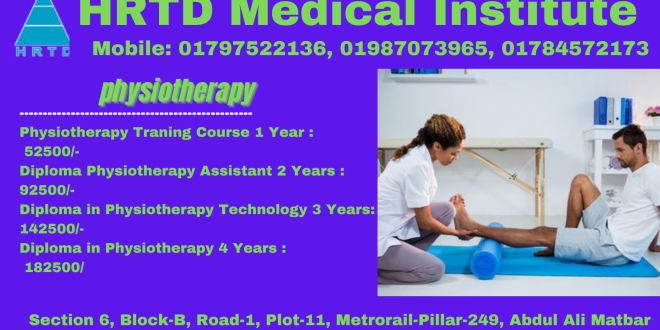
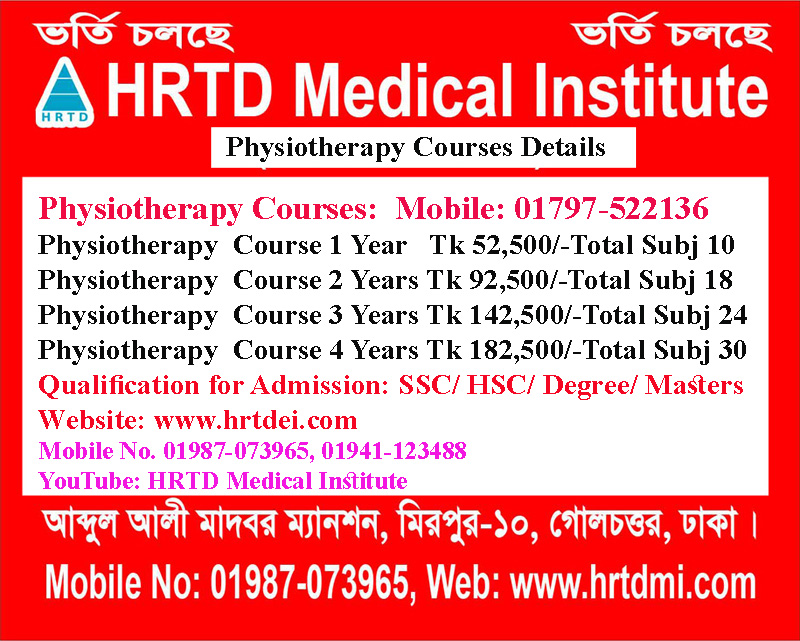
Physiotherapy Courses in Dhaka. Mobile No. 01987-073965, 01797-522136. Physiotherapy Training Course 1 Year Tk 52500/-, Diploma in Physiotherapy Assistant 2 Years Tk 92500/-, Diploma in Physiotherapy Technology 3 Years Tk 142500/-, Diploma in Physiotherapy 4 Years.
What are the three types of physiotherapy?
Physiotherapy Courses in Dhaka. Mobile No. 01987-073965, 01797-522136. Physiotherapy is an important part of healthcare that is used to treat a wide variety of physical ailments. It is used to help people recover from injury, reduce pain, improve mobility, and restore function. Physiotherapists use a variety of techniques to treat their patients, including exercise, manual therapy, and other modalities.
The three main types of physiotherapy are musculoskeletal physiotherapy, neurological physiotherapy, and cardiorespiratory physiotherapy.
Musculoskeletal physiotherapy focuses on the muscles, bones, and joints of the body. It is used to treat conditions such as arthritis, back pain, neck pain, and sports injuries. Manual therapy techniques such as massage, mobilization, manipulation, and stretching are commonly used in musculoskeletal physiotherapy.
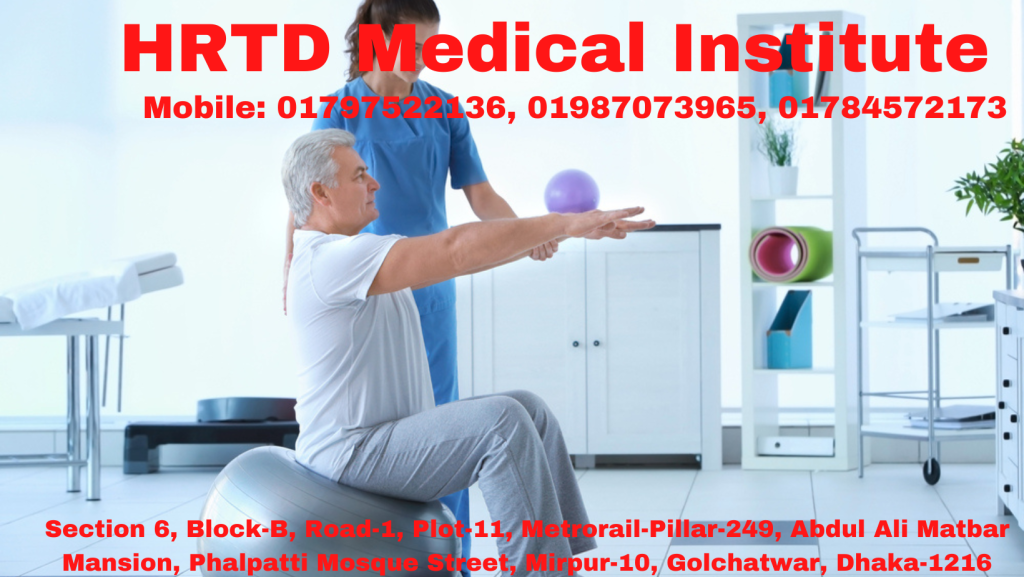
Neurological physiotherapy focuses on the nervous system. It is used to treat conditions such as stroke, spinal cord injury, multiple sclerosis, and Parkinson’s disease. Neurological physiotherapy uses a variety of techniques, such as gait training, balance exercises, and functional electrical stimulation.
Cardiorespiratory physiotherapy focuses on the heart and lungs. It is used to treat conditions such as asthma, COPD, and heart failure. Cardiorespiratory physiotherapists use techniques such as breathing exercises, chest physiotherapy, and cardiac rehabilitation.
Physiotherapy can be a very effective form of treatment for many physical ailments. It is important to find a qualified and experienced physiotherapist who is able to provide the appropriate type of treatment for your condition.\
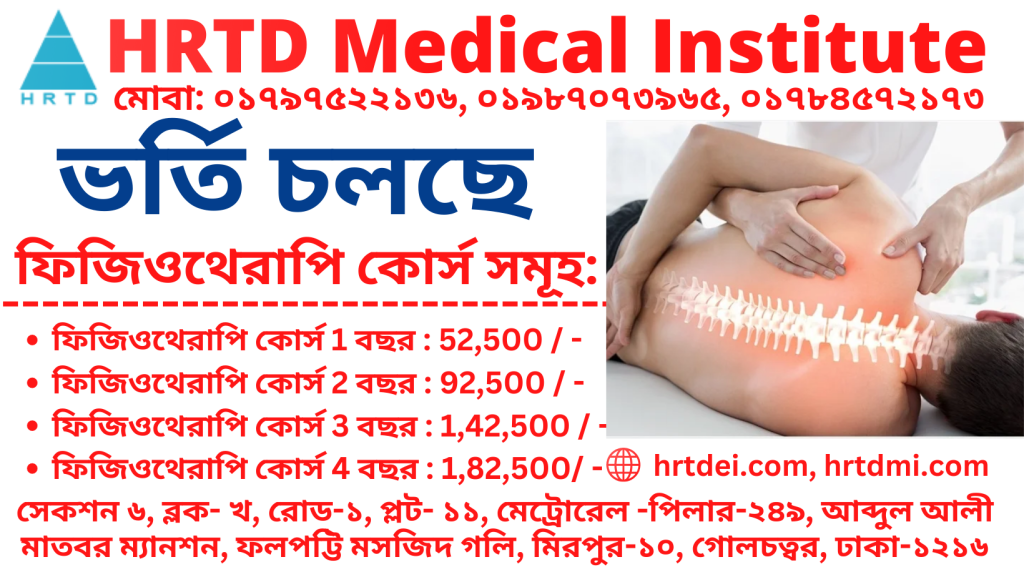
Physiotherapy Courses In Dhaka 1 Year
Course Fee for 1 year Physiotherapy Course Tk 62,500/- including admission fee Tk 12,500/- Monthly fee 3,500/- and Exam Fee 4000×2=8000/-
Physiotherapy Courses In Dhaka 2 Years
Course Fee for 2 years Physiotherapy Course 92,500/- including admission fee Tk 20,500/- Monthly fee 3000/- and Exam Fee 1000×4=4000/
Physiotherapy Courses In Dhaka 3 Years
Course fee for 3 Years Physiotherapy Course Tk 1,52,500/- including admission fee Tk 26,500/- Monthly Fee 3000/- and Exam Fee Tk 3000×6=18,000/-
Physiotherapy Courses In Dhaka 4 Years
Course fee for 4 years Physiotherapy Diploma Course Tk 1,99,500/- including admission fee Tk 30,500/- Monthly fee Tk 3000/- and exam fee Tk 3000×8 = 8000/-
Subjects for 1 year Physiotherapy Courses In Dhaka
- Human Anatomy & Physiology
- Chemistry & Pharmacology-1
- First Aid & Treatment
- Hematology & Pathology
- Study of OTC Drugs
- Orthopedic Anatomy & Physiology
- Neuro Anatomy & Physiology
- Cardiovascular Anatomy & Physiology
- Electro Physics
- Study of TENS
Subjects for 2 year Physiotherapy Courses In Dhaka
(1st & 2nd Semester Subjects)
- Human Anatomy & Physiology
- Chemistry & Pharmacology-1
- First Aid & Treatment
- Hematology & Pathology
- Study of OTC Drugs
- Orthopedic Anatomy & Physiology
- Neuro Anatomy & Physiology
- Cardiovascular Anatomy & Physiology
- Electro Physics
- Study of TENS
2nd Year Subjects ( 3rd Semester & 4th Semester)
- Microbiology and Antimicrobial Drugs
- Bone Joints & Diseases
- Claytons Electrotherapy-1
- Therapeutic Exercise-1
- Community Medicine-1
- Electrotherapy & Hydrotherapy
- Claytons Electrotherapy-2
- Therapeutic Exercise-2
Subjects for 3 year Physiotherapy Courses In Dhaka
1st Year Subjects(1st & 2nd Semester Subjects)
- Human Anatomy & Physiology
- Chemistry & Pharmacology-1
- First Aid & Treatment
- Hematology & Pathology
- Study of OTC Drugs
- Orthopedic Anatomy & Physiology
- Neuro Anatomy & Physiology
- Cardiovascular Anatomy & Physiology
- Electro Physics
- Study of TENS
2nd Year Subjects ( 3rd Semester & 4th Semester)
- Microbiology and Antimicrobial Drugs
- Bone Joints & Diseases
- Claytons Electrotherapy-1
- Therapeutic Exercise-1
- Community Medicine-1
- Electrotherapy & Hydrotherapy
- Claytons Electrotherapy-2
- Therapeutic Exercise-2
3rd Year Subjects (5th & 6th Semester)
- Anatomy of Backbone
- Back Pain & Physiotherapy Treatment
- Skin Anatomy & Physiology
- Vertebral Muscles & Their Abnormalities
- Physiotherapy Equipment
- Neuromuscular Coordination
Subjects for 4 year Physiotherapy Courses In Dhaka
1st Year Subjects(1st & 2nd Semester Subjects)
- Human Anatomy & Physiology
- Chemistry & Pharmacology-1
- First Aid & Treatment
- Hematology & Pathology
- Study of OTC Drugs
- Orthopedic Anatomy & Physiology
- Neuro Anatomy & Physiology
- Cardiovascular Anatomy & Physiology
- Electro Physics
- Study of TENS
2nd Year Subjects ( 3rd Semester & 4th Semester)
- Microbiology and Antimicrobial Drugs
- Bone Joints & Diseases
- Claytons Electrotherapy-1
- Therapeutic Exercise-1
- Community Medicine-1
- Electrotherapy & Hydrotherapy
- Claytons Electrotherapy-2
- Therapeutic Exercise-2
3rd Year Subjects (5th & 6th Semester)
- Anatomy of Backbone
- Back Pain & Physiotherapy Treatment
- Skin Anatomy & Physiology
- Vertebral Muscles & Their Abnormalities
- Physiotherapy Equipment
- Neuromuscular Coordination
4th Year Subjects ( 7th Semester & 8th Semester)
- Management of Hypertension & Hypotension
- Disability & Rehabilitation
- Neurogenic Disorders & Physiotherapy
- Community Medicine-2
- Paralysis & Physiotherapy Treatment
Short Summary of Physiotherapy Courses In Dhaka
Physiotherapy Courses in Dhaka. Mobile No. 01987-073965, 01797-522136. This long course of Physiotherapy contains 30 subjects in 8 semesters. 1st Semester contains 5 subjects. The subjects are Human Anatomy & Physiology, Chemistry & Pharmacology, First Aid & Treatment, Hematology & Pathology, and the Study of OTC Drugs & Medicine. 2nd semester of this long physiotherapy diploma course contains 5 subjects. The subjects are Orthopedic Anatomy & Physiology, Neuroanatomy & Physiology, Cardiovascular Anatomy & Physiology, Electro Physics, and the Study of TENS.
The third semester of this course contains four subjects: microbiology, bone joints and diseases, Clayton’s electrotherapy-1, and therapeutic exercise. The fourth semester contains four subjects: community medicine-1, electrotherapy and Hydrotherapy, Clayton’s Electrotherapy-2, and Therapeutic Exercise.
Physiotherapy Chamber Starting & Establishment
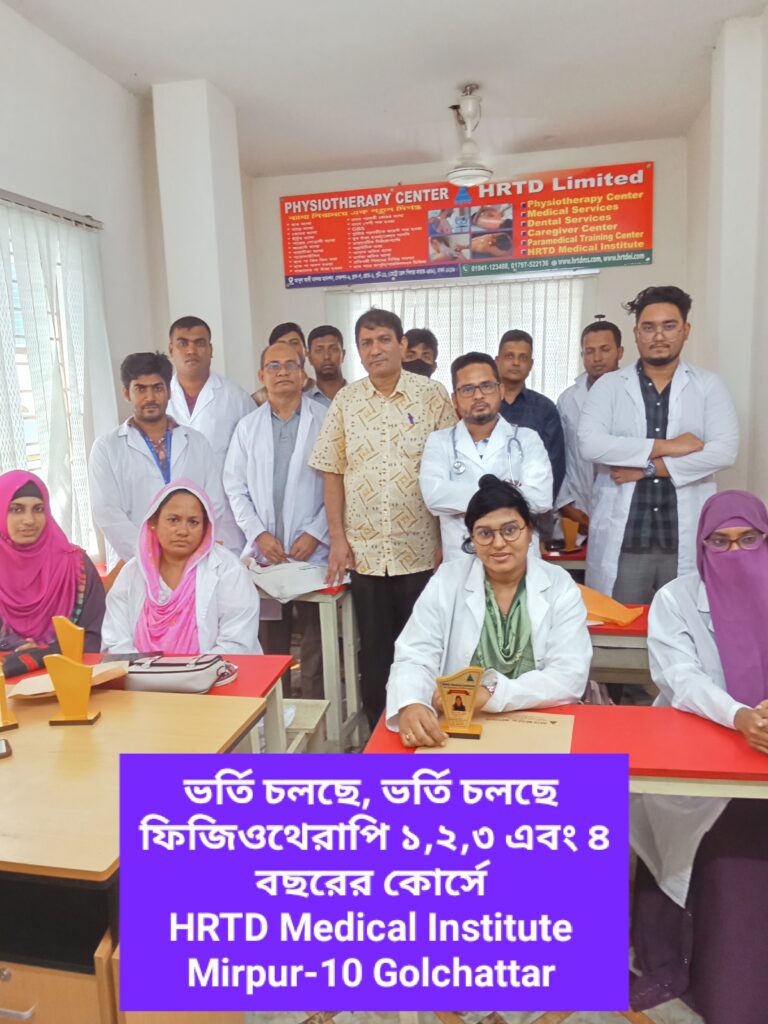
Physiotherapy Courses in Dhaka. Mobile No. 01987-073965, 01797-522136. After completing the Diploma in Physiotherapy Course you can start a Physiotherapy chamber in any location in Bangladesh. You need to obtain The Registration and The License from the Respective Authority of the Government of the People’s Republic of Bangladesh. We only help our students obtain registration and licenses for the Starting & Establishment of Physiotherapy Chamber.
ডিপ্লোমা ইন ফিজিওথেরাপি কোর্স সম্পন্ন করার পর আপনি বাংলাদেশের যেকোনো স্থানে একটি ফিজিওথেরাপি চেম্বার শুরু করতে পারেন। আপনাকে গণপ্রজাতন্ত্রী বাংলাদেশ সরকারের সংশ্লিষ্ট কর্তৃপক্ষের কাছ থেকে নিবন্ধন এবং লাইসেন্স পেতে হবে। আমরা শুধুমাত্র আমাদের ছাত্রদের ফিজিওথেরাপি চেম্বারের শুরু ও প্রতিষ্ঠার জন্য নিবন্ধন এবং লাইসেন্স পেতে সাহায্য করি।
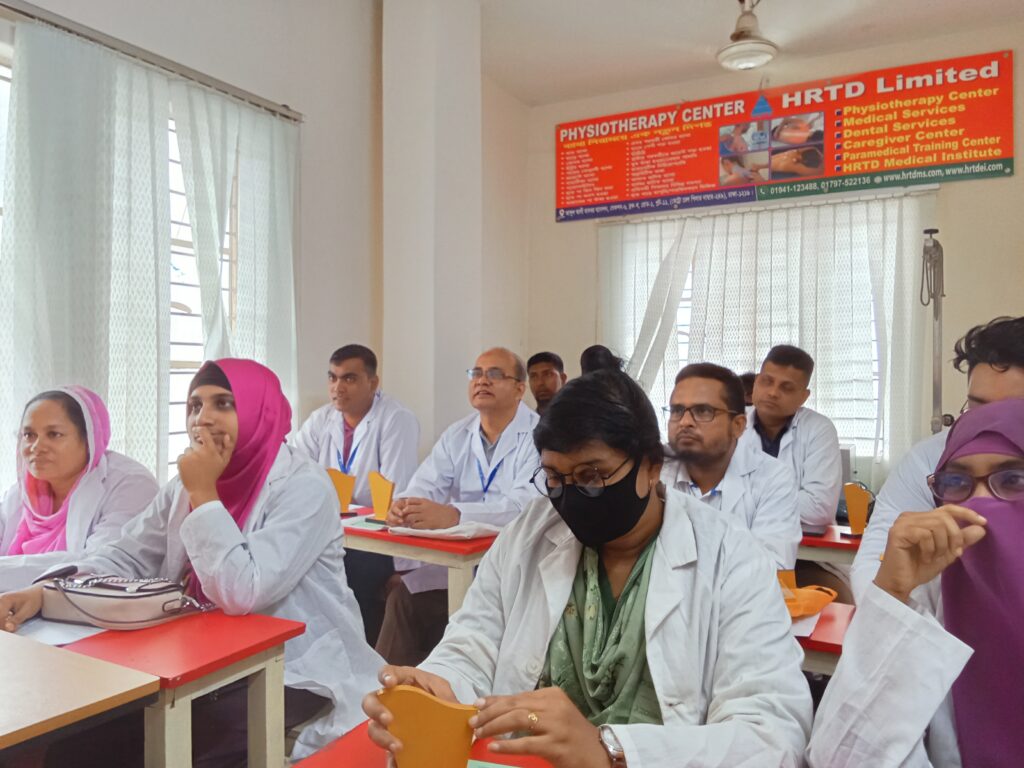
Teachers for Physiotherapy Courses In Dhaka
- Dr. Md. Sakulur Rahman, MBBS, CCD (BIRDEM), Course Director
- Dr. Sanjana Binte Ahmed, BDS, MPH, Assistant Course Director
- Dr. Tisha, MBBS, PGT Gyne, Assistant Course Director
- Dr. Suhana, MBBS, PGT Medicine
- Dr. Danial Hoque, MBBS, C-Card
- Dr. Tisha, MBBS
- Dr. Afrin Jahan, MBBS, PGT Medicine
- Dr. Ananna, MBBS
- Dr. Lamia Afroze, MBBS
- Dr. Amena Afroze Anu, MBBS, PGT Gyne, Assistant Course Director
- Dr. Farhana Antara, MBBS,
- Dr. Nazmun Nahar Juthi, BDS, PGT
- Dr. Farhana Sharna, MBBS
- Dr. Bushra, MBBS
- Dr. Turzo, MBBS
- Dr. Kamrunnahar Keya, BDS, PGT (Dhaka Dental College)
- Dr. Shamima, MBBS, PGT Gyne
- Dr. Alamin, MBBS
- Dr. Benzir Belal, MBBS, FCPS( FP)
- Dr. Disha, MBBS, FCPS (FP)
- Dr. Mahinul Islam, MBBS
- Dr. Tisha, MBBS, PGT Medicine
- Dr. Anika, MBBS, PGT
- Dr. Jannatul Ferdous, MBBS, PGT Gyne
- Dr. Jannatul Aman, MBBS, PGT
- Dr. Rayhan, BPT
- Dr. Abu Hurayra, BPT
- Dr. Sharmin Ankhi, MBBS, PGT Medicine
- Md. Monir Hossain, B Pharm, M Pharm
- Md. Monirul Islam, B Pharm, M Pharm
- Md. Feroj Ahmed, BSc Pathology, PDT Medicine
Class System for Physiotherapy Courses
Physiotherapy Courses in Dhaka. Mobile No. 01987-073965, 01797-522136. Weekly Class 3 hours. For Regular Students Friday 1 hour, Saturday 1 hour, and Monday 1 hour. For Job holders, Friday is 3 hours, or Monday is 3 hours. Morning Shift 9:00 am to 12:00 pm, and Evening Shift 3:00 pm to 6:00 pm.
Importance of Physiotherapy Courses In Dhaka
একজন ফিজিওথেরাপিষ্ট এর পক্ষে একটি ফিজিওথেরাপী চেম্বার বা ফিজিওথেরাপী সেন্টার বা ফিজিওথেরাপী ক্লিনিক ম্যানেজ করা সম্ভব হয় না বা ম্যানেজ করা উচিৎ না । কারন সেখানে থাকে অনেক মেশিনারী এবং অনেক কাজ । যেমন মেশিনারী ম্যানেজমেন্ট, মার্কেটিং ম্যানেজমেন্ট, একাউন্টস ম্যানেজমেন্ট, ফিনেনশিয়াল ম্যানেজমেন্ট, রোগীদের ডেটা ম্যানেজমেন্ট, রোগীদের কাউন্সিলিং ইত্যাদি ।
Why Do We Need a Physiotherapy Course?
Physiotherapy Courses in Dhaka. Mobile No. 01987-073965, 01797-522136. Physiotherapy courses are essential for training professionals who help individuals recover from injuries, manage pain, and improve mobility. The increasing demand for rehabilitation services in healthcare, sports, and wellness makes physiotherapy an important field of study. Here’s why we need physiotherapy courses:
- To Train Skilled Healthcare Professionals
- To Promote Non-Surgical Treatment Methods
- To Help in Pain Management
- To Support Rehabilitation & Recovery
- To Improve Quality of Life for the Elderly & Disabled
- To Enhance Sports Performance & Injury Prevention
- To Provide Career Opportunities & Job Stability
- To Contribute to Public Health Awareness
ফিজিওথেরাপি ৩ বছর/ ৪ বছরের ডিপ্লোমা কোর্স সফলভাবে সমাপ্ত করার পরে, শিক্ষার্থীরা সক্ষম হবে:

(১) ফিজিওথেরাপি সম্পর্কিত অনেক জ্ঞান ও দক্ষতা অর্জন করতে পারবে ।
(২) বিভিন্ন ফিজিওথেরাপি সরঞ্জাম এবং আনুষাঙ্গিক পরিচালনা এবং রক্ষণাবেক্ষণের জ্ঞান ও দক্ষতা অর্জন করতে পারবে ।
(৩) ফিজিওথেরাপি সম্পর্কিত প্রয়োজনীয় ডকুমেন্টেশন বজায় রাখার জ্ঞান ও দক্ষতা অর্জন করতে পারবে ।
(৪) ফিজিওথেরাপি যন্ত্রগুলি পরিচালনার বিপদ এবং তাদের প্রতিরক্ষামূলক জ্ঞান ও দক্ষতা অর্জন করতে পারবে ।
(৫) ফিজিওথেরাপিউটিক কার্যক্রম তদারকি জ্ঞান ও দক্ষতা অর্জন করতে পারবে ।

(৬) ফিজিওথেরাপিউটিক কার্যক্রমের ভবিষ্যত উন্নয়ন ও পরিকল্পনায় অবদান রাখাতে পারবে।
ফিজিওথেরাপি ডিপ্লোমা বা ফিজিওথেরাপি কোর্স কেন করবেন?
ফিজিওথেরাপি ডিপ্লোমা বা ফিজিওথেরাপি কোর্স করে ফিজিওথেরাপি চ্যাম্বার, ফিজিওথেরাপি সেন্টার, ফিজিওথেরাপি ক্লিনিক, অথরা ফিজিওথেরাপি হাসপাতাল গড়ে তুলতে পারবেন। এটা নির্ভর করে আপনার অর্থনৈতিক অবস্থা এবং মেধার উপর । ফিজিওথেরাপি সেন্টারে চাকরি করতে পারবেন, বাসায় বাসায় অথবা হাসপাতালে হাসপাতালে গিয়ে থেরাপী দিতে পারবেন ।
Job Opportunity of Physiotherapy Courses In Dhaka
What does a physiotherapist do?
Physiotherapy Courses in Dhaka. Mobile No. 01987-073965, 01797-522136. A physiotherapist is a healthcare professional who works with patients to diagnose and treat physical issues such as pain, injury, and disability. Physiotherapists use a combination of physical treatments, exercises, and lifestyle advice to help their patients regain and maintain their physical health.
Physiotherapists assess the patient’s condition using various techniques such as analyzing the patient’s posture, movement, balance, coordination, and strength. They also use assessment tools such as X-rays and MRI scans to get an accurate diagnosis.
Based on the diagnosis, they develop a treatment plan that may include manual therapy, therapeutic exercises, and lifestyle advice. Manual therapy involves manipulating the patient’s joints, muscles, and connective tissues to improve range of motion, reduce pain, and increase strength.
Therapeutic exercises are tailored to the individual patient to help improve strength and mobility. These exercises may include stretching, strengthening, balance, and coordination exercises. Physiotherapists also teach their patients how to use assistive devices such as crutches, walkers, and wheelchairs.
In addition to providing physical treatments and exercises, physiotherapists also provide lifestyle advice to their patients. This may include educating them about nutrition, sleeping habits, and proper body mechanics. They may also refer patients to other healthcare professionals for additional treatments such as occupational therapy, speech therapy, or psychological counseling.
Physiotherapists work closely with their patients to help them achieve their physical goals and improve their quality of life. They are an important part of the healthcare team, and their expertise is invaluable when it comes to helping people regain their physical health.
Human Anatomy and Physiology for Physiotherapy Courses in Dhaka
Physiotherapy Courses in Dhaka. Mobile No. 01987-073965, 01797-522136. The study of the Body Structure and its functions is Anatomy and Physiology. Here we discuss the systems of the Human Body and its Organs, Tissues, and Cells. The systems of the Human Body are the Digestive System, Respiratory System, Cardiovascular System, Skeletal System, Muscular System, Nervous System, Endocrine System, Immune System, Lymphatic System, Integumentary System, and Urinary System.
Anatomy explains the structure of the human body — bones, muscles, joints, organs, and tissues.
Physiology explains the functions of these body parts and how they work together to maintain life and health.
Skeletal System – framework of bones that supports and protects the body.
Muscular System – responsible for movement and posture.
Nervous System – controls and coordinates body functions.
Circulatory System – transports oxygen, nutrients, and waste.
Respiratory System – responsible for gas exchange.
Digestive System – breaks down and absorbs food.
Urinary System – removes waste and regulates fluid balance.
Endocrine System – glands that secrete hormones.
Reproductive System – responsible for reproduction.
Integumentary System – skin, hair, nails (protection and sensation).
Anatomy & Physiology আসলে মানুষের শরীরের গঠন (Anatomy) এবং কার্যপ্রণালী (Physiology) নিয়ে পড়াশোনা।
এটি মেডিকেল, নার্সিং, ডেন্টাল, ফার্মেসি সহ সব স্বাস্থ্যবিজ্ঞান কোর্সের প্রাথমিক ও অপরিহার্য বিষয়।
Anatomy (শারীরবিদ্যা)
সংজ্ঞা: মানবদেহের গঠন ও অঙ্গপ্রত্যঙ্গের অবস্থান, আকার, আকার-প্রকৃতি এবং সম্পর্ক নিয়ে অধ্যয়ন।
বিভাগসমূহ
- Gross Anatomy – অঙ্গপ্রত্যঙ্গ চোখে দেখা যায় (যেমন হৃদপিণ্ড, ফুসফুস, হাড়)
- Microscopic Anatomy – মাইক্রোস্কোপে দেখা যায় (Histology – টিস্যুর গঠন, Cytology – কোষের গঠন)
- Developmental Anatomy – ভ্রূণ থেকে পূর্ণাঙ্গ দেহে বিকাশের প্রক্রিয়া (Embryology)
পাঠ্যসূচিতে অন্তর্ভুক্ত প্রধান সিস্টেমসমূহ
- Skeletal System – কঙ্কাল
- Muscular System – পেশি
- Nervous System – স্নায়ুতন্ত্র
- Cardiovascular System – হৃদপিণ্ড ও রক্তনালী
- Respiratory System – শ্বাসযন্ত্র
- Digestive System – পরিপাকতন্ত্র
- Urinary System – মূত্রতন্ত্র
- Reproductive System – প্রজননতন্ত্র
- Endocrine System – হরমোন গ্রন্থি
- Integumentary System – ত্বক, চুল, নখ
২. Physiology (দেহক্রিয়া বিজ্ঞান)
সংজ্ঞা: মানবদেহের বিভিন্ন অঙ্গপ্রত্যঙ্গ ও সিস্টেমের স্বাভাবিক কার্যপ্রণালী ও সমন্বয় নিয়ে অধ্যয়ন।
প্রধান অধ্যায়সমূহ
- Cell Physiology – কোষের গঠন, ঝিল্লির কার্যপ্রণালী, কোষের বিভাজন
- Muscle Physiology – পেশির সংকোচন ও শিথিলকরণ প্রক্রিয়া
- Nerve Physiology – স্নায়ু ইমপালস সৃষ্টি ও পরিবহন
- Blood Physiology – রক্তের উপাদান, জমাট বাঁধা, রোগ প্রতিরোধ
- Cardiac Physiology – হৃদপিণ্ডের পাম্পিং, কার্ডিয়াক সাইকেল
- Respiratory Physiology – শ্বাস-প্রশ্বাস প্রক্রিয়া, গ্যাসের বিনিময়
- Renal Physiology – কিডনির মাধ্যমে রক্ত পরিশোধন ও তরল ভারসাম্য
- Endocrine Physiology – হরমোন উৎপাদন ও নিয়ন্ত্রণ
- Reproductive Physiology – ডিম্বাণু ও শুক্রাণু উৎপাদন, গর্ভধারণ প্রক্রিয়া
- Homeostasis – দেহের অভ্যন্তরীণ পরিবেশ স্থিতিশীল রাখা
৩. Anatomy ও Physiology শেখার উদ্দেশ্য
- দেহের গঠন ও কার্যপ্রণালীর সম্পর্ক বোঝা
- রোগের কারণ ও প্রভাব বুঝতে পারা
- চিকিৎসা ও নার্সিং কৌশল সঠিকভাবে প্রয়োগ করতে সক্ষম হওয়া
Pharmacology-1 for Physiotherapy Courses In Dhaka
The study of Drugs and Medicine is called Pharmacology. Here we discuss group-wise drugs and their medicines in Pharmacology-1. Common Groups of Drugs are Pain Killer Drugs, Anti Ulcer Drugs, Anti Vomiting Drugs, Laxative Drugs, Motility Drugs, Antimotility Drugs, Bronchodilator Drugs, Antibiotic Drugs, Anti Fungal Drugs, Anti Protozoal Drugs, Anti Viral Drugs, Anthelmintic Drugs, Anti Hypertensive Drugs, Beta Blocker Drugs, Calcium Channel Blocker Drugs, ACE Inhibitor Drugs, Hemostatic Drugs, Analgesic Drugs, Antipyretic Drugs, Anti Thrombotic Drugs, etc.
ওষুধ ও ওষুধের অধ্যয়নকে ফার্মাকোলজি বলা হয়। এখানে আমরা ফার্মাকোলজি-১ এ গ্রুপভিত্তিক ওষুধ ও তাদের ওষুধ নিয়ে আলোচনা করেছি। ওষুধের সাধারণ গ্রুপগুলি হল পেইন কিলার ড্রাগস, অ্যান্টি আলসার ড্রাগস, অ্যান্টি-ভোমিটিং ড্রাগস, ল্যাক্সেটিভ ড্রাগস, মোটিলিটি ড্রাগস, অ্যান্টিমোটিলিটি ড্রাগস, ব্রঙ্কোডাইলেটর ড্রাগস, অ্যান্টিবায়োটিক ড্রাগস, অ্যান্টি ফাংগাল ড্রাগস, অ্যান্টি প্রোটোজোয়াল ড্রাগস, অ্যান্টি ভাইরাল ড্রাগস, অ্যান্টি-ভাইরাল ড্রাগস, অ্যান্টি-অ্যান্টিভেনস ড্রাগস। , বিটা ব্লকার ওষুধ, ক্যালসিয়াম চ্যানেল ব্লকার ড্রাগস, এসিই ইনহিবিটর ড্রাগস, হেমোস্ট্যাটিক ড্রাগস, অ্যানালজেসিক ড্রাগস, অ্যান্টিপাইরেটিক ড্রাগস, অ্যান্টি থ্রম্বোটিক ড্রাগস ইত্যাদি।
Pharmacology is the science of drugs — their sources, actions, and effects on the human body.
For physiotherapists, understanding pharmacology is essential to recognize how medications can influence physical performance, healing, pain management, and rehabilitation.
- Understanding drug effects on muscles, nerves, and joints.
- Recognizing drug side effects that may affect physiotherapy treatment.
- Coordinating with doctors regarding patient medication and exercise planning.
General Chemistry for Physiotherapy Courses In Dhaka
Physiotherapy Courses in Dhaka. Mobile No. 01987-073965, 01797-522136. General Chemistry is an important subject in medical science. This Subject is important for understanding Pharmaceutical Chemicals and Biochemicals. With the help of general chemistry, we can study drugs and medicine, and biochemicals.
What is Chemistry? (সংজ্ঞা)
Chemistry হলো এমন একটি বিজ্ঞান শাখা যেখানে পদার্থের গঠন, উপাদান, বৈশিষ্ট্য এবং রাসায়নিক বিক্রিয়া নিয়ে আলোচনা করা হয়।
Chemistry হলো পদার্থ (matter)-এর
- গঠন (composition),ধর্ম (properties),পরিবর্তন (change/reaction) নিয়ে অধ্যয়ন।
Nursing ব্যবহার:
IV fluid, electrolyte, medicine interaction, pH balance বুঝতে chemistry দরকার।
Matter (পদার্থ)
- Matter = যেকোনো কিছু যার ভর আছে ও স্থান দখল করে।
Types:
- Solid (কঠিন) – bone, ice
- Liquid (তরল) – blood, water
- Gas (গ্যাস) – oxygen, CO₂
Atom & Molecule
- Atom: পদার্থের ক্ষুদ্রতম কণা (Proton + Neutron + Electron)
- Molecule: দুই বা ততোধিক atom যুক্ত হলে molecule।
উদাহরণ: H₂O, O₂
Element, Compound, Mixture
- Element: এক ধরনের atom, যেমন O, H, Na
- Compound: দুই বা ততোধিক element chemically যুক্ত, যেমন NaCl, H₂O
- Mixture: রাসায়নিক বিক্রিয়া ছাড়া মিশ্রণ, যেমন air, saline
Acid, Base & Salt
- Acid: pH < 7, H⁺ দেয়, টক স্বাদ (HCl, Vinegar)
- Base: pH > 7, OH⁻ দেয়, তিতা (NaOH, Soap)
- Salt: Acid + Base → Salt + Water (NaCl)
Nursing: IV saline, ORS, electrolyte balance
pH Scale
- Scale: 0–14
- pH 7 → Neutral, <7 Acid, >7 Base
- Normal blood pH: 7.35–7.45
- As imbalance → acidosis / alkalosis
Electrolytes
- Charged ions in body fluids
Major: Na⁺, K⁺, Ca²⁺, Mg²⁺, Cl⁻, HCO₃⁻
Nursing: IV therapy, cardiac monitoring, dehydration treatment
Solution
- Solute + Solvent = Solution
- Example: NaCl + water = saline
- Types: Isotonic, Hypotonic, Hypertonic
Chemical Reactions
- Combination: A + B → AB
- Decomposition: AB → A + B
- Displacement: A + BC → AC + B
- Neutralization: Acid + Base → Salt + Water
Biochemistry Basics
- Carbohydrates: Energy, Glucose, Starch
- Proteins: Body building, meat, egg
- Lipids (Fat): Energy storage, butter, oil
- Vitamins & Minerals: Metabolism & body function control
Water
- 60–70% of body
- Functions: Temperature regulation, Transport, Digestion, Lubrication
- Nursing: IV saline, ORS
Nursing Short Notes Summary
- Matter = Solid + Liquid + Gas
- Atom = Proton + Neutron + Electron
- pH normal = 7.35–7.45
- Saline = NaCl solution
- Acid + Base = Salt + Water
- Electrolyte = Na⁺, K⁺, Ca²⁺, Mg²⁺, Cl⁻, HCO₃⁻
- Glucose = main energy source
First Aid for Physiotherapy Technology Courses in Dhaka
First Aid is an important subject for Medical Courses including Diplomas in Medicine& Surgery Course, RMP Courses, LMAF Courses, Paramedical Courses, DMA Courses, DMS Courses, Nursing Courses, Dental Courses, Pathology Courses, Physiotherapy Courses, Caregiver Courses, etc. Here we discuss Shock, Classification Shock, Causes of Shock, Stages of Shock, Clinical Features of Shock, Hypovolemic Shock, Cardiogenic Shock, Neurogenic Shock, Traumatic Shock, Burn Shock, Electric Shock, Psychogenic Shock, Anaphylactic Shock, First Aid of Shock, First Aid of Cut, First of Snake Bite, First Aid of Accidental Injury, etc.
ফার্স্ট এইড মেডিসিন এবং সার্জারি কোর্সের ডিপ্লোমা, আরএমপি কোর্স, এলএমএএফ কোর্স, প্যারামেডিক্যাল কোর্স, ডিএমএ কোর্স, ডিএমএস কোর্স, নার্সিং কোর্স, ডেন্টাল কোর্স, প্যাথলজি কোর্স, ফিজিওথেরাপি কোর্স, কেয়ারগিভার কোর্স, ইত্যাদির জন্য একটি গুরুত্বপূর্ণ বিষয়। শক, শ্রেণিবিন্যাস শক, শকের কারণ, পর্যায় নিয়ে আলোচনা করুন শক, শকের ক্লিনিকাল বৈশিষ্ট্য, হাইপোভোলেমিক শক, কার্ডিওজেনিক শক, নিউরোজেনিক শক, ট্রমাটিক শক, বার্ন শক, বৈদ্যুতিক শক, সাইকোজেনিক শক, অ্যানাফিল্যাকটিক শক, শকের প্রাথমিক চিকিৎসা, কাটার প্রাথমিক চিকিৎসা, সাপের কামড়ের প্রাথমিক চিকিৎসা, প্রাথমিক চিকিৎসা দুর্ঘটনাজনিত আঘাত, ইত্যাদি
Definition of First Aid
First Aid is the immediate and temporary care given to an injured or suddenly ill person before medical help arrives.
👉 In physiotherapy practice, first aid is essential for patient safety in clinic, gym, and field settings.
2. Aims of First Aid
- Preserve life
- Prevent condition from worsening
- Promote recovery
- Relieve pain and anxiety
3. Principles of First Aid (Golden Rules)
- Stay calm
- Ensure safety of scene
- Do not panic
- Do not give unnecessary movement
- Call for medical help when needed
4. Primary Assessment (DRABC)
D – Danger: Check safety
R – Response: Check consciousness
A – Airway: Clear airway
B – Breathing: Check breathing
C – Circulation: Check pulse, bleeding
5. Wounds & Bleeding
Types of Wounds:
- Abrasion
- Incised wound
- Laceration
- Puncture wound
First Aid for Bleeding:
- Apply direct pressure
- Elevate injured part
- Use sterile dressing
- Immobilize area
⚠️ Do NOT remove deeply embedded objects
6. Fractures (Very Important)
Signs:
- Pain
- Swelling
- Deformity
- Loss of movement
First Aid:
- Immobilize using splint
- Support joint above & below
- Apply cold pack
- Refer to hospital
👉 Physiotherapists must suspect fracture before exercise.
7. Sprain & Strain
Sprain:
Ligament injury
Strain:
Muscle or tendon injury
First Aid – RICE:
- R – Rest
- I – Ice
- C – Compression
- E – Elevation
8. Burns
Types:
- Thermal
- Chemical
- Electrical
First Aid:
- Cool with running water (10–20 min)
- Cover with sterile dressing
- Do not break blisters
- Refer severe burns
9. Shock
Causes:
- Bleeding
- Trauma
- Burns
Signs:
- Pale skin
- Cold, clammy
- Rapid pulse
First Aid:
- Lay patient flat
- Elevate legs
- Keep warm
- Seek urgent medical help
10. Fainting (Syncope)
Causes:
- Low BP
- Heat
- Fear
First Aid:
- Lay patient down
- Raise legs
- Loosen tight clothing
- Fresh air
11. Cardiac Emergency (CPR Basics)
When to Start CPR:
- Unconscious
- Not breathing
- No pulse
CPR Steps:
- 30 chest compressions
- 2 rescue breaths
- Compression rate: 100–120/min
👉 Physiotherapists should know Basic Life Support (BLS).
12. Choking
Adult:
- Encourage coughing
- Heimlich maneuver
Child:
- Back blows + chest thrusts
13. Heat & Cold Emergencies
Heat Exhaustion:
- Move to cool place
- Give water
- Cold compress
Hypothermia:
- Keep warm
- Remove wet clothes
14. Epileptic Seizure
First Aid:
- Clear surrounding objects
- Do not restrain
- Do not put anything in mouth
- Place in recovery position after seizure
15. First Aid Kit (Physiotherapy Clinic)
- Sterile gauze
- Bandage
- Antiseptic
- Gloves
- Scissors
- Ice pack
16. First Aid Contraindications (Physio View)
- Do not massage acute injury
- Do not apply heat in acute stage
- Do not move suspected spinal injury
- Do not give food to unconscious patient
Hematology for Physiotherapy Courses In Dhaka
The study of Blood and Blood Disease is called Hematology and the Study of Pathos and Process of Disease Creation and Diagnosis is called Pathology. In Hematology and Pathology, we discuss blood cells, their structure and functions, Blood Diseases, Common Pathos and their pathogenesis, Atrophy, Hypertrophy, Metaplasia, Gangrene, Pathological Tests like TC, DC, ESR, Hemoglobin Percentage, etc.
রক্ত ও রক্তের রোগের অধ্যয়নকে বলা হয় হেমাটোলজি এবং স্টাডি অফ প্যাথোস এবং রোগ সৃষ্টি ও নির্ণয়ের প্রক্রিয়াকে প্যাথলজি বলা হয়। হেমাটোলজি এবং প্যাথলজিতে, আমরা রক্তের কোষ, তাদের গঠন এবং কার্যকারিতা, রক্তের রোগ, সাধারণ প্যাথোস এবং তাদের প্যাথোজেনেসিস, অ্যাট্রোফি, হাইপারট্রফি, মেটাপ্লাসিয়া, গ্যাংগ্রিন, প্যাথলজিকাল টেস্ট যেমন TC, DC, ESR, হিমোগ্লোবিন শতাংশ ইত্যাদি নিয়ে আলোচনা করি।
1. Definition of Hematology
Hematology is the study of blood, blood-forming organs, and blood disorders.
👉 For physiotherapists, hematology is important to ensure safe exercise and rehabilitation.
2. Functions of Blood
- Transport oxygen & nutrients
- Remove waste products
- Defense against infection
- Regulation of body temperature
- Blood clotting (hemostasis)
3. Composition of Blood
| Component | Percentage |
|---|---|
| Plasma | ~55% |
| Formed elements | ~45% |
Formed Elements:
- Red Blood Cells (RBC)
- White Blood Cells (WBC)
- Platelets
4. Plasma
Contents:
- Water (90%)
- Proteins (albumin, globulin, fibrinogen)
- Electrolytes
- Hormones
- Nutrients
Functions:
- Maintain blood volume
- Transport substances
- Blood clotting
5. Red Blood Cells (RBC)
Normal Value:
- Male: 4.5–6 million/mm³
- Female: 4–5.5 million/mm³
Function:
- Carry oxygen via hemoglobin
Hemoglobin (Hb):
- Male: 13–18 g/dL
- Female: 11.5–16 g/dL
6. Anemia (Very Important for Physiotherapy)
Definition:
Low hemoglobin or RBC count.
Types:
- Iron deficiency anemia
- Megaloblastic anemia
- Hemolytic anemia
Clinical Features:
- Fatigue
- Weakness
- Breathlessness
- Pale skin
👉 Physiotherapy consideration:
- Reduce exercise intensity
- Monitor fatigue
- Allow rest periods
7. White Blood Cells (WBC)
Normal Count:
- 4,000–11,000 /mm³
Types & Functions:
| Type | Function |
|---|---|
| Neutrophils | Bacterial infection |
| Lymphocytes | Immunity |
| Monocytes | Phagocytosis |
| Eosinophils | Allergy, parasite |
| Basophils | Inflammation |
8. Leukocytosis & Leukopenia
- Leukocytosis → Increased WBC (infection)
- Leukopenia → Decreased WBC (risk of infection)
⚠️ Avoid crowded therapy areas in leukopenia.
9. Platelets (Thrombocytes)
Normal Count:
- 150,000–400,000 /mm³
Function:
- Blood clotting
Disorders:
- Thrombocytopenia → bleeding risk
- Thrombocytosis → clot risk
👉 Avoid deep tissue techniques if platelets are low.
10. Hemostasis (Blood Clotting)
Steps:
- Vasoconstriction
- Platelet plug formation
- Coagulation
- Fibrinolysis
11. Bleeding Disorders
- Hemophilia
- Von Willebrand disease
⚠️ Physiotherapy precautions:
- Avoid vigorous exercise
- Avoid deep massage
- Gentle ROM only
12. Blood Groups
ABO System:
- A
- B
- AB
- O
Rh System:
- Rh positive
- Rh negative
Important for blood transfusion knowledge.
13. Common Hematological Diseases (Physio View)
| Disease | Physiotherapy Concern |
|---|---|
| Anemia | Fatigue, exercise intolerance |
| Leukemia | Infection risk, bleeding |
| Polycythemia | Thrombosis risk |
| Thrombocytopenia | Bleeding |
14. Laboratory Investigations (Basic Knowledge)
| Test | Normal Value |
|---|---|
| Hb | 11.5–18 g/dL |
| ESR | Male <15, Female <20 mm/hr |
| PCV | 40–54% |
| Bleeding Time | 2–7 min |
| Clotting Time | 5–11 min |
15. Physiotherapy Contraindications (Hematology-Based)
- Severe anemia
- Active bleeding
- Very low platelet count
- Uncontrolled leukemia
Pathology for Medical Practice In for Physiotherapy Courses In Dhaka
Pathology plays a crucial role in medical practice by diagnosing diseases, advising on treatment, and monitoring patient conditions through laboratory tests and analysis of tissues and fluids. It is a bridge between science and medicine, providing the necessary diagnostic information for clinicians to make informed decisions. Pathologists, specialized medical professionals, analyze samples to identify the cause and nature of diseases, ultimately impacting patient care across various specialties.
Key Functions of Pathology in Medical Practice:
Definition of Pathology
Pathology is the branch of medical science that studies:
- Cause of disease (Etiology)
- Mechanism of disease (Pathogenesis)
- Structural changes (Morphology)
- Functional effects (Clinical features)
👉 For physiotherapists, pathology helps in safe treatment planning.
2. Importance of Pathology in Physiotherapy Practice
Pathology helps a physiotherapist to:
- Understand disease condition of patient
- Modify exercise according to disease stage
- Prevent complications
- Identify contraindications
- Work effectively with doctors & nurses
3. Basic Terms Used in Pathology
| Term | Meaning |
|---|---|
| Etiology | Cause of disease |
| Pathogenesis | Development of disease |
| Acute | Short duration |
| Chronic | Long duration |
| Inflammation | Body response to injury |
| Degeneration | Deterioration of tissue |
| Necrosis | Death of tissue |
4. Cell Injury & Adaptation
Causes of Cell Injury:
- Hypoxia
- Infection
- Physical injury
- Chemical agents
Types:
- Reversible injury → cell recovers
- Irreversible injury → cell death
Cell Adaptation:
- Hypertrophy
- Atrophy
- Hyperplasia
- Metaplasia
👉 Muscle atrophy is very important in physiotherapy.
5. Inflammation (Very Important)
Definition:
Inflammation is the protective response of the body to injury or infection.
Types:
- Acute inflammation
- Redness
- Heat
- Swelling
- Pain
- Loss of function
- Chronic inflammation
- Long-term
- Tissue destruction
- Fibrosis
👉 Physiotherapy modalities like ice, ultrasound, TENS are used based on inflammation stage.
6. Healing & Repair
Types of Healing:
- Healing by regeneration
- Healing by fibrosis (scar)
Factors Affecting Healing:
- Age
- Nutrition
- Infection
- Blood supply
- Disease (diabetes)
👉 Exercise timing depends on healing stage.
7. Infection & Immunity
Common Infectious Agents:
- Bacteria
- Virus
- Fungi
- Parasites
Immunity:
- Innate immunity
- Acquired immunity
⚠️ Physiotherapists must maintain infection control during practice.
8. Circulatory Disorders
Important Conditions:
- Edema
- Thrombosis
- Embolism
- Ischemia
- Infarction
👉 Edema management is a major physiotherapy role.
9. Degenerative Diseases (Physiotherapy Focus)
- Osteoarthritis
- Rheumatoid arthritis
- Degenerative disc disease
Pathology helps to:
- Understand pain mechanism
- Choose correct exercise
- Avoid joint damage
10. Musculoskeletal Pathology
- Muscle strain
- Ligament sprain
- Tendinitis
- Bursitis
👉 Accurate pathology knowledge prevents wrong therapy.
11. Neurological Pathology (Basics)
- Stroke (CVA)
- Spinal cord injury
- Peripheral nerve injury
- Multiple sclerosis
Pathology helps in:
- Neuro-rehabilitation planning
- Prognosis understanding
12. Systemic Diseases Affecting Physiotherapy
| Disease | Physiotherapy Concern |
|---|---|
| Diabetes mellitus | Delayed healing |
| Hypertension | Exercise precautions |
| Osteoporosis | Fracture risk |
| Anemia | Fatigue |
| Heart disease | Exercise limitation |
13. Tumors (Basic Idea Only)
- Benign tumor
- Malignant tumor
⚠️ Active cancer → careful physiotherapy required.
14. Laboratory Investigations (Basic Knowledge)
Physiotherapists should know:
- CBC
- ESR
- CRP
- Blood sugar
- X-ray, MRI (basic understanding)
15. Contraindications in Physiotherapy (Pathology-Based)
- Acute infection
- Fever
- Severe inflammation
- Recent fracture
- Uncontrolled cardiac condition
Microbiology and Antimicrobial Drugs for Physiotherapy Courses In Dhaka
The Study of Microorganisms is called Microbiology. The Drugs that are used for the treatment of Infectious Diseases are Antimicrobial Drugs. Microorganisms are Bacteria, Protozoa, Fungus, and Virus. Antimicrobial Drugs are Antibiotic Drugs ( Antibacterial Drugs), Anti Protozoal Drugs, Anti Fungal Drugs, and Anti Viral Drugs. Antibacterial Drugs are Azithromycin, Erythromycin, Clarithromycin, Cefaclor, Cefixime, Cefuroxime, Ceftriaxone, Ciprofloxacin, Moxifloxacin, Doxicicline, Gentamycin, Neomycin, Flucloxacillin, Amoxicillin, Clindamycin, etc. Antiprotozoal Drugs are Metronidazole, Secnidazole, Tinidazole, Ornidazole, Nitazoxanide, etc. Antifungal Drugs are Fluconazole, Ketoconazole, Itraconazole, Econazole, Miconazole, Terbinafine, etc.
অণুজীবের অধ্যয়নকে মাইক্রোবায়োলজি বলা হয়। সংক্রামক রোগের চিকিত্সার জন্য যে ওষুধগুলি ব্যবহার করা হয় তা হল অ্যান্টিমাইক্রোবিয়াল ড্রাগ। অণুজীব হল ব্যাকটেরিয়া, প্রোটোজোয়া, ফাঙ্গাস এবং ভাইরাস। অ্যান্টিমাইক্রোবিয়াল ড্রাগগুলি হল অ্যান্টিবায়োটিক ড্রাগস (অ্যান্টিব্যাকটেরিয়াল ড্রাগস), অ্যান্টি প্রোটোজোয়াল ড্রাগস, অ্যান্টি ফাঙ্গাল ড্রাগস এবং অ্যান্টি ভাইরাল ড্রাগস। ব্যাকটেরিয়ারোধী ওষুধগুলি হল Azithromycin, Erythromycin, Clarithromycin, Cefaclor, Cefixime, Cefuroxime, Ceftriaxone, Ciprofloxacin, Moxifloxacin, Doxicicline, Gentamycin, Neomycin, Flucloxacillin, Amoxicillin, ক্লিন্ডাজোল, ক্লিন্ডামাইসিন, ক্লিনিডামাইসিন ইত্যাদি। Secnidazole, Tinidazole, Ornidazole, Nitazoxanide, ইত্যাদি অ্যান্টিফাঙ্গাল ওষুধ হল Fluconazole, Ketoconazole, Itraconazole, Econazole, Miconazole, Terbinafine ইত্যাদি।
Study of OTC Drugs & Medicines For Physiotherapy Courses In Dhaka
The drugs that can be bought or sold without a prescription from doctors are OTC drugs. OTC Drugs stand for Over-the-counter Drugs. There are 39 OTC Drugs & Medicines in Bangladesh, but this range is very high in some countries like Japan and the USA. The OTC drugs are Paracetamol, Albendazole, Omeprazole, Bengyl Benzoate Lotion, Permethrin, Vitamin B Complex, Calciium, etc. In the Study of OTC Drugs & Medicine, students can learn about the drug knowledge administration practice of OTC Drugs and Medicine. The common points of Drug Knowledge are Description, Mode of action, Indication, Contraindication, Side effects, Dose form, Daily dose, Pregnancy category, Drug interaction, and Storage.
1. Definition of OTC Drugs
OTC (Over-the-Counter) drugs are medicines that can be bought without a doctor’s prescription.
They are generally safe when used correctly and are used for minor illnesses and pain relief.
👉 Physiotherapists should know OTC drugs because patients often take them during treatment.
2. Importance of OTC Drugs in Physiotherapy
- Many patients take painkillers before therapy
- OTC drugs can reduce pain and inflammation, helping exercise performance
- Some drugs may mask pain, increasing risk of injury
- Drug side effects may affect therapy sessions
3. Common OTC Drugs Used by Physiotherapy Patients
A. Analgesics (Pain Relievers)
Used to reduce pain
| Drug Name | Use |
|---|---|
| Paracetamol | Mild to moderate pain, fever |
| Aspirin | Pain, inflammation (less common now) |
⚠️ Overdose may cause liver damage (paracetamol)
B. NSAIDs (Non-Steroidal Anti-Inflammatory Drugs)
Reduce pain + inflammation
| Drug Name | Use |
|---|---|
| Ibuprofen | Muscle pain, joint pain |
| Diclofenac | Back pain, arthritis |
| Naproxen | Sports injuries |
⚠️ Side effects:
- Gastric irritation
- Kidney problems
- Increased bleeding risk
C. Topical Analgesics
Applied on skin
| Drug | Use |
|---|---|
| Diclofenac gel | Muscle & joint pain |
| Methyl salicylate | Sprain, strain |
✅ Useful along with physiotherapy modalities
D. Muscle Relaxants (Limited OTC use)
Used for muscle spasm (often prescription, but some combinations are OTC)
| Drug | Use |
|---|---|
| Chlorzoxazone (combination) | Muscle spasm |
⚠️ May cause drowsiness
E. Antacids
Used because NSAIDs cause gastric irritation
| Drug | Use |
|---|---|
| Aluminium hydroxide | Acidity |
| Magnesium hydroxide | Acid neutralization |
4. Role of Physiotherapist Regarding OTC Drugs
A physiotherapist should:
Educate patients about safe use
Ask about drug history before treatment
Observe drug side effects (dizziness, fatigue)
Avoid excessive therapy when pain is masked
❌ Physiotherapists should NOT prescribe drugs
✅ Can advise general precautions
5. OTC Drug Safety & Precautions
- Do not exceed recommended dose
- Avoid long-term NSAID use
- Elderly patients need special care
- Check for allergies
- Avoid mixing multiple painkillers
6. Contraindications (Important for Physiotherapy)
- Peptic ulcer → Avoid NSAIDs
- Kidney disease → Avoid long-term NSAIDs
- Liver disease → Avoid paracetamol overdose
- Pregnancy → Drug caution required
7. Patient Education (Physiotherapy Aspect)
- Pain relief does NOT mean injury is healed
- Continue exercises carefully
- Report side effects immediately
- Avoid self-medication for long duration
8. Short Exam Notes (Quick Review)
- OTC drugs = Non-prescription medicines
- Common OTC in physiotherapy: Analgesics, NSAIDs, Topical gels
- Main risks: Gastric irritation, kidney damage
- Physiotherapist’s role: Awareness, monitoring, patient education
Treatment/Practice of Medicine for Best Physiotherapy Courses In Dhaka
Physiotherapy Courses in Dhaka. Mobile No. 01987-073965, 01797-522136.The study of Disease and Treatment is called the Practice of Medicine. This subject is important for a Diploma Medical Practitioner, Diploma Medical Assistant, and Rural Medical Practitioner. This subject discusses some common diseases. The discussion points for the Practice of Medicine are the Definition of Disease, Causes of Disease, Clinical Features of Disease ( Symptoms and Signs), Investigation of Disease, Treatment of Disease, Complication of Disease, and Advice for the Patients. To understand the diseases, the movement of doctors, and their prescriptions, this subject should be studied by physiotherapy students.
রোগ ও চিকিৎসার অধ্যয়নকে বলা হয় মেডিসিনের অনুশীলন। এই বিষয় একজন ডিপ্লোমা মেডিকেল প্র্যাকটিশনার, ডিপ্লোমা মেডিকেল অ্যাসিস্ট্যান্ট এবং গ্রামীণ চিকিৎসা অনুশীলনকারীর জন্য গুরুত্বপূর্ণ। এই বিষয়ে কিছু সাধারণ রোগ নিয়ে আলোচনা করা হয়েছে। মেডিসিন অনুশীলনের আলোচনার বিষয়গুলি হল রোগের সংজ্ঞা, রোগের কারণ, রোগের ক্লিনিক্যাল বৈশিষ্ট্য (লক্ষণ এবং লক্ষণ), রোগের তদন্ত, রোগের চিকিৎসা, রোগের জটিলতা এবং রোগীদের জন্য পরামর্শ। রোগগুলি, ডাক্তারদের গতিবিধি এবং তাদের প্রেসক্রিপশন বোঝার জন্য, এই বিষয়টি ফিজিওথেরাপি শিক্ষার্থীদের দ্বারা অধ্যয়ন করা উচিত।
Therapeutic Exercise-1 for Physiotherapy Courses In Dhaka
Physiotherapy Courses in Dhaka. Mobile No. 01987-073965, 01797-522136.Exercise Therapies are discussed in Therapeutic Exercise. After completing Theory Classes, Practical Classes are done. Topics for Therapeutic Exercise-1 are Lever, Types of Lever, 1st Degree Lever, Pulley, Types of Pulley, Movable Pulley, Energy, Types of Energy, Kinetic Energy, Axis, Types of Axis, Plane, Types of Plane, Names of Shoulder Movement, Names of Hip Movement, Names of Wrist Movement, MCP Movement, Range of Motion of Elbow Joint, Muscle action, Types of Muscle action, Muscle work, Types of Muscle work, Types of Fundamental Position, Pelvic tilt, Types o Pelvic tilt, Relax Passive Movement, Indication of Relax Passive Movement, Contraindication of Relax Passive Movement.
ব্যায়াম থেরাপি থেরাপিউটিক ব্যায়াম আলোচনা করা হয়. থিওরি ক্লাস শেষ করার পর ব্যবহারিক ক্লাস করা হয়। থেরাপিউটিক এক্সারসাইজ-১-এর বিষয়গুলো হলো লিভার, লিভারের ধরন, ১ম ডিগ্রি লিভার, পুলি, পুলির প্রকার, চলনশীল পুলি, শক্তি, শক্তির প্রকার, গতিশক্তি, অক্ষ, অক্ষের প্রকার, সমতল, সমতলের ধরন, নাপুল। আন্দোলন, নিতম্ব আন্দোলনের নাম, কব্জির নড়াচড়ার নাম, MCP মুভমেন্ট, কনুই জয়েন্টের গতির পরিসর, পেশীর ক্রিয়া, পেশীর ক্রিয়ার ধরন, পেশীর কাজ, পেশীর কাজের ধরন, মৌলিক অবস্থানের ধরন, শ্রোণী কাত, পেলভিক কাত, শিথিলকরণ, নিষ্ক্রিয় গতির ধরন প্যাসিভ আন্দোলন শিথিল করুন, প্যাসিভ মুভমেন্ট শিথিল করার বিরোধীতা,
Types of skeletal muscle fibers, Clinical Examination of the Motor Nervous System, Clinical Examination of the Sensory Nervous System, Clinical Examination of Cranial Nerves, Clinical Examination of the Cardiovascular System, Measurement of the Pelvic Angle of Inclination, Factors affecting the Joint Range of Motion, Starting and Derived Positions, Suspension therapy, Advantage of Suspension therapy, Names of Suspension Instrument, Types of Suspension Therapy, etc.
কঙ্কালের পেশী তন্তুর ধরন, মোটর স্নায়ুতন্ত্রের ক্লিনিকাল পরীক্ষা, সংবেদনশীল স্নায়ুতন্ত্রের ক্লিনিকাল পরীক্ষা, ক্রানিয়াল স্নায়ুর ক্লিনিকাল পরীক্ষা, কার্ডিওভাসকুলার সিস্টেমের ক্লিনিক্যাল পরীক্ষা, পেলভিক প্রবণতার কোণ পরিমাপ, জোড়ের সীমাকে প্রভাবিত করার কারণগুলি , শুরু এবং প্রাপ্ত অবস্থান, সাসপেনশন থেরাপি, সাসপেনশন থেরাপির সুবিধা, সাসপেনশন যন্ত্রের নাম, সাসপেনশন থেরাপির প্রকারভেদ ইত্যাদি।
Cardiovascular Anatomy & Physiology for Physiotherapy Courses In Dhaka
Cardiovascular Anatomy is a branch of Anatomy, and Cardiovascular Physiology is a branch of Physiology. These two subjects are related to cardiology. Cardiovascular Anatomy and Physiology are being studied in a single subject for Diploma Medical Courses, Paramedical Courses, and All Short Medical Courses.
কার্ডিওভাসকুলার অ্যানাটমি হল অ্যানাটমির একটি শাখা এবং কার্ডিওভাসকুলার ফিজিওলজি হল ফিজিওলজির একটি শাখা। এই দুটি বিষয় কার্ডিওলজি সম্পর্কিত। কার্ডিওভাসকুলার অ্যানাটমি এবং ফিজিওলজি ডিপ্লোমা মেডিকেল কোর্স, প্যারামেডিক্যাল কোর্স এবং সমস্ত শর্ট মেডিকেল কোর্সের জন্য একটি একক বিষয়ে অধ্যয়ন করা হচ্ছে।
We discuss here the Anatomy of the Heart, Cardiac Chambers, Cardiac Valves, Cardiac Wall, Cardiac Septum, Right Heart, Left Heat, Function of Right Heat, Functions of Left Heart, Aorta, Venecava, Artery, Vein, Capillary, Pulmonary Blood Circulation, Cerebral Blood Circulation, Renal Blood Circulation, Hepatic Blood Circulation, Portal Vein and Portal Circulation, Heart Beat, Pulse, Pulse Rate, Tachycardia, Bradycardia, Blood Pressure, Normal Blood Pressure, Hypertension, Hypotension, Stroke Volume, Cardiac Output, Heart Failure, etc. This Subject is the most essential for the Diploma in Medicine and Diploma in Surgery Course.
আমরা এখানে হার্টের অ্যানাটমি, কার্ডিয়াক চেম্বার, কার্ডিয়াক ভালভ, কার্ডিয়াক ওয়াল, কার্ডিয়াক সেপ্টাম, ডান হার্ট, বাম তাপ, ডান তাপের ফাংশন, বাম হার্টের কাজ, অ্যাওর্টা, ভেনেকাভা, ধমনী, শিরা, কৈশিক, পালমোনারি রক্ত সঞ্চালন নিয়ে আলোচনা করি। , সেরিব্রাল ব্লাড সার্কুলেশন, রেনাল ব্লাড সার্কুলেশন, হেপাটিক ব্লাড সঞ্চালন, পোর্টাল ভেইন এবং পোর্টাল সঞ্চালন, হার্ট বিট, পালস, পালস রেট, টাকাইকার্ডিয়া, ব্র্যাডিকার্ডিয়া, রক্তচাপ, স্বাভাবিক রক্তচাপ, উচ্চ রক্তচাপ, হাইপোটেনশন, স্ট্রোক ভলিউম, কার্ডিয়াক আউটপুট, হার্ট ফেইলিউর ইত্যাদি। ডিপ্লোমা ইন মেডিসিন এবং ডিপ্লোমা ইন সার্জারি কোর্স।
Orthopedic Anatomy & Physiology for Physiotherapy Courses In Dhaka
Physiotherapy Courses in Dhaka. Mobile No. 01987-073965, 01797-522136.Orthopedic Anatomy & Physiology describe the anatomy of bone, physiology of bone, anatomy of skeletal muscle, physiology of skeletal muscle, anatomy of tendon, physiology of tendon, anatomy of ligament physiology of ligament, anatomy of cartilage, physiology of cartilage, anatomy of joints, physiology of joints, etc.
অর্থোপেডিক অ্যানাটমি এবং ফিজিওলজি হাড়ের অ্যানাটমি, হাড়ের শারীরবৃত্তি, কঙ্কালের পেশীর শারীরবৃত্তি, কঙ্কালের পেশীর শারীরবৃত্তি, টেন্ডনের শারীরবৃত্তি, টেন্ডনের শারীরবৃত্তি, লিগামেন্টের অ্যানাটমি অফ লিগামেন্ট ফিজিওলজি, লিগামেন্টের অ্যানাটমি, কারটিলেজের শারীরবৃত্তি, কার্টিলেজের শারীরবৃত্তবিদ্যা, কার্টিলেজের শারীরবৃত্তির বর্ণনা দেয়। জয়েন্ট, ইত্যাদি.
Neuro Anatomy & Physiology for Physiotherapy Courses In Dhaka
Physiotherapy Courses in Dhaka. Mobile No. 01987-073965, 01797-522136.Neuroanatomy is the study of the structure and organization of the nervous system, while neurophysiology is the study of its function, focusing on how neurons communicate to control body processes, thoughts, and sensations.
Neuroanatomy: Structure of the Nervous System
The nervous system is divided into two main parts: the central nervous system (CNS) and the peripheral nervous system (PNS).
Central Nervous System (CNS)
The CNS is the body’s command center, consisting of the brain and spinal cord, protected by the skull and vertebrae, as well as by membranes called meninges and cerebrospinal fluid
- Brain: The central organ responsible for thought, emotion, memory, sensation, and movement. It is divided into several major regions, including the cerebrum (for higher functions), the cerebellum (for coordination), and the brainstem (for vital autonomic functions like breathing and heart rate).
- Spinal Cord: A vital pathway for transmitting motor commands from the brain to the body and relaying sensory information from the body to the brain
Peripheral Nervous System (PNS)
The PNS consists of nerves and ganglia outside the CNS that connect the CNS to the rest of the body.
- Somatic Nervous System: Controls voluntary movements by sending signals to skeletal muscles.
- Autonomic Nervous System (ANS): Regulates involuntary body functions such as heart rate, digestion, and respiration to maintain homeostasis. It is further divided into:
- Sympathetic Nervous System: Prepares the body for a “fight-or-flight” response in emergencies.
- Parasympathetic Nervous System: Has a calming effect, responsible for “rest-and-digest” functions.
Neurophysiology: Function of the Nervous System
The primary function of the nervous system is communication, which relies on specialized nerve cells called neurons.
- Neurons: The basic building blocks of the nervous system. They receive signals via dendrites, process them in the cell body, and transmit signals along an axon to other neurons or effector cells (muscles and glands).
- Action Potentials: Neurons communicate using rapid, all-or-none electrochemical impulses.
- When a neuron is sufficiently stimulated, voltage-gated ion channels open, allowing ions (like sodium and potassium) to flow across the cell membrane, creating a brief change in electrical potential that travels down the axon.
- Synaptic Transmission: At the end of the axon, a microscopic gap called the synapse is crossed by chemical messengers called neurotransmitters.
- Neurotransmitters are released from the presynaptic neuron and bind to receptors on the postsynaptic neuron, causing either an excitatory (promoting a new signal) or inhibitory (suppressing a signal) response.
- Glial Cells: Non-neuronal support cells (e.g., oligodendrocytes and Schwann cells) that provide structural support, nutrition, and electrical insulation (myelin) for neurons, allowing for faster signal transmission.