
Best Pharmacy Course in Bangladesh: A Step-by-Step Practical Training Guide
 Super Admin
7 views
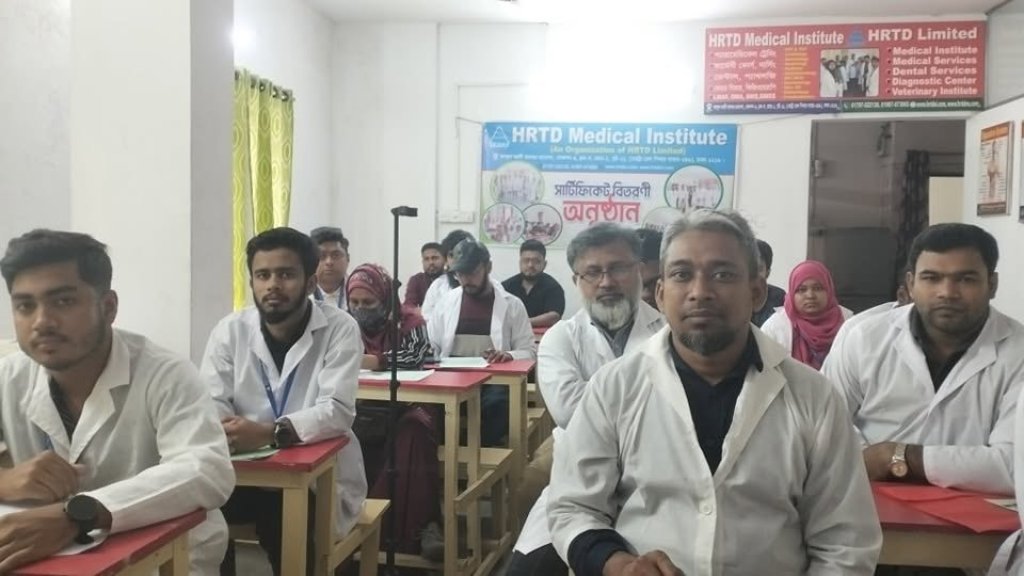
Introduction
Pharmacy is a vital healthcare profession that blends scientific knowledge with hands-on patient care. In Bangladesh, the demand for skilled pharmacy professionals is growing rapidly. But what makes a pharmacy course truly the best? The answer lies in its practical training. Education provides the foundation, but training is essential for development. In this step-by-step guide, we will explore the key components of a top-tier pharmacy course and show you how to choose the right program. We will also highlight the practical works that form the core of training, which are indispensable for the development of treatment.
Step 1: Understand the Importance of Practical Training
Pharmacy is not just about memorizing drug names and dosages. It is about applying knowledge in real-world scenarios. Practical training bridges the gap between theory and practice. It ensures that pharmacy professionals can perform essential clinical procedures safely and effectively. Training is essential for development because it builds confidence, competence, and critical thinking. Without hands-on practice, even the most educated pharmacist cannot deliver optimal patient care.
Step 2: Identify the Core Practical Works
Any reputable pharmacy course in Bangladesh must include a comprehensive set of practical works. These are the main core of training and depend on a strong educational background. They are essential for the development of treatment. Here are the key practical skills you should master:
- Pushing Injection: Administering medications via the intramuscular or subcutaneous route.
- Pushing Saline Infusion: Setting up and managing intravenous saline drips.
- Blood Glucose Measurement with Glucometer: Accurately measuring blood sugar levels.
- Blood Pressure Measurement: Using a sphygmomanometer to assess hypertension or hypotension.
- Heart Rate Measurement: Counting beats per minute to evaluate cardiac function.
- Pulse Measurement: Assessing the rhythm and strength of the pulse.
- Heart Sound Auscultation: Listening to heart sounds with a stethoscope.
- Pulmonary Auscultation: Listening to lung sounds to detect abnormalities.
- Clearing: Clearing airways or equipment as needed.
- Dressing: Applying sterile dressings to wounds.
- Bandaging: Using bandages to support injuries and promote healing.
- Inhalation: Administering medications via inhalation.
- Rotahaletion: Using a Rotahaler for dry powder inhalation.
- Nebulization: Delivering medication as a mist for respiratory conditions.
- Stitching: Suturing wounds under supervision.
These practical works are not optional; they are the backbone of pharmacy training. They require careful supervision and repeated practice to achieve proficiency.
Step 3: Evaluate the Curriculum and Facilities
When choosing a pharmacy course, look beyond the syllabus. Check if the institution has well-equipped laboratories, simulation rooms, and clinical practice opportunities. The best courses integrate practical training from the first year. They also provide internships in hospitals and community pharmacies. Ensure that the course covers all the practical works listed above. A strong educational background in anatomy, physiology, pharmacology, and pharmaceutics is necessary to perform these tasks safely.
Step 4: Check Accreditation and Recognition
In Bangladesh, pharmacy education is regulated by the Pharmacy Council of Bangladesh and the University Grants Commission. The best courses are accredited by these bodies. Accreditation ensures that the program meets national standards and that graduates are eligible for licensure. Always verify the accreditation status before enrolling.
Step 5: Consider Location and Accessibility
Practical training requires regular attendance at labs and clinical sites. Choose a course that is conveniently located. For residents of Dhaka, a centrally located institution can save time and reduce stress. For example, a well-known training center is situated at Section 6, Block-Kha, Road-1, Plot-11, Metro-rail-Pillar: 249, Mirpur 10 Roundabout, Dhaka 1216. This location is easily accessible via public transport and is close to major hospitals, facilitating clinical practice.
Step 6: Seek Hands-On Experience
Don't just rely on the institution's promises. Ask about the student-to-instructor ratio in practical sessions. Ensure that you will have ample opportunity to practice each skill under supervision. The best courses provide repeated demonstrations and allow students to perform procedures on mannequins and real patients (under supervision). This hands-on experience is what sets top graduates apart.
Step 7: Contact the Institution for Details
Once you have shortlisted a few courses, reach out to them directly. Ask about the practical training schedule, the qualifications of instructors, and the success rate of graduates. For the institution mentioned above, you can call 01987073965, 01797522136, or 01784572173 to get detailed information about their pharmacy course. They can provide you with a curriculum outline, fee structure, and admission requirements.
Conclusion
Choosing the best pharmacy course in Bangladesh requires careful consideration of practical training, curriculum, accreditation, and location. The practical works listed above are the core of training and are essential for the development of treatment. By following these steps, you can select a program that equips you with the skills and knowledge needed to excel in the pharmacy profession. Remember, education is the foundation, but training is the key to development. Invest in a course that prioritizes hands-on learning and prepares you for real-world challenges.

Leave a Reply