
Best Pharmacy Course in Dhaka: A Step-by-Step Guide to Practical Training
 Super Admin
7 views
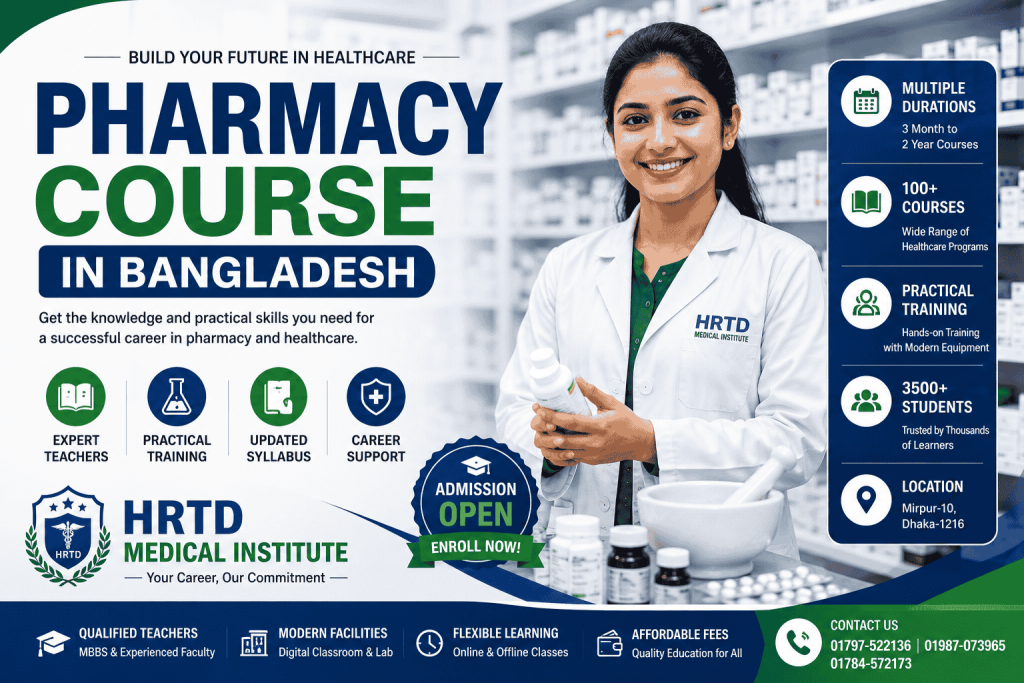
Introduction
Pharmacy is more than dispensing medicines; it is a healthcare profession built on a foundation of rigorous education and hands-on training. In Dhaka, the demand for skilled pharmacy technicians and assistants is growing rapidly. This tutorial will guide you through the essential steps to choose the best pharmacy course in Dhaka, emphasizing the practical training that forms the core of professional development. Whether you are a student, a career changer, or a healthcare enthusiast, this step-by-step guide will help you navigate the options and understand what makes a pharmacy course truly effective.
Step 1: Understand the Importance of Practical Training
Before enrolling in any course, it is crucial to recognize that pharmacy is a practical discipline. Theoretical knowledge alone is insufficient. Practical work, based on a solid educational background, is essential for the development of effective treatment. Training in real-world skills ensures that you can contribute confidently to patient care. The core of any reputable pharmacy course should include hands-on practice in the following areas:
- Pushing injections (administering medication via syringe)
- Pushing saline infusion (setting up and managing IV fluids)
- Blood glucose measurement with a glucometer
- Blood pressure measurement
- Heart rate measurement
- Pulse measurement
- Heart sound and pulmonary auscultation (listening to heart and lungs)
- Clearing (maintaining a sterile environment)
- Dressing and bandaging wounds
- Inhalation and rotahaler techniques
- Nebulization
- Stitching (suturing minor wounds)
These practical works are the main core of training. They depend on your educational background and are essential for the development of treatment. A course that skips or minimizes these practical components is not worth your time.
Step 2: Evaluate the Curriculum
When comparing pharmacy courses in Dhaka, look beyond the brochure. Request a detailed syllabus and check whether it includes the practical modules listed above. The best courses balance classroom instruction with supervised laboratory and clinical practice. Ensure that the curriculum covers subjects such as pharmacology, anatomy, physiology, and patient care, alongside extensive hands-on sessions. A strong educational foundation is necessary for practical work to be meaningful.
Step 3: Check the Training Facilities
Practical training requires proper facilities. Visit the institution and observe the laboratories, simulation rooms, and equipment. Are there enough glucometers, blood pressure monitors, nebulizers, and training mannequins for students to practice? Is there a dedicated space for learning injection techniques and wound care? The quality of facilities directly impacts the quality of your training. In Dhaka, many institutions claim to offer practical training, but only a few have the infrastructure to deliver it effectively.
Step 4: Meet the Instructors
The best pharmacy courses are taught by experienced professionals who have worked in clinical or community pharmacy settings. Ask about the instructors' qualifications and their experience in performing and teaching the practical skills listed above. Instructors who can demonstrate proper techniques for blood pressure measurement, auscultation, and injection administration will provide invaluable guidance. Their mentorship is a key factor in your development.
Step 5: Consider Location and Accessibility
Dhaka is a bustling city, and commuting can be time-consuming. Choose a course location that is accessible and safe. For example, a well-known training center is located at Section 6, Block-Kha, Road-1, Plot-11, Metro-rail-Pillar: 249, Mirpur 10 Roundabout, Dhaka 1216. This central location is easily reachable by public transport and is close to major landmarks. Accessibility ensures you can attend all sessions, including practical classes, without unnecessary stress.
Step 6: Verify Accreditation and Recognition
Ensure that the pharmacy course is accredited by relevant health or education authorities in Bangladesh. Accreditation guarantees that the curriculum meets national standards and that your certification will be recognized by employers. Without proper accreditation, your training may not lead to employment or further education opportunities. Ask the institution for proof of accreditation and check with the regulatory bodies if necessary.
Step 7: Assess Hands-On Practice Opportunities
Theory is important, but practice is paramount. Inquire about the ratio of practical to theoretical hours. The best courses allocate at least 50% of the time to hands-on training. Ask if students practice on each other (under supervision) or on mannequins, and whether there are opportunities for real-world clinical placements. Practical work such as pushing injections, measuring blood glucose, and performing nebulization should be practiced repeatedly until you achieve proficiency.
Step 8: Talk to Current Students and Alumni
One of the best ways to evaluate a course is to speak with those who have completed it. Ask about their experience with the practical training, the quality of instruction, and their job prospects after graduation. Alumni can provide honest insights into whether the course truly prepares students for the demands of the pharmacy profession. If possible, visit the campus and observe a practical class in progress.
Step 9: Consider Your Career Goals
Different pharmacy courses may focus on different career paths—community pharmacy, hospital pharmacy, or pharmaceutical sales. Choose a course that aligns with your goals. If you aim to work in a clinical setting, ensure the course emphasizes skills like auscultation, injection administration, and wound care. If you are interested in community pharmacy, focus on blood pressure and glucose monitoring, inhalation techniques, and patient counseling. The best course will offer a broad foundation while allowing some specialization.
Step 10: Enroll and Commit to Your Training
Once you have selected the best pharmacy course in Dhaka, commit fully to both the educational and practical components. Attend every class, practice each skill until you are confident, and seek feedback from instructors. Remember that training is essential for development. The practical works you master—from pushing saline infusion to stitching wounds—will form the backbone of your professional competence. With dedication and the right course, you can build a rewarding career in pharmacy.
Conclusion
Finding the best pharmacy course in Dhaka requires careful research and a focus on practical training. By following these steps, you can identify a program that offers a strong educational foundation and extensive hands-on experience. For further information or to enroll, you can contact the institution at 01987073965, 01797522136, or 01784572173. Remember, your training is the key to your development as a skilled pharmacy professional.

Leave a Reply