Best Pharmacy Course in Dhaka: A Step-by-Step Guide to Practical Training
 Super Admin
15 views
Introduction
Finding the best pharmacy course in Dhaka is not just about earning a certificate—it is about acquiring the practical skills that define competent healthcare support. In a city where healthcare demands are rising, the right training program bridges the gap between theoretical education and hands-on patient care. This tutorial will guide you step-by-step through what to look for, what skills you will master, and how to enroll in a course that truly prepares you for the field.
Step 1: Understand the Core of Pharmacy Training
Pharmacy training is fundamentally practical work grounded in education. Training is essential for development. Without hands-on practice, theoretical knowledge remains incomplete. The main core of any reputable pharmacy course in Dhaka is the practical component—these are the skills that directly impact treatment outcomes. When evaluating a course, ensure it covers the following essential practical works:
- Pushing Injection: Mastering safe injection techniques.
- Pushing Saline Infusion: Administering intravenous fluids correctly.
- Blood Glucose Measurement with Glucometer: Accurate diabetes monitoring.
- Blood Pressure Measurement: Reliable cardiovascular assessment.
- Heart Rate Measurement: Basic vital sign monitoring.
- Pulse Measurement: Assessing peripheral circulation.
- Heart Sound and Pulmonary Auscultation: Listening for abnormalities.
- Clearing: Maintaining airway and equipment hygiene.
- Dressing: Proper wound care and infection control.
- Bandaging: Supporting injuries and promoting healing.
- Inhalation and Rotahaletion: Administering respiratory medications.
- Nebulization: Delivering aerosolized drugs effectively.
- Stitching: Assisting with wound closure techniques.
These practical works depend on educational background and are essential for the development of treatment. A course that emphasizes these skills ensures you are job-ready.
Step 2: Evaluate the Curriculum
Look for a curriculum that integrates theory with extensive lab and clinical practice. The best pharmacy course in Dhaka will allocate significant hours to each practical skill listed above. Ask about the instructor-to-student ratio, the availability of modern equipment (e.g., glucometers, nebulizers, BP monitors), and whether you will practice on simulators or real clinical settings. A strong curriculum also includes education on anatomy, physiology, and pharmacology to underpin your practical work.
Step 3: Check Accreditation and Faculty
Accreditation ensures the course meets national standards. Verify that the institution is recognized by relevant health and education authorities. Faculty members should be experienced practitioners—pharmacists, nurses, or physicians—who can demonstrate techniques and provide constructive feedback. The best courses often have faculty who are active in the field, bringing real-world insights into the classroom.
Step 4: Visit the Campus and Facilities
Before enrolling, visit the campus. A practical course requires proper facilities: clean labs, functioning equipment, and a safe environment for practicing injections, dressing, and other procedures. Observe a class if possible. The institution should have dedicated spaces for practical demonstrations and enough supplies for every student to practice hands-on.
Step 5: Consider Location and Accessibility
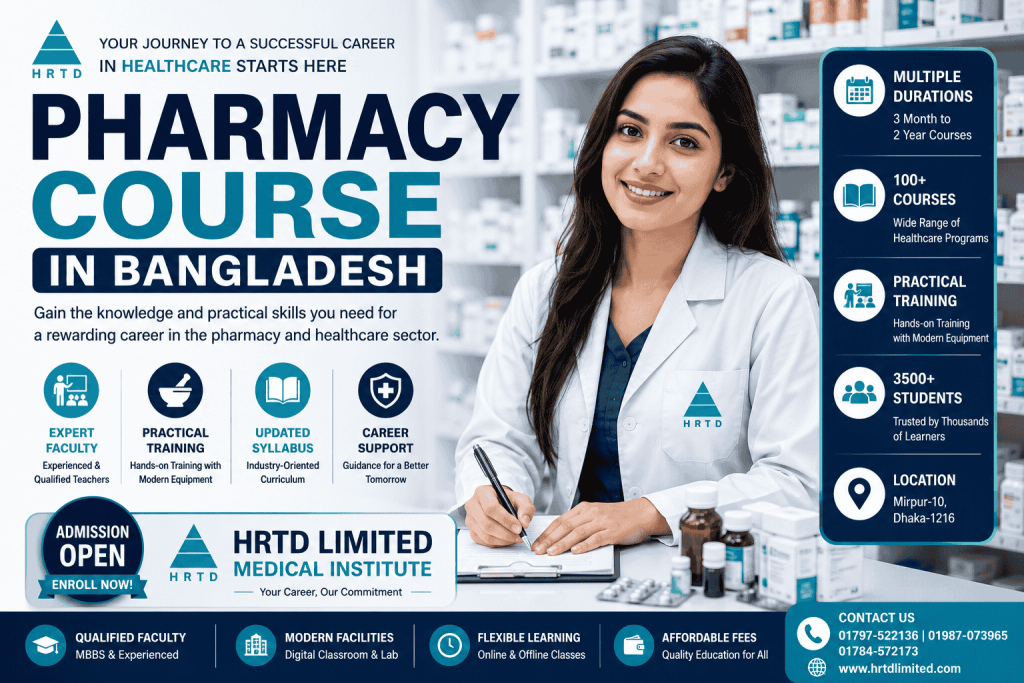
Convenience matters. The best pharmacy course in Dhaka should be easily accessible. For residents of Mirpur and surrounding areas, a centrally located institution is ideal. For example, a course offered at Section 6, Block-Kha, Road-1, Plot-11, Metro-rail-Pillar: 249, Mirpur 10 Roundabout, Dhaka 1216, provides easy access via public transport and metro rail. Proximity reduces commute stress and allows more time for study and practice.
Step 6: Enroll and Commit to Hands-On Learning
Once you have selected a course, complete the enrollment process. Be prepared to actively participate in every practical session. Practice each skill until you are confident. Remember, training is essential for development—your competence in pushing injections, measuring blood pressure, or performing nebulization will directly affect patient care. Seek feedback, ask questions, and take advantage of any extra practice hours offered.
Step 7: Verify Contact and Support
Before finalizing, contact the institution to clarify details. A reputable course will have responsive support. For the location mentioned above, you can reach out at 01987073965, 01797522136, or 01784572173 for inquiries about schedules, fees, and enrollment. Good communication from the start indicates a well-organized program.
Conclusion
Choosing the best pharmacy course in Dhaka requires careful evaluation of practical training, curriculum, faculty, facilities, and accessibility. By following these steps, you can enroll in a program that equips you with the essential skills—from injection techniques to auscultation—that are the backbone of effective treatment. Invest in a course that prioritizes hands-on learning, and you will build a rewarding career in pharmacy.
Related Posts

Best Pharmacy Course in Bangladesh: A Step-by-Step Guide to Practical Training
Discover the best pharmacy course in Bangladesh with this step-by-step guide. Le...

C Grade Best Pharmacy Course in Dhaka
C Grade Best Pharmacy Course in Dhaka HRTD Medical Institute offers C G...
Pharmacy Best Course In Dhaka
Pharmacy Best Course in Dhaka Details Pharmacy Best Course in Dhaka. Mo...
